Home › Field notes › ASTM B117 Salt Spray for Bag Hardware: Meaning, Limits and Reading the
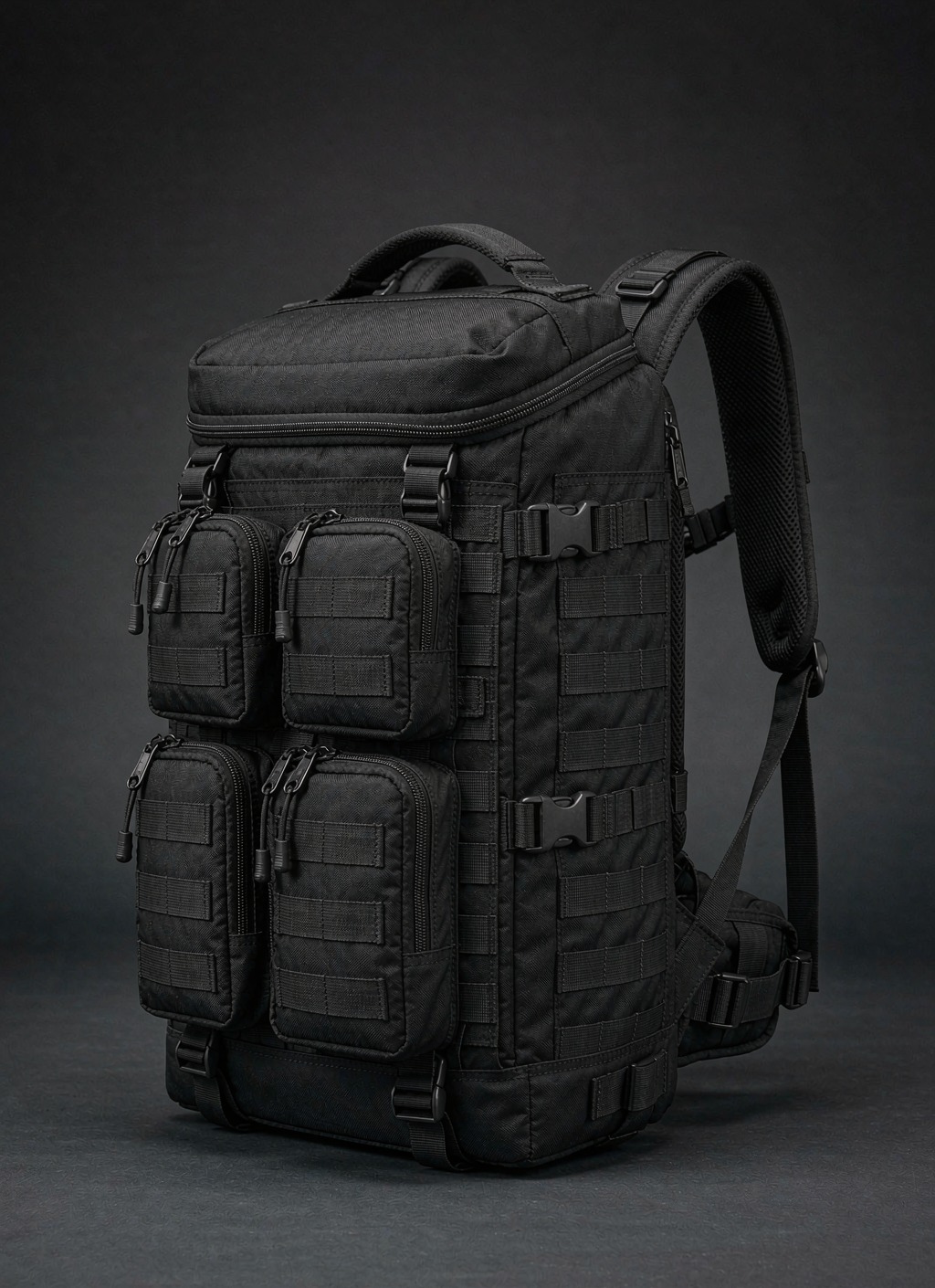
ASTM B117 is a neutral salt fog practice used to compare the corrosion behaviour of coated or bare metal under a continuous, controlled chloride exposure, and it is a screening tool rather than a prediction of service life. The cabinet holds specimens in a near-neutral sodium chloride fog at an elevated temperature with no drying phase, no ultraviolet input and no mechanical load, so it reproduces a constant wet condition that a coastline never delivers. Read properly, hours-to-first-rust ranks two finishes of the same family; read carelessly, it becomes a marketing number that fails in the field. Programme gates still govern: a 500-unit minimum per reference, 6-10 working days for samples, 35-50 days for bulk, and release at AQL 2.5 by attribute sampling. Scope is civilian hardware for hiking, commuting, worksite and first-aid carriage; nothing here addresses weapon carriage, ballistic protection or any defence qualification. None of this is legal advice; it is general trade information for buyers.
What the Cabinet Does to a Specimen
The practice published as ASTM B117 describes how to operate an apparatus, not how long a product should last. Specimens are placed at an angle inside a closed chamber and exposed to a continuous fog generated from a sodium chloride solution whose concentration, temperature and acidity are held within defined bands. Fog condenses on the surface, runs off, and is replaced continuously, so the metal never dries.
That last property is the whole point and the whole limitation. A surface that is permanently wet corrodes through a different mechanism from one that is wetted, dried and rewetted. In a constant fog, corrosion products stay in place and the electrolyte film stays dilute; outdoors beside the sea, salt deposits concentrate as water evaporates, then dissolve again at the next wetting, and each cycle drives the attack further into the metal.
The cabinet also removes everything else that shapes real corrosion. There is no ultraviolet radiation to break down an organic topcoat, no abrasion from grit or fabric, no flexing at a hinge or a latch, no load on a plated surface, and no galvanic coupling to a dissimilar metal unless the specimen happens to be assembled that way when it goes in.
What the practice does deliver is repeatability. Two specimens of the same family, prepared the same way and run in the same cabinet, can be compared with confidence, and that is why it remains the default quality-control screen for plating quality across a production run.
Spec rule: Use a neutral fog cabinet to rank finishes inside one family and to screen plating quality between batches, and never quote its hours as a service-life figure for hardware that will see wet-dry cycles, ultraviolet exposure or abrasion.
Reading the Result: Hours, Rating Method and Photographic Record
A salt fog result is meaningless without three items stated alongside it: the exposure duration at which the specimen was assessed, the rating method used, and the condition of the specimen when it went into the chamber. Hours alone — 24, 48, 96 and beyond — are checkpoints agreed between the parties, not thresholds defined by the practice.
Rating methods turn appearance into a number. Painted and coated steel is commonly graded by the proportion of surface showing rust, using a published pictorial standard, and creepage from a deliberate scribe is measured separately to judge how well a coating resists undercutting at a damaged edge. Both approaches are comparative: they describe how far the attack has progressed at a stated time, not whether the part will survive a season.
Specimen condition deserves more attention than it usually gets. As-received parts carry drawing lubricant, handling residue and fingerprints, which change the way the fog wets the surface; degreased parts behave differently again. Edges, cut ends, tapped holes and the inside of a rivet barrel are where plating is thinnest, so a result depends heavily on whether those areas were masked, left bare or deliberately included.
Photographs settle arguments that numbers cannot. Two laboratories can both honestly report a given grade, and only a picture shows whether the rust is a uniform bloom across a face or a deep pit at one corner. Requiring standardised images at each checkpoint costs nothing and prevents months of correspondence.
Judgement: Accept a fog report only when it states the assessment hour, the rating method, the surface preparation and the treatment of edges and cut ends, because the same finish can pass at one laboratory and fail at another on preparation alone.
Why a Neutral Fog Is Not a Marine Atmosphere
A coastline delivers salt as a cycle. Spray and aerosol land on a surface, water evaporates, crystals concentrate, humidity rises overnight and the deposit re-dissolves into a strong electrolyte, then sun and wind dry the surface again. Each cycle changes the chemistry at the metal interface, and the corrosion morphology that results — localised pitting under a deposit, crevice attack under a washer or a folded flange — looks nothing like the even bloom produced in a cabinet.
Ultraviolet radiation is the second missing input. Organic topcoats, powder coats and clear seals chalk and craze under sunlight, and once the film is cracked the electrolyte reaches the metal far faster than any fog test suggests. A finish that survives hundreds of cabinet hours on the strength of an organic seal can fail in a single summer of outdoor exposure.
Mechanical inputs matter just as much for bag hardware. A buckle is cycled thousands of times, a D-ring rubs against webbing, a rivet head is abraded by grit, and a slider works against a tape under load. Abrasion removes the passive film and the plating that the fog never touches, exposing fresh metal in exactly the places where load is highest.
Assembly effects are the last gap. Real hardware is a system: a stainless spring inside a plated body, an aluminium rivet through a steel plate, a brass eyelet against a coated shell. Galvanic couples, crevices under washers and trapped moisture inside folded seams all drive corrosion in service, and none of them exists for a single part hung alone in a chamber. The same applies to the grid hardware on a MOLLE attachment face and to the frame stays of a modular hiking backpack.
Bottom line: A cabinet result describes constant wetting of an isolated part, while service corrosion is driven by wet-dry cycling, ultraviolet damage, abrasion and galvanic coupling, so the two should never be equated in a specification or a listing.
How Each Hardware Finish Family Fails
Different substrates fail in different ways, and a single hours figure applied across all of them hides the difference. Zinc alloy die-castings develop white corrosion product that then undercuts the plating; plated steel shows red rust once the sacrificial layer is consumed; brass and bronze can lose one constituent element selectively; stainless grades pit in chloride when the environment is aggressive enough; anodised aluminium fails at scratches and at contact with a more noble metal.
| Finish family | First site attacked | Failure signature | Parts where it appears |
|---|---|---|---|
| Zinc alloy die-casting with decorative plating | Plating porosity over casting skin and at parting lines | White bloom that lifts the plating, then blistering | Side-release buckles, cam buckles, triglides |
| Carbon steel with zinc plating | Cut ends, threads and inside diameters where coverage is thinnest | White deposit first, red rust once the layer is spent | Rivets, eyelets, wire hooks, spring gates |
| Brass and bronze, bare or lacquered | Surface film and any break in the lacquer | Dark tarnish, then selective loss of one constituent metal | Zipper teeth, sliders, decorative snaps |
| Stainless grades used for springs and gates | Crevices under washers and at contact points | Localised pitting rather than general rusting | Springs inside buckles, carabiner-style clips |
| Anodised aluminium | Scratches, machined edges and contact with a nobler metal | White powdery deposit and galvanic pitting at contact | Adjusters, ladderlocks, frame stays |
| Coated or painted steel with a seal | Scribe lines, edges and any impact damage | Creepage outward from the damaged line | Magnetic closures, reinforced plates |
Finish choice should follow the part, not the price list. A spring gate on a tactical backpack that must keep working after a season beside the sea has a different requirement from a decorative snap on an inner pocket, and specifying one hours figure for both overspends in one place and under-protects in the other.
Selection rule: Set the corrosion requirement per part using its consequence of failure — a spring gate or load-bearing buckle needs a substrate and plating stack chosen for crevice and cycle behaviour, while decorative trim can be specified on appearance hours alone.
Accelerated Hours versus Service Months
The question every buyer asks is how many cabinet hours equal a season in service, and the honest answer is that no general conversion exists. Acceleration in a corrosion test depends on the alloy, the coating, its thickness, the geometry of the part and the environment being approximated, so a multiplier that works for one family is meaningless for the next.
What the cabinet gives instead is a ranking. If finish A shows first red rust at a later checkpoint than finish B under identical conditions, A is the better choice for that family of parts — and that conclusion is reliable precisely because both were exposed to the same constant input. Extending it to predict calendar life requires a correlation established by field exposure for that specific finish, which is a programme of work rather than an arithmetic step.
The equivalent route in the ISO family, ISO 9227, offers neutral, acetic acid and copper-accelerated variants for the same class of comparison work, and the choice between them is again about ranking sensitivity rather than about realism.
Where a buyer needs a number for a warranty or a tender, the defensible approach is to state the test result and the service claim separately: hardware passed a stated fog checkpoint under a stated rating method, and separately, field exposure of a stated duration is under way at a stated site. Mixing the two into one sentence is how unsupported claims get written.
Verdict: Quote fog hours only as a comparative checkpoint within one finish family, and keep any service-life statement separate and supported by field exposure data for that specific finish.
Complementary Routes: Cyclic Cabinets and Exposure Racks
A neutral fog is best treated as one instrument in a set. Programmes that need a realistic mechanism rather than a quick screen add a cyclic cabinet, which alternates wetting, drying and sometimes a controlled humidity or a different electrolyte, and an outdoor exposure rack at a coastal or industrial site, which introduces ultraviolet, wind, temperature swing and real deposition.
| Route | Mechanism reproduced | Best use | Blind spot |
|---|---|---|---|
| Neutral fog cabinet | Continuous chloride wetting at controlled temperature | Batch screening and ranking finishes in one family | No drying, ultraviolet, abrasion or assembly effects |
| Cyclic wet-dry cabinet | Repeated wetting, concentration during drying and rewetting | Comparing coating systems where mechanism realism matters | Still no ultraviolet, no load, no real deposition rate |
| Outdoor exposure rack | Full environment: sun, wind, deposition, temperature swing | Correlating laboratory results to a real service life | Slow, site specific and hard to schedule around a launch |
| Assembled-product spray and soak | Water tracking into crevices, galvanic couples and traps | Finding system-level failures a single part never shows | Results scatter; needs several specimens |
| Handling and abrasion cycling before fog | Wear damage followed by corrosive attack | Hardware that is operated daily or rubs against webbing | Sequence has to be defined or results are not repeatable |
A proportionate plan for most bag programmes is two-tier: fog screening on every incoming hardware lot at a short checkpoint, plus a slower cyclic or rack correlation for the finishes that carry the highest consequence of failure. That structure keeps cost controlled while giving the brand something real to say about service.
Sequencing matters when wear is part of the failure. Cycling a buckle a defined number of times and then fogging it produces a different and more useful result than fogging a new part, because the film damage comes first in service as well.
Takeaway: Run short fog checkpoints on every incoming hardware lot for batch control, and reserve cyclic or rack exposure for the few finishes where a service-life statement must be defended.
Writing the Corrosion Requirement Into a Drawing
A specification that says salt spray tested for 48 hours is unenforceable, because it names neither the substrate nor the finish nor the acceptance. A usable requirement has six elements: base metal, plating or coating type with its class, any sealing or passivation, surface preparation before test, the checkpoint hours, and the rating criterion with photographic reference.
Geometry deserves its own line. Plating coverage on threads, inside diameters, cut ends and deep recesses is always thinner than on a flat face, so the drawing should state whether those areas are masked or included, and the acceptance should be written against the worst case rather than the average appearance of the part.
Assembly-level requirements are often skipped and should not be. Where a stainless spring sits inside a plated body, or an aluminium rivet meets a steel plate, an insulating washer, a compatible plating choice or a deliberate isolation detail is the engineering answer; a fog test on the individual parts will not reveal the couple that fails in service.
Change control closes the loop. A plating line change, a new plating supplier, a different passivation chemistry or a modified casting tool all alter corrosion behaviour, and each should trigger a fresh checkpoint round. Recording the plating batch against the order number means a later complaint can be traced back to the chemistry that produced it.
Writing six items into the drawing — base metal, coating type and class, sealing, preparation, checkpoint hours and rating criterion — and re-testing on any change to plating supplier, chemistry or casting tool, costs one line on a title block and removes the argument later.
Sampling, Records and Programme Gates
Programme work is coordinated through the SGS-verified production base: 4,950 m² of floor, 149 machines spread over 7 production lines, a 137-person workforce and 200,000 units of monthly capacity; our founder has been making bags since 2004 and the company opened in 2014. Quotation turnaround is 24-48 hours; samples are built in 6-10 working days for a routine construction and 12-15 for a demanding one; volume runs 35-50 days against a 500-unit floor. AQL 2.5 applies at release: no critical defect is accepted, major defects are capped at 2.5 and minor at 4.0, with sampling drawn to ISO 2859-1 level II and goods shipped FOB Xiamen. Delivery then takes 25-35 days on the water, 5-8 by air and 3-5 by express.
Hardware is usually the longest lead item on a bag programme, so corrosion screening should be booked when the component order is raised rather than when the parts land. Sampling from the incoming lot, tested at a short checkpoint, catches a plating line drift while the bulk is still being sewn rather than after the goods are packed.
Records should tie the test to the batch. Each checkpoint report belongs with the plating batch number, the purchase order and the order number of the finished goods, so a field complaint two seasons later can be traced to a chemistry and a supplier rather than argued about. Retained reference samples of hardware, stored dry and labelled, cost very little and settle most disputes.
Finally, keep the claim aligned with the evidence in the listing text. A checkpoint result supports a statement about the finish; it does not support an unqualified lifetime promise, and the difference is what regulators, retailers and customers read first.
Frequently asked questions
What does ASTM B117 actually test on bag hardware?
ASTM B117 exposes specimens to a continuous near-neutral sodium chloride fog at a controlled temperature, without drying, ultraviolet input or mechanical load. It ranks finishes inside one family and screens plating quality between batches. Hardware samples are built in 6-10 working days before a cabinet round is booked.
Does a salt spray result predict how long hardware lasts outdoors?
No general conversion exists. Acceleration depends on alloy, coating, thickness, geometry and the environment being approximated, so a multiplier valid for one family is meaningless for another. Quote fog hours as a checkpoint and support any service claim with separate field exposure.
How many hours of salt spray should a buckle be tested for?
The checkpoint is agreed between the parties, not fixed by the practice; 24, 48, 96 and longer runs are common choices. What matters is stating the hour, the rating method and the surface preparation in the same line as the requirement.
Why does hardware pass salt spray and still rust beside the sea?
The cabinet keeps the part permanently wet, while a coastline wets, concentrates, dries and rewets, and adds ultraviolet, wind, abrasion and galvanic contact. Pitting under a deposit and crevice attack under a washer never appear in a constant fog.
Which hardware parts need the strongest corrosion requirement?
Parts whose failure has consequences: spring gates, load-bearing buckles, rivets and anything holding a strap. Decorative trim can be specified on appearance hours. A single hours figure across all parts overspends in one place and under-protects in another.
Should the drawing specify masking of cut ends and threads?
Yes. Plating coverage is thinnest at threads, inside diameters and cut ends, so the drawing should state whether those areas are masked or included, and acceptance should be written against the worst case rather than average appearance.
What is the difference between white rust and red rust on hardware?
White corrosion product is the sacrificial zinc layer doing its job; red rust appears once that layer is consumed and the base steel is attacked. Reporting both checkpoints separately tells a buyer how much protective layer remains.
Do stainless steel parts need salt spray testing?
Stainless corrodes by localised pitting in chloride rather than by general rusting, so a bloom-based rating can miss the real failure. Test assembled parts, look at crevices under washers, and add cyclic exposure where pitting is the concern.
Should hardware be cycled before it is fogged?
For parts operated daily, yes. Cycling a buckle a defined number of times and then fogging it reproduces the service order, because abrasion and film damage come first in the field as well. Define the sequence or results will not repeat.
How is a corrosion report tied back to a production batch?
Keep each checkpoint report with the plating batch number, the purchase order and the finished-goods order number, and retain labelled reference samples. Goods are released at AQL 2.5, so a complaint can be traced to a chemistry and supplier.
When should corrosion screening be booked in a programme?
When the component order is raised, because hardware usually sets the longest lead time. Incoming-lot screening belongs at the point the component order is raised: samples need 6-10 working days and bulk 35-50, so a plating drift is caught while goods are still being sewn.
What triggers a fresh salt spray round after approval?
Any change to plating supplier, plating line, passivation chemistry, casting tool or base metal. A modified tool changes casting skin and porosity, which changes plating coverage, so the earlier checkpoint no longer describes the part.
Does freight transit affect hardware corrosion risk?
Hardware plans and checkpoint slots can be arranged through the hardware testing desk. A long humid voyage can start corrosion before goods reach a warehouse. A humid voyage can start corrosion before goods reach a warehouse — count on 25-35 days by sea, 5-8 by air, 3-5 by express — so packing, desiccant and storage belong in the specification.
Can a supplier certificate replace a corrosion test?
A certificate states intent; a checkpoint on the incoming lot states fact. Use declarations to screen suppliers and reserve laboratory checkpoints for incoming lots and for any change to plating chemistry, tooling or supplier.