Home › Field notes › ASTM D5034 Tensile Testing Explained: Reading Grab Reports on Bag Fabr
ASTM D5034 records the force needed to rupture a textile gripped along a band narrower than the specimen itself, so its number describes flat cloth — never seam efficiency, never hardware anchoring, never the behaviour of a loaded three-dimensional shell. The parameters that decide whether such a report is usable are the cited revision, specimen orientation, conditioning state, clamp arrangement and whether each piece broke cleanly or slipped at the jaw, and our own programmes pair this evidence with release counting at AQL 2.5 on lots built to an order minimum of 500 pieces after 6-10 working days of sampling. Acceptance figures are agreed rather than discovered: whoever owns the product writes them beside the material reference on the drawing before bulk cutting begins. The boundary follows directly from the mechanism — this is one construction in one condition at one moment, so anything said about coated, sewn or aged behaviour needs evidence generated elsewhere.
What ASTM D5034 Actually Loads: Grab Force on Flat Cloth
The grab arrangement exists to solve a workshop problem. Narrowing every specimen down to a strip takes time, and for some constructions the act of cutting strands away changes what is being measured. Instead, a wide piece is held across two opposing clamps, while those clamps cover less width than the piece does, so only the gripped yarns are pulled directly and their neighbours contribute through friction and sideways restraint.
That geometry returns a figure above what a cut strip of the same material would give, because surrounding yarns carry part of the load. The published method fixes clamp dimensions, specimen width, gauge distance and the speed at which the moving jaw travels, so two laboratories following the same revision can compare meaningfully. Everything depends on naming the revision used, since those dimensions and tolerances live in that document and cannot be recalled accurately from habit.
The recorded value is the maximum force sustained before rupture, sometimes accompanied by extension at that point when the request asks for it. It is a peak, not a service capability. Nothing in the procedure asks whether a seam sewn from this material holds, whether a strap anchor resists pull-out, or whether a face survives catching on a door frame, and none of those behaviours can be inferred from the result.
Reading the method honestly also means acknowledging what it excludes. No stage flexes a coated face, no abrasive contact occurs, no ultraviolet or salt exposure takes place, and no repeated loading happens. Material can leave the mill in strong condition and give up a meaningful share of that property after coating, printing, hydrolysis in a humid warehouse, or a season outdoors.
Takeaway: Read a grab figure as one cloth, one condition, one moment, then route every claim about sewn joins, anchored webbing or aged performance to a method built for that specific question rather than stretching this one.
Specimen Preparation and Conditioning: Where Results Are Won or Lost
More contested results trace to preparation than to the machine. Where pieces come from matters first: taking them across the full width rather than down one margin avoids the systematic differences weaving produces between centre and edge, and avoiding folds, creases and printed zones removes inputs nobody intended to measure.
Conditioning is the next large influence. Textiles take up and release moisture, and common constructions behave measurably differently between a dry state and a conditioned one. A laboratory that conditions to the atmosphere set by the cited revision and says so produces data another laboratory can reproduce; one that tests straight off the roll produces numbers that may not survive another season or another building.
Clamp behaviour quietly decides more outcomes than buyers expect. Too little pressure lets the piece creep, producing a result that describes slippage rather than rupture. Too much pressure crushes coated or laminated structures along the grip line and starts failure inside the clamp, where an honest result should never begin. Face condition, alignment and how the piece is seated all belong inside the laboratory's own routine control, and the report should record outcomes so a reader can tell them apart.
A piece that slips, or one that fails immediately at the jaw instead of away from it, should be reported as such and handled under the rules set by the cited revision. Accepting those results because the figure looked comfortable defeats the point of commissioning the work, and it is among the first things a technical reviewer examines when a result is challenged.
| Variable | Where control is usually lost | Effect on recorded force | Control written into the request |
|---|---|---|---|
| Origin across roll width | Every piece cut from one margin or one fold | Reading describes a local structure, not the roll | Distribute pieces across width and note position |
| Conditioning atmosphere | Material loaded straight off the roll | Values drift with ambient moisture and repeat poorly | Condition to the cited revision and state it |
| Clamp pressure | Set by operator habit rather than procedure | Light grip slips; heavy grip fails at the jaw | Fix the setting and report every failure mode |
| Face condition | Worn or contaminated clamp surfaces | Inconsistent holding between pieces in one set | Face inspection interval plus rejection rule |
| Specimen alignment | Piece seated skew inside the clamps | Load enters unevenly and depresses the peak | Alignment check before each piece is loaded |
| Piece count per direction | Too few pieces to support any average | One outlier dominates the quoted figure | Fix piece count for both directions upfront |
| Finished versus unfinished | Bare substrate sent instead of coated material | Result omits the finish actually used | Submit the construction going into production |
Spec rule: Require the laboratory to print conditioning state, piece counts for both directions, clamp arrangement and every failure mode including slip and jaw-edge breaks, because without those fields no reviewer can tell whether the number describes material or describes the gripping.
Grab Versus Strip Versus Tear: Three Questions Behind One Word
Buyers ask for "tensile" without deciding which of three questions they actually need answered, then compare whatever returns against a rival's figure produced by a different question. The confusion is understandable, since all three involve pulling textile apart, but the mechanisms diverge sharply and the numbers are not interchangeable.
Grab loading holds a band narrower than the piece and allows adjacent yarns to assist, giving results suited to comparing batches of one approved reference and to material approval. Strip loading narrows the piece so every loaded yarn runs parallel between the clamps, returning lower and arguably more fundamental values that suit comparison between constructions and design calculation. Both finish in simultaneous rupture under tension.
Tear methods answer something else. Rather than pulling all yarns to failure together, they propagate disruption sequentially along a line, so the figure describes resistance to an opening that is already growing. For carriers, that maps onto two real events: a panel loaded uniformly by its contents, against a small nick beginning to run at a cut edge.
The consequence for specification writing is simple. Each route answers one story, and a programme needing two stories commissions two routes. Choosing whatever fits the blank on a template is how selection errors become expensive, usually discovered when complaints arrive about precisely the mechanism nobody measured.
| Attribute | Grab route, the D5034 family | Strip route | Tear route |
|---|---|---|---|
| What the clamps hold | Full-width piece in narrower jaws | Narrowed piece, all yarns loaded | Configured piece with a defined disturbance |
| Failure mechanism | Simultaneous rupture under spread tension | Simultaneous rupture under even tension | Sequential propagation along one line |
| Relative force level | Highest of the three for equal material | Below grab for equal material | Lowest, and different in kind |
| Fit for purpose | Batch comparison and material approval | Construction comparison and calculation | Whether a small defect will keep running |
| Recurring misuse | Quoted as proof a sewn panel holds | Ranked against a grab figure from elsewhere | Substituted for either tension route |
| Specimen burden | Low; nothing has to be machined | Moderate; narrowing needs care | Configured piece with prepared opening |
| Fields the report owes you | Direction, conditioning, failure mode, clamp set-up | Direction, conditioning, effective width | Direction, initiation state, propagation record |
Selection rule: Commission grab loading when comparing batches of one approved reference, strip loading when comparing constructions or calculating, and tear when a service failure would start from a small opening — since one figure cannot stand for all three.
Direction, Coating and Construction: Specifying What Actually Gets Tested
Woven structures are not isotropic. Yarns running with the roll behave differently from yarns crossing it, often by enough to change a purchasing decision, so a report quoting one direction alone is incomplete by definition and any criterion built on it describes half the material.
Request both directions, the count of pieces in each, and whether the quoted figure is a mean or a minimum. Ask for the spread too, because two materials sharing a mean but differing widely in distribution will behave differently once production variability enters; a tight distribution is worth more than a high peak obtained from a favourable subset.
Construction choices move results more than marketing language suggests. Coating adds mass and restrains yarn movement, lamination redistributes load across the grip line, reinforcement grids introduce regular discontinuity, and knit structures extend and recover rather than failing cleanly. Submitting the unfinished substrate because it cuts more easily produces a figure describing something other than what will be sewn.
Webbing calls for a separate note. Binding tape, strap tape and structural webbing are not the same population as face material, and loading them through an arrangement designed for wide woven goods is frequently inappropriate. Straps terminated into hardware belong to assembly-level work that loads the genuine route, including how the tape was ended and what it anchored into.
Modular carriers rarely use one material. Face panels, lining grades, reinforcement patches and tape all appear in one product, so a single certificate covering one of them cannot carry the others. Builds such as carriers specified for trade tool loads often stack three or four constructions in contact, which is exactly where a material-only view runs out of usefulness.
Report Fields That Separate Evidence From Decoration
An isolated number is decoration. The report must identify the sample unambiguously — supplier, reference, colourway, batch, any coating or finish, and whether the piece came from roll stock, a cut panel or a finished article. A strong result attached to a generic phrase is unenforceable and, worse, useless months later when two lots need comparing.
Method identification follows: designation plus the revision or date actually applied, together with any deviation agreed in advance. Laboratories often hold several versions of one designation, and although successive versions may look broadly similar, citing none removes any possibility of reproducing the work.
Conditions belong on the same page. Atmosphere and conditioning duration, piece dimensions, both directions tested, count per direction, machine settings including clamp arrangement and traverse rate, plus the statistical treatment applied. A mean quoted without count or direction tells a reader almost nothing about how it arose.
Failure description closes the set. Each piece either broke away from the clamp, broke at the jaw edge, or slipped, and how many landed in each category determines whether the mean deserves to stand. Transparent reporting of rejected pieces signals competence rather than weakness, and the absence of any mention of failure modes should be read as a warning.
| Report field | What it establishes | Symptom of a thin report | Buyer action |
|---|---|---|---|
| Sample identity | Which material, colourway and batch were loaded | Generic phrase instead of a reference | Reject and require reference plus batch |
| Revision cited | Which dimensions and settings governed the run | Designation given with no version | Request the version followed |
| Direction and piece count | Whether both axes were genuinely covered | One mean with no direction stated | Require separate means per axis |
| Conditioning state | That moisture equilibrium preceded loading | Conditions omitted completely | Condition to the stated atmosphere |
| Failure modes recorded | Whether the mean rests on genuine ruptures | No mention of slip or jaw-edge breaks | Require counts per failure category |
| Construction details | Whether the production build was tested | Unfinished substrate for a coated product | Submit the finished construction |
| Accreditation scope | Whether the work sits inside accredited activity | Logo displayed without a scope statement | Check scope against the method |
Verdict: Accept only reports identifying sample and batch, citing the revision of ASTM D5034, giving both directions with counts, stating conditioning, and breaking down failure modes, because missing any one of those five fields makes the figure unusable for warranty or purchasing purposes.
Five Misreadings That Turn a Tensile Figure Into a False Promise
The first is treating a material property as a product property. The piece contains no join, no stitch perforation, no hardware and no load path through a shaped shell. A strong result says nothing about whether a strap anchor holds, whether a base survives being set down loaded, or whether an attachment row stays fixed to what sits behind it.
The second is ranking figures across different constructions. A higher force may simply reflect heavier material, another weave, or a coating restraining yarn movement — none of which necessarily serves the product better, especially where carried weight and bulk are themselves selection criteria.
The third appears when a mean is read as a floor. Natural variation puts individual pieces below any average, and production adds further spread between batches. Specifying against a mean without considering distribution lets marginal material through repeatedly while every certificate still looks compliant.
The fourth is unit drift. Figures arrive in different force units, and occasionally on different bases, then get ranked directly. Check units and stated basis before comparing anything, since the correction is trivial and the error is embarrassing once noticed by somebody else.
The fifth is permanence. Results describe material before coating ageing, ultraviolet exposure, hydrolysis, cleaning or abrasion have taken effect. Where service life genuinely matters, commission ageing or conditioning work alongside identification and let the care language reflect what was learned. Putting this beside wear evidence from ASTM D3884 gives a far more honest picture than one certificate alone, and combining it with sampling Released at AQL 2.5 keeps both material and batch views in place.
Judgement: Compare ASTM D5034 figures only within one reference and one cited revision, never across constructions, and never as a stand-in for join, anchor or closure behaviour.
Writing an Acceptance Criterion Without Inventing a Threshold
Acceptance positions are agreed, not discovered. The defensible route starts from the duty the article must perform, works back to the property governing that duty, and then sets a limit incoming material must meet before it is cut. Since no standard anticipates every construction, load case and market, that limit belongs on the drawing next to the material reference and the method citation.
Make the criterion complete rather than merely numeric. State direction — both axes or their equivalent — the count of pieces, conditioning requirement, statistical treatment, and whether a mean, a minimum or both govern. A single lower figure without those companions invites precisely the ambiguity the exercise was meant to remove.
Tie the criterion to lot release rather than to initial qualification only. Material arriving months later deserves the gate applied on day one, and keeping swatches from each approved batch gives both parties something physical to place side by side when a certificate is questioned. Where the brand runs its own laboratory programme, align request wording so both sets of numbers can be read together.
Then write consequences into the same document: what happens to a batch that misses, who funds retesting, whether retesting is permitted at all, and how fast a replacement must be qualified. Criteria without consequences get renegotiated at the worst moment. Our production team places this gate immediately before bulk cutting, because after that point substitution stops being paperwork.
Bottom line: Express every acceptance position as method revision, both directions, piece counts, conditioning, statistical treatment and consequence of failure, agreed with the brand and printed on the drawing before material release.
Where Tensile Evidence Stops: Joins, Hardware and Assembled Behaviour
The moment a needle enters material, the flat result stops describing reality. Stitching perforates yarns, concentrates load at holes, and introduces thread that behaves differently under tension. Coated and laminated goods make this worse, because the perforation line simultaneously becomes a tear path and a path for water.
Joins therefore need their own evidence, generated on the sewn configuration with the thread, density and machine setting used in production. Platforms such as shared modular carriers accepting swap-out modules make the point clearly: identical cloth delivers different tolerance depending on where load enters and what it anchors into.
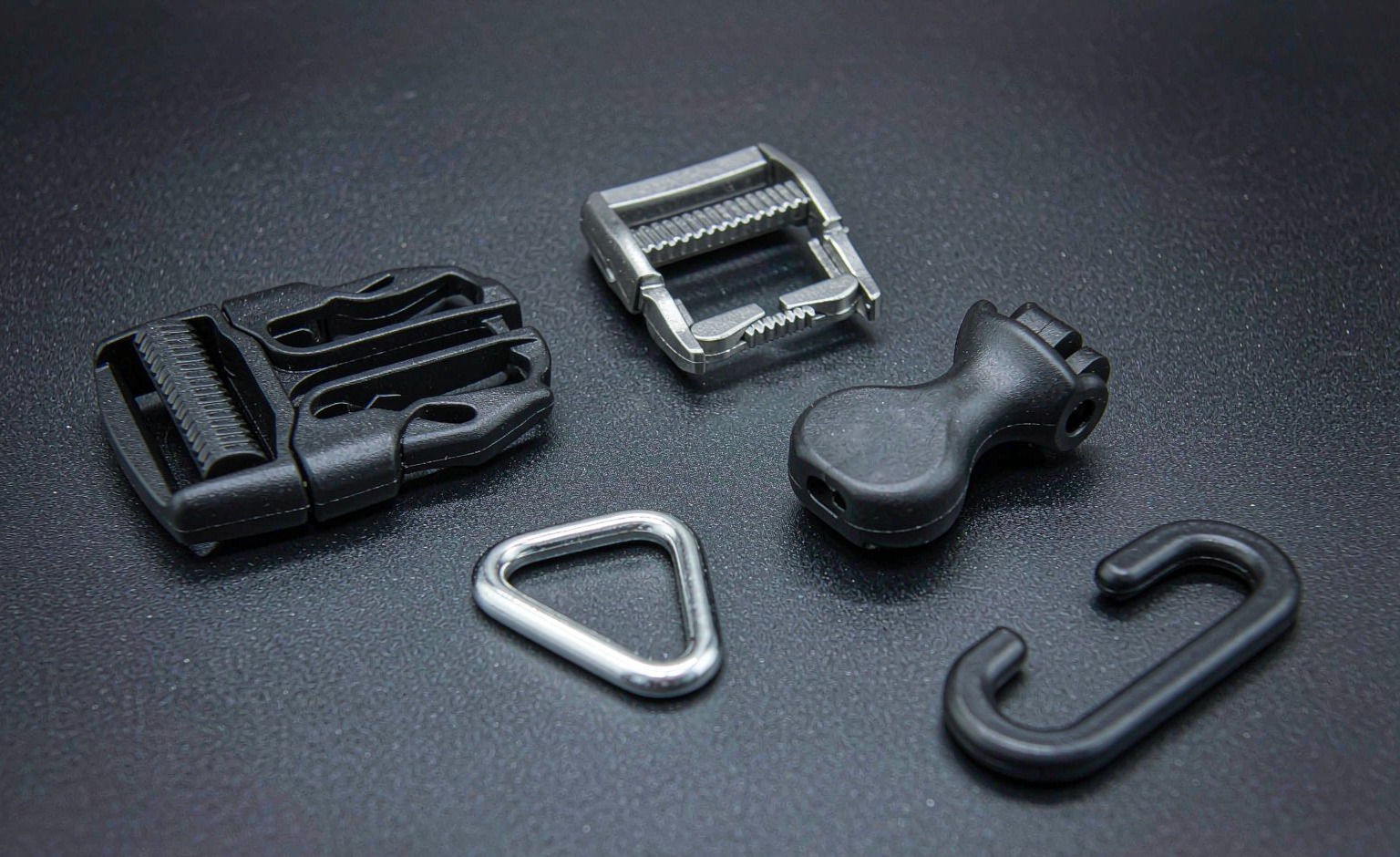
Anchored hardware needs assembly evidence too. Sliders, buckles, cams and webbing adjusters introduce contact geometry, local bending and concentrated loading that a flat piece cannot reproduce, so their evaluation belongs at component or assembly level with genuine parts in the genuine arrangement.
Capacity context helps plan that work instead of discovering it late. Seven production lines carrying 149 machines occupy the 4,950 m² SGS-verified floor we schedule through, staffed by 137 people with monthly planning around 200,000 units; coordination runs through QUANZHOU JUNYUAN BAGS, established in 2014, whose founder has been in bag production since 2004. Evidence therefore has to be booked into the same calendar as everything else: component approval before cutting, then the build itself over 35-50 days.
Timing the Evidence Inside a 35-50 Day Programme
Sequence decides whether evidence informs decisions or merely records them. Material identification and any comparative ISO strip work belong at sample stage, before the drawing freezes, because changing a construction after artwork has been approved costs more than the test ever did. Sampling occupies 6-10 working days, extending to 12-15 where several constructions interact, so requests placed after that window close tend to arrive after the decision has been made.
Once the production window opens, 35-50 days covers everything from cutting to packed cartons, and each gate within it has an evidence owner. Lot release checks confirm incoming material against the approved reference; first-piece review confirms the join; patrol records cover the middle; final counting at AQL 2.5 closes the file on the order minimum of 500 pieces.
Commercial mechanics matter here because they set what is affordable. Prices are quoted FOB Xiamen with settlement on T/T 30/70, sampling carries a USD 50-150 fee refunded against the order, and tooling or screens fall in a USD 300-2,500 band, so a modest increase in test scope rarely moves the landed figure by much while materially reducing the chance of a disputed lot.
Freight then decides what happens after discovery. Sea transit takes 25-35 days, air 5-8 days and courier 3-5 days, which is why problems found at the quay are far more expensive than the same problems found at first piece. Buyers planning a full evidence package for one platform usually start from the technical enquiry route and settle the test list while drawings are still open.
Frequently asked questions
What does ASTM D5034 actually measure on piece goods?
It records the maximum force sustained before a specimen held in clamps narrower than itself ruptures, optionally noting extension at that point. Neighbouring yarns assist, so the figure sits above a cut-strip equivalent for the same material. It is a property of one flat construction under one condition, not a prediction for a sewn or coated assembly.
- Peak force before rupture
- Optional extension reading
- Material-level statement only
Why does a grab result exceed a strip result for identical material?
Because alignment matters. In the grab arrangement surrounding yarns that are not directly clamped still carry load through friction and sideways restraint, sharing the work. In a strip arrangement the piece is narrowed so all remaining yarns are loaded together without that assistance. Comparing the two directly is a category error rather than a quality signal.
How many directions should be reported for a woven facing?
Both, always. Yarns with the roll and yarns across it behave differently, often enough to change a purchasing decision, and a report quoting one axis describes half the material. Request separate piece counts and separate means per direction, together with the spread, before any figure is used for release.
Which specimen should be submitted: unfinished or production material?
Submit exactly what will be sewn, including coating, printing and any laminate. Finishing changes behaviour materially — coatings restrain yarn movement and add mass, laminates redistribute load across the grip line. Submitting the unfinished substrate produces a tidy number describing something the product never contained.
Why does conditioning change reported force so much?
Textiles exchange moisture with their surroundings, and many constructions respond measurably between dry and conditioned states. Conditioning to the atmosphere named by the cited revision makes results reproducible across laboratories and seasons, while testing straight off the roll produces values that drift with the weather.
- Follow the stated atmosphere
- Print the conditioning state
- Expect comparability across sites
What does a failure at the clamp line tell me?
Usually that the result is compromised. Clean rupture should occur away from the clamps, so a break immediately at the jaw often means pressure was too high, faces were damaged, or the piece was seated badly. Such pieces should be reported and handled under the cited revision's own rules rather than quietly averaged into the result.
When should an acceptance figure be agreed with the supplier?
Before material is released for cutting. Acceptance is a commercial decision derived from duty, not a property waiting to be discovered, so it belongs on the drawing beside the material reference, the method revision, both directions, piece counts, conditioning, statistical treatment and the consequence of a missed batch.
Can one grab figure support a claim about strap anchors or bases?
No. Those involve joins, stitch perforations, reinforcement and hardware geometry that no flat piece contains. Evaluating them requires work on the genuine assembly, using production thread, density and setting, with load entering through the route it takes in service rather than through a rectangular sample.
Why is ranking two different constructions by force misleading?
Because a higher reading frequently reflects greater mass, another weave or a coating restraining movement, rather than superior fitness. Where carried weight, pack volume or hand feel are themselves selection criteria, a heavier material scoring higher may serve the product worse despite looking better on paper.
Does a mean guarantee every part of the batch meets it?
It does not. Individual pieces fall below any average and production adds spread between batches, so specifying against a mean alone lets borderline material through repeatedly while certificates stay clean. Include distribution, minimum requirements or both, and tie the criterion to release testing on later batches.
Which additional routes complement ASTM D5034 for bag programmes?
Wear resistance through rotary abrasion such as ASTM D3884 or its Martindale counterpart, water behaviour of flat cloth through AATCC 127, coated constructions through ASTM D751, and join behaviour through sewn-assembly methods. Together they cover the failure stories one tension route cannot reach.
How does tensile evidence fit a 35-50 day production window?
Identification belongs at sample stage, 6-10 working days for most builds and 12-15 where several constructions interact, well before the drawing freezes. Production then occupies 35-50 days, with lot checks before cutting, first-piece review of joins, patrol records through the run and final counting at AQL 2.5 against MOQ 500.
What commercial terms accompany bags ordered with this evidence package?
Prices carry FOB Xiamen with T/T 30/70 settlement, the order minimum is 500 pieces, sampling occupies 6-10 working days and mass production 35-50 days. Sampling carries a USD 50-150 fee refunded against the order and tooling falls in a USD 300-2,500 band, so extra test scope rarely dominates the landed number.
How quickly can a replacement be moved if material fails late?
That depends entirely on mode: air takes 5-8 days, courier 3-5 days and sea freight 25-35 days. Because those options exist, evidence taken early is consistently cheaper than evidence taken at the quay, where the only remaining route usually carries the highest freight cost.