Home › Field notes › Best Fabrics for Modular Backpacks: A Buyer's Test Matrix
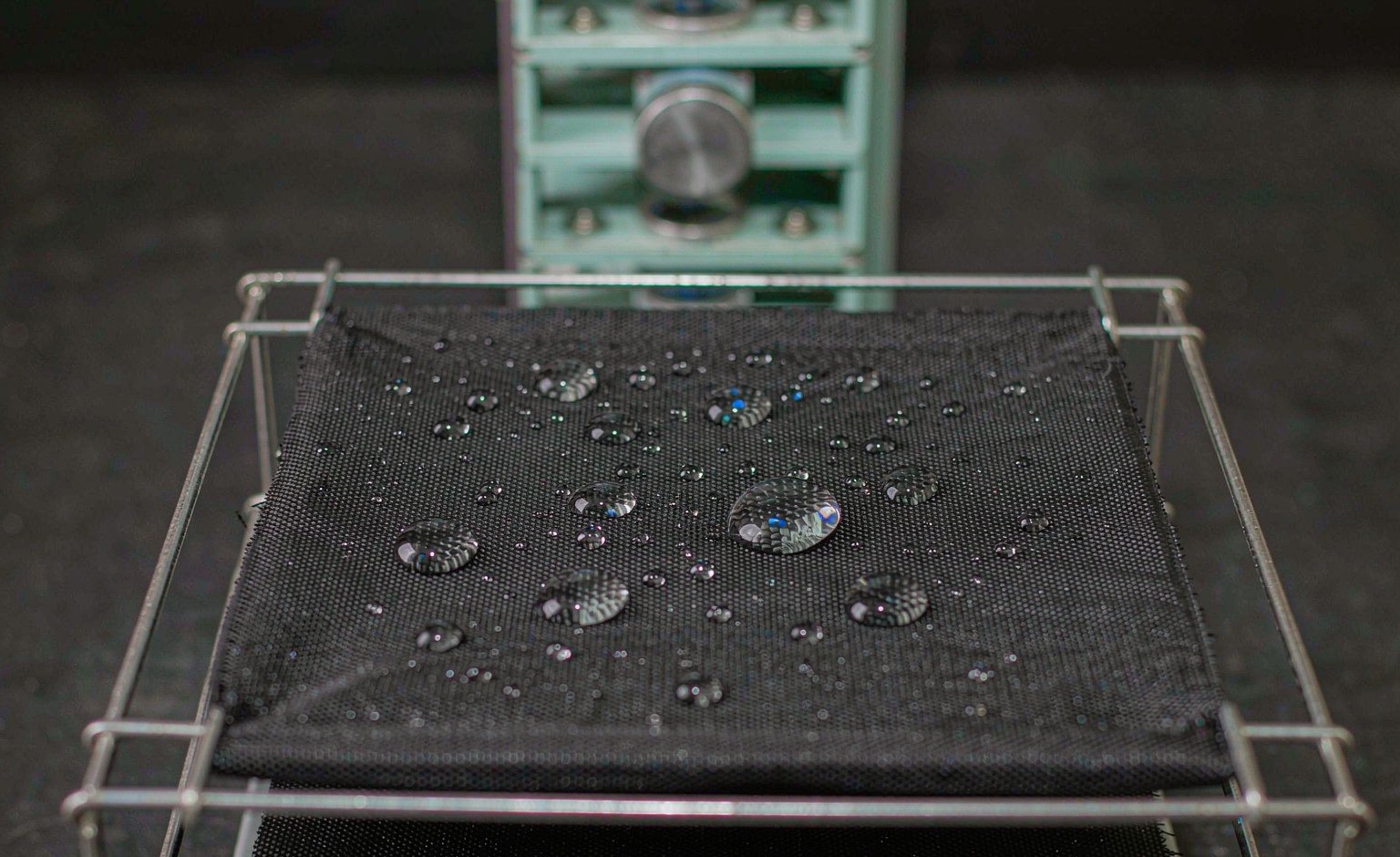
The best fabric for a modular backpack is the cheapest one that still passes the abrasion cycle target, the hydrostatic band and the coating adhesion check at the stitch penetrations, because modular platforms concentrate wear at their attachment fields rather than spreading it. A shell that looks excellent in a studio can fail in month three when the coating cracks at a webbing row or the print lifts off a reinforcement patch. This guide replaces fabric marketing names with a test matrix a buyer can send to a production partner, with cycle targets, hydrostatic bands, care-tolerance checks and the laboratory references that make results comparable across two or three candidate suppliers. It closes with the commercial frame a planner has to work inside: a 500-unit minimum per colourway, a sampling window counted in working days, inspection classes defined before production starts, and a Xiamen FOB basis that makes two quotations genuinely comparable.
Why modular platforms punish fabric differently
A conventional backpack wears broadly and shallowly. A modular platform wears locally and deeply, because the attachment field turns one region of the shell into a structural joint. Load from a mounted pouch enters the face fabric at discrete stitch penetrations, and the coating around those penetrations is worked every time the user walks. That is why fabric selection for a modular chassis is not the same decision as fabric selection for a daypack.
The second difference is branding surface. A modular platform is sold as a system, and the system story is told through printed or embossed marks on the chassis and on each module. Print adhesion therefore becomes a specification line, not a design preference. A coating that accepts a crisp print on day one may craze after UV exposure and cleaning, and the mark goes with it.
The third difference is replacement economics. On a modular system the user replaces a module, not the whole pack, which means the module fabric and the chassis fabric age at different rates and must still look like one product after a season. Colour consistency across two different fabric lots, two different constructions and sometimes two different dye processes is a real specification problem, and it is solved with a defined colour tolerance and a reference swatch held by both sides.
So the selection question is not "which fabric is strongest". It is: which fabric holds its coating at stitch penetrations, accepts the chosen branding method, matches the module fabric after ageing, and still meets the weight target the channel demands.
Selection rule: Judge a shell fabric by behaviour behind an attachment field after repeated module removal rather than by flat-panel results, and take that decision before MOQ 500 turns opinion into commitment.
Abrasion: pick a route, then a cycle target
Abrasion is the first filter because it correlates best with returns. There are two common routes — Martindale to ISO 12947 and the rotary platform abrader to ASTM D3884 — and they do not produce interchangeable numbers. Pick one route in the specification and require all suppliers to report on it, otherwise a comparison table becomes meaningless.
Then set a cycle target by duty cycle rather than by product tier. A commuter chassis carried five days a week against a coat and a desk chair sees a different wear budget from a trail shell dragged over granite. Where the platform carries external modules, add abrasion exposure at the mounting face specifically, because the pouch rubs the panel in a small area with every step.
Weight interacts with abrasion in an uncomfortable way. Going from a 420D to a 900D construction roughly doubles the abrasion budget and adds real grams, and on a 30 L chassis the difference is felt. The usual resolution is a differential construction: a heavier denier on the base, the mounting face and the shoulder strap run, and a lighter denier on panels that never see contact.
| Fabric family | Abrasion route and realistic target | Behaviour at stitch penetrations | Branding method it accepts best |
|---|---|---|---|
| 500D nylon, PU coated | ASTM D3884, high cycle count for weekly carry | Stable; coating holds around penetrations | Screen print, heat transfer, woven patch |
| 900D polyester, PU coated | ASTM D3884, high; heavier per square metre | Stable but stiffer to needle; watch needle heat | Screen print on smooth finishes only |
| TPU laminate | ISO 12947, moderate; excellent wet wipe-down | Needs a bonded spreader; perforations leak | Heat transfer, debossed label |
| 210D–420D ripstop nylon | ISO 12947, moderate; best weight-to-tear ratio | Good; grid limits tear propagation | Heat transfer, embroidery with backing |
| Waxed canvas | ASTM D3884, variable by wax load | Needle wax build-up; schedule cleaning | Embroidery, debossed leather patch |
Note the last row. Waxed canvas is a legitimate premium choice, but wax builds on the needle and changes stitch formation over a shift. Where a waxed shell carries a webbing field, specify a needle-cleaning interval and check stitch formation at the start and end of the run.
Choose one abrasion route and name it in the technical pack rather than describing outcomes in adjectives: either rotary-platform cycling scored under ASTM D3884 or the alternative Martindale sequence, both run on fabric cut from the bulk roll rather than from a development swatch.
Water resistance: hydrostatic bands and the seam strategy
Hydrostatic head numbers are quoted loosely in this industry and that causes disputes. A figure measured on flat fabric describes the fabric; it does not describe the assembled pack, because the seams, the stitch field and the zip are the leak paths. Always specify a seam strategy alongside the fabric number.
Set the band by duty cycle. Light rain on a commute is a different specification from a wet locker room or a multi-day trail. Daily urban use is served by a moderate head with taped or bound main seams; sustained wet exposure needs a laminate plus seam sealing, and it needs the stitch field designed as a managed leak path rather than a hoped-for dry one.
The test reference is AATCC 127, and the result should be reported before and after a defined ageing or cleaning sequence, because coatings lose performance. ISO 6330 covers domestic washing and drying, and where a care label claims washability the fabric must be tested after the stated number of cycles rather than as new.
Coating type matters as much as the head figure. PU coatings are economical and printable; TPU laminates clean better and resist hydrolysis longer; PVC coatings are cheap and increasingly restricted by substance requirements. Where the destination market is the EU, confirm the coating against REACH (EC 1907/2006) documentation before it goes into the specification, not after samples are made.
Verdict: Pair every hydrostatic figure with a seam-sealing route and re-test after the stated cleaning cycles, because a fabric that sheds water as a panel leaks through stitching long before the 35-50 days bulk run ends.
Coating behaviour, hydrolysis and the failures that arrive late
The most expensive fabric failures are the ones that appear after the product has shipped: a coating that goes sticky, a laminate that delaminates, a print that lifts. All three are predictable from tests that take days, not seasons, and all three are cheap to prevent at specification stage.
Hydrolysis is the classic. Polyurethane coatings exposed to heat and humidity break down and become tacky, and the failure surfaces in a container that has sat in a humid port or in a warehouse through a summer. The standard screening is a humidity and heat ageing exposure followed by a visual and tack assessment. Where a programme ships to a tropical destination or stores through humid summers, specify a hydrolysis-resistant coating grade and ask for the ageing report.
Delamination shows as bubbles or a cloudy layer between face and backing. It is usually an adhesive or a process-temperature problem, and it is screened by a bond-strength check to ASTM D751 on coated and laminated constructions. Because a stitch field perforates the laminate, the field edges are where delamination starts, so the bond check should be run on coupons that include a sewn row rather than on flat material alone.
Print and trim failure is the third. Colourfastness to crocking runs to AATCC 8; colourfastness to washing runs to ISO 6330. A mark that passes as new and fails after cleaning will generate returns attributed to "poor quality" when the real cause is an unspecified care cycle. State the care cycle in the specification and test to it.
Weight, tear control and the ripstop argument
Weight sells, and weight also fails. The resolution in most modular programmes is a mixed construction with a clear rationale for each zone, rather than a single fabric chosen by feel.
Ripstop earns its place where tear control matters more than abrasion: packable modules, light travel accessories, internal organisers. The grid stops a small puncture from becoming a long tear, which is exactly the behaviour you want in a 210D module liner. It does not make a fabric abrasion-resistant, and specifying ripstop on a base panel because it sounds technical is a common and expensive error.
Tear strength itself is measured by tongue or grab methods rather than by abrasion, and ASTM D5034 is the usual reference for woven shells. A fabric can post an excellent abrasion cycle count and a poor tear figure; on a chassis with a webbing field, tear resistance at the stitch penetrations is the property that decides whether a snagged pouch tears a panel open.
Then decide the weight target with the channel in mind. A retail outdoor buyer weighs the pack in the aisle; a corporate uniform buyer does not. Where weight is the selling point, spend the saving on the panels that never see contact and hold the denier on the base, the mounting face and the strap run. That trade is invisible in a specification sheet and obvious in a warranty claim.
Bottom line: Buy tear resistance at row terminations and strap take-offs rather than across the whole panel, and show the resulting weight saving on the line sheet while alternatives exist rather than after MOQ 500 is committed.
Colour governance across chassis and modules
On a modular platform, colour is a system property. A chassis in one construction and a pouch in another will not match by default, and a two-tone look that was deliberate at design stage becomes a mismatch complaint at destination if the tolerance is not written down.
The mechanism is straightforward. Different constructions take dye differently, different coatings shift perceived colour, and different production lots drift. Add a branded trim and a zip tape in nominally the same colour and there are four variables to align. The control is a master reference: a physical swatch set held by the brand and the production partner, with a stated tolerance and a defined lighting condition for assessment.
Specify the tolerance numerically where possible, and specify the viewing condition, because two people assessing the same swatch under different light will disagree. Where a programme uses a dyed-to-match zip or a dyed-to-match webbing, purchase all of it against the same reference at the same time; buying trim in a second lot against a remembered colour is how mismatch enters a bulk run.
| Trim element | Control to write down | Assessment condition | Mismatch it prevents |
|---|---|---|---|
| Chassis face fabric | Master swatch plus numeric tolerance | Defined light booth, agreed illuminant | Chassis-to-chassis drift between lots |
| Module face fabric | Same master, separate lot approval | Same booth as the chassis | Module reading lighter than the chassis |
| Webbing and tape | Dyed to the master in one purchase | Compared against the chassis swatch set | Webbing reading warm against the shell |
| Branded trim and labels | Approval swatch held by both sides | Compared under the same illuminant | Logo patch clashing with the shell |
| Lining and binder | Tolerance where visible at openings | Assembled, at the opening, worn | Visible lining flash at the mouth |
Keep the approved swatch set for the life of the programme and re-issue it when a fabric lot changes. A swatch that lives in a drawer on one side of the relationship is not a control; it is an artefact.
Put colour transfer beside colour in the same document, quoting dry and wet crocking to AATCC 8 for every colourway that appears on both a chassis and a module, since mismatched transfer is the defect wearers notice first.
Specification and commercial frame for a fabric decision
A fabric decision is only as good as the document that records it. Send a specification that names the construction, the coating type and weight, the abrasion route and cycle target, the hydrostatic band with the seam strategy, the care cycle, the colour reference and tolerance, and the branding method. Anything left to interpretation will be interpreted in favour of the cheapest option that still looks right on a sample.
On the commercial side, the numbers a planner needs are stable. MOQ 500 per colourway, and fabric minimums often drive this more than assembly does, because a dyed-to-match lot carries its own minimum. The sampling window is 6–10 working days, stretching to 12–15 working days for laminates and bonded constructions. Mass production needs 35–50 days after approval with every input confirmed. Tooling and screens land between USD 300 and USD 2,500, though a custom dyed lot can add a separate charge that should be confirmed in writing.
Settlement runs T/T 30/70 against an FOB Xiamen figure, and any number should be marked indicative until the fabric lot is confirmed. Add 25–35 days on the water, 5–8 days if it flies, and 3–5 days by courier for approval pieces. Inspection follows ISO 2859-1 with majors taken at AQL 2.5, and coating, delamination and print faults each need a named class so an inspector never has to decide whether a crazed mark is major or minor.
Where the platform carries external pouches, see the mounting face discussion on PALS webbing field engineering, because the shell specification and the field specification have to be written as one decision rather than two.
The constructions discussed here appear across the current modular product range, where the same fabric decisions show up at production scale.
Takeaway: Quote each alternative fabric as a priced option with its own 6-10 working days sampling round, because an unpriced substitute discovered after approval costs more than the materials under discussion.
Reading a test report: what an importer should reject
A fabric decision is enforced through documents, and documents in this category fail in predictable ways. The most common is scope mismatch: a report issued for a fabric family, or for a construction one denier away from the one being shipped, presented as evidence for the actual product. Retailers and customs authorities read the description line, and a report that does not describe the shipped construction is not evidence of anything.
The second failure is date. Coating and substance reports have validity windows, and a report issued two years ago against a coating that has since changed formulation is a historical document. Require an issue date inside the programme window and, where a lot-specific result is claimed, require the lot reference on the report.
The third is laboratory identity. A report from an accredited laboratory carries an accreditation reference and a method statement. A supplier's internal test sheet is useful for process control but is not third-party evidence, and it should not be filed in the compliance pack as if it were. Where a retailer requires OEKO-TEX Standard 100 certification, check that the certificate covers the article class actually being shipped, because the standard is classed by how closely a product contacts skin.
| Field on the report | Acceptable entry | Reason the report is refused |
|---|---|---|
| Product description | Exact construction, denier, coating and colour | Describes a family, not the shipped item |
| Issue date | Inside the programme validity window | Expired, or predates a coating change |
| Lot reference | Present where a lot-specific result is claimed | No link to the material on the order |
| Laboratory identity | Accredited third party with a method statement | Internal sheet filed as third-party evidence |
| Certificate class | Class matching the end use | Certificate class below the required one |
Finally, keep the reports with the order, not with the season. When a warranty question arrives eleven months after delivery, the document that settles it is the report tied to the lot that shipped, and it is much easier to find if it was filed against the purchase order rather than against the development folder.
Substance compliance and the documents a fabric decision triggers
Fabric selection is also a compliance selection, and the documents differ by destination. A specification that ignores this produces a compliant-looking product that cannot clear customs or a retailer's onboarding process.
For the EU, REACH (EC 1907/2006) documentation covers substance restrictions across the textile and coated components. OEKO-TEX Standard 100 certification is the practical shorthand many retailers accept for textile components, though it does not replace a REACH statement where one is required. For California, Prop 65 exposure assessment applies to listed substances in the components as sold. For US children's products, CPSIA applies with its own testing and tracking requirements, and any platform marketed toward younger users needs that scope confirmed before sampling rather than after.
Metal hardware is a separate line. Nickel release is assessed to EN 1811, and corrosion resistance for coastal or marine duty cycles can be qualified to ASTM B117. A coated shell with a zinc-alloy buckle that rusts in month two is a fabric-adjacent failure that no fabric test would have caught, which is why the hardware specification belongs in the same review as the shell.
Finally, match the documentation to the real product. Test reports must describe the construction actually shipped, at the lot actually used, with dates inside their validity window. A report for a fabric family is not a report for your fabric. This is the single most common reason a shipment is held at destination, and it is entirely preventable at the specification stage.
Judgement: File substance declarations against both the purchase order and the dye lot, and clear the shipment only when the AQL 2.5 report and those declarations carry the same lot number.
Frequently asked questions
Which abrasion test should a modular backpack specification name?
Name one route — ASTM D3884 or ISO 12947 — and require every supplier to report on it. The two do not produce interchangeable numbers, so a comparison table that mixes them is meaningless, and set a cycle target by duty cycle rather than by product tier.
What hydrostatic head does a commuter chassis need?
A moderate head with taped or bound main seams serves daily urban use, while sustained wet exposure needs a laminate plus seam sealing. Specify the seam strategy alongside the AATCC 127 result, never the fabric figure alone, because the seams are where the water enters.
Why does coating cracking happen at webbing rows?
Load from a mounted pouch enters face fabric at discrete stitch penetrations, and the coating around them is worked with every step. Screen with ASTM D751 on coupons that include a sewn row, and run the check again after a humid-heat ageing exposure.
Is ripstop a good choice for a modular chassis?
For light modules and packable organisers, yes — the grid limits tear propagation at low weight. On a base panel or a mounting face, abrasion matters more than tear control, so a heavier denier is the correct call even though it costs grams.
How do I stop chassis and module colours drifting apart?
Hold one master swatch set on both sides with a numeric tolerance and a defined illuminant for assessment, then buy all dyed-to-match trim in a single purchase against that reference. Re-issue the swatch set whenever a fabric lot changes. Re-issue the swatch set whenever a fabric lot changes.
Which substance regulations apply to the fabric?
EU shipments need REACH documentation; US shipments need a Prop 65 assessment, with CPSIA in scope for younger users. Textile evidence usually means OEKO-TEX Standard 100, and metal hardware is assessed for nickel release under EN 1811. Keep the certificate for the article class actually shipped.
What causes a coating to go sticky in storage?
Hydrolysis from heat and humidity, typically appearing after a container sits in a humid port or a warehouse through summer. Screen with a humid-heat ageing exposure before specification and choose a hydrolysis-resistant grade for tropical destinations. Run the screen before specification, not after the goods are made.
What is the MOQ and sampling schedule for a new fabric?
A 500-unit minimum applies per colourway, with fabric lot minimums often the binding constraint. Six to ten working days covers sampling; laminated and bonded builds need 12–15 working days, and a custom dyed lot may carry its own charge.
How long does bulk production take after approval?
Allow 35–50 days of assembly from the approved reference, with every input confirmed before it starts. Then 25–35 days sea, 5–8 days air, or 3–5 days by express for approval pieces, plus time for laboratory reports.
What inspection level should fabric-related defects use?
Follow ISO 2859-1 and take majors at AQL 2.5, then write coating, delamination and print faults into the plan as named classes so a third-party inspector rejects on evidence instead of judging whether a crazed mark counts as minor.
Should I test the fabric flat or assembled?
Both. Flat results qualify the material while assembled results describe the product, and a hydrostatic figure measured away from a stitch field says nothing about the field, which is the leak path. Run a shower test on the finished pack.
How should fabric pricing be quoted?
FOB Xiamen is the basis and T/T 30/70 the settlement pattern. Mark the figure indicative until the fabric lot is confirmed, and confirm in writing whether a custom dyed lot carries its own charge, since that minimum is often the real constraint.