Home › Field notes › Best Modular Commuter Backpacks for 2026: Buying Criteria
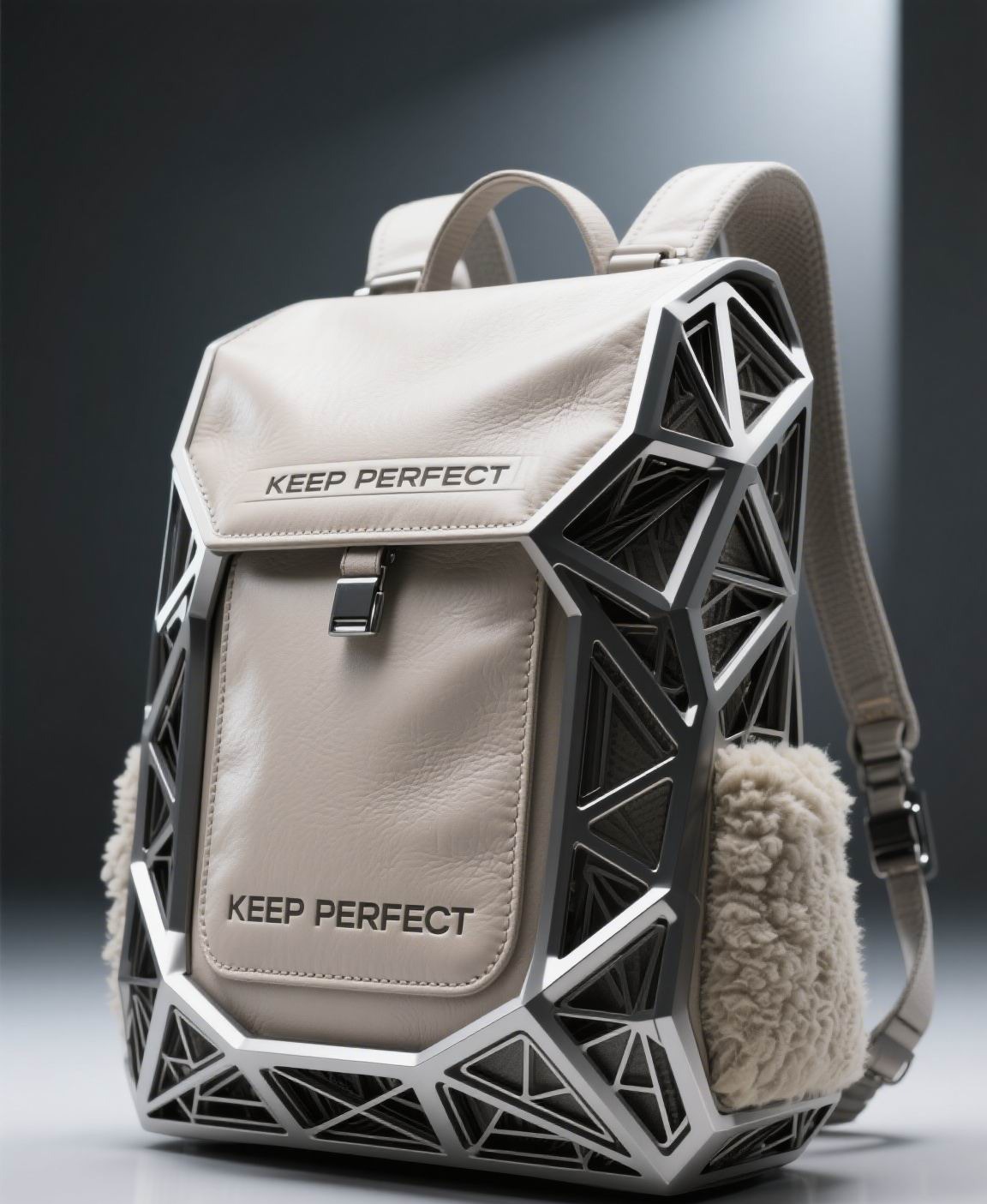
The best modular commuter backpack for 2026 protects a laptop through a crowded platform, opens one-handed at a security checkpoint, and still looks presentable in a client meeting — in that order. Carry comfort matters less than most reviews suggest over a forty-minute cycle, and capacity matters least of all. This buying guide sets out the criteria that separate a good urban chassis from a good-looking one: device bay geometry and the drop test that predicts real damage, access design for repeated daily use, security against opportunistic theft, the module set commuters actually buy, and the material and finish choices that survive urban abrasion. It also gives procurement the frame — MOQ 500, sampling in working days, AQL 2.5 inspection and FOB Xiamen terms. Every criterion here is written so that it can be verified before sampling rather than discovered after the first return, which is the only point at which a buying criterion is worth having.
What changed in the 2026 commuter brief
Three things moved in the last two years and all three change the specification. Devices got thinner and the screens got more repair-sensitive. Hybrid work made the daily load inconsistent — some days a laptop and a charger, some days gym kit and a lunch — which is precisely the problem modularity solves. And corporate buyers started specifying commuter packs as part of a uniform programme rather than as a perk, which brings branding, consistency and replacement-cycle requirements into the brief.
The device consequence is the most concrete. A bay designed around a 2020 laptop is often slightly too deep and slightly too loose for a 2026 machine, and a loose device in a suspended bay takes corner impacts that a snug one does not. The fix is a bay specified as a range with a clearance figure, not a nominal size.
The load inconsistency is the modular argument. A commuter who carries gym kit twice a week does not want to carry a 35 L pack five days a week, and the modular answer — a compact chassis plus a detachable kit module — is genuinely better than a single compromise volume. Where brands get this wrong is by offering modules nobody refits; a module that stays attached permanently is just weight.
The corporate consequence is documentation. A uniform buyer will ask for a specification, a colour reference, a replacement availability window and a branding sample before placing an order, and a supplier who cannot produce those loses the tender on process rather than on product.
Spec rule: Accept a commuter chassis only when the device bay, the harness and the attachment rows were engineered together, because adding any one of them after launch costs more than specifying all three before the first MOQ 500 order is cut.
Device carriage: bay geometry and the drop test that matters
Laptop protection is the single most returned-against feature in this category, and it is also the one most often specified badly. Three variables decide the outcome: clearance, suspension height, and corner construction.
Clearance is the gap between the device and the bay walls. Too tight and the device is hard to insert, and the user forces it; too loose and the device moves. A defined clearance range stated in the specification removes the guesswork. Suspension height is the distance between the bottom of the bay and the base of the pack — the single most important number for drop survival, because it is the crush distance available when the pack is set down hard.
Corner construction is where damage actually occurs. A device dropped onto a corner concentrates force in a small area, and the bay corner is the only defence. Reinforced corners with closed-cell foam, plus a bay seam that is not directly over the corner, is the construction that reduces claims.
Test it honestly. A drop test onto a defined surface from a defined height, with a representative mass in the device bay, repeated across corners and flat faces, is more informative than any foam-thickness claim. Record whether the device survives and whether the bay deformed permanently. Where a brand wants a stated protection claim, ISTA 3A gives a parcel-transit frame that a retail buyer will recognise.
Cable routing is the detail that separates a considered commuter pack from a generic one. A power bank carried loose in a pocket becomes a projectile in an abrupt stop, and a cable run that crosses the main opening gets caught every time the pack is closed. Specify a retained loop or sleeve for the power cell, a routed path that keeps cables clear of the closure line, and a port position that does not put strain on the connector when the pack is worn.
Carry comfort over a short, repeated duty cycle
Harness design for a commute is not harness design for a trail. The load is lighter, the duration is shorter and the surface is flat, which means the design priorities shift from load transfer to pressure distribution and heat.
Strap width and foam density do most of the work. Over a forty-minute carry at 6–8 kg, a strap that is too narrow produces a pressure line; a strap that is too soft bottoms out and the user feels the webbing edge. The specification should state foam type, density and thickness, and the strap should be tested on bodies across the intended torso range rather than on one fit model.
Back-panel ventilation is the second urban-specific issue. A commuter walking to a station in a shirt will notice a sweaty back within ten minutes, and the usual answer — raised foam channels — trades a small amount of load stability for airflow. That trade is acceptable on a commute and unacceptable on a trail, which is why the same chassis rarely serves both.
Stability at the shoulder matters more than padding thickness. A pack that shifts when the user turns to check a platform screen feels cheap regardless of how soft the straps are, and the correction is usually sternum-strap position and strap-anchor geometry rather than more foam.
Two practical checks settle most harness arguments before sampling. The first is a loaded walk of twenty minutes with the heaviest intended daily load, recording where the wearer reports pressure; the second is a don-and-doff timing test, because a commuter puts the pack on and takes it off several times a day and a harness that fights the user on the third attempt is a harness that will be complained about.
Selection rule: Size strap foam and venting for a repeated short carry rather than for an endurance trek, and check comfort with modules mounted during the 6-10 working days prototype round rather than empty-handed.
Security and access at the checkpoint and on the train
Urban carry has two access events that dominate design: the security or turnstile moment, and the on-the-train reach. Both are one-handed, both are time-pressured, and both are where a pack gets judged.
Checkpoint behaviour is predictable. The user needs to remove a laptop and sometimes a liquids pouch, then restore the pack, in under a minute, often while holding something else. A bay that opens flat and a closure that re-forms without fuss are worth more than any number of pockets. Where a programme targets air travel, a dedicated flat-opening device section is the single highest-value feature in the whole design.
Security against opportunistic theft is a different problem, and it is mostly about closure placement. A main-compartment zip that sits against the user's back is materially safer in a crowd than one on the outer face. Lockable sliders, hidden rear pockets and internal attachment points for keys all help, and none of them require a claim stronger than "designed to reduce opportunistic access" — which is also the only claim that will survive a retailer's legal review.
| Access event | Frequency per day | Layout response | Verification check |
|---|---|---|---|
| Security or turnstile device removal | One to two | Flat-opening dedicated bay | Timed removal and restore under 60 seconds |
| On-train reach for a phone or pass | Ten or more | External quick-access pocket, one hand | One-handed retrieval while worn |
| Bottle retrieval at a desk | Several | Stable side pocket with elasticated mouth | Bottle stays put when the pack is set down |
| Charger and cable access | Several | Shallow organiser with retained loops | Items visible without unpacking |
| Keys at the front door | Two | Internal clip at a fixed position | Retrievable without looking |
Note the verification column. Each of these can be checked in a fitting session in under an hour, and doing so before sampling prevents the most common commuter complaint: a pocket that exists but does not work.
Modularity that commuters actually use
The commuter module set is short and well established, and adding modules beyond it mostly adds cost. The modules with genuine repeat use are a device sleeve, a cable or tech organiser, a lunch or food module with a lined interior, and a compact kit module for gym or swim gear. A toiletry pouch sells well in travel and barely registers in commuting.
What makes a commuter module work is refit speed. A module that takes fifteen seconds to detach is used; one that takes a minute and requires the pack to come off is left attached. That is an argument for a quick-attach interface on the module the user refits most, and for a simple webbing or hook interface on modules that change weekly rather than daily.
Where a corporate buyer is involved, the module set becomes part of the uniform specification: a standard issue chassis plus an approved module list. That is commercially attractive because it raises repeat order value, and it works only if the interface is stable across the programme. Freeze the interface before the module catalogue is designed, not after.
| Module type | Refit frequency in service | Interface it justifies | Failure if over-engineered |
|---|---|---|---|
| Device sleeve | Daily, at the checkpoint | Quick-attach or dedicated bay | Cost without time saved |
| Tech organiser | Weekly | Hook-and-loop or simple webbing | Hardware weight for little gain |
| Food or lunch module | Daily | Lined drop-in compartment | Leakage if the liner is not welded |
| Gym or swim kit module | Two or three times weekly | Detachable with a wet liner | Odour retention without drainage |
| Toiletry pouch | Rarely | Simple pouch, no interface needed | Permanent attachment anyway |
The last row is the cautionary one. If a module is never detached, integrating it into the chassis reduces weight and unit cost, and the honest specification says so.
Compact carry formats that pair with a commuter chassis are grouped under modular everyday carry, where the same interface rules apply at smaller volume.
Verdict: Offer no more than two interface families on a commuter chassis, since each additional family splits the accessory range and puts MOQ 500 pressure onto parts customers replace rarely.
Material and finish choices for an urban duty cycle
Urban wear is gentler on the base and harder on appearance than trail wear. A commuter pack is rarely dragged over rock, but it is rubbed against coats, set on office floors, and judged in a meeting room — so scuff resistance, colour stability and cleanability outrank raw abrasion numbers.
A smooth-faced coated nylon or polyester in the 500D to 900D range is the mainstream answer, with a finish that resists marking. Screen-printed branding on a smooth surface stays crisp; on a textured weave it tends to break up. Where a corporate programme needs a logo on every unit, confirm the marking method against the actual fabric and test adhesion to AATCC 8 crocking plus a cleaning cycle under ISO 6330.
Darker colourways dominate corporate programmes for a practical reason: they hide scuffs between replacement cycles. Where a brand insists on a light colourway, the specification should include a higher-grade coating and an explicit cleaning instruction, because the alternative is a replacement claim at month six.
Water resistance on a commuter pack is about a sudden shower between the station and the office, not sustained rain. A moderate hydrostatic result under AATCC 127 with bound or taped main seams is sufficient, and spending on fully sealed construction on an urban chassis is cost the user will never notice.
Hardware finish is the appearance detail buyers regret most. A bright nickel finish looks sharp on a sample and shows wear within weeks on a daily carry; a matte or anodised finish hides it. Where a corporate programme wants the hardware to match a brand colour, confirm the finish against a physical reference and ask for abrasion resistance on the coating, because a coloured finish that wears through to base metal looks worse than a plain one that never did.
Urban finishes still answer to substance rules, so keep dyes and coatings inside OEKO-TEX Standard 100 parameters wherever the programme claims them, and record the certificate number against the fabric lot rather than against a style code.
Sustainability claims and the evidence behind them
Corporate buyers now ask about recycled content and substance compliance as a matter of course, and the questions are getting more specific. A claim of recycled polyester without a transaction certificate is a marketing statement; with a recognised chain-of-custody document it becomes a procurement asset.
The practical requirements are simple to state and easy to get wrong. Name the recycled fraction as a percentage by weight of the fabric, keep the chain-of-custody documentation that supports it, and make sure the marketing copy does not imply more than the certificate covers. A pack with a recycled shell and virgin hardware cannot be described as a recycled product without qualification.
Substance compliance is separate and non-negotiable. EU destinations require REACH documentation; California requires a Prop 65 assessment; CPSIA applies if the range is marketed toward younger users. OEKO-TEX Standard 100 is the textile evidence most retail programmes accept, and it should be held for the components as shipped rather than for the fabric family.
Durability is the most credible sustainability argument available to a bag brand, and it is the one with the fewest legal edges. A pack that lasts five years displaces four purchases, and that claim rests on abrasion results to ASTM D3884 or ISO 12947 and on a documented replacement-parts policy.
Takeaway: Publish recycled content as a percentage tied to a transaction certificate, keep durability claims inside the returned test results, and never let documentation hold up a reserved 35-50 days production window.
Replacement cycles and the total-cost argument
Corporate and uniform buyers do not buy a pack; they buy a population of packs over several years, and the economics look completely different from a retail purchase. Understanding that framing changes which features are worth paying for.
The first variable is the replacement cycle. A pack that lasts two years in daily service costs more over six years than a pack that lasts three, even if the second costs more per unit, once you add the administrative cost of issuing a replacement. The specification consequence is that abrasion resistance and hardware durability outweigh novelty features in this channel, and the test evidence for them — ASTM D3884 or ISO 12947 abrasion, ASTM D751 coating bond — is what wins the tender.
The second variable is spare-part availability. Buckles, sliders and zips fail before fabric does, and a programme that can replace a slider keeps a pack in service for another year. Ask whether spare hardware is available against the original order reference, and for how long. That question is rarely in a first brief and always in a second one.
The third variable is appearance retention between replacements. A uniform programme looks shabby when half the population is a year old and half is new, and the visible ageing of a dark colourway is mostly scuff and sheen loss rather than colour change. Specification levers include a scuff-resistant finish, a colour reference held on both sides, and a cleaning instruction that does not accelerate sheen loss.
Set against that, modularity has a specific value: it lets one chassis serve several job roles, which simplifies stock-holding and reduces the number of distinct SKUs a facilities team has to manage. That is a genuine saving, and it should be quantified in the tender rather than asserted — count the SKUs before and after, and attach the module cost.
Bottom line: Count the SKUs before and after modularity, attach the module price to each one, and take the total-cost decision across three seasons rather than across a single MOQ 500 order.
Procurement frame: specification, testing and terms
A commuter specification should close: device bay range with clearance, suspension specification and foam density, closure placement and hardware finish, module interface frozen before catalogue design, marking method with a colour reference, and packaging. Add a replacement-availability window if the programme is corporate, because a uniform buyer will ask.
Testing follows the duty cycle. Screen abrasion under ISO 12947 or ASTM D3884; check laminate and coating bond to ASTM D751; confirm water resistance to AATCC 127; run crocking to AATCC 8 and washing to ISO 6330. Where a protection claim is made, add a drop sequence and a parcel-transit frame under ISTA 3A. Ask for nickel-release results on metal parts and, for a coastal duty cycle, corrosion screening to ASTM B117.
Commercially, expect a 500-unit minimum per colourway. Sampling takes 6–10 working days for a first unit, or 12–15 working days when a moulded panel or custom hardware finish is involved; allow 35–50 days for assembly once the reference and inputs are locked. Freight: 25–35 days sea, 5–8 days air, 3–5 days express. Terms are T/T 30/70, quoted FOB Xiamen. Third-party inspection follows ISO 2859-1 at an AQL 2.5 major level, with a separate critical tier.
For programmes specifying a shared chassis across several job roles, the range logic on modular work backpack platforms is the closest reference, because the same interface discipline applies whether the user is commuting or on site.
Packaging deserves a line in the same tender: parcel-ready cartons validated against ISTA 3A sequences, with drop height and carton orientation written into the packing specification rather than left to whoever closes the box.
Frequently asked questions
What matters most when specifying a commuter backpack?
Device protection, then checkpoint access, then appearance. Carry comfort matters less over a forty-minute cycle than reviews suggest, and raw capacity matters least of all. Specify in that order and most trade-offs resolve themselves. Write the bay range into the specification with the clearance stated.
How should a laptop bay be specified?
As a range with a clearance figure rather than a nominal size, because a 2026 machine in a 2020 bay sits loose and takes corner impacts. Set the suspension height from the bay floor to the pack base and reinforce the bay corners with closed-cell foam.
Which drop test predicts real device damage?
A defined-height drop onto a defined surface with a representative mass in the bay, repeated across corners and flat faces. Record device survival and permanent bay deformation; ISTA 3A gives a recognised parcel frame for the claim. Use ISTA 3A wherever a parcel-transit claim is published.
Which modules do commuters actually refit?
A device sleeve, a tech organiser, a lined food module and a gym or kit module. A toiletry pouch is rarely detached on a commute, so integrating it saves weight and unit cost, and refit speed is what decides whether any module is used at all.
Where should the main closure sit for security?
Against the wearer's back. Closure placement does more to reduce opportunistic access in a crowd than lockable hardware does, and the claim language should stay modest — describe the design intent, never a theft-proof promise. Keep the claim to design intent rather than a promise.
What fabric suits an urban duty cycle?
A smooth-faced coated nylon or polyester in the 500D–900D range with a scuff-resistant finish. Appearance retention and cleanability outrank raw abrasion numbers here, and dark colourways hide scuffs between replacement cycles. Dark colourways hide scuffs between replacement cycles. Cleanability and appearance retention both outrank raw abrasion numbers here.
How much water resistance does a commuter pack need?
Enough for a sudden shower between the station and the office: a moderate AATCC 127 result with bound or taped main seams. Fully sealed construction costs money the urban user will never notice, and the saving is better spent on hardware finish.
What is the minimum order and sampling window?
A 500-unit minimum per colourway. Sampling takes 6–10 working days, stretching to 12–15 working days when a moulded panel or custom hardware finish is specified, and branded trim is the input that most often arrives late. Spend the saving on hardware finish instead.
How long is production and delivery?
Assembly needs 35–50 days once the reference and inputs are confirmed. Then 25–35 days by ocean, 5–8 days by air, or 3–5 days by express parcel, plus a week for documents and booking. Branded trim is the input that most often arrives late.
What inspection level should be specified?
ISO 2859-1 at an AQL 2.5 major level with a separate critical tier. Write the defect definitions into the plan so the inspector works from evidence, and include device-bay dimensions as a measured check. Add a week for document preparation and booking.
How should recycled-content claims be documented?
State the recycled fraction as a percentage of fabric weight and hold the chain-of-custody document that supports it. Do not let marketing copy imply more than the certificate covers, and treat durability as the strongest claim available. Include device-bay dimensions as a measured check.
Which substance regulations apply to a commuter range?
EU destinations require REACH documentation, California requires a Prop 65 assessment, and CPSIA applies where the range is marketed toward younger users. OEKO-TEX Standard 100 is the usual textile evidence, with EN 1811 for metal parts. Add EN 1811 results for metal parts.