Home › Field notes › Clamshell vs Top Loader Modular Backpack: Choosing the Opening
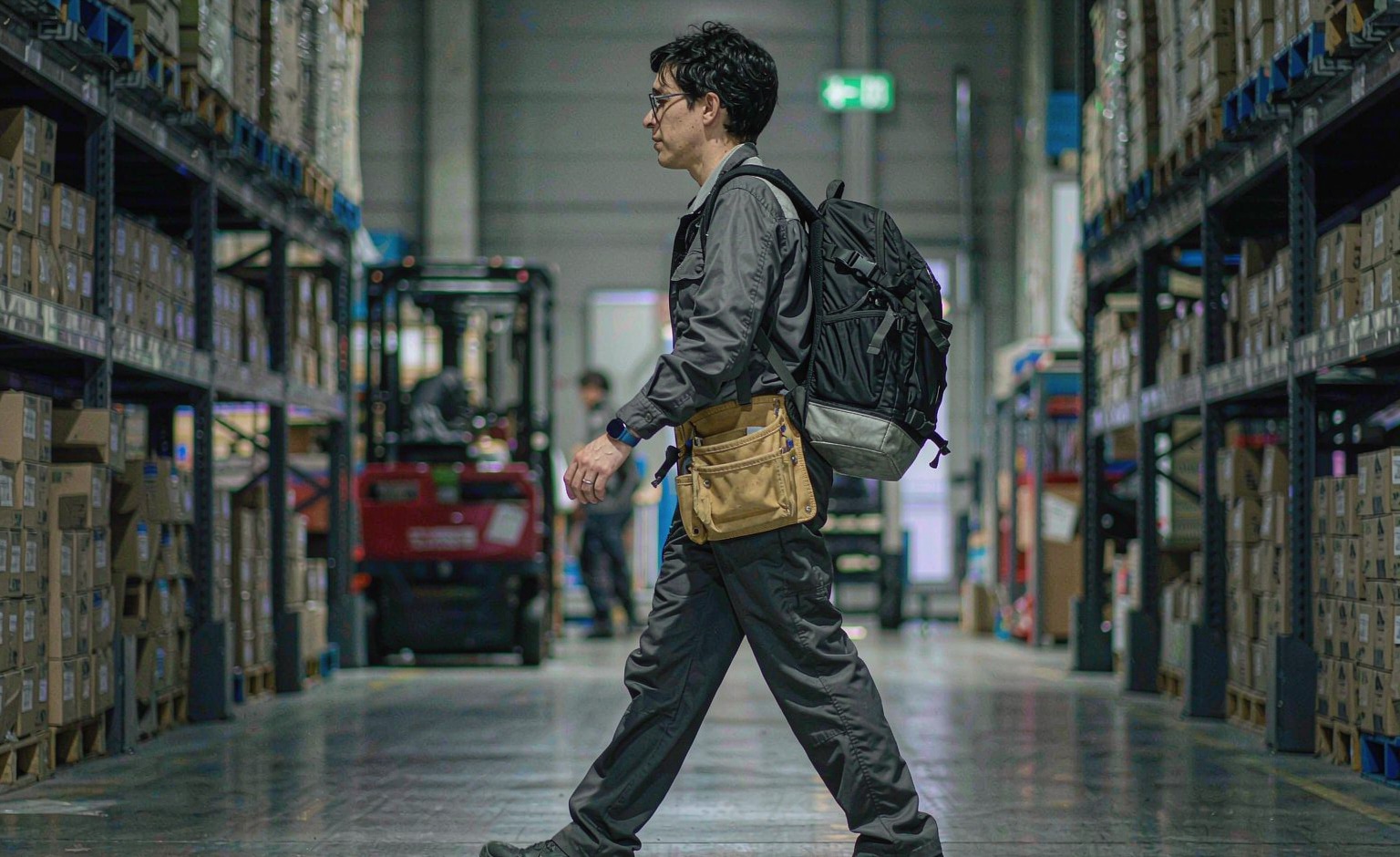
A clamshell opening suits users who retrieve small items from deep in the pack several times an hour; a top loader suits users who load once, carry, and unpack at a destination, and nothing about the two formats is interchangeable in structural terms. The clamshell book-open shell typically doubles usable zip length - around 1.8-2.4 m against 0.4-0.6 m - which is also roughly 2.5 times the seam length that has to be sealed, and it needs about 12-20 extra assembly minutes per unit. Water behaviour is decided by those seams rather than by the zip tape, so specified checks should use AATCC 127 for fabric resistance and IEC 60529 thinking for ingress paths. Release follows AQL 2.5, samples return in 6-10 working days and bulk occupies 35-50 days. The discussion covers civilian carry - work tools, instruments, camera kit, clothing layers - and sets aside any weapon, ballistic or waterproof-certification claim.
What each opening does to the access path and retrieval time
An opening format is not a styling decision; it dictates the physical sequence every user performs hundreds of times. Put the pack down and fully open it, reach sideways into the shell, or stand it upright and reach downward. Those are different motions with different time costs, different weather exposure and different requirements from the ground or bench beneath the pack.
Timed retrieval trials expose the gap quickly. Reaching a torch, a meter or a notebook stored at mid-depth takes roughly 3-6 seconds through a clamshell opening and 12-25 seconds through a vertical entry when the wanted item sits below two unopened layers. Multiply that across thirty retrievals a day and the difference consumes real working minutes.
Hand requirement matters as much as time. A book-open shell can be opened and searched one-handed while the other hand steadies a ladder or a rail, provided the zip pull is positioned to run down rather than across. A drawcord entry normally needs both hands: one to hold the collar open and one to search. Users in field roles notice this within the first shift.
Ground conditions complete the picture. Clamshell access imagines a clean surface; a top loader can be unpacked standing in shallow water, mud or snow without laying anything down. Programmes issued to crews working from vehicles often prefer exactly that behaviour, even at the cost of slower retrieval. Buyers comparing travel-oriented chassis layouts should test both motions with real contents rather than with an empty shell.
Spec rule: Time three representative retrievals from a fully loaded pack and require that the chosen opening completes at least two of them one-handed, before any decision about trim or hardware is made.
Module layout latitude: a flat grid versus a vertical stack
Opening geometry decides whether internal organisation can be two-dimensional. A shell that opens flat permits modules arranged side by side, each reachable without disturbing neighbours, which is the whole rationale behind internal velcro-backed organisers arranged like a page. A vertical entry forces modules to be stacked, so the middle unit can only be reached by lifting everything above it.
The consequence for interface planning is concrete. A flat-opening panel can carry internal rows across its whole width, perhaps 240-320 mm of usable row space, letting three or four slim modules sit in one layer. A vertical body offers the same total row area but distributed around a cylinder, so only the top-facing arc is reachable and effective row space drops to roughly 100-140 mm at any one moment.
External mounting behaves differently again. Top loader bodies tend to have continuous, uninterrupted side and lid faces, which suit external pouch fields; clamshell bodies often sacrifice some face continuity to release tape and seam allowances, leaving a narrower unbroken run. Where a programme depends on external row fields, this hidden subtraction should be checked on the pattern rather than on the sample photograph.
Content shape interacts with both. Flat rectangular modules - laptop sleeves, cable organisers, document wallets - suit a book-open shell ideally. Soft compressible items - clothing layers, sleeping bags, food - suit vertical loading and tolerate being buried. Mixing the two in one body is where most real designs compromise.
Judgement: Choose a clamshell format when the module set is dominated by flat rigid items needing independent reach, and a top loader when the contents are compressible, loaded once and unpacked together at a destination.
Structural complexity that each shell type imposes
A vertical cylinder is inherently strong: internal pressure from contents resolves into hoop stress that fabric handles well. Cut that cylinder with a perimeter closure and the structure loses that advantage, relying instead on seam engineering, tape selection and whatever frame sits behind the shell. The clamshell therefore demands more from every other component.
Three areas absorb the difference. First, seam count rises: a clamshell adds a long continuous run plus junctions at both ends, each a place where stitch elongation, tape peel or seam slippage can start. Second, panel stability suffers because the front face no longer participates in carrying load, so a framesheet or stay set becomes more valuable than it would be on an otherwise comparable top loader. Third, corner geometry gets harder, since the shell has to fold flat without buckling at the base.
Assembly minutes follow predictably. A typical soft-goods top loader body closes in about 42-55 minutes of line time; a comparable clamshell with taped and bound seams runs 55-75 minutes, and a hard-travel hybrid with a stiffened perimeter can exceed 85 minutes. Those minutes are real money at MOQ 500 and explain much of the unit-price gap between formats.
Frame requirements move with the same logic. A top loader can tolerate a removable moulded sheet; a clamshell carrying dense modules usually needs that sheet plus edge stiffening, otherwise the front face bows outward under load and the zip tracks lose alignment, which is how zippers begin failing before they appear worn.
Takeaway: Budget roughly 12-20 extra assembly minutes and a stiffer panel solution for every clamshell conversion, and re-check zip track alignment under full load rather than only when the pack is empty.
Zip length, seam count and where a water path actually begins
Water does not usually enter through zip tape; it enters through the seams sewn to either side of it, through corner junctions, and through needle holes left by the stitching that holds those seams. Understanding that changes what a specification should demand, because upgrading the zip while leaving the seam construction unchanged accomplishes very little.
Length arithmetic makes the point. A top loader with a collar closure might present 0.4-0.6 m of closure and perhaps 1.2 m of associated seaming. A clamshell can present 1.8-2.4 m of closure plus 3.0-4.5 m of adjacent seaming. Triple seam length means roughly triple probability of an ingress point, even when every metre is built identically.
Fabric and coating evidence should come from AATCC 127 hydrostatic testing, quoted with the washing history described by ISO 6330, because a resistance figure measured before any flexing says little about a pack two months into service. Where an ingress rating is discussed at all, frame it in the language of IEC 60529 rather than inventing a certification category.
Storm flap geometry then does the heavy lifting. A well-designed cover sewn over a long run sheds most rainfall before it reaches the tape; a decorative flap that lifts at walking speed does nothing. The test is simple: run the flap under a shower head at 20-30 litres per minute for five minutes with the pack loaded, and look inside.
Bottom line: Specify seam construction, tapping and flap coverage rather than a zip brand, then verify fabric resistance to AATCC 127 after washing to ISO 6330 and confirm the finished unit under a running shower rather than a spray bottle.
Loaded shape retention and the empty-pack problem
Both formats distort; they distort differently. A top loader under load tends to barrel, widening through the middle and rolling slightly, which is usually harmless because nothing depends on precise panel alignment. A clamshell under the same load tends to bow outward at the front face and drop its base, pulling the closure geometry out of plane.
Out-of-plane behaviour is the enemy of long zippers. Once the two tracks no longer lie on the same arc, the slider works against misalignment, teeth wear unevenly and users report difficulty long before any visual damage appears. Preventing it costs far less than fixing it: seam binding along the closure path, a base stiffener, and a framesheet that keeps the back panel true.
Empty behaviour splits the other way. A top loader with nothing inside often stands acceptably because the cylinder retains some shape; an unstiffened clamshell slumps into a soft rectangle that looks poor on a retail shelf and photographs worse. If the product will be displayed unfilled, that matters commercially.
Cyclic loading should be tested rather than assumed. Load to the rated ceiling, walk the sampled unit for an agreed distance, then unload and repeat twenty times, measuring base distortion after each tenth cycle. Units that recover fully pass; units accumulating a permanent set need panel work.
Verdict: Add seam binding, a base stiffener and a true back panel to any clamshell before chasing a better zipper, and accept twenty load cycles with full recovery as the pass condition for shape stability.
Format comparison across ten buying criteria
Set side by side, the two formats rarely tie. The table below compares them alongside a practical middle route - a shortened U-panel opening, which opens three sides with a shorter closure than a full clamshell.
| Criterion | Full book-open shell | Vertical collar entry | Shortened U-panel |
|---|---|---|---|
| Typical closure length | 1.8-2.4 m | 0.4-0.6 m | 1.0-1.4 m |
| Time to reach a buried item | 3-6 seconds | 12-25 seconds | 6-12 seconds |
| One-handed retrieval | Practical with correct pull direction | Difficult | Practical for upper half |
| Usable row width for flat modules | 240-320 mm | 100-140 mm | 180-240 mm |
| Total seam length needing seal | 3.0-4.5 m | 1.0-1.6 m | 2.0-3.0 m |
| Inherent shell rigidity | Low; needs added stiffening | High; hoop stress helps | Moderate |
| Line minutes per unit | 55-75 minutes | 42-55 minutes | 50-64 minutes |
| Standing appearance when empty | Slumps without a base stiffener | Holds shape reasonably | Holds with light stiffening |
| Behaviour unpacked in wet ground | Best laid on a clean surface | Can stay upright | Needs partial support |
| Best-fit use profile | Frequent retrieval of many items | Load once, unpack at destination | Mixed work and travel |
Two rows deserve a second read. Line minutes and sealable seam length are the rows that convert into money, while retrieval time and usable row width are the rows that convert into user satisfaction. Most range decisions are actually arguments about which of those two groups matters more to the specific audience.
Where budgets allow, the U-panel is worth sampling alongside the favourite, and it also converts well into convertible carry formats using the same shell pattern. It regularly lands within 10-15 percent of the favourite's performance both ways, which is often enough to simplify a range down to one chassis and one tooling set.
Inspection points, packing claims and transit behaviour per format
Inspection should differ by format, because each generates its own defect population. Applying one generic checklist hides exactly the failures each opening produces. The plan below assigns specific observations and measurements to each design and couples them to the shipment decision.
| Opening format | Defect population to look for | Measurement | Decision rule | Record retained |
|---|---|---|---|---|
| Book-open | Track misalignment, base drop | Feeler gauge between the two tracks | Reject above 2 mm gap when empty | Gap map across the closure |
| Book-open | Corner junction leakage | Shower at 20-30 litres per minute | No moisture on internal tissue | Timed photos of internal tissue |
| Collar entry | Drawcord creep under load | Marked collar circumference after load | Recovery within 5 mm | Before and after circumference log |
| Collar entry | Collar seam run-out | Visual under 10x magnification | No skipped stitch within 30 mm | Magnified corner images |
| U-panel | Asymmetric face bowing | Depth from a straight edge | Bow under 6 mm loaded | Depth readings at five points |
| All formats | Zip slider fatigue | 500 open and close cycles | Smooth travel at final cycle | Cycle count and operator name |
| All formats | Carton creasing of panels | Transit check to ISTA 3A | No permanent crease after conditioning | Transit report on packed carton |
Packing counts tie back into all of this. A book-open shell that refuses to fold packs thicker than its volume suggests, and carton planning is done against roughly 28 CBM usable in a 20GP and 68 CBM in a 40HQ. Asking for the count on both candidates before artwork is commissioned avoids discovering a freight penalty at booking.
Material evidence rounds out the file. Fabrics carry hydrostatic results to AATCC 127, colour transfer to AATCC 8 where light panels meet dark trim, and every shipment is audited at AQL 2.5 following ISO 2859-1.
Cost drivers, calendar and programme mechanics
Opening choice shows up in four places in a quotation: cutting and sealing labour, the list of trims, tooling where stiffened components are involved, and the packing count. Only the second is obvious from the line item sheet, which is why two quotations for apparently similar packs can differ far more than the component costs explain.
Tooling matters most for hybrid builds. A moulded perimeter stiffener or a formed base tray generally requires USD 300-2,500 of tooling or screens; staying with soft construction and a taped seam removes that entirely. Sample charges run USD 50-150, refundable against the confirmed order.
The calendar holds a fixed shape regardless of format. First samples return across 6-10 working days for soft goods and across 12-15 days once a moulded part joins the bill; bulk then takes 35-50 days from sample approval and material confirmation. Settlement normally splits T/T 30/70, and indicative quotations are stated FOB Xiamen against MOQ 500 per reference.
Vetted partner facilities handle this work across a 4,950 m² floor verified by SGS, where 137 people operate 149 machines laid out along 7 lines and installed output is planned at 200,000 units per month. Experience inside the operation dates from 2004, with the entity itself registered in 2014. Freight then runs 25-35 days by sea, 5-8 days by air and 3-5 days by courier.
Which opening suits which programme
Return to the retrieval profile. Programme users who touch their contents many times an hour - technicians, camera operators, field clinicians, survey crews - benefit from a book-open shell even though it costs more and weighs slightly more. Programme users who pack once in the morning and unpack once at a bench do not need it and are better served by the simpler, more forgiving entry.
Range strategy then refines the answer. A catalogue already carrying several vertical formats gains differentiation from one book-open model, while a catalogue of flat-opening packs may need a single robust vertical option for wet ground and rough handling. Ask what the range lacks rather than which format is intrinsically superior.
Finally, publish the behaviour. Retail copy describing reach depth, whether opening can be done one-handed and whether the shell stands empty does more for return rates than any photograph. Teams working from a documented development route can put those three claims into the technical file and hold suppliers to them.
Selection rule: Decide the opening from measured retrieval time, then confirm that seam length, line minutes, tooling spend and packing count still fit the target margin before the format is committed to Purchase orders.
Frequently asked questions
Which opening gives faster access on a modular backpack?
A clamshell opening, typically 3-6 seconds to reach a buried item against 12-25 seconds through a vertical collar. That gap compounds across a working day, so any programme where users retrieve items more than about ten times daily justifies the extra seam length and line minutes.
Is a clamshell backpack harder to waterproof than a top loader?
Practically yes, because it presents roughly three times the seam length - 3.0-4.5 m against 1.0-1.6 m. Verify fabric to AATCC 127 after washing to ISO 6330, add a working storm flap, and test under a shower at 20-30 litres per minute rather than relying on the zip tape alone.
How much extra labour does a clamshell opening cost?
Expect roughly 12-20 additional line minutes: a vertical body typically closes in 42-55 minutes against 55-75 for a book-open shell. At MOQ 500 that difference is visible in the unit price, and it is largely driven by seam binding and closure insertion rather than by materials.
Can a top loader carry internal modular organisers?
Yes, but only as a stack, so anything below the top layer requires lifting what sits above it. Effective reachable row width at any moment is around 100-140 mm compared with 240-320 mm on a flat-opening panel, which is why flat rigid modules suit book-open shells better.
Does a clamshell shell need a frame?
Almost always. Cutting the cylinder removes hoop-stress rigidity, so a moulded sheet plus base stiffening keeps the closure tracks aligned. Without it the face bows outward under load and the closure begins mis-tracking long before the slider shows visible wear.
What closure length should I expect on each format?
Allow 1.8-2.4 m for a full book-open shell, 0.4-0.6 m for a collar entry and roughly 1.0-1.4 m for a shortened U-panel. Closure length drives both cost and seam length, so put these figures on the drawing rather than discovering them at quotation stage.
How should seam sealing be specified on a book-open pack?
Name the seam construction, the binding method and the flap coverage rather than naming a zip brand. Then require evidence: fabric results to AATCC 127, transfer to AATCC 8 where light panels meet dark trim, and every shipment audited at AQL 2.5 under ISO 2859-1.
- Construction drawing with called-out seams
- Shower test images
- Release audit record
How long does sampling take for a new opening format?
Soft-goods bodies return in 6-10 working days, extending to 12-15 where a moulded base or perimeter stiffener is included. Sample charges are USD 50-150, refunded against the confirmed order, and tooling or screens sit at USD 300-2,500 where a formed part is needed.
Why do zippers fail early on some clamshell packs?
Misalignment rather than wear is usually the cause. When panel bowing pulls the two tracks out of plane, the slider works against geometry and wears teeth unevenly. Check gap with a feeler gauge when empty, rejecting anything above a 2 mm spread, and add stiffening before upgrading hardware.
What is the minimum order for a bespoke opening design?
MOQ is 500 units per reference, quoted FOB Xiamen. Where the design needs two colourways or a second size, treat each as its own reference, because each carries the 500-unit floor and each needs its own sampling round at USD 50-150.
How do I test one-handed opening before committing?
Load the sample fully, then perform three representative retrievals while the other hand stays on a fixed rail. Require at least two of the three to be completed one-handed within six seconds. Record the result against the style code so repeat orders can be held to it.
Does an empty pack standing upright matter commercially?
Yes. An unstiffened book-open shell slumps visibly on a shelf and photographs poorly, whereas a vertical body holds shape with nothing inside. Add a base stiffener for retail-facing styles, confirm the empty stance during first-article review, and ask the photographer to shoot the unit unfilled before artwork choices are finalised.
How much does the opening affect freight cost?
Indirectly, through packing count. A shell that resists folding fills cartons inefficiently, and planning runs against roughly 28 CBM in a 20GP and 68 CBM in a 40HQ. Request counts for both candidates before artwork so sea freight at 25-35 days is costed on reality.
Which defects should each opening attract its own inspection for?
Book-open needs track-gap and corner-leak checks; collar entry needs drawcord creep and collar seam magnification; U-panel needs face-bowing depth measurement. Add a 500-cycle slider test for all three, then release at AQL 2.5 with Critical 0, Major 2.5 and Minor 4.0.