Home › Field notes › Cold Crack Testing for Coated Fabric: Low-Temperature Bend Judgement
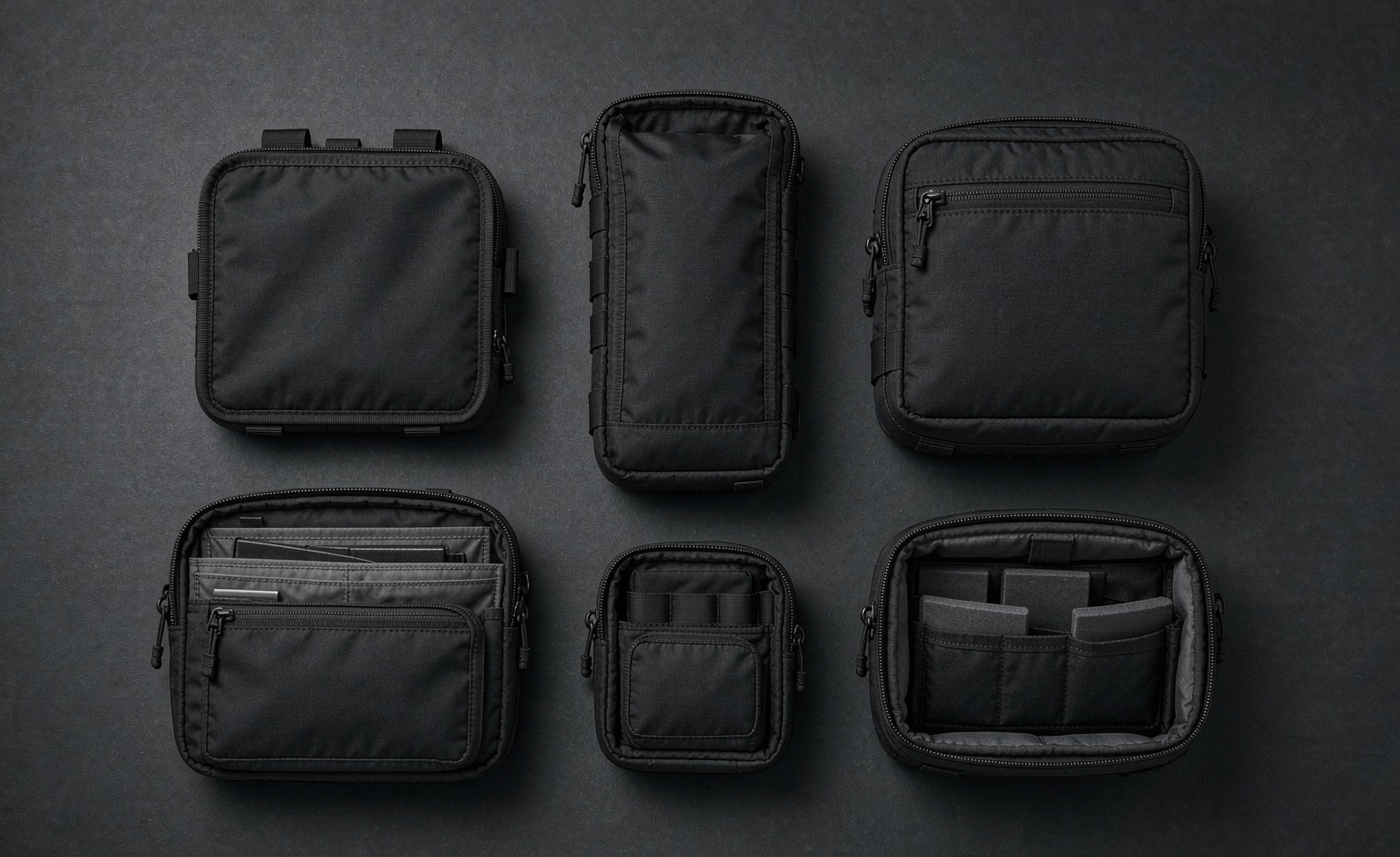
Cold crack testing for coated fabric bends a conditioned specimen around a mandrel at a stated low temperature and then examines the film for fracture, and the result tells a buyer whether a shell will survive folding, flexing and being sat on in winter rather than how warm it feels. Three variables decide the outcome more than the headline temperature does: mandrel diameter, dwell time at temperature, and how the specimen was conditioned before it entered the chamber. Plasticised polyvinyl chloride, polyurethane and thermoplastic polyurethane films part company sharply below freezing, so the clause must name the film. Our production team runs the check in four gates: 500-piece minimum, prototype panels at 6–10 working days, bulk in 35–50 days, and attribute sampling at AQL 2.5. Scope covers civilian cold-weather carry — winter commuting, cold-chain work and alpine hiking — and nothing here covers weapon carriage, any ballistic protection or defence certification.
What a Cold Crack Test Asks of a Coated Fabric
A low-temperature bend imposes a strain on the outer face of a fold and asks whether the film can take it. The specimen is conditioned at a target temperature long enough for the whole thickness to reach equilibrium, then wrapped around a bar of stated diameter, usually with the coating on the outside of the bend, held briefly, and examined. Cracks in the coating are the failure, and they are usually looked for at modest magnification because a hairline that is invisible on a bench becomes a water path and then a delamination after a season. The coated-cloth bend practice ASTM D2136 is the reference most laboratories cite for this geometry, and the general coated-fabric test set around ASTM D751 covers the strength and adhesion reads that go with it.
The important thing to understand is what the bend does not do. It does not flex the specimen repeatedly, it does not load it, it does not abrade it, and it does not combine cold with the flat pressing a pack receives when someone sits on it in a frozen vehicle. A single bend around a large mandrel is a screening strain, and it is a good one, but a programme that sells into genuine winter needs to know how the film behaves after hundreds of small flexes rather than after one.
Orientation is the variable most often left out of a request. Woven base cloth is not isotropic: bending across the warp and bending across the fill put different strain on the same film because the yarn crimp differs, and a laminate that passes one direction can fail the other. A clause that says "tested to the low-temperature bend route" without naming orientation has left the laboratory to decide, and the laboratory will pick the easier one.
Selection rule: State temperature, mandrel diameter, dwell time, bend direction, specimen orientation and the magnification used for examination, because a clause missing any one of those lets the laboratory choose the value.
Mandrel Diameter, Dwell Time and Conditioning: Three Variables That Move the Result
Mandrel diameter sets the strain. Halving the diameter roughly doubles the strain on the outer face for a given thickness, so a film that survives a large bar can crack on a small one at exactly the same temperature, and the two results are not in conflict. Deciding the diameter is therefore a design question: a roll-top closure folds tightly, a pack body creases loosely, and a webbing attachment point puts a sharp local bend into both film and cloth. Choose the diameter from the tightest fold the product will actually make.
Dwell time decides whether the result is real. A specimen pulled from a chamber before its core has reached temperature will read better than it should, and the error is not small: a laminate with a thick film needs minutes rather than seconds for the interior to equilibrate. Laboratories usually work to a stated conditioning period and to standard atmospheres for conditioning and testing published by ISO 2231, and the report should say what period was used and confirm that the specimen reached target before bending.
Prior conditioning decides what the specimen is. A shell that has been through heat ageing, hydrolysis or a solvent wipe is not the same material it was on the day it was made, and plasticiser content in particular changes both with heat and with time. Where a programme cares about winter behaviour after a summer in service, ask for the bend to be run on an aged specimen as well as on a fresh one and report both.
Verdict: Pick the mandrel from the tightest fold the product makes, insist the report confirms thermal equilibrium before bending, and run a second set on aged specimens so winter performance after summer storage is visible.
Coating Families Compared at Low Temperature
Below freezing the film chemistries separate clearly, and the separation is the reason a single temperature on a specification cannot cover a product family. Plasticised polyvinyl chloride is soft at room temperature because the plasticiser keeps the polymer chains mobile, and that mobility falls away as temperature drops, so the film stiffens and then fractures at a fold. Polyurethane coatings behave differently: they start tougher and stay flexible further down the scale, but ester-based grades carry a hydrolysis risk in warm humid storage that has nothing to do with cold. Thermoplastic polyurethane films generally hold flexibility at low temperature and resist hydrolysis, at a higher material cost.
| Property at issue | Plasticised PVC coating | Polyurethane coating | Thermoplastic polyurethane film |
|---|---|---|---|
| Flexibility retained when cold | Stiffens earliest of the three | Holds flexibility well below freezing | Holds flexibility furthest down the scale |
| Dominant cold failure | Brittle fracture at a tight fold | Cracking only where the film is thick | Crease whitening before any fracture |
| Plasticiser behaviour over time | Migrates to the surface and is lost | Little plasticiser dependence | Little plasticiser dependence |
| Warm humid storage risk | Low | Hydrolysis in ester-based grades | Low |
| Weight for equal protection | Heaviest of the three | Moderate | Lightest for equal thickness |
| Abrasion at a fold | Cracks propagate from a scuff | Resists propagation | Resists propagation best |
| Evidence worth keeping | Plasticiser content and film thickness | Grade, thickness and hydrolysis history | Film grade, thickness and lamination record |
Cost is not the only trade. A heavier PVC film can be made to pass a low-temperature bend by adding plasticiser, and it will pass on the day of test while losing that plasticiser over the following year, which is why the plasticiser content belongs on the specification next to the temperature.
Bottom line: Select the film from the service temperature and the storage climate together — thermoplastic polyurethane where cold and humid storage both apply, polyurethane for general winter programmes, and plasticised PVC only where cost dominates and folds stay gentle.
Why the Film Cracks While the Woven Base Survives
The base cloth is almost never the problem. Polyester and polyamide yarns stay ductile across the temperatures a pack will meet, and a woven structure has crimp that lets yarns rotate and absorb a fold. The film on top has no such escape route: it is a continuous layer bonded to a substrate that will not stretch with it, so when the temperature drops below the point at which the polymer can relax, the strain from a fold goes into cracking the film rather than into deforming it.
Four factors set where that point sits. Polymer chemistry comes first and is what the comparison above describes. Plasticiser content comes second for polyvinyl chloride and is effectively a dial the coater can turn, with the caveat that the dial moves downward over time. Film thickness comes third, because a thicker film puts more strain on its own outer face at the same mandrel. Adhesion to the base comes fourth and is the one buyers forget: a film that is well bonded is constrained by the cloth, while a poorly bonded film can lift locally and concentrate strain at the edge of the lifted area.
Age moves all four. Heat drives plasticiser out, humidity hydrolyses ester-based polyurethane, ultraviolet embrittles the surface, and a cleaning solvent extracts the same plasticiser that a wipe would. A shell that passed at the start of a programme can fail the identical bend 18 months later, which is why the clause belongs with a storage and care instruction rather than standing alone.
Takeaway: Treat low-temperature cracking as a property of the film system — chemistry, plasticiser level, thickness and adhesion — and never assume the woven base cloth will carry a coating through a winter it cannot itself survive.
Cold, Flex and Load: Sequencing a Realistic Low-Temperature Check
One bend at one temperature is a screen. A realistic sequence adds three things. Repetition first: a roll-top that is opened and closed twice a day accumulates hundreds of folds in a season, and a film that survives one bend at temperature can crack after a few hundred shallow ones, so a repeated-flex stage at the target temperature belongs in the sequence. Load second: a pack set down hard on frozen ground, or sat on, puts a compressive crease into the film that a mandrel does not reproduce, and a weighted crease step is cheap to add.
Abrasion third, and it is the one that finds failures in service. Grit frozen into a fold acts like a cutting edge, and a scuffed cold film propagates a crack far faster than an unmarked one. A short rub stage before or after the cold soak, depending on which the programme expects first, turns a laboratory sequence into something that resembles a worksite in February.
| Sequence stage | Demand added beyond the previous stage | Failure the stage detects |
|---|---|---|
| Conditioned bend alone | Nothing beyond a single imposed strain | Brittle films that fracture at any fold |
| Repeated flex at temperature | Accumulated cycles instead of one fold | Films that survive once but crack after hundreds |
| Weighted crease | Compressive load during folding | Films that fail under body weight on a frozen pack |
| Abrasion before or after cold | Grit damage combined with low temperature | Cracks that propagate from a scuffed fold |
| Closing function read | Actual operation of the product | Stiffened closures and seized fittings |
The sequence should end with a function read rather than with a photograph. Close the opening, work the zipper, mount and unmount a pouch from the attachment grid, and record whether anything has stiffened, cracked or seized. That last step catches the failure that matters commercially, which is not a hairline in a film but a pack that will not open when it is cold.
Judgement: Build the sequence as cold soak, repeated flex at temperature, weighted crease, light abrasion and a closing function read, since a single bend predicts none of the four ways a cold pack actually fails.
Cold Chain, Winter Roads and Altitude: Scenarios Worth Writing Down
Different routes produce different cold, and the differences are not only about the lowest number. A cold-chain warehouse is cold and dry with rapid transfers in and out, so the film cycles across its stiffening point many times a shift. A winter road is cold, wet and gritty, and adds abrasion and road salt to the fold. High altitude adds intense ultraviolet to low temperature, and ultraviolet has already embrittled the film before the cold asks it to bend.
| Service scenario | Exposure pattern | First symptom in the field | Evidence to request from the laboratory |
|---|---|---|---|
| Cold-chain warehouse work | Repeated transfers across the stiffening point, dry air | Crease whitening at roll-top folds | Repeated flex at temperature, 200 cycles or more |
| Winter road maintenance | Cold with grit, brine and set-down shock | Cracks radiating from a scuffed fold | Abrasion followed by cold bend |
| Alpine and high-altitude trekking | Low temperature plus intense ultraviolet | Surface chalking then brittle fracture | Aged specimen bent at temperature |
| Winter commuting by bicycle | Short hard flexes, wind chill, occasional rain | Stiffening at zipper and flap folds | Function read after cold soak |
| Air cargo hold transit | Cold and dry, then rapid warm humid arrival | Condensation under the film, then lift | Cycle between cold and humid conditioning |
| Frozen vehicle overnight | Static cold, then hard crease under load | Crack at the tightest pack crease | Weighted crease at the tightest fold radius |
Writing the scenario down at specification stage costs ten minutes and removes the argument later, because the clause then says which of these rows the product was engineered for and which it was not.
Spec rule: Name the scenario row the pack is engineered for, then require the matching sequence from that row — repeated flex for cold chain, abrasion plus bend for winter roads, aged specimens for altitude.
Report Retention, Traceability and Programme Gates
On the production side, low-temperature work runs on a 4,950 m² SGS-verified floor. The site is staffed by 137 people and carries 7 production lines with 149 machines; rated capacity is 200,000 units per month. Our founder entered bag production in 2004 and the business was registered in 2014. The sequence for a cold-region programme is: film selection and laboratory dip approval, prototype panels delivered in 6–10 working days, rising to 12–15 when a fresh laminate or new tooling enters the build, low-temperature reads on the prototype, then bulk in 35–50 days, inspected by attribute sampling to ISO 2859-1 at an AQL of 2.5, where Critical is nil, Major is 2.5 and Minor is 4.0.
A retainable cold-crack report records eight items: film chemistry and grade, film thickness, base cloth construction, conditioning temperature and dwell, mandrel diameter, bend direction and specimen orientation, number of specimens, and the examination method with photographs. Those eight let the result be repeated a year later against a new lot, which is the only way to tell a formulation drift from an unusually harsh winter.
Commercial gates are unchanged by the climate. Orders start at 500 pieces, prototype work carries a charge of USD 50–150 for each style that is credited back once the order is placed, and fresh tooling or screens cost USD 300–2,500. Budget figures reach you within 24–48 hours and are indicative only; delivery is quoted FOB Xiamen, with payment on T/T 30/70. Transit planning matters for cold programmes because a sea transit of 25–35 days through a hot climate is itself an ageing step, while air freight at 5–8 days shortens it; a 20GP accepts about 28 CBM while a 40HQ takes close to 68 CBM.
Film choice touches the rest of the build. Panel layout for winter tool loads sits in the work pack section, attachment geometry in the MOLLE system reference, and shell selection for cold trekking in the hiking pack section. Coated-fabric options appear on the products page, and low-temperature test scope can be arranged through the contact page.
Writing the Cold Crack Clause Without Overreach
The clause should commit to a temperature, a mandrel, a dwell, an orientation, an acceptance description and a specimen count, and to nothing else. Adding a demand that the shell remain flexible at a temperature the product will never see raises cost without improving the field result, and it narrows the field of available films until the programme is locked to one supplier.
Pair the clause with a care instruction. If a film needs to be stored above a certain temperature, or must not be folded tightly when frozen, say so on the care label and in the dealer manual, because the cheapest cold-crack control available is telling the user not to fold a frozen pack. A programme that writes both the clause and the instruction rarely sees the failure at all.
Frequently asked questions
What does cold crack testing measure on a coated backpack fabric?
It measures whether the coating fractures when a conditioned specimen is bent around a mandrel at a low temperature. The result is a screening strain test on the film, not a strength test on the cloth, and it predicts folding and flexing behaviour rather than tear resistance.
- Condition, bend, examine
- ASTM D2136 bend geometry
- Cracks in the film are the failure
Why does mandrel diameter change the outcome more than temperature?
Diameter sets the strain on the outer face of the fold; halving it roughly doubles that strain at the same temperature. Choose the diameter from the tightest fold the product makes, so a roll-top and a pack body are not judged by the same bar.
- Smaller bar means higher strain
- Match the tightest real fold
- Prototype panels 6-10 working days
How long should a specimen dwell at temperature before bending?
Long enough for the core of the laminate to reach equilibrium, which for a thick film is minutes rather than seconds. A specimen bent before it is cold through will read better than reality, and the report should state the period used and confirm equilibrium.
- Conditioning period stated on the report
- ISO 2231 atmospheres for conditioning
- Confirm equilibrium before bending
Which coating family performs best in cold regions?
Thermoplastic polyurethane generally holds flexibility furthest down the scale and resists hydrolysis in storage; polyurethane coatings are close behind at lower cost. Plasticised PVC stiffens earliest and depends on plasticiser that is gradually lost over time.
- TPU film for cold plus humid storage
- Polyurethane for general winter programmes
- PVC where cost dominates and folds are gentle
- Decide at the 500-piece approval stage
Why does a coating crack while the woven base cloth survives?
The cloth is ductile and its crimp lets yarns rotate to absorb a fold, while the film is a continuous bonded layer with no escape route. Once the temperature passes the point where the polymer can relax, the fold strain goes into cracking the film.
- Chemistry, plasticiser, thickness, adhesion
- Base cloth is rarely the failure
- Film thickness in microns, checked every 500 pieces
Should cold crack testing be repeated after ageing?
Yes. Heat drives plasticiser out, humidity hydrolyses ester-based polyurethane and ultraviolet embrittles the surface, so a film that passes fresh can fail the identical bend later. Run a second set on aged specimens and report both readings.
- Heat ageing before the bend
- Hydrolysis history recorded
- Sea transit 25-35 days as an ageing step
What is a realistic low-temperature sequence for a winter programme?
Cold soak, repeated flex at temperature, weighted crease, light abrasion, then a function read. A single bend predicts none of the four ways a cold pack fails in service, and the function read finds the failure that matters: a pack that will not open.
- Repeated flex, 200 cycles or more
- Weighted crease at the tightest radius
- Close, zip and unmount checks
How does specimen orientation affect a low-temperature bend result?
Woven cloth is not isotropic; bending across warp and across fill put different strain on the same film because yarn crimp differs. A laminate can pass in one direction and fail in the other, so orientation must be stated in the clause, and prototype panels are ready in 6-10 working days.
- State warp or fill orientation
- Bend with coating outward
- Number of specimens recorded
What should a retainable cold-crack report contain?
Eight items: film chemistry and grade, film thickness, base cloth construction, conditioning temperature and dwell, mandrel diameter, bend direction and orientation, specimen count, and the examination method with photographs. That set lets the test be repeated against a later lot.
- Film grade and thickness
- Conditioning and geometry
- Report retained against each AQL 2.5 lot
- Photographs with a scale reference
Can a shell pass in the laboratory and still crack in a frozen vehicle?
Yes, because a static cold soak followed by a hard crease under body weight is not the same as a mandrel bend. Add a weighted crease step at the tightest fold radius the product makes if that scenario is expected.
- Crease under load at temperature
- Test the tightest real fold
- Production needs 35-50 days from approval
How does high altitude change the cold crack requirement?
Altitude adds intense ultraviolet to low temperature, and ultraviolet embrittles the film surface before the cold asks it to bend. Specify aged specimens for altitude programmes and expect surface chalking before fracture appears.
- Aged then bent at temperature
- Chalking precedes cracking
- Minimum order 500 pieces
What causes condensation problems under a film after air transit?
A cold dry hold followed by rapid arrival in warm humid air puts moisture at the interface, and a film with marginal adhesion lifts there. Cycle specimens between cold and humid conditioning if that transit pattern is expected.
- Cold then humid cycling
- Adhesion read alongside the bend
- Air transit 5-8 days
How much does a cold-rated film add to unit cost?
Thermoplastic polyurethane costs more per metre than plasticised PVC, and the difference is easier to absorb on a first run of 500 pieces than on a small reorder. Set the film at programme start, since changing it later triggers new tooling and a fresh approval cycle.
- 500-piece order floor per style
- New tooling or screens USD 300-2,500
- Sample charge USD 50-150, credited back
How do inspection levels treat a cracked coating finding?
Attribute sampling follows ISO 2859-1 level II at AQL 2.5, where Critical is nil, Major is 2.5 and Minor is 4.0. Cracking that exposes the base cloth is normally a major defect, while faint crease whitening with an intact film is minor.
- Critical nil; Major 2.5; Minor 4.0
- Exposed base cloth is major
- Crease whitening intact is minor
Should the care label mention folding a frozen pack?
Yes. Telling the user not to fold a frozen pack tightly is the cheapest control available and prevents a large share of cold-crack complaints. Write the clause and the care instruction together, and dealers will pass the instruction on.
- Do not fold tightly when frozen
- Store above the stated temperature
- Budget figures within 24-48 hours