Home › Field notes › Cost Driver Breakdown for a Modular Backpack: Ranking and Levers
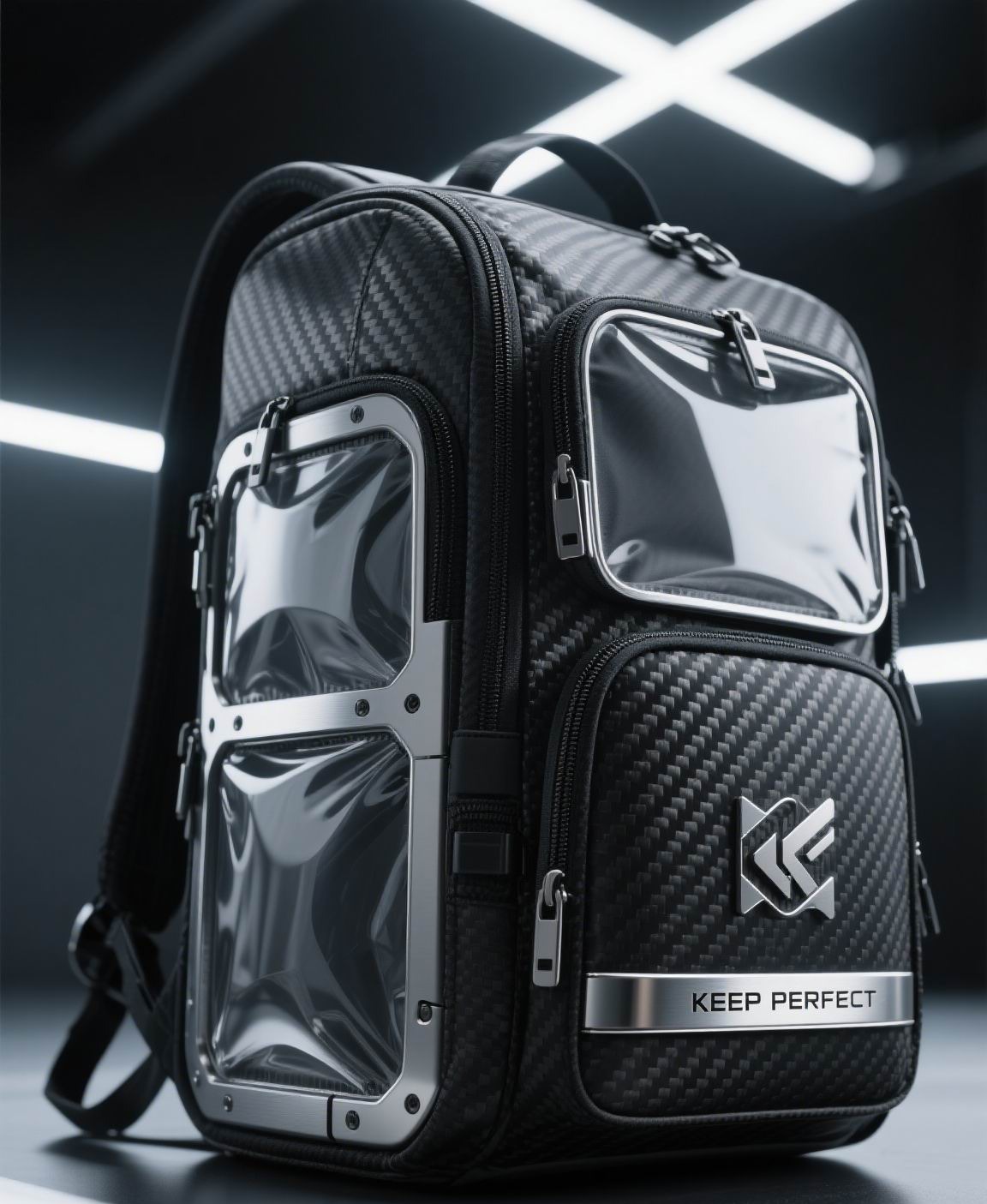
Cost in a modular backpack programme is set by seven drivers in a stable order: fabric, hardware, labour minutes, waste, tooling, testing and packaging. Fabric is normally the largest single share of the ex-works figure, and hardware becomes the second-largest driver whenever branded components are written into the specification as mandatory. The levers worth most are the ones pulled before tooling is cut, because a change landing after PP approval reaches tooling again and reopens a charge generally running USD 300 to 2,500. Programmes start at 500 pieces per reference and sample in 6-10 working days; volume then finishes in 35-50 days. This page describes structure and lever order only; it gives no unit prices and no quotation ranges.
Seven Cost Drivers in a Modular Backpack, and Which Ones Move
Splitting a bag programme into drivers is only useful if the split predicts something. It does. Across modular programmes the order is remarkably stable even when the gaps between the drivers are not: fabric sits first, hardware second wherever brands are named, labour minutes third, then waste, tooling, testing and packaging.
The order matters because it tells a brand where a change will actually register. Trimming packaging on a programme that has not settled its fabric width is work spent on the seventh driver while the first is still open.
| Driver | What sets it | Response to a decision |
|---|---|---|
| Fabric | Area bought, width, denier, coating add-on, marker yield | Fast, if decided before cutting |
| Hardware | Item count, whether brands are mandatory, finishing | Fast at specification stage |
| Labour minutes | Operation count, jig availability, repeatability | Slow, set at design |
| Waste and defect | Nesting loss, reject rate, rework after inspection | Moderate, improves with volume |
| Tooling and screens | Number of new tools, prints, amortised over the order | One-off, fixed once cut |
| Testing and inspection | Methods chosen, report count, inspection days | Immediate, a straight choice |
| Packaging and freight | Carton cube, container count, transit mode | Fast, if sized before booking |
Two interactions are worth holding in mind. A cheaper cloth that nests worse can raise total fabric spend, because area rather than price per metre is what is bought. And a hardware saving that adds an operation can move cost from the second driver into the third without reducing anything.
Everything in the table is ex-works. Landed cost adds freight, which is governed almost entirely by carton cube and is therefore the one driver a brand can influence at the very end of the programme.
A note on what this breakdown deliberately does not do. It gives no unit figures and no quotation bands, because a unit number depends on fabric grade, hardware naming, operation count, order quantity and carton cube — none of which exist until a specification does. What is useful before that point is the ranking and the mechanism, which hold across programmes, and a written enquiry through the contact route is what turns them into a figure.
Bottom line: Work the drivers in their ranked order, because trimming packaging on a programme whose fabric width and hardware naming are still open spends effort on the seventh driver while the first two remain unsettled.
Fabric: The Largest Driver, Decided by Width and Yield
Fabric is bought by area, not by reputation. Two cloths quoted at the same figure per linear metre but offered in different widths do not cost the same per panel, and this is the single most common way a fabric comparison goes wrong.
Denier and coating add-on both push mass per unit area upward, and mass per unit area is what the price follows. A specification that names a denier but not an add-on leaves the largest driver partly undefined, which means the estimate is built on an assumption rather than on the sheet.
Yield is the second half. Marker efficiency decides how much of what was purchased becomes panels and how much becomes offcut, and a directional constraint on a coated or patterned face reduces usable area further. A laminate cut in one direction only wastes more than a plain cloth cut either way.
The lever here is width and nesting before grade, and the part range shown in the product catalogue gives a sense of how much widths vary. Changing the width or the marker usually moves the driver more than stepping down a denier, and it does not change how the product performs in the field.
There is a second lever that is often overlooked because it sits between fabric and packaging: panel count. A construction that closes two functions into one panel buys less cloth, needs fewer seams and generates less offcut, and those three savings land on the first, third and fourth drivers simultaneously.
Verdict: Compare fabric options in square metres with marker yield applied rather than in price per linear metre, because the area actually converted into panels is what the programme pays for.
Hardware: Second-Largest When Branded Components Are Specified
A modular pack carries more hardware than a conventional one. Ladder locks, buckles, D-rings, sliders, snap hooks and cord ends accumulate quickly, and on a programme with several modules the count can be two or three times that of an ordinary daypack.
Branding is the multiplier on top of the count. Where a named component is made mandatory, hardware is often the second-largest driver after fabric; where the specification instead records what the part must do, the same programme frequently drops a place in the ranking without any change to function.
Piece count also drives labour, which is why hardware and the operation count should be read together. Every additional item is at least one additional operation: it has to be picked, positioned, sewn or riveted and checked.
The consolidation lever is the most reliable one available. Specifying a single ladder lock size across a programme rather than three concentrates the buy on one line, reduces fitting errors, and removes the setting changes that slow a line down between sizes.
Judgement: Consolidate hardware sizes and write a performance line rather than a brand name wherever the customer permits it, because both moves cut the second-largest driver without touching how the pack functions.
Labour Minutes and Operation Count
Labour is driven by how many operations a pack requires and how long each one takes. Modular construction raises both, because every attachment row, every bar-tack and every binding pass is a discrete step that has to be performed and checked.
The count is fixed at design, not at the sewing floor. A field with ten rows, bar-tacked at both ends of every channel, represents a specific number of operations that can be read off the process sheet before a sample is made, and the same logic applies to any custom modular backpack layout. Design decisions therefore set labour cost long before anyone negotiates it.
The lever is not sewing faster. It is removing operations without removing function — a bound edge that also closes a seam, a row count that meets the module layout without exceeding it, a jig that makes a repeatable operation genuinely repeatable.
Jigs and templates deserve their own line in any cost discussion. They cost little, they are the reason a field holds a 50 mm repeat across ten rows, and they remove the variation that otherwise becomes rework.
Spec rule: Count operations on the process sheet before sampling rather than negotiating labour afterwards, because operation count is fixed by design decisions and cannot be recovered at the sewing floor.
Waste, Defect and Rework: Three Different Costs
These three are usually treated as one line and should not be. Waste is material lost in cutting. Defect is a finished or part-finished unit that fails inspection. Rework is a unit already shipped or already at goods-in that has to be corrected.
Defect cost exceeds waste cost, because a defective unit carries the full labour already spent on it rather than just the material. A panel ruined at the cutting table costs cloth; the same panel ruined after assembly costs cloth plus every operation performed since.
Rework is the most expensive of the three by a wide margin. It carries labour, freight in both directions and the calendar penalty, and it is the form most often caused by a specification gap rather than by poor workmanship.
Release inspection is what catches the middle category before it becomes the third. Inspection by attributes to ISO 2859-1 at general level II, with major defects held to AQL 2.5 and critical defects accepted at zero, is a per-day cost that protects a considerably larger sum already spent on materials and labour.
The category most often overlooked is the specification gap rather than the workmanship fault. A tolerance never written down, an alternate never recorded and a method never given an acceptance figure all produce defects that no amount of floor discipline can prevent, because nobody was working to an agreed number.
Takeaway: Treat defect cost as labour plus material and rework cost as labour plus freight plus calendar, because ranking them that way puts the emphasis on specification gaps rather than on cutting losses.
Tooling, Screens and Sampling Amortisation
Tooling and print screens are one-off charges rather than unit costs, generally running between USD 300 and 2,500, set by what the programme actually needs cut. What matters commercially is not the charge itself but the quantity it is spread across.
Amortisation is where the 500-unit floor interacts with cost. The same tooling charge behaves very differently when it is spread across a single 500-piece reference and when it is spread across a reference expected to reorder each season, and stating that a programme will repeat is a genuine commercial input.
Sampling carries its own figure: USD 50-150 per reference, refunded once an order is placed. The sample itself needs 6-10 working days, extending to 12-15 when a tool has to be made, and that window is the last point at which a specification change is cheap. Everything decided inside it is free; everything decided after it is not.
After PP approval the position changes. A change landing at that point can reach tooling again, reopening the one-off charge at the moment the programme has least room for it in the calendar.
Selection rule: Settle fabric width, hardware naming and carton dimensions before tooling is cut, because the same changes after PP approval reopen a one-off charge generally running USD 300 to 2,500.
Testing, Compliance and Inspection
Testing is priced per report and per inspection day rather than per unit, which makes it the most directly controllable driver on the list. The number of methods requested is a choice, and the choice is usually made by default rather than by decision.
Three methods chosen deliberately, each with an acceptance figure recorded, produce a usable file. Eight methods ordered because nobody narrowed the list produce a larger invoice and, frequently, a less usable one, because data nobody asked for still has to be read.
Market determines the floor rather than the ceiling. Destination rules, and the documentation that travels with the goods, are surveyed for exporters by trade.gov; the requirement is set by the market, and anything beyond it is a commercial decision.
Inspection sits alongside testing and is priced by the day. Recording the sampling plan on the specification — ISO 2859-1 at level II with an AQL 2.5 limit and critical defects at zero — means it is quoted rather than discovered after the goods are made.
One further decision belongs here, and it is cheap to state: who pays for the reports, and whether they have to be issued by a laboratory the customer names. Left unstated, it becomes an argument at exactly the point in the calendar when nobody has time for one.
Packaging, Cube and Freight
Packaging looks small per unit and is large per shipment, because carton dimensions decide container count and container count decides freight. A carton sized late in the day can waste more than any per-unit packaging saving recovers.
| Decision | Effect on cube | Effect on landed cost |
|---|---|---|
| Packed versus flat | Largest single swing in carton volume | Can change the number of containers |
| Pieces per carton | Changes carton count, not total cube | Changes handling cost per unit |
| Carton dimension tolerance | Decides whether the container plan reconciles | Avoids short loading at booking |
| Pallet pattern | Affects how much of the container is usable | Affects loading time and damage rate |
| Transit mode | No effect | Sea 25-35 days, air 5-8, courier 3-5 |
Container arithmetic is simple and unforgiving. A 20GP carries about 28 CBM and a 40HQ about 68 CBM, so the difference between one carton size and another is the difference between filling a container and paying for space left empty. It is also the difference between one freight quote and two, which is usually noticed only after the booking.
Where goods move through parcel networks, a transit test is worth specifying too. ISTA 3A is the common reference here and carries a test charge rather than being assumed.
On the production side, our SGS-verified production base covers 4,950 m² and holds 7 production lines plus 149 machines, with 137 people on the floor and capacity rated at 200,000 units a month. Our founder entered the bag trade in 2004, and the business opened in 2014. Work runs sampling, PP sample, inspection at AQL 2.5 and finally shipment.
Lever Order: Which to Pull First, and What Each Costs You
Levers are not equal, and the order in which they are pulled matters more than which ones are chosen. Anything applied before tooling is cut is cheap. Anything applied after PP approval carries a tooling charge and a calendar penalty, and anything applied at booking is usually too late to be anything but expensive.
| Weighed on | Specification route | Consolidation route | Packing and freight route |
|---|---|---|---|
| Mechanism | Removes assumptions before quoting | Concentrates buy on fewer lines | Recovers paid container space |
| Speed of effect | Immediate, at quotation | Immediate, at purchasing | At booking |
| Risk to the product | None | Low, if function is unchanged | None |
| Depends on | Specification completed early | Programme size and shared parts | Carton data supplied |
| Costs you | Discipline before sampling | Some design freedom | Nothing, if done early |
| Best used when | Always, and first | Two or more references share parts | Volume is container-led |
The specification route comes first because it costs nothing but discipline. Filling the fields that an estimator would otherwise guess — hardware naming, fabric width, carton dimensions — removes padding without changing the product at all.
Consolidation follows, and it is strongest where references share components. One tape, one ladder lock size and one buckle finish across a programme concentrate demand in a way that is visible to purchasing and invisible to the customer.
The packing route is last not because it is small but because it depends on data that only exists once the pack is settled. Handled early it is free; handled at booking it is a scramble.
One caution closes the list. Levers pulled late tend to move cost from one driver into another rather than out of the programme: a hardware saving that adds an operation, or a lighter cloth that raises the reject rate. Measuring the effect on the driver that was targeted, and on the one next to it, is what separates a saving from a transfer.
Frequently asked questions
What are the main cost drivers in a modular backpack?
Seven: fabric, hardware, labour minutes, waste, tooling, testing and packaging. Fabric is normally the largest single share, and hardware becomes the second-largest once branded components are made mandatory. This page covers structure and lever order only, with no unit prices.
- Fabric bought by area
- Hardware driven by count and branding
- Labour set by operation count
Why is fabric usually the largest cost driver?
Because it is purchased by area and cut with loss. Width, denier and coating add-on all change cost per square metre, and marker efficiency decides how much of what was bought becomes a panel. Volume completes in 35-50 days against a 500-piece floor.
When does hardware become the second-largest driver?
When branded components are written in as mandatory. A modular pack already carries more hardware than a conventional one; naming brands multiplies that count, and each item also adds at least one operation to the process sheet.
How does operation count affect the cost of a pack?
Labour follows how many operations a pack needs and how long each takes. Attachment rows, bar-tacks and binding passes are discrete steps, so a ten-row field carries a specific operation count that can be read off the process sheet before sampling.
What does tooling cost on a modular backpack programme?
Tooling and print screens are one-off charges, generally running between USD 300 and 2,500, spread across the units ordered. Sampling is billed at USD 50-150 per reference and is refunded against the order.
How does the 500-unit floor affect unit cost?
One-off charges such as tooling spread across the order quantity, so the same charge behaves differently on a single 500-piece reference than on a reference expected to reorder. Set-up and cutting also become efficient above that floor.
How much does testing add to a programme?
Testing is priced per report and per inspection day rather than per unit, so the number of methods chosen drives the invoice. Naming three methods with acceptance figures rather than eight is a genuine decision, provided the market requirement is still met.
How does packaging affect landed cost?
Carton dimensions decide container count: a 20GP takes about 28 CBM and a 40HQ about 68 CBM. A carton sized late wastes paid space, and that waste usually exceeds whatever a per-unit packaging saving recovered.
Which cost lever should be pulled first?
Specification clarity, before tooling is cut. Settling fabric width, hardware naming and carton dimensions in the first submission avoids post-approval changes, which are the ones that reopen a tooling charge generally running USD 300 to 2,500.
Does consolidating hardware reduce cost?
Usually yes. One ladder lock size across a programme instead of three concentrates the buy on a single line, cuts fitting errors and removes setting changes between sizes. It also shortens the operation count where each size previously needed different jigs.
How does waste affect the cost of a modular backpack?
Twice: as material lost in cutting, and as units failing inspection that already carry labour spent. Defect cost exceeds waste cost for that reason, and rework at goods-in is the most expensive form of all three.
Can a cheaper fabric raise the total cost?
Yes. A narrower or lower-grade cloth can nest worse, raising the area needed per panel, and a coating change can lift the reject rate. Compare options in square metres with marker yield applied rather than in price per metre.
How does inspection fit into cost control?
Release inspection to ISO 2859-1 at general level II, critical defects accepted at zero and major defects held to AQL 2.5, catches the defect class that would otherwise become rework. It is a per-day cost protecting a much larger sum already spent on materials and labour.
Why does this page give no unit prices?
Because a unit figure depends on fabric grade, hardware naming, operation count, order quantity and carton cube, none of which exist before a specification does. Once those fields are supplied, quotations are returned in 24-48 hours.