Home › Field notes › Hydration Bladder vs Bottle Pocket Modules: Choosing Water Carry
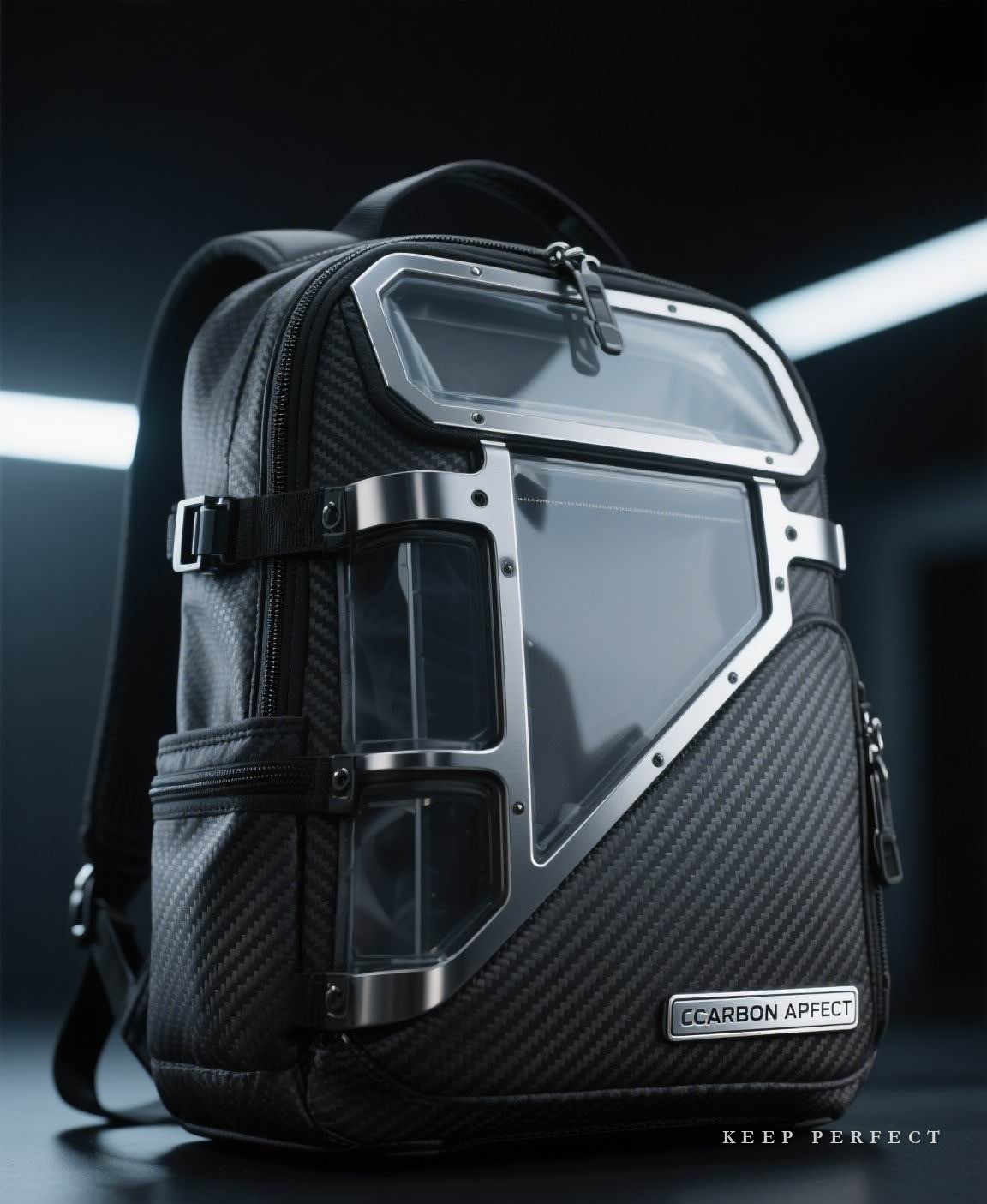
An internal hydration bladder keeps water mass close to the spine and lets the user drink without stopping, while external bottle pockets keep water visible, removable and easy to clean; for most professional programmes the bottle route wins on hygiene and the bladder route wins on drinking frequency. The physical difference is measurable: a 2 litre bladder carries about 2 kg centred roughly 25-35 mm behind the back panel, whereas two 1 litre side bottles place identical mass 120-160 mm either side of the centreline, adding noticeable sway when the wearer turns quickly. Leak consequence separates them most sharply, because a split bladder empties into the main compartment next to electronics. Filmed materials are checked against ASTM D751 for coating behaviour and declared against REACH (EC 1907/2006) substance requirements, with shipments released at AQL 2.5. Sampling takes 6-10 working days and bulk occupies 35-50 days. Scope stays civilian - trail, work site, commuting and sport - with no protective or military claim attached.
What each hydration module changes about the host chassis
Water is the densest thing most people carry, so its placement dominates how a pack behaves long before any other content does. Two litres weighs close to 2 kg, which is often a quarter of total carried mass, and where that kilogram pair sits decides both comfort and safety.
An internal bladder sleeve answers by putting the load in the best possible place: flat against the spine, high in the body, well within the load envelope the chassis was designed around. The penalty is that the volume occupies interior space that could carry gear, and the associated hose, exit port and retaining loop introduce three openings through the shell that did not exist before.
External bottle pockets take the opposite approach. They move water out of the interior, freeing volume, but they place mass far from the centreline and often lower than ideal. Because bottles are removable, the chassis also has to behave well both with and without them: an empty pocket that flaps at every step is a common complaint that no amount of valuable load planning fixes.
Both formats interact with the interface system. Bottle pockets compete for the same external face area as pouch fields, and a hydration port competes with lid closures and panel seams. Teams planning a trail-oriented carrier should reserve both areas on the pattern before any panel is drawn.
Spec rule: Decide hydration placement before dividing up the exterior face, because each option consumes space the other needs, and retrofitting either one after tooling costs more than the original allowance.
Centre of gravity and sway: putting numbers on placement
The comparison is simple mechanics. A full 2 litre bladder sits roughly 25-35 mm behind the back panel, so its moment arm about the wearer's spine is small and the load behaves almost like internal content. A 1 litre bottle in a side pocket sits around 120-160 mm off the centreline, and because one side often holds more than the other, an asymmetric rolling moment appears.
Sway symptoms follow from that asymmetry. Users describe the pack rotating during quick turns, catching on door frames, and pulling one shoulder strap outward. Measured simply: with two bottles full, lateral moment equals roughly twice the bottle mass multiplied by its offset; with one bottle full, add roughly half that again as imbalance.
Vertical position matters too. Bladders sit high, which is where load belongs. Side pockets frequently place their base near the hip line or lower, and low water mass increases pendulum behaviour on rough ground. Deep pockets with a high retaining strap perform meaningfully better than shallow ones.
Partial fill is the case least often tested and most often experienced. Half-filled bottles slosh and produce pulse loads of perhaps 1.5-2 times static mass; a partially filled bladder slumps quietly and stays coherent. That single behaviour explains why trail runners tolerate bottles and mountaineers prefer bladders.
Judgement: Where the programme involves rapid direction changes, carry one bladder rather than two bottles; where water is used mostly while standing still, bottles are acceptable provided pocket depth keeps their mass above the hip line.
Cleaning access, drying time and what grows inside the module
Hygiene is where bottles usually win. A bottle has a wide mouth, a visible interior and nothing that cannot be reached with a brush, so cleaning takes seconds and drying takes a few minutes inverted on a rack. A bladder has a narrow port, internal corners at the hose weld and a baffle if one is fitted, giving drying times of 24-48 hours in open air.
That difference drives biofilm. Damp film left closed between uses develops a slimy layer within a few days in warm conditions, and once established it is difficult to remove without mechanical action the port often prevents. Programmes issuing hydration to rotating staff should assume bladders will not be dried properly and should plan accordingly.
Remediating options exist but carry their own problems. Cleaning tablets work on films yet need correct contact time; freezer storage slows growth without killing established colonies; a dedicated drying hanger halves the time but must actually be used. None substitutes for a removable, inspectable design.
Service design helps. Specifying a wide top-opening bladder with a slider closure rather than a screw port changes drying time substantially, and placing the exit port so the hose can be detached and drained separately removes the worst reservoir. Daily-carry module ranges do well with bottles for exactly this reason.
Takeaway: Require a wide-opening reservoir with a detachable hose when bladders are specified, budget 24-48 hours of open drying in the care instructions, and issue bottles to any user population unlikely to follow that routine.
Cold-weather behaviour: what freezes first and why it matters
Freezing order is counter-intuitive but consistent: the hose and bite valve freeze before the reservoir, because their bore is small and the water column inside them has almost no thermal mass. A user can be carrying three litres of liquid water and still be unable to drink any of it.
Three responses work. Blow-back returns the residual column into the insulated reservoir after each drink; insulating sleeve covers over the exposed hose length reduce heat loss; and routing the hose inside a shoulder strap rather than along the outside keeps it near body warmth. Any one of the three helps, and together they extend usable range considerably.
Reservoir placement influences freeze time as well. A bladder against the back panel benefits from body heat, adding perhaps 30-60 minutes before thick slush forms at around -5 °C. A bottle in an external pocket receives none of that benefit and can freeze solid in the same conditions, which is partly why insulated pockets exist.
Valve material behaviour deserves its own note. Silicone stiffens in cold and may not seal fully against the bite; cheaper PVC hose becomes rigid and can crack at the weld. Request cold-condition trials at -5 °C and -15 °C with the assembled unit rather than component-level assurances.
Bottom line: Test the assembled hydration system at -5 °C after blow-back has been performed, specify insulation over any hose run outside the strap, and prefer back-panel reservoirs wherever freezing is plausible.
Leak risk: probability, consequence and where the damage lands
Two questions belong in any hydration decision: how often does it leak, and what does it ruin when it does. Those are separate, and programmes that only ask the first discover the second during a warranty claim.
Failure sources differ by design. Bladders fail at the hose weld, at the port cap thread and through pinholes caused by folding the film while frozen. Bottles fail at the cap seal and through body cracking after impact, particularly around a moulded grip. Field programmes tend to see roughly 1-3 percent of bladders needing attention annually and rather fewer bottles, though bottle caps are lost or cross-threaded far more often than they fail outright.
Consequence separates them decisively. A leaking bottle empties outside the pack into the open. A leaking bladder empties into the main compartment, which may contain a laptop, test instruments or documents - turning a USD 8 component failure into the most expensive claim the programme ever handles.
Mitigation is cheap when planned. A dedicated sleeve with a sealed base isolates reservoir leaks from the main volume; routing the hose through a port below the electronics line prevents capillary tracking; and specifying cap leashes removes the lost-cap population entirely. Work-site carriers carrying meters should treat isolation as mandatory rather than optional.
Verdict: Treat every internal reservoir as a fluid that will eventually escape: place it in a sealed sleeve separated from electronics, and never let hose routing pass above or beside a device compartment.
Decision table for the three hydration configurations
Most programmes choose among three configurations rather than two: internal reservoir with hose routing, external bottle pockets with retention, or a combined arrangement that offers both. The table below sets those options against the criteria that actually decide the matter.
| Criterion | Internal reservoir with hose | Twin external bottle pockets | Combined dual-carry |
|---|---|---|---|
| Mass position relative to spine | Roughly 25-35 mm behind back panel | 120-160 mm either side | Mixed; best case for both |
| Sway during rapid direction change | Very low | Noticeable when asymmetric | Low when bottles stay paired |
| Interior volume consumed | About 1.5-2.5 litres equivalent | Almost none | Partial |
| Drinking without removing the pack | Yes, hands mostly free | No, requires removal | Both behaviours available |
| Drying time after cleaning | 24-48 hours open | Under 1 hour inverted | Depends on which is used |
| Behaviour at -5 °C after 2 hours | Usable with blow-back discipline | Often frozen solid | Reservoir usable, bottle not |
| Damage path when leaking | Into the main compartment | Outside the body | Only if isolation is omitted |
| Indicative module cost | USD 6-14 for the reservoir set | USD 2.50-6 for pockets | USD 9-18 combined |
| Face area consumed on the exterior | Port and strap loop only | Two wide panels | Both |
| Replacement cadence in hard service | Roughly 12-18 months | Typically 24-36 months | Staggered |
Note the last three rows in particular. Indicative module cost is the number buyers watch, while damage path and face-area consumption are the numbers that actually shape the product. A catalogue selling to users who carry instruments should read those three rows in that order.
The combined configuration is often the right commercial answer, because it lets the same chassis serve both user types without doubling tooling. Just ensure the reservoir sleeve remains isolated even when bottles are used.
Material evidence, service intervals and inspection
Liquid contact puts hydration modules into a stricter compliance category than ordinary accessories. Film materials need coating and adhesion evidence, seam construction needs to be leak tested, and every component in the drinking path needs a substance declaration appropriate to the destination market.
| Component | Evidence requested | Interval | Failure indicated by | Action at failure |
|---|---|---|---|---|
| Reservoir film and weld | Coating behaviour to ASTM D751 | Per material lot | Delamination at the weld edge | Lot rejection before cutting |
| All polymers in contact | Substance declaration under REACH (EC 1907/2006) | Annually and after any change | Missing or expired declaration | Hold shipment until updated |
| Reservoir seam integrity | Inflated pressure hold for the agreed minutes | Every production batch | Pressure decay beyond allowance | Full batch quarantine |
| Cap and valve thread | 500 open-close cycles plus torque check | Qualification only | Cross-threading or weeping | Tooling correction before bulk |
| Fabric of the sleeve and pocket | Abrasion route to ASTM D3884 | Per colour lot | Yarn exposure before target cycles | Specification review |
| Finished units | Release audit at AQL 2.5 to ISO 2859-1 | Every shipment | Critical 0, Major 2.5, Minor 4.0 exceeded | Rework with agreed reaction rules |
| Packed carton | Transit check to ISTA 3A where units ship singly | Each new pack-out | Creased or crushed panels | Pack-out correction |
Service intervals should be written into the user documentation rather than left to judgement. A reasonable field cadence replaces reservoirs every 12-18 months, hoses every 6-12 months and bite valves whenever they stiffen. Those parts cost little compared with the consequence of ignoring them.
Sampling, replacement and evidence all sit inside the same calendar as any other module, which brings us back to programme mechanics.
Cost, calendar and programme mechanics
Cost comparison should be done per user-year rather than per unit. A reservoir costing USD 6-14 replaced every 12-18 months is not cheaper than pockets costing USD 2.50-6 replaced every 24-36 months, and once the possible consequence of a leak is priced in, the internal option often loses money it appears to save.
Volume economics matter here more than unit economics. A reservoir listed at USD 6-14 against pockets at USD 2.50-6 looks like double the spend, yet those numbers are indicative only and are read FOB Xiamen against 500 units per style; introduce a formed sleeve and the tooling picture moves into a USD 300-2,500 range, while a sample charge between USD 50 and 150 comes back to you once the order is confirmed.
Timing follows the pattern seen across soft-goods modules generally. A first sample comes back inside 6-10 working days, lengthening toward 12-15 once a moulded component enters the build, and only then does the sewing calendar start: bulk occupies 35-50 days measured from sample sign-off and material confirmation, where components including insulated pockets can represent the longest single lead item.
ISO 2859-1 at AQL 2.5. Our production team plans such work inside an SGS-verified floor area totalling 4,950 m², where 149 machines laid out along 7 lines are operated by 137 people, supporting scheduled output at 200,000 units per month; the founder has been in sewn goods since 2004 and incorporation followed in 2014.
Transit offers three options: roughly 25-35 days by sea, 5-8 by air, and 3-5 by express courier. Container planning works against approximately 28 CBM of usable space in a twenty-foot unit and close to 68 CBM in a high-cube forty-footer, so an insulated pocket that will not compress deserves a packing count before anyone signs off artwork.
Which hydration module fits which programme
Begin with the drinking behaviour the user population actually exhibits. People who drink while moving - cyclists, skiers, hikers covering distance, technicians walking large sites - deserve the hose. People who drink while stationary around a bench, vehicle or office can manage perfectly well with bottles and will appreciate how easy they are to wash.
Next, weigh the consequence of failure. Programmes carrying electronics, instruments or documents alongside water should choose bottles unless a genuinely isolated reservoir sleeve with a sealed base is specified and tested. Programmes carrying clothing and food can accept internal water far more readily.
Climate and season follow. Cold destinations penalise external bottles in every respect; hot destinations penalise bladder hygiene unless drying discipline is realistic. Where a single product must serve both, the combined arrangement costs little more and removes the argument entirely.
Selection rule: Choose bladders for drinking while moving with no electronics below them, bottles for programmes carrying instruments or lacking drying discipline, and the combined arrangement whenever one chassis must serve both populations.
Frequently asked questions
Which hydration module keeps pack behaviour most stable?
An internal reservoir, because it places roughly 2 kg about 25-35 mm behind the back panel instead of 120-160 mm off the centreline. Side bottles create asymmetric rolling moments, especially when one is fuller than the other, and that instability shows up during quick turns rather than on straight paths.
How long does a bladder take to dry after cleaning?
Plan for 24-48 hours open with the hose detached, considerably longer if the port is narrow and the interior cannot be propped open. Bottles invert and dry in under an hour, which matters when several users share the same equipment locker. Any programme issuing reservoirs to rotating users should specify a wide top opening to cut that drying window, and should name a drying location in the care card.
Does the hose freeze before the reservoir?
Almost always, because the small bore holds very little water and loses heat fastest. Blow-back after each drink, an insulating cover over the exposed run, and routing inside the shoulder strap all delay it, and the combined route typically keeps the system drinkable well past -5 °C.
What happens if a bladder leaks inside a work backpack?
The fluid enters the main compartment, which on a service build often means instruments or a laptop, so a small component failure becomes the largest claim in the programme. Isolate the reservoir in a sealed sleeve, route the hose below electronics, and never place the reservoir above a device pocket.
Which materials evidence is needed for liquid-contact modules?
Request coating behaviour to ASTM D751 for films, abrasion to ASTM D3884 for sleeve fabrics, a substance declaration under REACH (EC 1907/2006) for everything in the drinking path, and a release audit at AQL 2.5 following ISO 2859-1 on every shipment.
- Film lot reports
- Declarations updated annually
- Batch pressure-hold records
How often should hydration modules be replaced in service?
A practical cadence is reservoirs every 12-18 months, hoses every 6-12 months and bite valves as soon as they stiffen or weep. Bottles usually survive 24-36 months unless caps are lost or bottles are dropped onto hard surfaces. Publishing this schedule in the care card reduces warranty arguments considerably and gives service teams a dated reference to quote.
Do bottle pockets consume less interior volume than a bladder?
Yes. A reservoir occupies the equivalent of roughly 1.5-2.5 litres inside the body, plus the routing space taken by the hose and exit port, while external pockets take almost nothing internally and instead consume two wide panels on the exterior face that pouch fields might otherwise use.
How much do the two options cost at production volume?
Indicatively USD 6-14 for a reservoir set and USD 2.50-6 for pockets, quoted FOB Xiamen at MOQ 500. Compare per user-year rather than per unit, since reservoirs are replaced more often and carry the larger consequence risk when they fail.
Can one chassis support both hydration options?
Yes, and it is frequently the best commercial answer because tooling stays shared across travel and work chassis using one shell. Keep an isolated reservoir sleeve with a sealed base and add retaining pockets, then test the reservoir separately so a leak cannot reach the main compartment when only bottles are used.
How should leak testing be done in production?
Inflate each reservoir to the agreed pressure and hold it for the specified minutes, quarantining any batch that shows decay beyond allowance. Pair that with a 500-cycle cap test at qualification and carton checks to ISTA 3A for singly shipped units.
What sample and production lead times apply?
Soft-goods modules sample in 6-10 working days, extending to 12-15 where a moulded insulated pocket is involved; bulk takes 35-50 days from approval. Sample fees of USD 50-150 are credited back, tooling runs USD 300-2,500, and shipments release at AQL 2.5 following ISO 2859-1.
Why do half-full bottles feel worse than expected?
Sloshing produces pulse loads roughly 1.5-2 times the static mass, which the wearer feels at the shoulder straps and especially on stairs. Deeper pockets with high retaining straps reduce it, as does carrying paired bottles so their contents move together rather than independently, or decanting to leave each container either full or empty.
Does an insulated bottle pocket justify its added bulk?
In cold or hot climates yes, since it protects against freezing and heat gain, but it increases packing volume and must be counted against roughly 28 CBM in a 20GP. Request packing counts with and without insulation before artwork is signed off.
When should a programme reject a hydration module sample?
Reject on weld delamination, pressure decay in the hold test, cap cross-threading within 500 cycles or any missing substance declaration. Those failures cannot be corrected downstream, unlike cosmetic issues handled at AQL 2.5 with Critical 0 and Major 2.5, and elapsed declarations should also trigger a hold until updated paperwork arrives.