Home › Field notes › Modular Backpacks for EDC (Everyday Carry): Load Planning Rules
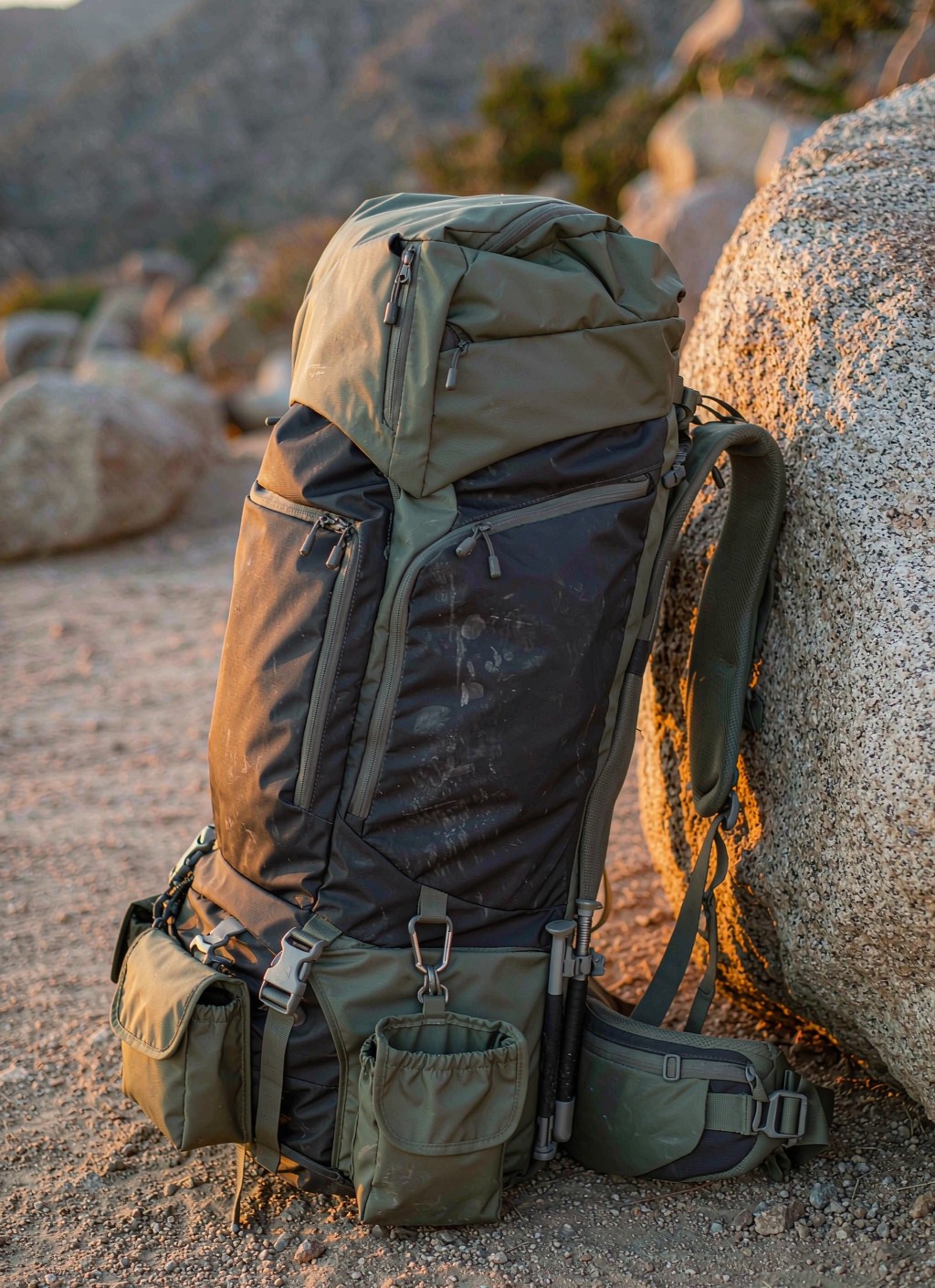
A modular backpack for everyday carry should be organised by how often each object is reached, not by how much it holds, because daily users open their bag dozens of times and every extra second of searching is a reason to switch brands. The practical ceiling is four detachable modules on a daily chassis; beyond that the system is slower than fixed pockets and the modularity stops paying for itself. This article sets retrieval tiers, maps the objects people actually carry to pocket geometry, and gives the urban failure signatures that return data consistently reveals. Commercial anchors for the programmes discussed are MOQ 500, sampling at 6-10 working days, bulk at 35-50 days, AQL 2.5 release and FOB Xiamen dispatch.
Why everyday carry is a harder duty cycle than it looks
Everyday carry is routinely treated as the easy case, because the loads are light. That is a mistake. A hiking pack meets one environment with one load; a daily pack meets a train, an office, a supermarket, a bike and a building site visit, sometimes in one day, with a load that changes every morning.
The consequence is that daily use stresses access rather than structure. Seams rarely fail on a commuter pack. What fails is the user's patience: a pocket that requires two hands, a module that has migrated out of reach, or a closure that cannot be worked while standing in a crowd. Those failures produce returns and negative reviews long before any mechanical failure appears.
Modularity helps here, but only if it is disciplined. The promise is that the bag can be reconfigured for a day that includes a gym visit and a client meeting. The risk is a bag with six pouches, none of which is where the user expects it to be. The design goal is therefore a small number of well-placed modules plus a stable internal organisation that never changes.
Two rules follow. First, the internal layout should hold the objects that are carried every single day, and modules should carry only the variable items. Second, every module position should be reachable with the bag on one shoulder, because that is how people actually access their things.
A third rule is less obvious and equally binding: the bag should look appropriate in all of the settings it visits. A pack that reads as field equipment in a client meeting will be left in the car, and a pack that reads as an office bag in a workshop will be treated as disposable. Everyday carry is the only category where the same product is judged in both places on the same day, and the specification has to satisfy both.
Selection rule: Judge any everyday chassis against every environment it meets in one working day and hold the full order at MOQ 500 to those conditions, because settlement between an office audience and a workshop audience has to happen in one product.
Retrieval frequency as the organising principle
Sort contents by how often they are needed, then assign position by that frequency. Three tiers are enough, and the tier boundary should be visible in the physical layout so users learn it without reading instructions.
| Tier | Access expectation | Object classes | Geometry required |
|---|---|---|---|
| Immediate, several times hourly | One hand, bag on shoulder | Phone, transit pass, keys, headphones | External slip pocket with a wide mouth |
| Regular, a few times daily | Two hands, bag swung forward | Wallet, notebook, charger, glasses | Lined internal pocket with a closure |
| Occasional, once daily or less | Bag set down, opened fully | Rain shell, lunch, spare layer | Main compartment or a detachable module |
| Emergency, hopefully never | Findable under stress | First-aid dressing, spare cash | Colour-marked pocket with a pull tab |
The immediate tier deserves disproportionate attention because it generates most of the daily interactions. A phone pocket that is too deep, too narrow, or positioned where the wearer's arm cannot reach while the bag is on one shoulder will be criticised in reviews even if everything else is excellent.
Emergency items need a different treatment entirely. A dressing kit buried at the bottom of a main compartment is effectively absent. Give it a marked position, a high-contrast pull, and if possible a colour that reads as first aid without dominating the aesthetics of the product.
Verdict: Rank pockets by retrieval frequency and justify every addition against reorder data rather than enthusiasm, keeping an everyday roster near six modules even where the platform could physically take more.
Capacity bands and the module count each one supports
Module count should scale with capacity, but not linearly. A small daily chassis cannot carry four modules without each one dominating the silhouette, and a large one that carries only two looks under-specified.
| Volume band | Modules carried well | Typical daily load | Penalty of one extra module |
|---|---|---|---|
| 12-18 litres | One or two small | Phone, wallet, light layer, bottle | Silhouette distortion; front face crowded |
| 18-24 litres | Two or three mixed | Laptop, charger, lunch, gym kit | Added depth; harder under a desk |
| 24-30 litres | Three or four mixed | Laptop, documents, change of clothes | Weight creep; less suited to commuting |
| Above 30 litres | Four, but reconsider the format | Work kit plus overnight items | No longer an everyday silhouette |
Buyers also read depth more than volume. A pack that is deep front-to-back will not slide under a desk or through a crowded carriage, whatever its litre figure says, and depth is the dimension most often increased when capacity grows. Capping depth and growing height or width instead keeps a larger capacity usable in the settings daily carry actually involves.
The 18-24 litre band is where most daily programmes land, and it carries two to three modules comfortably. That band fits a laptop sleeve, a daily load and a variable module without the pack becoming luggage, and it remains acceptable in a meeting and on a train.
Above 30 litres the product has stopped being an everyday bag and has become a travel or work carrier. Brands frequently push capacity upward in response to customer requests and then find the product no longer competes in the everyday category it was designed for. Capacity growth should trigger a category review, not just a pattern change.
Bottom line: Let module count grow stepwise with capacity and stop where each extra module starts dominating the silhouette, because capacity growth past that point changes the category and every version still has to clear MOQ 500 with room for colourways.
Pocket geometry for the objects people really carry
Pocket design fails through geometry rather than through materials. Four object classes account for most daily frustration, and each has a known fix.
Phones have grown and pockets have not. A phone pocket should accept a large device in a case, with a mouth wide enough to remove it one-handed and a depth that leaves the top of the device exposed. Lining the pocket with a low-friction material helps withdrawal; lining it with a grippy mesh makes one-handed removal impossible.
Keys are the opposite problem: they are small, hard and sharp, and they abrade everything they touch. A dedicated key position with a clip, separated from any device screen and from any lined pocket, prevents both the scratches and the daily rummage. A clip also stops keys ending up at the bottom of the main compartment.
Chargers and cables need volume with structure, not a flat slip. A cable coiled into a flat pocket springs out and tangles. A shallow box-shaped pocket, or a small module with an internal divider, keeps a charger and its cable together and retrievable.
Bottles are the heaviest daily item and the one most often mounted externally. A side sleeve works if it is deep enough and elastic enough to hold a part-full bottle; a shallow sleeve drops its contents the first time the wearer bends. Where a bottle is carried internally, put it low and close, in line with the load-distribution logic that applies to any carried mass.
One more object class deserves a named home: the small flat items that vanish. Transit cards, receipts, earbud cases and spare keys are lost not because there is no space but because there is no assigned space. A shallow slip pocket with a contrasting lining, sized to a card, prevents the daily search that users describe as the bag being disorganised when it is really just undifferentiated.
Discretion in shared spaces: noise, shine and silhouette
Daily bags live in shared spaces, and users judge them by how they behave there. Three properties matter: how much noise the hardware makes, how much light the material reflects, and how the bag reads at a distance.
Noise comes almost entirely from metal-on-metal and from hook-and-loop. A zip puller striking a buckle with every step is audible across a quiet carriage. The fixes are cheap: select pullers with a rubber or cord element, place pullers where they rest against fabric rather than hardware, and use a silent closure on pockets opened frequently in quiet places.
Hook-and-loop is the loudest closure available and the most convenient, which is why it persists. Reserve it for pockets opened occasionally, and use magnetic-guided or snap closures where frequent quiet access matters. Where hook-and-loop must be used, a cover flap that hides the tape also reduces the tearing sound slightly and improves appearance.
Reflective detail is a genuine safety benefit and a genuine discretion problem. A bag that reads as technical equipment at a distance may be undesirable in a client setting. The resolution is placement rather than removal: small reflective elements on the sides and straps, where they work for a cyclist but do not dominate the front face.
Takeaway: Resolve noise, shine and silhouette by placement rather than removal, keeping reflective trim off the front face and off the 25 mm webbing rows crossing it, so a cyclist still benefits and a meeting room does not notice.
Urban failure signatures and the specification change behind each
Return data for daily bags clusters around a small number of complaints. Mapping each complaint to its mechanism produces a specification change rather than a customer-service response.
| Failure reported | Physical cause | Specification change |
|---|---|---|
| Lining torn at the key position | Sharp edges abrading a light lining | Dedicated clip position with abrasion-resistant lining |
| Zip separates after months | Lateral stress from an overpacked compartment | Increase gauge to YKK #8; add a stress-relief gusset |
| Bottle sleeve stretched out | Elastic fatigued by repeated wet loading | Specify a deeper sleeve and a recovery test |
| Module detached and lost | Retention relied on friction alone | Add a secondary positive lock to the interface |
| Colour transfer onto light clothing | Dye crocking from a dark shell | Require AATCC 8 crocking grade in the spec |
| Strap webbing fuzzed | Abrasion against a coat seam | Tighter weave; verify per ASTM D3884 |
The lost module is the one that generates the worst reviews, because it is both a product failure and a loss of the user's property. Any detachable module needs positive retention: a lock that can be felt and heard engaging, not friction alone. This is a hard requirement, not a preference.
Colour transfer is the complaint that reaches a brand's social channels fastest. It is entirely preventable by specifying a crocking grade per AATCC 8 at material selection, and it is far cheaper to catch there than after a production run is shipped.
Judgement: Specify a crocking grade and an abrasion result at material selection for every colourway that touches light clothing, before the 35-50 day bulk calendar opens, since neither can be corrected once the units are cut.
Materials and hardware selected for daily abrasion
Daily abrasion is different from trail abrasion. It comes from coat seams, desk edges, train seating and bag-on-bag contact, and it is concentrated at predictable places: the base, the lower back panel, the strap undersides and the tops of external pockets.
Shell selection should be driven by abrasion result rather than by denomination. A mid-weight polyester with a strong ISO 12947 result outlasts a heavier fabric with a poor one, and the difference shows at the base corners within a season. For programmes that want a softer hand, a bonded or laminated construction raises abrasion performance without raising weight much.
Hardware gauge is the other daily decision. YKK #5 suits pocket closures and light duties; #8 is the correct choice for a main compartment that will be overpacked; #10 belongs on a work or travel body rather than an everyday silhouette. Specifying #8 on a main opening costs a small amount and removes the most common mechanical warranty claim in the category.
Metal components in prolonged skin contact need a nickel release check per EN 1811, and all materials need REACH (EC 1907/2006) and California Prop 65 declarations for the markets you sell into. Those are document requirements as much as material requirements, and they belong in the brief rather than in a post-production scramble.
Building a module roster that stays small
The discipline that makes a modular everyday system work is restraint in the accessory range. Six modules is a catalogue; fifteen is a burden for the buyer, the forecaster and the user.
Choose the roster by asking which items vary between days. The objects carried every day belong in the bag's fixed organisation. The objects that vary are gym kit, a lunch, a camera, a first-aid dressing, a wet layer and a tool set. That list produces six modules, and each one has a clear purchase reason.
Give each module a single stated purpose and a stated internal dimension. A module that tries to serve gym kit and camera equipment serves neither well. Purpose-built modules also photograph better in listings, which matters because accessory conversion happens on the product page.
Keep the interface identical across the roster and publish the mounted-load rating for each. Users need to know what they can hang where, and a rating converts a vague promise into a specification the brand can defend.
Bundle the roster deliberately at the point of sale. A carrier listed with two modules attached outsells the same carrier listed alone, because modularity stays an abstraction until a buyer sees a configuration. Offer one starter bundle and let customers add, rather than presenting six modules and asking them to design a system before they have bought into it.
Our production team sees the same pattern repeatedly: ranges that launch with six modules sell steadily, and ranges that launch with fifteen sell six modules and carry nine in inventory for two seasons. Start with six and add only what reorder data justifies.
Validation and release gates for a daily-use programme
Daily products need tests that reproduce daily behaviour. Four gates cover the category, and each produces a number that can be written into a specification.
Gate one, access trial: ten users, a defined object list, timed retrieval of three immediate-tier items with the bag worn on one shoulder. Record the time and the failure mode. Anything above a few seconds or requiring the bag to be set down is a design failure regardless of how the product looks.
Gate two, abrasion and colour: ISO 12947 or ASTM D3884 on the shell at the base and strap zones, plus AATCC 8 crocking on every colourway that will touch light clothing. Gate three, closure cycling: open and close every closure a few thousand times, because a daily zip sees more cycles in a year than a travel zip sees in five.
Weight is the other silent complaint in this category. A daily chassis that is heavy before anything is put into it eats into the payload a user is willing to carry, and every gram saved on the shell is a gram available for contents. Publish an empty weight alongside capacity, because buyers compare those two figures before they compare anything else. A target tare figure set at brief stage also stops a range drifting heavier season by season without anyone deciding to.
Gate four, transit simulation: ISTA 3A on a packed carton, because a daily bag sold online is shipped individually and arrives as the customer's first impression. A product that survives the user but arrives crushed has still failed.
Production then follows the standard path: sampling at 6-10 working days, extending to 12-15 for a laminated or moulded panel, bulk at 35-50 days, MOQ 500, release per AQL 2.5, dispatch FOB Xiamen with sea transit of 25-35 days or air at 5-8 days when a launch cannot wait. Our vetted partner facilities schedule daily-use programmes alongside everyday carry module ranges, which shares material lines and shortens the front end of the calendar.
Spec rule: Gate daily-use programmes on access cycles, on abrasion and crocking at the base and strap zones, and on transit simulation of a packed carton, releasing lots drawn at AQL 2.5 only once every result sits inside the stated band.
Frequently asked questions
How many detachable modules should a daily backpack carry?
Four is the practical ceiling. Beyond that the system becomes slower than fixed pockets and the modularity stops paying for itself. An 18-24 litre chassis carries two to three modules comfortably without distorting the silhouette.
What capacity suits everyday carry best?
18-24 litres suits most daily programmes. It fits a laptop, a charger, a lunch and one variable module, and it still passes as acceptable in a meeting and on a train. Above 30 litres the product is no longer an everyday bag.
How should pockets be allocated inside a daily pack?
By retrieval frequency. Immediate items several times hourly go in external slip pockets reachable one-handed; regular items go in lined internal pockets; occasional items go in the main compartment or a detachable module.
What is the most common reason a daily bag is returned?
Access frustration rather than mechanical failure: a pocket requiring two hands, a module migrated out of reach, or a closure that cannot be worked while standing. Timed retrieval trials catch these before tooling.
Which zip gauge should a main compartment use?
YKK #8 for a main compartment that will be overpacked. #5 suits pocket closures and light duties, and #10 belongs on work or travel bodies. Specifying #8 costs little and removes the most common warranty claim in the category.
How do I stop metal hardware making noise?
Choose pullers with a rubber or cord element, position them so they rest against fabric rather than against buckles, and reserve hook-and-loop for pockets opened occasionally in quiet places.
Why do detachable modules get lost?
Because retention relied on friction alone. Every detachable module needs a positive lock that can be felt and heard engaging. This is a hard requirement, not a preference, because losing a module also loses the contents.
How is colour transfer onto clothing prevented?
Specify a crocking grade per AATCC 8 at material selection for every colourway that may touch light clothing. Catching it at selection costs far less than recalling a shipped run.
What materials resist daily abrasion best?
Choose by test result rather than denomination. A mid-weight polyester with a strong ISO 12947 result outlasts a heavier fabric with a poor one, and bonded constructions raise abrasion performance without much weight gain.
Should reflective detail be included on a commuter bag?
Yes, but placed rather than maximised. Small reflective elements on the sides and straps work for a cyclist without making the bag read as technical equipment across a meeting room.
What compliance documents does a daily bag need?
REACH (EC 1907/2006) and California Prop 65 declarations for materials, EN 1811 nickel release for metal hardware in skin contact, and CPSIA coverage where the product is aimed at school-age users.
How long does development take for this category?
Sampling runs 6-10 working days, extending to 12-15 for a laminated or moulded panel. Bulk occupies 35-50 days at MOQ 500, released per AQL 2.5, dispatched FOB Xiamen.
Is air freight ever justified for an everyday range?
As recovery after a slip, when a launch date cannot move. Air takes 5-8 days against 25-35 by sea, but the cost is severe on bulky empty bags because dimensional weight governs the charge.
What is ISTA 3A testing for, and why does a bag need it?
It simulates parcel transit for an individually shipped carton. A daily bag sold online arrives as the customer's first impression, so a product that survives the user but arrives crushed has still failed.