Home › Field notes › Modular Bags for Online Sellers: Building an Own-Brand Range
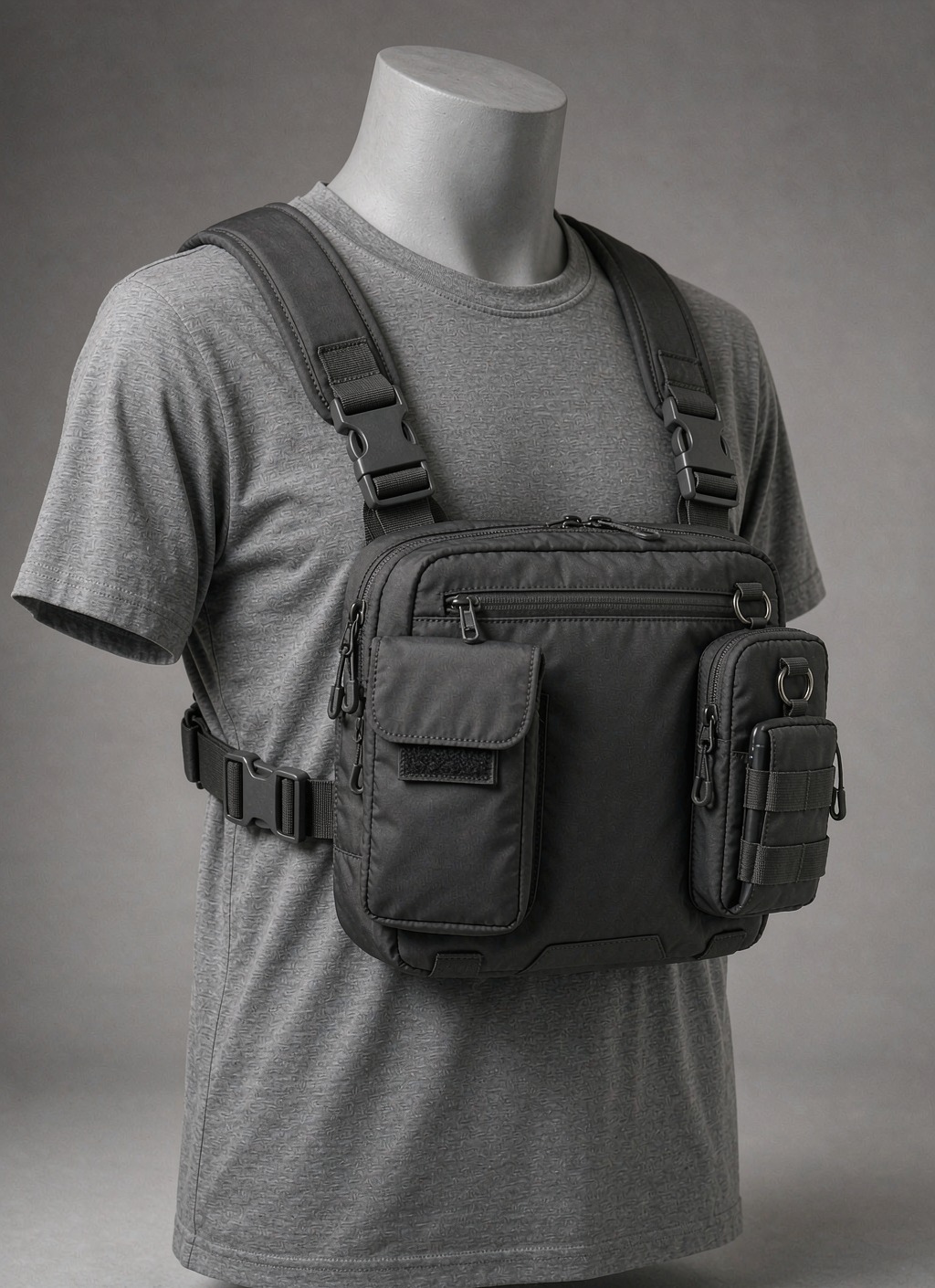
An own-brand modular range succeeds or fails on two numbers an online seller already owns: the parcel damage rate and the return rate. Everything else is secondary. Pack the product so a single unit survives the courier network in 3–5 days and the damage line falls; specify against the reasons customers actually give for returning a bag and the return line falls. One chassis supporting many listings keeps the 500-unit floor affordable across colourways, and a modular interface means a returned pouch becomes an exchange rather than a refund. Standard terms remain T/T 30/70 against FOB Xiamen, with inspection at AQL 2.5 before the lot ships. The sections below work through each of these in the order a seller meets them.
Pack-out testing, colour control against a retained standard and a spares allocation are the three interventions with the largest measured effect on the return line.
What changes when a seller starts putting a name on the product
Reselling and running an own-brand range are different businesses that happen to use the same photographs. A reseller's risk is inventory: buy the wrong stock and it sits. A brand-led seller's risk is specification: the product is now theirs, the reviews attach to it, and a defect is not a supplier's problem to be passed back but a listing's problem to be lived with.
That shift makes three things newly important. First, the seller owns the consequence of a design decision, which means the specification has to be written rather than inherited. Second, the seller controls the variant structure, which is where most of the margin in an own-brand range is created or destroyed. Third, the seller can now fix a recurring complaint permanently instead of switching suppliers, which is the actual long-term advantage.
A modular architecture suits this position unusually well. Because the interface stays constant across a range, a seller can introduce a new module without re-engineering the shell, which means the response to a customer complaint can be a new accessory rather than a new product. Speed of response is the main structural advantage an own-brand seller has over a reseller, and modularity is what makes it cheap.
The minimum order quantity of 500 units is the first real constraint a seller meets. It applies per specification, which in practice usually means per colourway of a given shell. Most first ranges are two colourways of one chassis across a module library, because that structure keeps the opening commitment inside a working capital budget while still presenting a range rather than a single product.
Set expectations about timing early. A reference piece takes 6–10 working days to produce, 12–15 where the design involves new hardware or a complex module interface, and the run itself takes 35–50 days once that piece is approved. Sea transit then takes 25–35 days. A seller planning a seasonal launch has to work backwards from the listing date, not forwards from the decision date.
Selection rule: Plan backwards from the listing going live rather than forwards from the decision to buy, because sampling occupies 6-10 working days, production 35-50 days and sea transit 25-35 days before one unit can even be photographed for the first time.
Single-parcel engineering: the product that arrives intact
A seller shipping single units into a parcel network is exposing the product to conditions a palletised shipment never sees. Parcels are dropped, stacked under heavier parcels, conveyed at speed, and sorted by machines that read shape rather than fragility. The protocol that describes this is ISTA 3A, which covers individually packaged products up to 32 kg moving through a parcel system, and it should be the reference for any own-brand pack-out decision.
Dimensional weight is the second constraint and it interacts with protection. Carriers price on the greater of actual weight and volumetric weight, so a carton that is 20 mm larger in each dimension can cross a pricing breakpoint and raise the shipping cost per unit by a percentage that exceeds the saving on protective material. The pack-out has to be designed at the dimensional weight breakpoint, not merely to fit the product.
| Decision | Effect on dimensional weight | Cost consequence | Damage mode removed |
|---|---|---|---|
| Ship the shell compressed with pouches nested inside | Reduces height by roughly 25 % | Lower volumetric bracket; less void fill needed | Corner crush on the shell lid |
| Use a rigid carton rather than a mailer | Adds about 5 mm per face | Slightly higher volumetric cost; measurably fewer damage claims | Compression damage in mixed sorting |
| Protect hardware with a moulded pulp corner rather than bubble wrap | Neutral | Higher unit cost, faster pack-out labour | Buckle imprint through the shell fabric |
| Print the module diagram on the carton inner face | Neutral | Print cost only | Nothing physical; reduces confusion returns |
| Pack a single-page insert explaining the interface | Neutral | Fraction of a cent | Returns coded as defective where the product was fine |
Two of those rows are about confusion rather than damage, and they are included deliberately. A meaningful share of consumer returns on a configurable product are not defects at all: the customer could not work out how a module attaches, decided the product was faulty, and returned it. An insert that answers that question is the cheapest return-rate intervention available.
Test the pack-out, do not assume it. ISTA 3A runs a drop and vibration sequence on a complete packed unit; a seller who runs it once on the real pack-out will usually find at least one failure that is cheap to correct. Run it again after any change to carton supplier or to the module set, because a heavier module changes the drop behaviour.
Finally, decide the cosmetic acceptance line before shipping. Permit scuffing on the base panel, prohibit it on the lid and front face, and state that in the inspection criteria. Without a written line, the warehouse has no rule for whether a scuffed unit is sellable, and inconsistent decisions generate inconsistent reviews.
Verdict: Put the actual pack-out through a parcel sequence before the first carton enters a 3-5 day courier network, and write the acceptable face condition into inspection criteria so the warehouse decides consistently every time.
Return-rate anatomy: why a bag comes back
Return rate is the single largest controllable cost in an own-brand bag range, and it is almost always treated as a marketing problem when it is a specification problem. Sort returns by reason code for two months and the pattern is usually clear enough to act on.
| Reason given by the customer | Mechanism | Specification change | Expected effect |
|---|---|---|---|
| Too small for a laptop | Capacity stated as volume, perceived as device fit | State device size in centimetres on the listing and on the insert | Removes a large share of expectation returns |
| Colour different from the photographs | Screen variation plus uncontrolled dye-lot drift | Set a colour tolerance against a retained standard and control dye lots | Removes the most corrosive review type |
| Pouch will not attach | Interface tolerance drift or an unkeyed asymmetric module | Key the interface; add a gauge check at inspection | Converts a defect return into an exchange |
| Strap uncomfortable when loaded | Harness geometry specified for an unloaded fitting | Fit-test at the stated load, not empty | Reduces both returns and negative reviews |
| Arrived damaged | Insufficient pack-out for the parcel network | ISTA 3A pack-out with corner protection | Direct reduction in the damage line |
| Zip caught on the lining | Insufficient zip guard at a lined corner | Add a binding or a guard at the specified position | Removes a recurring, fixable complaint |
Colour deserves particular attention because it generates the worst review type: a customer who feels misled writes a longer and more damaging review than one who received a faulty item. Control it with a retained physical standard from the approved lot, a stated tolerance against that standard, and a dye-lot declaration from the fabric supplier. This costs nothing structurally and protects the listing.
Fit-testing at load is the other high-value discipline. A harness that feels right on an empty bag can dig in at 8 kg, and a customer's first loaded use is usually within a day of delivery. Fit-test with the stated load in the bag and record the result, because it is a specification property rather than an opinion.
Track the metric as a share of units shipped and set a target. A consumer bag range running below about 8 % returns is performing acceptably; above 15 %, the specification needs work and no amount of listing copy will compensate. Set the target before launching so the number can be judged rather than explained.
Bottom line: Set the acceptable return rate before launch and treat anything above it as a specification defect rather than a copy problem, since no amount of listing language compensates for a lining, closure or fit customers dislike.
Listing architecture: one chassis, many listings
The commercial advantage of a modular range online is that one physical product supports several listings without multiplying inventory. A shell listed alone, the same shell listed with a camera module, and the same shell listed with a work module are three listings addressing three search intents, all fulfilled from the same 500-unit run plus a smaller module inventory.
Structure the variants carefully, however, because marketplace platforms penalise a listing structure that confuses them. Parent-child relationships should reflect genuine variants of one product, not bundles of different products. A bundle belongs as a separate listing with its own identifier, not as a variant option on the parent.
Module inventory is where the working capital argument is won. Modules are cheaper than shells and faster to reorder, so a seller can carry a wider module assortment than shell assortment without a proportional increase in committed capital. A range with two shell colourways and five module types presents ten configurations from two committed runs.
Photography has to carry the interface. A customer cannot feel a magnetic closure through a screen, so the listing needs a close view of the attachment, a view of the module detached, and a dimensioned view of the capacity. Three additional images cost little and directly reduce the expectation-driven return reasons in the table above.
Keep the copy factual and specific. State device fit in centimetres, state the empty weight in grams, state the module count, and state the interface geometry. Vague superlatives do not reduce returns; dimensions do. This is also the copy that survives a marketplace compliance review.
Takeaway: Publish internal dimensions, weight in grams, module count and the interface geometry itself, including 25 mm tape width and 38 mm vertical spacing, because dimensions reduce returns while vague superlatives invite them.
Mining reviews as a specification input
Reviews are the cheapest product research an own-brand seller will ever get, and they arrive continuously for free. Most sellers read them for sentiment and miss the specification signal entirely. Read them instead as a defect register: every repeated noun is a component, and every repeated complaint about that noun is a failure mode with a frequency attached.
Build a simple tally. Extract every review mentioning a named component, categorise it as praise or complaint, and count by month. A component that appears in 4 % of reviews and in 80 % of complaints about it is the next specification change. This takes an afternoon and produces a prioritised engineering list.
Distinguish preference from defect. A customer who wanted a bigger bottle pocket is expressing a preference, which informs the next module. A customer whose bottle pocket tore is reporting a defect, which informs the next revision. Both are useful and they require different responses; conflating them leads to over-engineering the product to satisfy a minority.
Feed the findings back into the next production cycle in writing. A revision note that states the complaint, the frequency, the change made and the expected effect turns the range into an improving product rather than a static one, and it is the clearest evidence of the advantage of owning the specification.
Watch for a specific trap: fixing a complaint in a way that creates a new one. Adding a zip guard can make a pocket harder to open; reinforcing a base adds weight and shifts balance. Re-test after any change, and re-read the reviews for the following two months to confirm the fix landed.
Spare parts: converting a refund into an exchange
Most sellers treat a return as a binary event: refund or replacement. A modular range allows a third outcome, which is cheaper than both. A customer whose pouch attachment has failed does not need a new bag; they need a new pouch, and sending one costs a fraction of a replacement while producing a better outcome than a refund.
Stock the parts that fail. On a modular range that is usually the buckle or fitting, a length of webbing, a zip slider and the module itself. Hold them at the same warehouse as the stock so a replacement ships the same day, and list them publicly where the platform allows it, because a customer who can buy a spare is a customer who does not return the product.
Order the spares with the main run. Because the floor is 500 units, a separate small parts order is inefficient; add the spare parts as an extra line on the same purchase order. A few hundred fittings and a few dozen spare modules across a 500-unit run is a small addition and it funds a whole returns strategy.
Make the offer visible. Include a card in the carton stating that individual components are replaceable and giving the route to request one. The card costs almost nothing, it supports the durability narrative, and it intercepts a return before the customer opens a case.
Track the exchanges as a separate metric from returns. A range with a 10 % contact rate but only a 4 % return rate, because six points were resolved with a part, is performing far better than the headline number suggests, and that saving is entirely attributable to the modular architecture.
Judgement: Offer the replacement module before offering the refund and carry a bin of spares alongside the main run, because resolving returns with parts costs less than replacing whole units and that saving is attributable to the architecture.
Cash cycle, freight and the inspection that matters here
Working capital is the constraint that ends most own-brand attempts, and it is mostly a calendar problem. The deposit is released at order placement, the balance before shipment, and the stock then sits in transit and in a fulfilment warehouse before it sells. A seller should model the cash gap explicitly: deposit plus balance plus freight plus the weeks of transit and holding, against the expected sell-through rate.
The usual settlement is 30 % by telegraphic transfer to open the run and 70 % before release, quoted FOB Xiamen. Ocean freight takes 25–35 days and is the default for planned replenishment; air takes 5–8 days and courier 3–5 days, which is right for a genuine stockout on a fast-selling variant and wrong for the whole range, because air cost per unit on a bulky product consumes the margin.
Split the first order if cash is tight. Ship 60 % by sea to open the listing and hold the balance for a second production window informed by the first month's return and review data. The second batch is then specified against evidence, which usually produces a measurable improvement in the return rate.
Inspection criteria on a consumer-shipped product differ from a wholesale one because the unit is judged by an individual rather than by a receiving desk. Every sampled unit should be checked for the mark or label placement, the colour against the retained standard, the fit of the module interface with a gauge, and the pack-out presentation. A cosmetic defect that a warehouse would tolerate is a one-star review from a consumer.
Release continues to follow ISO 2859-1 at AQL 2.5 for major defects, with zero tolerance for critical ones such as a fitting that releases below load. Add a pack-out check to the inspection scope rather than running it separately, because a failure discovered after the goods have left the port is a far more expensive problem than one found at the production site.
Finally, plan capacity before the range grows. A listing that succeeds creates a reorder, and a reorder placed into a congested window competes for a slot. Our vetted partner facilities schedule 149 machines and 137 people over 7 production lines within a 4,950 m² SGS-verified production floor, which is 200,000 units per month at full load, and a seller who declares a rolling forecast gets fabric reserved against it rather than renegotiating each cycle.
Spec rule: Release every lot at AQL 2.5 with zero tolerance for critical defects, and declare a rolling forecast so material is reserved rather than renegotiated, since a fault a warehouse would tolerate becomes a one-star review at this address.
Frequently asked questions
What is the minimum order for an own-brand modular range?
500 units per specification, which in practice means per shell colourway. Most first ranges are two colourways of one chassis plus a module library, because that keeps the opening commitment inside a working-capital budget while still presenting a range rather than one product.
How do I reduce damage on single-unit shipments?
Design the pack-out at the dimensional-weight breakpoint and test it under ISTA 3A. Nest pouches inside the shell to cut height by about a quarter, use a rigid carton rather than a mailer, protect hardware with moulded pulp corners, and set a written cosmetic acceptance line.
Why does dimensional weight matter more than actual weight?
Carriers charge on whichever is greater. A carton 20 mm larger in each dimension can cross a volumetric bracket and raise shipping cost per unit by more than the saving on protective material, so pack-out geometry has to be designed against the bracket.
What return rate should an own-brand bag range target?
Below about 8 % of units shipped is acceptable; above 15 % indicates the specification needs work. Track it as a share of units shipped, and set the target before launching so the number can be judged rather than explained.
How do I stop customers returning bags for the wrong reason?
State device fit in centimetres, empty weight in grams and the module count on the listing, and add a printed insert explaining the interface. A meaningful share of configurable-product returns are confusion rather than defects.
Should a bundle be a variant or a separate listing?
A separate listing with its own identifier on most marketplaces. Parent-child variant structures should describe genuine variants of one product; a shell plus a module is a bundle and should not be attached to the parent as an option.
How do I control colour consistency between runs?
Hold a retained physical standard from the approved lot, state a tolerance against it, and require a dye-lot declaration from the fabric supplier. Colour complaints generate the most damaging review type, so this control is worth more than it appears to cost.
What spare parts should I stock?
The buckle or fitting, a length of webbing, a zip slider and the module itself. Add them as a line on the main order rather than ordering separately, because the 500-unit minimum makes a small standalone parts order inefficient.
How do spare parts change the economics of returns?
They create a third outcome. A failed pouch attachment needs a pouch, not a bag, so a part costing a fraction of a replacement converts a refund into an exchange. Track exchanges separately, because a 10 % contact rate with only 4 % returns is a good result.
How should I use customer reviews?
As a defect register. Tally every review naming a component, split praise from complaint, and count by month. A component appearing in 4 % of reviews and 80 % of complaints about it is the next specification change.
Should the first order be split?
Often, when cash is tight. Ship about 60 % by sea to open the listing, then use the first month of return and review data to specify the balance. The second batch is then specified against evidence rather than assumption.
When is air freight justified for an online range?
For a genuine stockout on a fast-selling variant, not for the full range. Air runs 5–8 days and courier 3–5 days, but air cost per unit on a bulky product consumes the margin. Sea at 25–35 days remains the default.
What inspection level applies to consumer-shipped units?
ISO 2859-1 at AQL 2.5 for major defects, zero acceptance for critical ones. Add mark placement, colour against the retained standard, a gauge check on the module interface, and pack-out presentation, because a consumer judges each unit individually.
How long does the first production cycle take?
A reference piece takes 6–10 working days, 12–15 where the design involves new hardware or a complex interface; the run takes 35–50 days from approval; sea transit adds 25–35 days. Work backwards from the listing date.
Can one chassis really support several listings?
Yes. A shell alone, the same shell with a camera module, and the same shell with a work module are three listings addressing three search intents, fulfilled from one 500-unit run plus a smaller module inventory.
Should I fit-test with the bag loaded?
Always. A harness that feels right empty can dig in at 8 kg, and the customer's first loaded use is usually within a day of delivery. Fit-test at the stated load and record the result as a specification property.