Home › Field notes › Modular Carrier for Construction Site Supervisors: Drawings, Tablet an
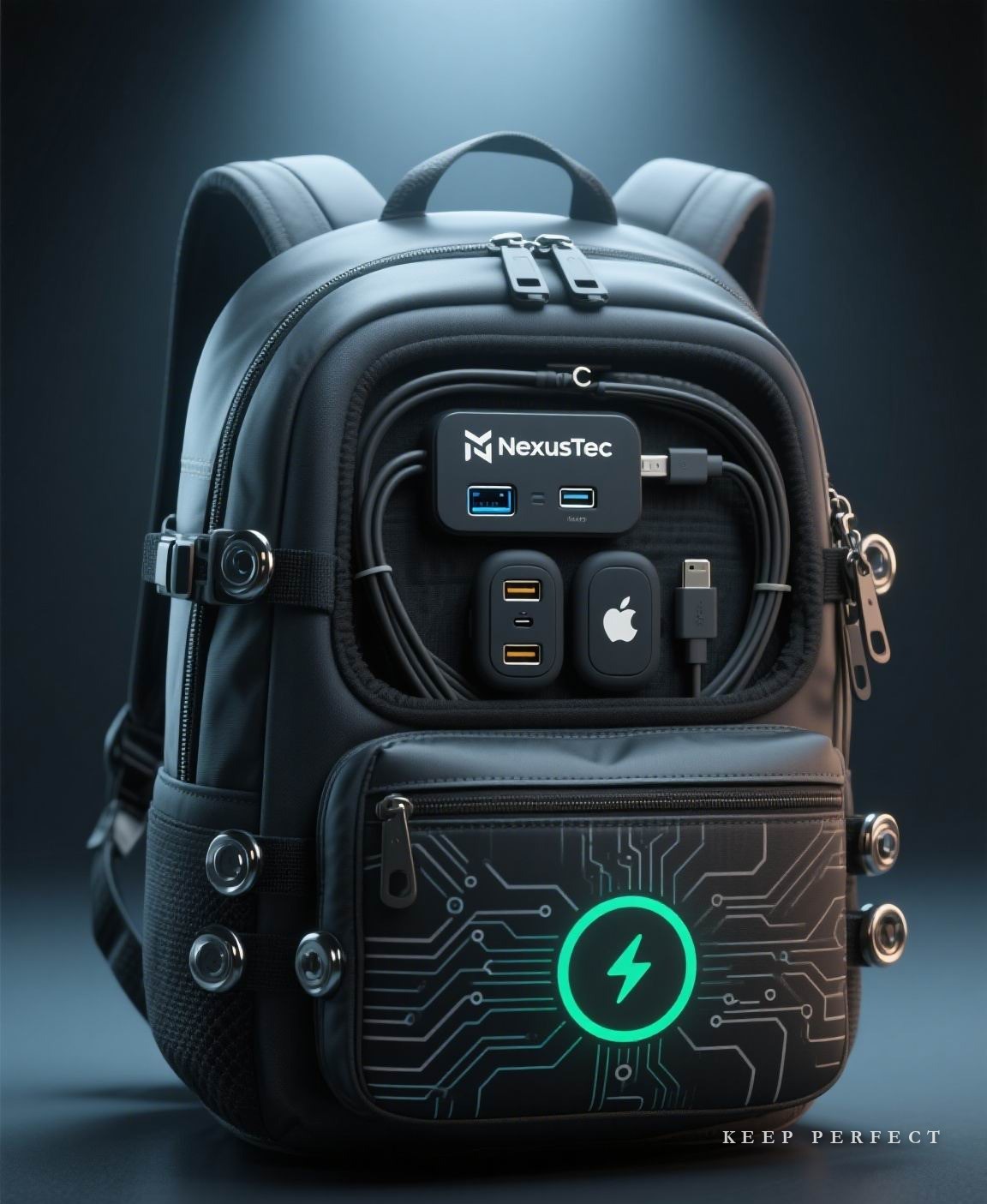
A modular carrier for construction site supervisors is a worksite bag, usually 20-30 litres, arranged so drawings or a tablet, measuring instruments and a hard hat can be reached without setting the bag down on wet concrete. Order terms are 500 units per reference, samples turned round in 6-10 working days and 35-50 days allowed for the bulk run, inspection at AQL 2.5 at level II of ISO 2859-1, and prices quoted FOB Xiamen with payment on T/T 30/70. One limit is explicit: this is civilian worksite carry only. Personal protective equipment, helmet standards, site access rules and any safety obligation are set by the site and by local regulation, and nothing below is safety guidance.
What a Site Supervisor Carries Between the Office and the Slab
A supervisor's day is a sequence of short moves rather than a long walk: office to slab, slab to scaffold stair, stair to a meeting in a cabin, then back to the vehicle. Each move ends with the bag being put down somewhere unsuitable, and each one generates a small reach for something specific. That pattern, more than the total weight, is what the layout has to answer.
Typical kit runs 5-9 kg. A tablet or a rolled set of drawings, a laser distance meter and a 5 m tape, a notebook and pens, gloves, safety glasses, a hard hat when it is not being worn, a hi-vis vest, a phone, a small tool roll and 1.5-2 litres of water. None of those items is heavy; together they are awkward, because three of them are bulky and rigid and two are fragile.
Walking distance is deceptive. Six to ten kilometres is normal on a large site, most of it on uneven ground, some of it on stairs, and a surprising amount of it one-handed because the other hand is carrying a door, a sample or a handrail. A bag that only works when worn on both shoulders gets carried by a top handle instead, which is how straps and shoulders both end up sore.
The volume envelope should stay disciplined at 20-30 L, which sits between a daypack and the larger modular backpack platform sizes. Larger volumes encourage the bag to become a mobile store, which slows every reach and makes the bag too big for a site vehicle footwell or a cabin locker. The attachment face is the cheaper way to add capacity, because a helmet cradle or a document tube on the outside costs less than the litres it would take to do the same job inside.
- Working load: 5-9 kg
- Main body: 20-30 L
- Distance on foot per day: 6-10 km
- Moves per day ending in a reach: 20-40
- Items carried rigid and bulky: drawings, tablet, hard hat
Bottom line: Specify a 20-30 L worksite carrier for a declared 5-9 kg load, sized to fit a vehicle footwell, and mount bulky rigid items on the attachment face rather than buying the litres needed to carry them inside.
Drawing and Document Carriage: Flat, Rolled and Protected
Paper has not left the site. Even where a tablet carries the current set, someone arrives with a printed A1 sheet, a marked-up A3 detail or a delivery note that has to stay dry and readable for the rest of the day. Handling those formats is a geometry problem before it is a material one.
Three carriage routes are in everyday use. A rolled tube mounted externally takes a full A1 sheet at a 60-80 mm roll diameter and keeps it out of the main body entirely; it is the best answer for a set that is consulted once and carried all day. A flat document sleeve inside the body takes A3 and A4 without creasing, protects against rain, and is the best answer where drawings are consulted often, because the sheet can be pulled out and handed over flat. A rigid case in the main compartment protects best and costs the most space, and it suits a tablet plus a small set rather than a full drawing set.
Creasing is the failure that matters. A sheet folded to fit a 25 L body is a sheet nobody can read at a handover, and a sheet folded repeatedly fails at the fold within a week. If the programme uses printed drawings at all, the bag has to carry at least one flat format without folding, and that single requirement drives more of the bag's shape than any other.
| Selection criterion | External rolled tube | Flat sleeve inside the body | Rigid case in the main compartment |
|---|---|---|---|
| Largest format handled | A1 at 594 x 841 mm | A3 at 297 x 420 mm flat | A3 in a case, A4 loose |
| Creasing risk | Low if the roll is 60 mm or over | None | None |
| Weather protection | Good with end caps | Good with a storm flap | Best |
| Time to hand a sheet over | 30-60 s, unroll and flatten | 5-10 s | 15-25 s |
| Interference with other kit | Tube occupies one side face | Sleeve occupies the rear panel | Case eats the main body |
| Added empty mass | 180-320 g | 90-160 g | 400-750 g |
| Best used when | A full set is carried, consulted rarely | Sheets are consulted often | A tablet travels with the set |
Verdict: Fit an external rolled tube where a full A1 set is carried and consulted rarely, and a flat internal sleeve where sheets are handed over more than a few times a day, because a folded drawing stops being usable at a handover within a week.
Tablet, Measuring Tools and Instruments: Drop, Dust and Access
The tablet has replaced the drawing board on many sites and introduced a new failure mode: a device that costs more than the bag and is carried into an environment full of hard edges and fine dust. Instrument carriage is therefore decided by three things - how the device is protected in a fall, how much dust reaches it, and how long it takes to bring into use.
Position determines protection. A tablet sitting in a padded sleeve on the back panel has the wearer's torso taking the impact in a fall, which is the safest place; a tablet in an external pouch is exposed to knocks against scaffolding and door frames but is available in a couple of seconds. Instruments that are used constantly - a laser distance meter, a tape, a phone - belong outside; the tablet, used a dozen times a day rather than a hundred, belongs inside.
Dust is the mechanism that quietly ends devices. Fine concrete and plaster dust works into zips, into port covers and into the seam of a pouch, and it is abrasive enough to scratch a screen through a soft lining. Every device pocket on a site bag should have a covered closure, and the lining should be a smooth film that can be wiped rather than a brushed textile that holds grit.
| Selection criterion | Padded sleeve against the back panel | External padded pouch | Rigid case with an inner liner |
|---|---|---|---|
| Time to bring into use | 10-20 s, bag opened | 2-5 s | 15-30 s |
| Drop protection | Best, body takes the impact | Fair, exposed to knocks | Best, hard shell |
| Dust ingress over a shift | Low, inside the main body | High without a cover | Lowest |
| Screen scratch risk | Low with a smooth lining | Moderate | Lowest |
| Heat build-up | Moderate against the back | Low | Moderate |
| Suits which device | Tablet, 10-13 inch | Laser measure, phone, tape | Tablet plus instruments together |
| Added empty mass | 90-160 g | 120-220 g | 450-800 g |
Layouts derived from work-orientated modular carry platforms already solve most of this; the site-specific addition is the dust cover on every pocket and a smooth wipe-clean lining rather than a soft brushed one.
Selection rule: Keep any tablet in a padded sleeve against the back panel, keep instruments used more than twenty times a day in external pouches, and require a covered closure plus a wipe-clean lining on every device pocket on a site bag.
Hard Hat, Hi-Vis and Glove Carriage on the Outside
A hard hat is worn for part of the day and carried for the rest, and it is the single most awkward object a supervisor owns: rigid, roughly 290 mm across its widest dimension, 350-450 g, and impossible to compress. Note the boundary again - what hat is worn, when, and under what standard is set by the site and by local regulation, and is outside anything discussed here. What follows is only about carrying the thing when it is not being worn.
Two carriage routes work. A cradle on the attachment face holds the helmet brim-down against the side or bottom of the bag, released by one buckle, and keeps it out of the main body altogether. A compression strap arrangement holds it against the lid, which is cheaper but lets the helmet swing and tends to crush the brim against anything else mounted nearby.
Whichever route is used, three rules keep it tolerable. The helmet must mount low, because a helmet high on the bag pushes the centre of mass backwards and makes the wearer feel unstable on stairs. It must mount on the opposite side from the water bottle, because two rigid bulky items on the same side make the bag impossible to set down upright. And it must not cover a pocket that is used often, because a helmet is put on and taken off several times a day while other kit is needed constantly.
Hi-vis and gloves are easier but still worth planning. A vest folds into a flat external pocket and should have its own slot rather than sharing with documents, because hi-vis fabric carries dust and grit into anything it touches. Gloves belong in an open-topped external pocket where they can be dropped in wet, which keeps the main body clean.
Takeaway: Mount the helmet low on the attachment face, opposite the water bottle, on a one-buckle cradle, and give the hi-vis vest its own flat pocket so grit from the vest never reaches drawings or a device.
Dust, Grit and Abrasion: What Actually Kills a Site Bag
Site bags rarely fail dramatically. They fail by accumulation: zips that will not close by month four, corners worn through by month eight, and a lining that holds so much grit that anything soft put inside comes out grey. All three are material and closure decisions that can be made correctly at specification stage for very little money.
Dust enters at the closures. A bare coil zip running horizontally collects dust in the teeth and jams; the same zip under a storm flap stays serviceable for far longer. Hook-and-loop is worse still in this environment - it fills with lint and grit within weeks and stops holding, which is why pouch retention on a site bag should be woven rather than hooked.
Abrasion concentrates where the bag meets the world: the base, the lower corners, the shoulder strap binding and the grab handle. Resistance of the face cloth is measured to ISO 12947 and rubbing resistance of the narrow fabrics to ASTM D3884; both figures should be on the drawing, and both are cheaper to satisfy with a heavier base panel than by upgrading the whole shell.
Colour is a live trade-off on site. A mid-dark shell hides dust and grime far better than a pale one and is the practical choice for a supervisor who moves between site and client meetings; a fluorescent panel on the outside carries the visibility requirement without making the whole bag a dust magnet. Colour fastness of printed or dyed panels to rubbing is checked to AATCC 8, which matters because a fluorescent panel that greys out has stopped doing its job.
Spec rule: Put every external zip under a storm flap, retain pouches by weaving rather than by hook-and-loop, request ISO 12947 for the face cloth and ASTM D3884 for the webbing, and carry visibility on a fluorescent panel rather than on the whole shell.
Site Compatibility: Visibility Panels, Pass Window and Vehicle Storage
A worksite bag has to exist inside site rules that have nothing to do with carrying comfort. Three of them shape the product: visibility, identification, and where the bag goes when it is not on somebody's back.
Visibility is normally handled by a fluorescent panel plus a retroreflective band. The panel does the daytime work and the band does the work after dark and in poor weather, and both should be positioned on surfaces that face outward when the bag is worn - the lid and the front face, not the back panel, which is hidden by the wearer. Bands in the 25-50 mm range are enough; wide bands add stiffness and cost without adding much.
Identification is a small feature that saves a lot of time. A clear window for a site pass or a name card on the lid or the shoulder means a bag can be identified at a gate without opening it, and it removes the habit of taping cards to the outside, which leaves adhesive residue and tears the fabric when removed.
Storage is the constraint most often discovered too late. Site bags live in vehicle footwells, in cabin lockers and on crowded benches, and a bag designed only to look right on a person may not fit any of those. The specification should therefore state a maximum external dimension as well as a litre count, because the litre count does not tell anyone whether the bag will go under a seat.
- Fluorescent panel: lid and front face, not the hidden back panel
- Retroreflective band: 25-50 mm on outward-facing surfaces
- Pass window: clear, on the lid, removable card
- Stated maximum external dimension, not just volume
- Base panel: flat and wipe-clean so the bag can be set down anywhere
Judgement: State a maximum external dimension alongside the litre count, place visibility panels on outward-facing surfaces only, and fit a clear pass window so gate identification never involves opening the bag or taping cards to the shell.
Cleaning, Inspection and Fleet Rotation for Site Bags
Site bags are cleaned rarely and inspected never, which is why they fail early. Both activities can be made short enough to actually happen.
Cleaning is a dry-first job. Brushing and vacuuming removes the grit that would otherwise be ground into the lining by wiping; compressed air drives dust deeper into seams and into zip teeth and should be avoided. After the dry pass, a damp wipe with a mild agent takes the film off, and the bag should be left open to dry rather than closed and stacked.
Inspection should be tied to something the site already does. A monthly toolbox check is a natural anchor and is about the right interval for a bag in daily use: look at the base corners, the zip runs, the shoulder strap anchorage and the helmet cradle buckle, and withdraw anything showing a structural fault rather than a cosmetic one.
Rotation extends fleet life more than any material upgrade. Two bags per supervisor, rotated, roughly doubles the service life of both, because drying time between uses is what stops lining rot and hardware corrosion. Programmes that buy one bag per person and run them daily usually replace the fleet in half the time.
| Item checked | Interval in months | Action when the signal appears |
|---|---|---|
| Base corners and lower binding | 1 | Patch before substrate is exposed |
| Zip runs under the storm flaps | 1 | Replace the slider at first tooth spread |
| Shoulder strap anchorage | 1 | Return for restitch if stitch run-out shows |
| Helmet cradle buckle | 1 | Replace at any crack |
| Fluorescent and reflective panels | 3 | Replace when greyed or delaminated |
| Lining condition | 3 | Deep clean or withdraw if grit is embedded |
Anchor inspection to a monthly site check, clean dry-first rather than with compressed air, and budget two bags per supervisor in rotation because drying time between uses roughly doubles fleet service life.
Production Capacity and Sampling Gates for Site Fleet Orders
Site fleets are bought against a project start, and the order usually includes a contractor's own identification, which has to be approved before cutting begins. Sequencing that approval inside the sampling window is the difference between landing before mobilisation and landing after it.
Vetted partner facilities provide 4,950 m² of SGS-verified floor area worked by 137 staff across 7 lines holding 149 machines; combined output on those lines is rated at 200,000 units each month. A sample is turned round in 6-10 working days, extending to 12-15 where the face, the document sleeve and the helmet cradle are all new together, and the bulk run then takes 35-50 days once the pre-production sample is signed, inspected at AQL 2.5 on ISO 2859-1 level II with zero accepted on critical, 2.5 on major and 4.0 on minor.
Bag production experience on our side starts in 2004 and the business was set up in 2014, and the layouts proposed for worksite carriers come from that history: rigid bulky items go outside, fragile items go against the back panel, and every external pocket gets a cover, and pouch retention follows the published attachment grid geometry. Getting that split wrong at sampling stage is the most common reason a site bag needs a second round.
Approve contractor identification and artwork inside the 6-10 day sampling window, and hold the bulk schedule at 35-50 days after sign-off on the pre-production sample, because artwork approval sits outside the sewing schedule and is expensive to change once cutting has started.
Freight Cube, Sampling Cost and Reorder Planning for Site Fleets
Site bags are boxier than hiking bags and pack worse, because the back panel and the document sleeve do not collapse. Cube planning should therefore be done from a packed sample rather than from a drawing, and it should be done before the carton is specified.
A 20GP takes close to 28 CBM and a 40HQ near 68 CBM; sea transit runs 25-35 days, air takes 5-8 days and express courier 3-5 days. For a project start, the reliable pattern is a single sea shipment placed well before mobilisation, with one small air shipment of replacement pouches and panels held back for the first month on site, which is when damage rates are highest.
Sampling is billed at USD 50-150, returned to the buyer against the bulk order, and new tooling and screens land between USD 300 and 2,500 where the cradle, the sleeve or a printed identification set is new. Quotations for custom modular backpack programmes are issued inside 24-48 hours once a full specification arrives, FOB Xiamen, payment on T/T 30/70 terms, and a 500-unit minimum for each reference.
Reorder logic for a site fleet is simple: pouches, cradles and panels are consumables, shells are not. Holding one spare cradle and one spare pouch set per five bags keeps a damaged bag in service instead of out of it, and reordering against the same grid geometry means a replacement part bought next year still fits a shell bought this one.
Plan cube from a packed sample rather than a drawing, move the fleet by sea with 25-35 days of transit, and hold spare cradles and pouch sets at one per five bags so damage in the first month never takes a supervisor out of a bag.
Frequently asked questions
What size carrier is right for a construction site supervisor?
20-30 L for a declared 5-9 kg load, sized so it fits a vehicle footwell or a cabin locker. Above 30 L the bag becomes a mobile store and slows every reach, and bulky items are better mounted on the attachment face.
- Main body 20-30 L
- Working load 5-9 kg
- State maximum dimensions
How should drawings be carried on a site bag?
An external rolled tube for a full A1 set consulted rarely, or a flat internal sleeve for A3 sheets handed over several times a day. A folded drawing stops being usable at a handover within a week.
- A1 roll at 60-80 mm diameter
- A3 flat sleeve, no folds
- Storm flap over the sleeve
Where should a tablet go in a site supervisor bag?
In a padded sleeve against the back panel, where the wearer's body takes the impact in a fall and dust ingress stays low. External pouches suit instruments used constantly, not a device used a dozen times a day.
- Padded back-panel sleeve
- Smooth wipe-clean lining
- Covered closure on every pocket
How is a hard hat carried when it is not being worn?
On a one-buckle cradle mounted low on the attachment face, opposite the water bottle so the bag still stands upright. What hat is worn and when is set by site rules and local regulation, not by anything here.
- Low-mounted cradle
- Opposite side from water
- Never over a busy pocket
Why do zips on site bags stop working?
Fine concrete and plaster dust packs into the teeth of any bare horizontal zip. Putting every external zip under a storm flap keeps it serviceable for far longer, and pouch retention should be woven rather than hooked for the same reason.
- Flap every external zip
- Weave pouch straps
- Avoid hook-only retention
Which fabric tests matter for a worksite bag?
Face-cloth abrasion against ISO 12947 and rubbing resistance of the narrow fabrics to ASTM D3884, with colour fastness of printed panels checked to AATCC 8. A heavier base panel satisfies the abrasion figure more cheaply than a heavier whole shell.
- ISO 12947 face cloth
- ASTM D3884 webbing
- AATCC 8 printed panels
Should a site bag be a light or dark colour?
Mid-dark, because it hides dust and grime between site and client meetings. Carry the visibility requirement on a fluorescent panel with a 25-50 mm retroreflective band on outward-facing surfaces rather than making the whole shell fluorescent.
- Mid-dark shell
- Fluorescent panel on lid and front
- 25-50 mm reflective band
How should visibility panels be positioned on a worksite bag?
On surfaces facing outward when worn: the lid and the front face. Panels on the back panel are hidden by the wearer and do nothing, while wide bands add stiffness and cost without much gain.
- Lid and front face only
- 25-50 mm band width
- Replace when greyed
How often should a site bag be inspected?
Monthly, anchored to a toolbox check that the site already runs. Look at base corners, zip runs, shoulder strap anchorage and the helmet cradle buckle, and withdraw any bag showing a structural rather than cosmetic fault.
- Monthly, tied to a site check
- Four checks take a minute
- Withdraw on structural faults
What is the right way to clean a dusty site bag?
Dry first: brush and vacuum to remove grit, because wiping grinds it into the lining. Avoid compressed air, which drives dust deeper into seams and zip teeth, then damp-wipe and leave the bag open to dry.
- Brush and vacuum first
- No compressed air
- Dry open, not closed
Should a site fleet issue one bag per supervisor or two?
Two in rotation. Drying time between uses is what prevents lining rot and hardware corrosion, and a rotated pair roughly doubles the service life of both against one bag used daily.
- Two bags per person
- Rotate for drying time
- Longer fleet life
What is the minimum order for a site supervisor bag programme?
500 units per reference. Samples are turned round in 6-10 working days, or 12-15 where face, document sleeve and helmet cradle are all new, and bulk takes 35-50 days after sign-off on the pre-production sample, checked at AQL 2.5.
- 500 units per reference
- Samples in 6-10 working days
- Bulk 35-50 days
How much does sampling and tooling cost for a site bag?
Sampling is billed at USD 50-150 and returned to the buyer against the bulk order; new tooling and screens land between USD 300 and 2,500 where the cradle, sleeve or printed identification set is new. Quotations are issued inside 24-48 hours, FOB Xiamen.
- Sampling charge USD 50-150
- New tooling USD 300-2,500
- Quotation in 24-48 hours
How is a site fleet shipped and how much cube does it take?
A 20GP takes close to 28 CBM and a 40HQ near 68 CBM; sea transit runs 25-35 days, air takes 5-8 days and express courier 3-5 days. Ship the fleet by sea before mobilisation and hold one air shipment of spare pouches and cradles.
- 28 CBM per 20GP
- Sea 25-35 days
- Air 5-8 days for spares