Home › Field notes › Modular Diaper Bags: Organization for Parents, Compliance First
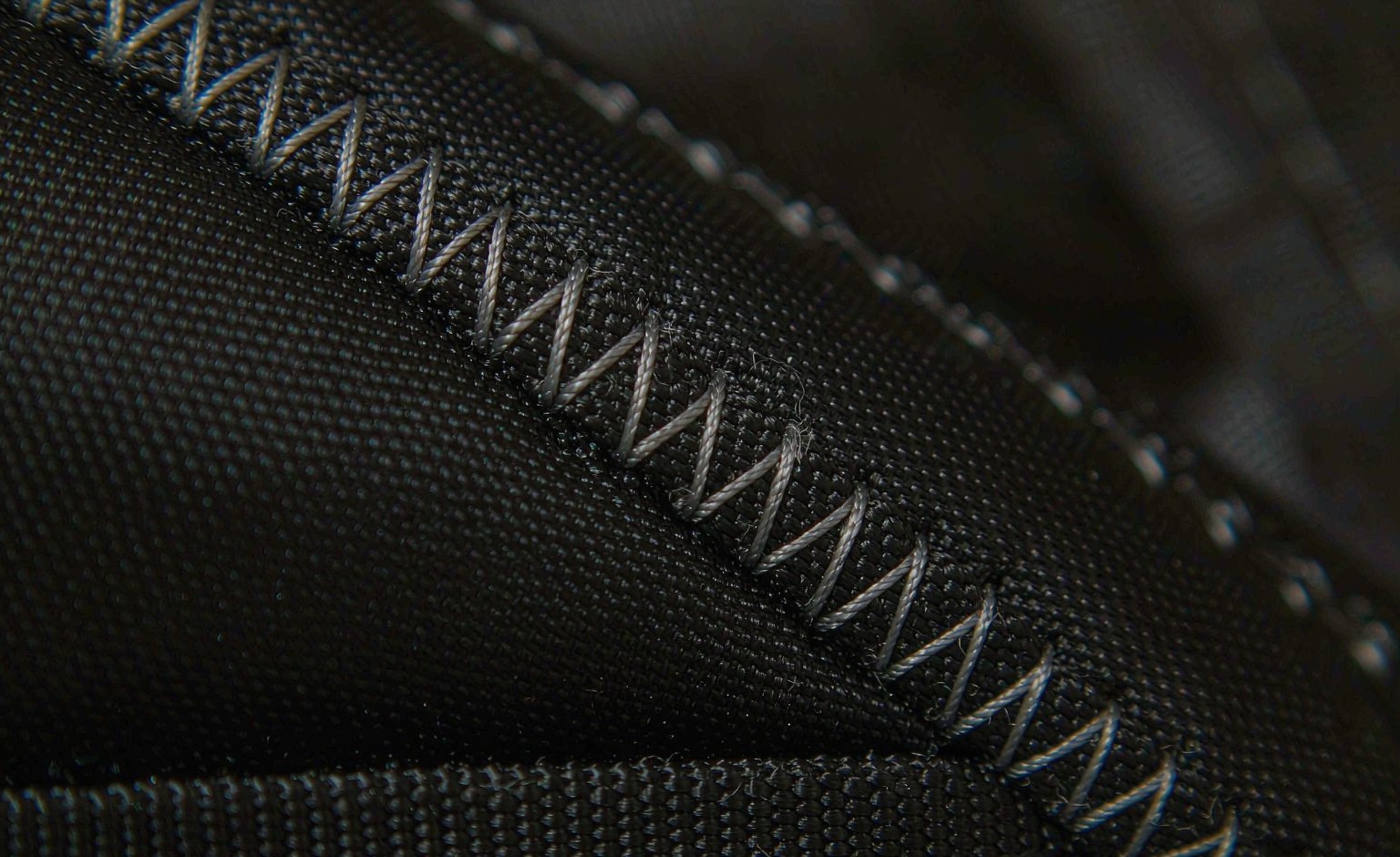
A modular bag for parents succeeds when one chassis serves several changing tasks and every trim on it has a documented compliance record behind it, because this is the one carry category where paperwork delays shipments more often than construction does. Start with the chemical file: CPSIA applies to products intended for children in the United States, REACH (EC 1907/2006) governs substances of very high concern for Europe, California Prop 65 drives warning decisions, and OEKO-TEX Standard 100 is the textile evidence most retailers request. Then design for cleaning, because anything that cannot survive frequent wiping will be returned. Commercial conditions are unchanged from any other programme: MOQ 500 per module reference, sampling 6-10 working days, mass production 35-50 days after approval, final inspection at AQL 2.5. This guide covers each obligation, the claim boundaries that must never be crossed, and the module architecture that keeps parental ranges practical.
Why this category is regulated differently
Two facts separate parenting ranges from ordinary carry: a child may mouth any component, and regulators assume fewer safe-by-design behaviours in use. Those assumptions drive migration limits, mechanical requirements and tracking obligations that do not apply to a laptop pouch. It is also why the documentation burden sits with the brand owner rather than being delegable.
Scope questions come first, and they are genuinely subtle. Whether an item is regulated as a children's product depends on intended use, marketing claims, age labelling and sizing, not merely on who buys it. A bag marketed to parents for carrying infant supplies often gets treated differently from one marketed to the child directly. Establishing that determination early, and writing it down, prevents expensive re-testing later.
The next step is a component inventory. Every zip pull, slider, buckle, magnet, print layer, foam layer and coating on the finished article belongs in that inventory with a material declaration and test reference attached. Most failed audits are not failures of chemistry; they are failures of completeness, where one small trim was substituted late and never re-documented.
Finally, treat any change as a re-documentation event. A cheaper slider from a different source may meet the same dimensional drawing and fail the migration limit. Programmes that hold this discipline find audits routine; programmes that do not spend months reconstructing records they never created. Retailers in this segment increasingly audit the file rather than merely sampling the goods, and a supplier with complete records becomes a lower-risk listing than a cheaper competitor with gaps, so treat documentation as a commercial asset and budget for it accordingly.
Bottom line: Treat a parent-facing carrier as a regulated article from the first sketch, because small-part retention, chemical documentation and cleaning validation each gate the shipment rather than the design.
The four regulatory instruments that shape every trim decision
Four frameworks dominate this category, and they interact with each other in ways that catch teams mid-development. Understanding which decision each one governs makes the whole file manageable.
| Instrument | What it governs here | Record expected | Usual failure |
|---|---|---|---|
| CPSIA | Substrate limits plus tracking information on children's products for the United States | Third-party test report with tracking label detail | Tracking information omitted from the finished article |
| REACH (EC 1907/2006) | Substances of very high concern across all components for Europe | Supplier declarations plus any required notification | Declaration missing for one substituted trim |
| California Prop 65 | Warning obligations for listed substances in California sales | Screening results or a documented rationale for no warning | Decision made without any recorded evidence |
| OEKO-TEX Standard 100 | Textile evidence most retailers request for infant contact | Certificate covering the specific article and class | Certificate scope does not cover the supplied colourway |
Every row has a version of the same failure: nobody wrote it down. Chemistry problems are comparatively rare in a mature supply chain; documentation gaps are routine. Assigning one person ownership of the file, with a checklist that must be complete before pre-production approval, resolves most of it.
Metal hardware deserves specific attention. Anything touched repeatedly and possibly mouthed should have nickel release evidence, and EN 1811 sets out the migration method and the limit typically applied. Magnetic closures add a second consideration beyond migration: small high-strength magnets present a mechanical hazard if they detach, so specify retention force and test it after repeated laundering rather than only when new.
Record both measurements in the technical file rather than relying on a supplier datasheet, because an auditor will reasonably ask how that closure behaves once the covering seam has survived a hundred cleaning episodes. The same principle applies to printed decoration: verify screening after the print has cured and been washed, since some ink systems change composition during cure.
Verdict: Document CPSIA status and chemical evidence, substance declarations under EC 1907/2006, and OEKO-TEX Standard 100 certification per component before the reference sample is reviewed.
Claim boundaries that must never be crossed
This is the area where brands do most damage to themselves, usually through enthusiasm rather than intent. A modular carrier for parenting can legitimately be described as organised, wipe-clean, and easy to carry. It must never be described in terms suggesting health benefit, medical effect, or protection from illness.
Concretely: avoid any suggestion that a material kills, neutralises or inhibits microbes unless it has been registered and tested as a biocidal product in the destination market, which is a separate and demanding regulatory pathway. Avoid claiming a surface is "antibacterial" as a marketing adjective. Do not imply that the product contributes to an infant's development, sleep, digestion or health.
Similarly, no claim should suggest compliance with a standard that was not actually tested against, and no certificate should be reproduced in a way that implies broader coverage than its scope. Retailers increasingly verify certificate scope directly, and a mismatch discovered at that stage tends to end relationships rather than prompt correction.
The safe writing pattern is descriptive and verifiable: state what the product physically does, reference the method used to verify it, and keep health language entirely out. "Wipe-clean lining tested for repeated cleaning" is defensible. Anything shorter, warmer and vaguer is where the risk lives. Apply the same discipline to imagery: a photograph showing the product beside medical items, or copy addressed to healthcare contexts, creates exactly the same inference as an explicit claim would. Review retail listings and marketplace copy with that in mind, because those pages are frequently written later by someone who never saw the development file.
Cleaning validation: the most frequently skipped test
Parenting products get cleaned far more often than any other carry category, and far more aggressively than any care label expects. A lining that survives five gentle machine washes may fail after five weeks of real wiping with whatever solution happens to be near the changing mat.
Validate against real behaviour. Run domestic laundering following ISO 6330 for a specified number of cycles and grade appearance, then add a separate wiping trial using the cleaning agents most commonly used by parents, including plain water, a mild detergent solution and a fragrance-free wipe. Record any change in coating, print, or seam tape after each.
Coating selection follows from that evidence. Where a wipe-clean surface is needed, prefer a coating with documented hydrolytic stability over one selected for hand feel. A surface that turns tacky after twenty cleaning cycles will be discarded long before the chassis wears out, and the failure will be blamed on the whole product.
Seam sealing deserves a note. Bound or welded seams clean better than taped seams in this application, because cleaning solutions attack tape edges and nobody can reseal them at home. Where a wet compartment is genuinely required, isolate it in a removable pouch so the parent can replace that component rather than the whole carrier. The same logic applies to insulating layers for bottles: a bonded-in film that delaminates cannot be repaired, whereas a lined sleeve can be turned out and washed separately.
Takeaway: Validate cleaning at a stated cycle count under ISO 6330 and add a disinfectant spot-exposure trial, because parents launder more often and far more aggressively than any care label assumes.
Module architecture for a parent's day
The commercial case for modularity is unusually strong here. Requirements change monthly in the first year: feeding equipment disappears, then clothing sizes change, then snacks and small toys appear. A fixed internal layout cannot follow that curve, while a set of detachable units can. The resale argument reinforces it, because secondhand buyers consistently pay more for a carrier that reconfigures for the next stage instead of being retired.
Three detachable units cover the overwhelming majority of what parents actually report carrying, and all three are cheaply specified. A change unit holding a mat, wipes and a spare outfit, insulated where required and always removable for cleaning. A feeding unit for bottles and food, which should be wipe-clean inside and out and carry no claim beyond that. And a personal unit for the carer's own items, because parents consistently report that their things are the first to be squeezed out.
| Unit | Contents it carries | Construction requirement | Why it must detach |
|---|---|---|---|
| Change unit | Mat, wipes, spare clothing | Wipe-clean interior, bound seams | Soiled items go straight into the wash without the whole carrier |
| Feeding unit | Bottles, food containers | Wipe-clean all surfaces, no absorbent lining | Cleaned far more often than any other component |
| Personal unit | Keys, wallet, phone | Standard lining, soft structure | Reused as a standalone pouch long after this stage |
| Dirty-goods pouch | Soiled clothing | Fully sealed seams, smooth face | Replaced rather than laundered with everything else |
The fourth row is the one buyers resist and parents appreciate most. A sealed pouch for soiled items converts the worst part of the day into a single component that rinses out, and it costs only a few grams of additional fabric. Because it also protects the lining from the staining that otherwise drives most condition-related complaints, it tends to improve resale value, and stays useful after this stage ends because it transfers easily to school runs and muddy sport. One caution: specify film thickness numerically, since a pouch puncturing on day three is worse than none at all.
Interface choice when small hands and heavy wash cycles meet
Attachment hardware has to satisfy two conflicting requirements here: it must release easily for a person holding a child, and it must not release when a toddler pulls on it. That combination favours closures with a deliberate two-stage action over anything that releases with a single grab.
The standard woven field remains a sensible base. Tape at 25 mm width with rows at 38 mm vertical spacing and 50 mm horizontal repeat allows third-party pouches to mount, which matters because many parents already own attachments. Reinforce every row junction, because this is one of the few applications where users genuinely pull hard in the wrong direction.
Where a magnetic-guided fitting is used for a one-handed closure, specify pull-off force and verify it after cleaning cycles, then confirm that the magnet is fully enclosed and cannot become accessible if a cover seam opens. Choose any supplier in that family by performance rather than by name, and require declaration documents for the plating.
Avoid small detachable components anywhere within reach. Anything that can be gripped by small fingers becomes a mechanical hazard the moment a stitch fails, so prefer riveted or fully captured fixings and pull-test them after abrasion cycling. Weight deserves attention too, because the user is frequently carrying a child at the same moment: every fitting contributes grams, and several heavy closures on a front panel introduce visible swing when the wearer bends. Prefer fewer attachment points executed properly over numerous light-duty ones.
Judgement: Keep attachment rows on 25 mm webbing at 38 mm vertical spacing but add a positive secondary retention, since a module opened by a child is a safety event and not a warranty claim.
Testing plan and inspection thresholds
A validation set for this category should cover chemical screening, physical durability and cleaning behaviour, each with defined methods and numeric thresholds. The following are the minimum entries worth putting into a tech pack.
Chemical screening against the applicable instruments discussed above, for every component in the inventory, with certificate scopes verified rather than assumed. Physical durability covers seam strength using ASTM D5034 for woven assemblies, abrasion by ISO 12947 on the base and lower panels, and hydrostatic resistance under AATCC 127 where a wet compartment is claimed.
Colour fastness matters here in an unexpected way. Light-coloured linings show every stain, while dark exteriors rub against pale clothing, so require AATCC 8 results in both dry and wet states and set the thresholds deliberately rather than accepting whatever the fabric mill reports.
At final inspection operate at AQL 2.5 with defect classes defined in advance, and add two specific checks a standard procedure omits: pull testing on every small component in reach, and confirmation that tracking information is present and legible on every unit. Both are cheap to check and expensive to discover missing after arrival.
Two further items belong in the set despite rarely appearing in a standard plan. First, a dimensional stability check after cleaning, because components shrink at differing rates and a panel that no longer lies flat will not seat against its mating part. Second, a hardware condition check following salt exposure under ASTM B117, since the same surfaces that get wiped down meet spilled liquids every single day.
Spec rule: Sample incoming lots at AQL 2.5 under ISO 2859-1, level II, with critical defects held at zero and the defect classification agreed before inspectors reach site.
Programme timing, quantity and documentation ownership
Development timing in this category is dominated by how quickly the compliance file closes, not by sewing. Plan sampling 6-10 working days for the soft-goods build, allowing 12-15 when moulded or laminated components enter the design, but budget separately for certificate lead times, which frequently exceed the physical sample route.
Each unit listed earlier carries MOQ 500 as a standalone reference, which shapes how many to launch. Two or three is realistic for a first season; five or six converts a range plan into unsold inventory. Development samples run USD 50-150 each and are refundable against production, while dedicated tooling for plates or moulded parts belongs in the USD 300-2,500 band and should be amortised across lifetime volume honestly.
Mass production 35-50 days follows pre-production approval, which should not be granted until the compliance file is substantially complete. Payment is T/T 30/70 against FOB Xiamen pricing, meaning the balance releases against shipping documents well before arrival. Freight planning then follows the familiar pattern: sea freight 25-35 days for anything planned, air 5-8 days reserved for genuine emergencies, courier 3-5 days for replacement components and documentation.
Ownership deserves the final word. Assign one named person to the technical file, require that person to sign off every component substitution, and keep certificates and declarations in a register with expiry dates. Every serious failure I have reviewed in this category traced back to a file nobody owned rather than to a bad decision anyone made. Review that register at every season boundary, since certificates expire quietly and a lapsed certificate discovered by a retailer is treated exactly like a missing one.
Selection rule: Plan MOQ 500 per module reference, allow sampling 12-15 working days where foam or moulded parts are involved, then mass production 35-50 days and sea freight 25-35 days.
Frequently asked questions
Which regulation applies first when sourcing a bag for infant supplies?
Establish product classification before anything else, because scope drives everything downstream. In the United States, CPSIA sets substrate limits and tracking requirements for children's products. In Europe, REACH (EC 1907/2006) governs substances of very high concern. California Prop 65 affects warning text, and OEKO-TEX Standard 100 is usually the textile evidence a retailer requests.
Can we describe the lining as antibacterial?
Only if the treatment is registered and tested as a biocidal product in the destination market, which is a separate regulatory pathway with substantial evidence requirements. Otherwise use descriptive wording such as wipe-clean, supported by the cleaning cycle count it was verified against. Never imply a health or medical benefit.
How many wash cycles should a parenting carrier be validated for?
Set muscle memory aside and count real behaviour: weekly cleaning across two years suggests around one hundred cycles. Run domestic laundering under ISO 6330 with visual grading, then add a separate wiping trial using common cleaning agents. Record coating, print and seam tape changes after each stage rather than grading appearance only at the end.
What should we require for metal hardware on this range?
Require nickel release evidence under EN 1811 for anything repeatedly touched or possibly mouthed, plus full material declarations for plating. Where magnetic closures are used, specify retained pull-off force and re-measure it after cleaning cycles, and confirm the magnet stays fully enclosed even if a cover seam opens.
How do we keep module costs controlled on a first launch?
Each detachable unit carries MOQ 500 as its own reference, so launch with two or three rather than six. Development samples are USD 50-150 each and refundable against production, while dedicated plates or moulded parts run USD 300-2,500. Add the third and fourth units on the reorder once attach rates justify them.
What is the development timeline including certificates?
Physical development is sampling 6-10 working days, or 12-15 with moulded or laminated components, then mass production 35-50 days after approval. Certificate lead times frequently exceed the physical route, so start the file in parallel and make pre-production approval conditional on it being substantially complete rather than treating it as a later step.
Should the nappy-change compartment be built in or detachable?
Detachable, decisively. Soiled items then go into the wash or the bin without condemning the whole carrier, and the unit can be replaced rather than cleaned in place. Specify bound or welded seams rather than taped, because cleaning solutions attack tape edges and nothing can be resealed at home.
Why did our audit fail when previous chemistry results were clean?
Usually incompleteness rather than contamination. One substituted trim after initial testing leaves no declaration in the file, and a certificate whose scope excludes the supplied colourway counts as missing. Maintain a component inventory with an owner, and treat every substitution as a re-documentation event.
What inspection extras should we specify beyond the standard procedure?
Operate at AQL 2.5 with classes agreed beforehand, then add two checks the standard procedure omits: pull testing on every small part within a toddler's reach, and confirmation that tracking detail is present and legible on each unit. Both are cheap at inspection and expensive if discovered after arrival.
Is standard woven attachment tape appropriate here?
Yes. Tape at 25 mm with rows at 38 mm vertical spacing and 50 mm horizontal repeat keeps third-party pouches usable, and reinforcement at every row junction handles users pulling in unexpected directions. Combine it with a two-stage closure where a heavy-wash module could otherwise detach.
How do we handle a retailer asking for certificate evidence later?
Keep certificates and declarations in a dated register with expiry fields, and verify that each scope statement covers the exact article and colourway supplied. Retailers increasingly check scope directly, so a certificate that does not match the delivered item tends to end the conversation rather than prompt a correction.
What freight and payment pattern should we plan around?
Plan FOB Xiamen pricing with T/T 30/70 settlement, balance released against shipping documents before arrival. Sea freight 25-35 days covers anything planned; air 5-8 days is for genuine emergencies only; courier 3-5 days suits replacement components. Model all three against the promotional window rather than after it is missed.
Can one chassis really serve the whole first year?
Yes, provided the internal layout is not fixed. Requirements shift from feeding equipment to clothing changes to snacks within months, so a chassis accepting two or three detachable units tracks that curve far better than a built-in organiser. Plan a fourth sealed pouch for soiled goods; parents value it more than any features.