Home › Field notes › Modular Duffel Bags: A Hybrid Travel Solution, Specified in Numbers
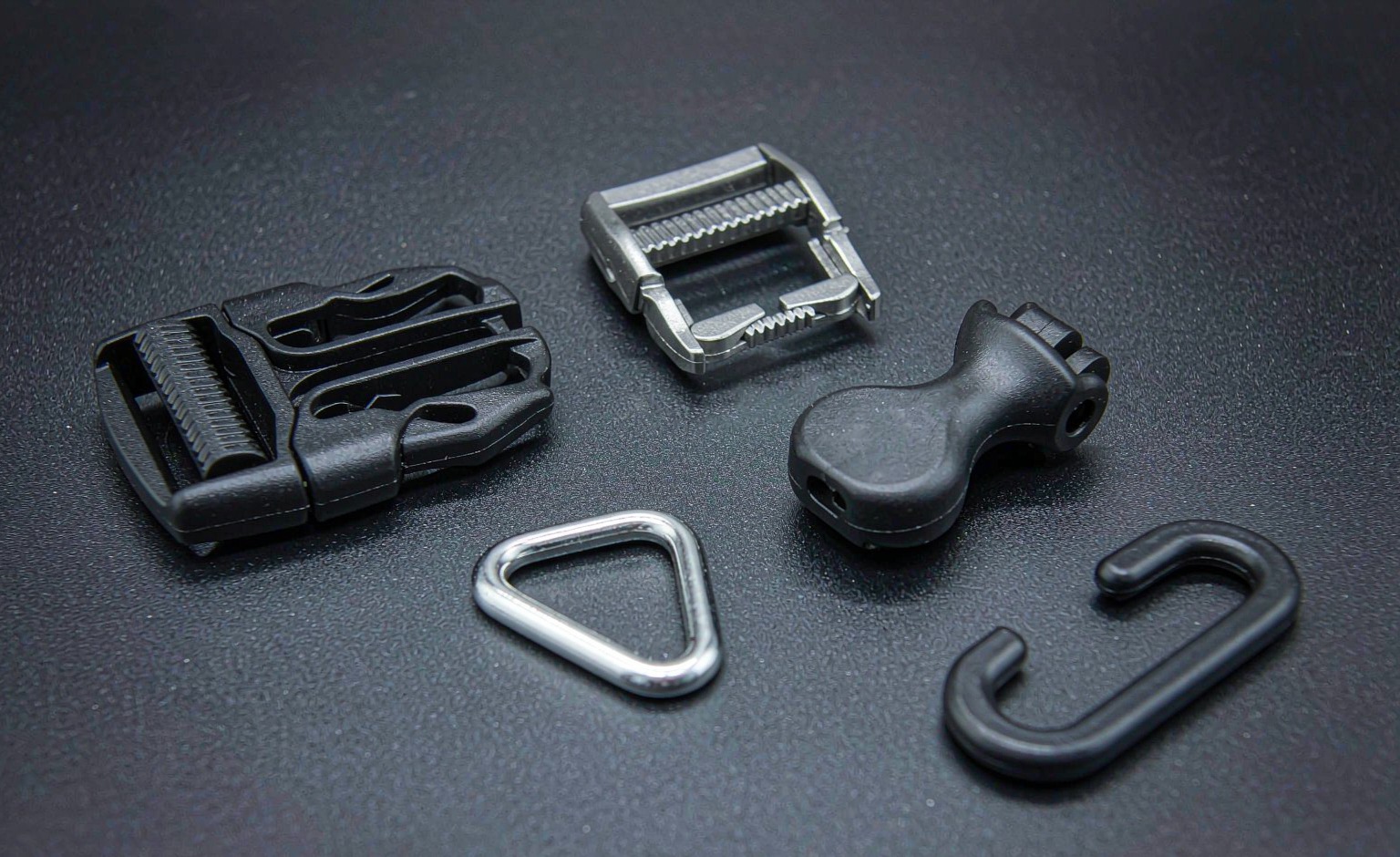
A modular duffel earns its keep when it moves from overhead locker to car boot to a long walk without repacking, and that requires one specific engineering compromise: a load-bearing harness that disappears completely when it is not needed. Built as a modular backpack platform with a stowable strap set, the hybrid can carry genuinely well for twenty minutes without compromising the opening a duffel exists to provide. Two numbers dominate the design. Overall length should stay near 55 cm so the reference survives the strictest cabin sizers most carriers use, and tape fields belong on the side panels rather than the base, mounted on 25 mm tape at 38 mm row pitch. Development then follows a predictable route: reference units inside 6-10 working days, bulk 35-50 days after sign-off, and release at a 2.5 acceptance number with defect classes agreed in advance, all of which this guide walks through in order. Decide early whether conversion takes under fifteen seconds with the body loaded, because a slower mechanism simply gets ignored and the harness becomes dead weight the buyer regrets funding.
What actually changes when a duffel gains a harness
Adding a wearable harness to a soft duffel is not an accessory decision; it changes how load enters the body panels. A duffel normally gets carried by handles, so its fabric is stressed in tension between two grab points. Ask it to ride on shoulders and those same panels now work in shear, along a completely different axis.
The consequence is predictable once stated: the strap anchorage has to tie into a continuous load path that reaches the base, not merely into the side seam. Anything less produces the classic failure where the top corner of the body tears away from its own binding, usually during the first genuinely full load rather than gradually.
Stowage then competes with that requirement. A pocket that swallows the straps cleanly is usually a pocket cut into the very panel carrying the load, so the panel gets a long opening and weakening it precisely where strength was needed. The two common solutions are to accept a visible zipped pocket with an internal reinforcement sleeve, or to route straps behind a false panel, which costs depth.
Whichever route is taken, decide it before the opening geometry is fixed. Every one of these options interacts with the zip line, and changing that relationship after sampling means a complete pattern revision rather than a minor amendment. Put plainly, settle the harness question in the same week as the opening question, because neither changes independently once the body panels are cut. One more consideration belongs beside them: how the conversion actually happens. Users switch modes dozens of times per trip, often queuing, and anything taking longer than about fifteen seconds gets abandoned in favour of carrying by hand. Time the operation repeatedly with the body loaded and treat thirty seconds as failure.
Takeaway: Accept the mass of a harness only where the bag is carried longer than ten minutes at a time, because a stowable harness that is never deployed is simply ballast.
Dimensional targets and how counting rules really work
Cabin limits are not a single number. There are several families of rule across the market, expressed variously as linear dimensions, as volume, or as a physical sizer box at the gate. Designing to the narrowest of them avoids the whole problem, but understanding which constraint binds makes the decision defensible rather than timid.
| Rule family | Practical dimension that binds | Design response | Trade accepted |
|---|---|---|---|
| Strict sizer, short-haul carriers | Overall length and depth | Keep length near 55 cm, depth near 25 cm | Less usable volume than the shell suggests |
| Linear sum regimes | Total of the three axes | Balance dimensions rather than minimising one | Slightly awkward proportions |
| Volume-based rules | Internal capacity | Soft unstructured panels that compress | Less protection for rigid contents |
| Weight-based rules | Total mass | Lighter hardware and shell | Reduced abrasion headroom |
| Unregulated regional operators | Discretion of ground staff | Conservative silhouette | Capacity left unused |
The pragmatic route most ranges take is to design a reference around 55 x 35 x 25 cm with soft panels, then publish guidance based on IATA material rather than asserting compliance with any single carrier's rules. The wording carries weight here: no supplier can guarantee acceptance when that judgement belongs to whoever is working the gate. Write retail copy accordingly, keep it measured rather than absolute, and publish the dimensional statement where a shopper sees it before buying rather than finding it at check-in. Build the platform around those fixed external dimensions too, since every detachable unit has to fit inside an envelope that already passed the sizer.
Also note that softness helps when it is honest. A body that compresses visibly under a sizer survives contact with the frame; one with an injection-moulded internal frame does not. Where structure is needed, put it into removable panels rather than into the shell itself, and check that an empty unit folds flat enough to store at home. That last point carries more weight than most designers expect, since many buyers own several such pieces and keep them nested between trips.
Verdict: Confirm the dimensional rule with the carrier before the pattern is cut, since counting methods differ on handles and wheels and a 20 mm oversize becomes a gate refusal.
Where attachment fields belong on a horizontal body
Horizontal bodies present a placement problem that upright packs do not: the base is a ground-contact surface, and the top is usually occupied by the main opening. That leaves the two end panels and the long side as the realistic mounting zones.
End panels are the best position for a tape field. They accept rows, they are visible when the bag is carried by hand, and they keep mounted pouches clear of the opening. Use 25 mm tape rows pitched 38 mm apart, repeating every 50 mm, so third-party pouches still mount and nothing interferes with the zip garage along the top.
Long side panels work well for compression-adjacent storage, provided the compression straps do not cross the field. Nothing destroys alignment faster than a cinched strap running diagonally over a mounted pouch, and users will blame the pouch.
Avoid the base entirely. Apart from ground abrasion, a pouch mounted there is unsupported when the bag stands upright, so it either dips into the puddle under a bar stool or takes the whole load when set down. If base-level storage is genuinely needed, make it a structured pocket rather than a hanging attachment, and consider whether that pocket can double as the dirty-laundry compartment that longer trips always demand. Handles deserve the same scrutiny: a wrap-around grip passing beneath the body protects the closure line far better than two loops sewn into seam allowance, and it spreads load across the whole panel instead of concentrating it at two stitch blocks.
Compression, partial fill and the slump problem
Duffels get used at partial fill more than any other format, and this is where cheap designs reveal themselves. A half-full unstructured body slumps into a shapeless mound, contents migrate to the lowest point, and whatever was carefully packed ends up in a corner.
Compression geometry answers this if the strap positions are chosen properly. Two straps at the quarter points stabilise a long body; four provide genuine shape control and allow uneven loads to be cinched selectively. The strap path matters more than the count: it should pass under the body rather than around it, so the load is lifted rather than merely squeezed.
Internal structure does the rest. A removable base stiffener is usually the best compromise, offering shape when loaded and pack-flat storage when empty. Avoid integrated frames for this category; they make the difference between passing and failing a sizer, and unlike a removable panel they cannot be taken out.
Finally, think about how empty units ship. A duffel that packs flat saves considerable volume per carton, which compounds across a container: those savings typically amount to several hundred units of extra capacity on a 40HQ of approximately 68 CBM. Conversely, a format that ships assembled spends most of a container on air, which is the single most common reason this category disappoints on landed cost once the freight invoice arrives.
Judgement: Specify compression positions that stop a half-full body slumping, and verify them with a partially loaded carry rather than with a fully packed one.
Base panels, flooring abrasion and water ingress at ground level
Unlike a backpack, a duffel spends much of its life sitting on the ground: airport floors, taxi boots, hotel rooms, a wet grass pitch. That single fact should drive base specification harder than any other attribute, and it is the part most frequently value-engineered away.
Abrasion numbers should be reported per panel rather than as a single figure for the fabric. Ask for cycles under ISO 12947 with the base called out separately, because the shell passing at twenty thousand cycles tells nothing about how the lower panel behaves when dragged across a concourse.
Water enters at the base more than anywhere else, not through the face fabric. Insist on hydrostatic resistance under AATCC 127 for the base material specifically, then consider whether bound and sealed seams are warranted. A welded base without drainage will eventually hold water against the contents, so provide a drain path or accept a sacrificial lining.
| Ground condition | Failure it produces | Specification lever | Method cited |
|---|---|---|---|
| Polished airport flooring | Base abrasion and print loss | Higher denier base with bound edges | Abrasion cycles per panel, ISO 12947 |
| Wet taxi boot | Wicking through the base seam | Sealed seams plus a drainage path | Hydrostatic resistance, AATCC 127 |
| Grass and soil | Staining on pale linings | Darker base tones, removable liner | Rub fastness, AATCC 8 |
| Salt-treated winter surfaces | Hardware corrosion | Covered feet and specified plating | Salt exposure then visual grading, ASTM B117 |
| Conveyor and loading contact | Abrasion at corner radii | Reinforced corners with wear patches | Abrasion plus visual assessment after ISTA 3A |
Note the last row: the period most likely to damage a duffel is often the few seconds it spends on a conveyor, which is why a transit qualification on the shipper earns its keep for this format specifically. Foot design deserves separate attention because it is usually specified last. Small feet concentrate the entire mass onto four points and dig into soft ground, whereas continuous rails spread load and slide more predictably across polished surfaces. Whichever route is taken, position the feet outboard enough to hold the panel clear of the surface, and check corrosion after salt exposure rather than assuming one plating grade behaves like another. Treat feet as a structural item rather than trim: replacement units rarely exist, so their loss usually condemns the whole panel.
Spec rule: Put higher denier fabric and bound seams at the base, then verify ground abrasion by ISO 12947 and splash resistance by AATCC 127 with figures stated separately by zone.
Module set that suits this format
The right module count for a hybrid is smaller than most teams expect. A long horizontal opening already provides excellent access, so the marginal benefit of additional organisation falls away quickly, and every extra pouch adds weight to a category that is already weight sensitive.
Three units cover the range convincingly. A wet and footwear pouch that seals and detaches for washing. A flat document and electronics sleeve that keeps rigid items away from the flexible body panels. And something small enough to become a personal item at the destination, which is where attach-rate is highest because users continue using it long after the trip.
It is worth defining precisely how little internal structure is enough: one removable divider at the base, a single flat sleeve, and compression doing the remainder. Anything beyond that belongs in detachable units, so its weight is carried only when the user actually wants it. Each additional reference carries MOQ 500, development costs real money, and another pouch competes with access the opening already provides, so launch narrow and expand on evidence rather than enthusiasm.
Cube mathematics for a mixed voyage plan
Soft-bodied products reward careful cube planning, because what compresses in a carton also compresses in a container, and the difference compounds over thousands of units. Getting this right frequently changes whether a seasonal order fits one vessel booking or two.
| Packing state | Carton cube per unit | Units in approximately 28 CBM | Units in approximately 68 CBM |
|---|---|---|---|
| Flat packed, no compression | Highest per-unit figure | Lowest of the three states | Lowest of the three states |
| Flat packed, compressed | Roughly two thirds of the loose figure | Noticeably higher than loose | Difference is often a whole booking |
| Assembled with modules fitted | High, and dominated by void space | Usually the worst option | Avoid for anything except displays |
| Modules shipped separately | Small, dense cartons | Efficient on the accessory leg | Allows phased store replenishment |
Sea transit then occupies 25-35 days, which is the planning assumption for everything routine. Air freight takes 5-8 days and should stay reserved for genuine shortages, while courier at 3-5 days handles replacement components and sample sets rather than volume. Record which option each booking actually used and the realised cube for each, since comparing planned against achieved figures across seasons is the only dependable way to tighten next year's forecast. Two useful heuristics come out of doing it consistently: the first booking of a new reference is almost always over-conservative, and any reference with an assembled shipper tends to stay that way unless someone forces the question.
Booking flexibility is the commercial benefit of getting this right. A range that packs efficiently can absorb a late forecast revision with an airborne top-up rather than paying for a second container, and that optionality is worth real money in a promotional season.
Bottom line: Cube out the shipper before quoting, because 20GP holds roughly 28 CBM and 40HQ roughly 68 CBM, and a duffel that cubes badly costs more per unit to land than to make.
Build route and gate discipline
A hybrid development has four decision points, and missing any one of them tends to cost months rather than days. The sequence below is deliberately short, because long checklists get skipped.
Gate one fixes external dimensions against the strictest sizer target, plus opening and harness-stowage geometry together. These three interact, and deciding them separately guarantees a conflict discovered at the reference stage.
Gate two is the reference review, held to 6-10 working days for soft-goods construction and 12-15 where moulded or laminated elements appear. Check strap anchorage into the base load path at this point, because no later gate will revisit it, and time the conversion repeatedly to confirm the fifteen-second benchmark still holds once production webbing has replaced whatever substitute the sample room used.
Gate three is pre-production approval built from production-intent materials and tooling. From here, allow 35-50 days for the bulk run, and ensure any long-lead hardware has already been booked rather than ordered.
Gate four is release against a 2.5 acceptance number with classes agreed in advance. Terms quoted are FOB Xiamen settled T/T 30/70, with the balance clearing once documents are presented, so plan working capital around documents rather than delivery. Expect every reference unit to cost USD 50-150, credited against the eventual invoice, and any dedicated plate or moulded part to sit between USD 300 and 2,500, so build both figures into the cash flow forecast rather than meeting them later as a surprise. Where a moulded insert is involved, allow that gate itself to stretch from 6-10 working days to 12-15, and tell customers before they ask.
Selection rule: Gate the build at reference sample, pre-production approval and AQL 2.5 inspection, with mass production 35-50 days and sea freight 25-35 days modelled before a booking date is promised.
Frequently asked questions
What external dimensions should a hybrid travel duffel target?
Around 55 x 35 x 25 cm covers the strictest sizer in common use while leaving usable internal volume. Keep panels soft so the body compresses against a frame, and avoid integrated structure. Publish guidance drawn from IATA material rather than claiming compliance, since acceptance is decided at the gate by whoever is working.
Can a duffel with an added harness genuinely carry well?
Yes, provided the strap anchorage runs into a continuous load path reaching the base. Anchoring into a side seam instead produces the familiar failure where the top corner tears from its own binding, typically on the first genuinely full load rather than through gradual wear.
Where is the best place for attachment rows on a horizontal body?
End panels, clearly. They take rows without interfering with the main opening, keep mounted items visible when carried by hand, and stay clear of ground contact. Never mount anything on the base: unsupported items dip and the field abrades against every surface it meets.
How many additional pouches should this format launch with?
Three is plenty, because a long opening already provides strong internal access and additional organisation has sharply falling returns. Each unit carries MOQ 500, adds weight to a weight-sensitive format, and competes with access the user already has. Expand later on evidence from attach rates.
Why do compression straps cause more complaints than they solve?
Usually because their path crosses the mounting field or passes around rather than under the body. A strap crossing mounted storage pulls it out of alignment; one going around merely squeezes instead of lifting. Specify an underside path and check that nothing intersects the rows.
Should the base panel use the same fabric as the shell?
Rarely. Base duty involves dragging across floors and standing water, so specify a higher denier face, bound rather than turned edges, and report abrasion cycles per panel rather than quoting one figure for the whole fabric. Add covered feet where hardware contacts the ground.
What water shed should we specify for the base?
Ask for hydrostatic resistance under AATCC 127 on the base material specifically, since ingress here comes through seams rather than face fabric. Then decide whether sealed seams plus a drainage route is warranted. Sealed without drainage eventually holds water against the contents.
How do we value-engineer this format without destroying it?
Reduce earlier on decoration, pouch count and hardware finish, and later on shell denier, strap anchorage and base construction. Those last three carry the load literally as well as figuratively, so cutting them converts a durable product into a return statistic within one season.
What is the development timeline for a hybrid reference?
Hold the reference review to 6-10 working days for soft-goods construction, or 12-15 once moulded or laminated elements enter the build. After pre-production approval allow 35-50 days for the run, then release against a 2.5 acceptance number with classes agreed beforehand.
How should we plan the container booking?
Model packed cube in the flat-compressed state first, since soft bodies reward compression and the saving can amount to several hundred units across a 40HQ of roughly 68 CBM. Efficient packing is what lets you absorb a forecast revision with an airborne top-up rather than a second booking.
What transit assumptions should we build into the calendar?
Assume 25-35 days on the water for anything routine. Air freight takes 5-8 days and belongs only to genuine shortages, while courier at 3-5 days suits replacement components and sample sets. Build the calendar from documents rather than arrival, because payment clears on documents.
Do we need transit testing on the shipper for this format?
Yes, and it earns its keep here more than for most formats. Contact few seconds on a conveyor belt damages corners and print in a way no drop-only test predicts, so qualify the shipper under ISTA 3A and inspect corners afterwards.
What payment structure applies to a first hybrid order?
Expect T/T 30/70 settlement against an FOB Xiamen quotation, meaning the balance clears when documents are presented rather than when units arrive. Reference samples run USD 50-150 each and are credited against the production invoice, while dedicated tooling falls between USD 300 and 2,500.