Home › Field notes › Repeat Order Consistency: Sample Control, Batch Records and Colour
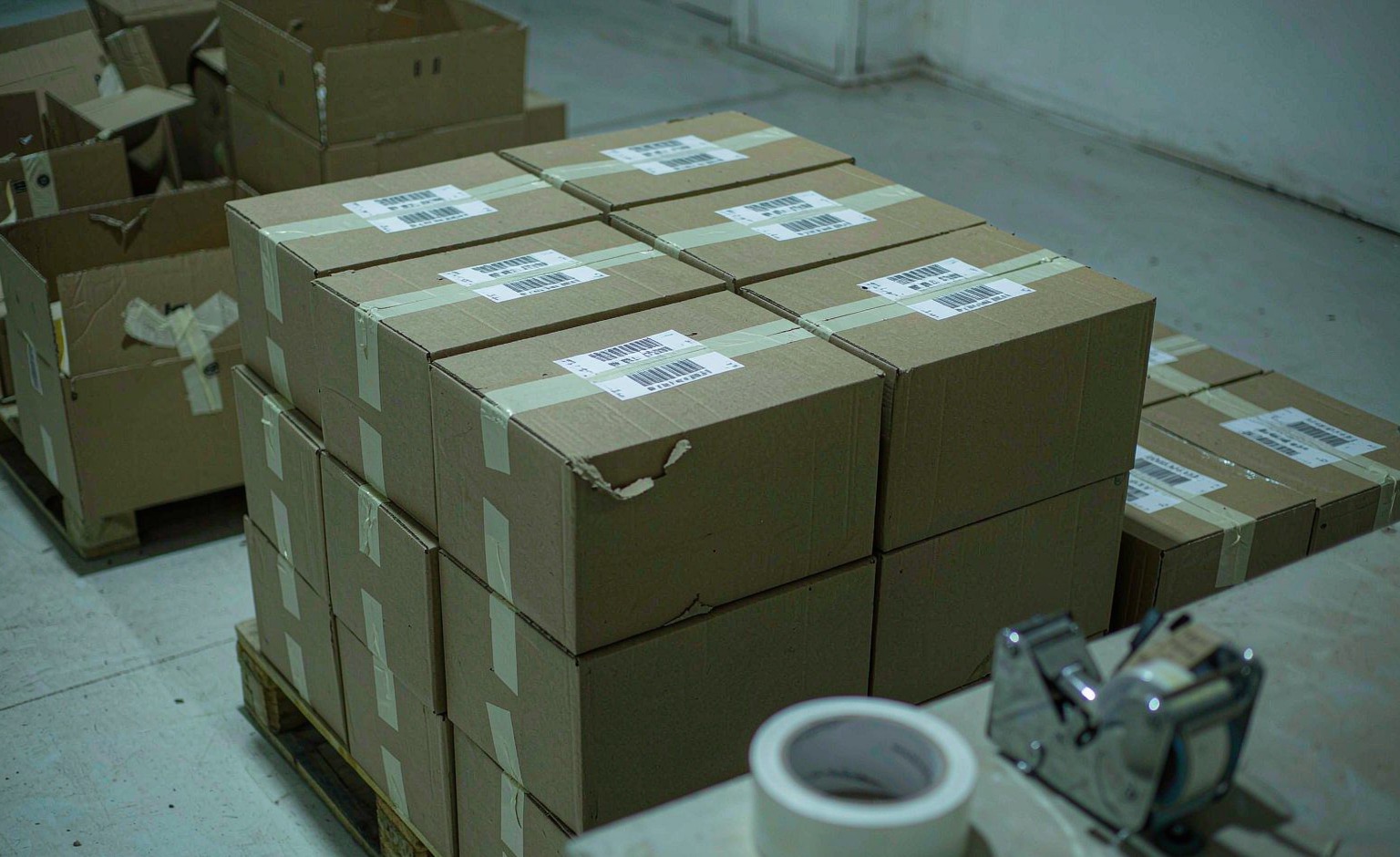
Repeat order consistency is held by four controls working together: a retained reference sample that travels with the order, written batch records for every input lot, hardware drawn from the same approved source and finish, and a colour number kept inside an agreed shade band. On a production floor verified by SGS at 4,950 m², 149 machines and 137 people are spread across 7 production lines and monthly output is scheduled near 200,000 units, so the same reference can legitimately be allocated to a different line in a different month — which is exactly why the standard has to be written rather than remembered. A repeat run starts at MOQ 500, revised sampling occupies 6-10 working days where any element has changed, and the production run itself fills 35-50 days. Scope covers civilian load carriage: outdoor, commuting, worksite and first-aid applications.
Why a Repeat Order Is the Hardest Test a Production System Faces
A first order is judged against a drawing, and a drawing is unambiguous; a repeat order is judged against a physical object and a memory, and neither is precise. The buyer does not compare the second shipment to the specification sheet. They put it on a table next to a unit from the first shipment and look for differences in shade, hand feel, hardware colour, stitch appearance and packing. Any drift that a drawing permitted still fails that comparison.
The difficulty is structural rather than careless. Between two runs, months pass. A fabric lot is exhausted and replaced with the next one from the same mill, nominally identical and measurably different. A hardware supplier changes a plating bath. A line that ran the reference before is busy, so the run moves elsewhere in the schedule. A needle size is changed for an unrelated reason and seam appearance shifts with it. None of those events is visible from the purchase order, and all of them are visible on the shelf, which is why the allocation question covered in capacity planning for bag orders belongs in the same conversation as consistency. None of those events is a defect in isolation; together they produce a second shipment that is within tolerance and visibly not the same product.
Consistency is therefore a documentation problem before it is a making problem. What separates a supplier system that repeats from one that drifts is whether the standard exists as a retained object plus written records, or only as the recollection of whoever supervised the first run. Recollection does not survive staff turnover, line changes or an eighteen-month gap.
The commercial stakes are asymmetric. A buyer who receives an inconsistent repeat does not usually reject it; they discount it, delay the next order, or quietly begin qualifying an alternative. By the time the issue becomes explicit, the relationship has already moved. Repeat consistency is where a production system either demonstrates it has one or shows that it does not.
Verdict: Treat a repeat order as a reconstruction exercise rather than a re-order, because the standard is a retained sample plus written batch records, and a run that relies on the recollection of the previous supervisor will drift on shade, hardware finish and seam appearance within one fabric lot change.
Retained Reference Samples: How a Golden Sample Travels
A retained reference sample is the physical unit, or set of units, released at pre-production stage and kept as the standard the run is built to. It is not a sales sample and not a photograph. It is the object an inspector holds next to a unit pulled from the line, and the object a buyer should be able to request at any point during the run.
Four copies are the practical minimum and each has a distinct job. One stays with the quality function as the master, held under conditions that limit fading. One travels to the line and is used at first-piece stage. One is retained for the buyer's own reference or held for them. One is archived against the order number for any later claim. Where a reference runs in several colourways, each colourway needs its own retained unit, because a shade band cannot be assessed from a neutral sample.
Circulation rules matter as much as the count. A sample that travels without a log comes back dirty, modified, or replaced by a production unit that was never approved. Each movement should be recorded against the order number, and the master should never leave controlled storage. Where a sample is used on the line daily, a working duplicate should be made for that purpose and the master compared against it periodically for fade.
Retention has a natural horizon tied to the product rather than to a regulation. Holding a reference for at least one full cycle beyond the last shipment covers return windows, claims and the next repeat. Where a programme is seasonal, the sample should be re-issued before the next season rather than assumed to be current, because fabric, hardware and print inputs will have moved on.
Disposal is the step usually forgotten. A superseded revision must be physically marked as superseded, or it will be found months later and used as the standard by someone who did not know it was replaced. Retained samples are only reliable when obsolete ones are visibly dead.
Takeaway: Release four copies of the pre-production reference — master, line copy, buyer copy and archive copy — log every movement against the order number, and physically mark superseded revisions, because an unmarked obsolete sample will eventually be used as the current standard.
Batch Records: What Has to Be Written Down for a Run to Repeat
A batch record is the written memory of how a specific run was built. It converts a physical sample from an object into a reproducible set of inputs, and it is what makes the second run a reconstruction rather than an imitation. The record should be raised per run, not per reference, because a reference can be built correctly twice from different inputs and still not match.
Eight fields cover most of the risk. Reference and drawing revision establish which version was built. Fabric lot, mill and coating reference capture the substrate. Hardware supplier, family, finish and batch capture the parts most likely to be substituted. Thread specification and needle size capture seam appearance. The pre-production sample identifier ties the run to the physical standard. The inspection result and its defect distribution record what went wrong. Packing configuration captures carton, polybag, labelling and assortment. Shipment reference closes the traceability loop.
Ownership has to be explicit or the fields go unfilled. The planner owns the revision, incoming inspection owns the fabric and hardware lot references, the line supervisor owns thread and needle, quality owns the sample identifier and the inspection result, packing owns the configuration, and logistics owns the shipment reference. A record with an owner per field gets completed; a record without one gets completed for the first run only.
| Record field | What it captures | Who owns it | Drift prevented |
|---|---|---|---|
| Reference and drawing revision | The exact version the run was built to | Production planner | Two revisions running in parallel unnoticed |
| Fabric lot, mill and coating | Substrate identity including finish and colour reference | Incoming inspection | Shade and hand-feel movement between lots |
| Hardware supplier, family, finish | Part identity down to plating or anodising reference | Kitting bench | Buckle colour and engagement feel mismatch |
| Thread and needle reference | Thread specification and the needle size used | Line supervisor | Seam perforation or appearance change |
| Pre-production sample identifier | The physical standard released for the run | Quality function | Line building from memory instead of reference |
| Inspection result and defect split | AQL 2.5 outcome and which defect classes appeared | Inspection | Recurrence of a known defect class |
| Packing configuration | Carton, polybag, labelling and assortment | Packing | Retail presentation mismatch at destination |
| Shipment reference | Container, vessel or airway bill identity | Logistics | Traceability gap when a claim is raised |
The record also earns its keep commercially. When a buyer asks why a repeat differs, a completed record turns a disagreement into a comparison: either the inputs differ, in which case the cause is identified, or they do not, in which case the difference is process and the line can be corrected. Without the record, both sides argue from memory.
Spec rule: Raise one batch record per run rather than per reference, assign a named owner to each of the eight fields, and release the run only when the fabric, hardware, thread and packing fields are complete, because an incomplete record is indistinguishable from no record when a claim arrives.
Hardware from One Source: Why a Buckle Change Breaks a Repeat
Hardware is the component most often substituted and least often noticed. A buckle that fits the same webbing, engages correctly and passes a functional check is not the same buckle if the supplier, the mould, the polymer or the plating has changed. The differences buyers notice first are colour and sound: a slightly different black, a duller anodised finish, a crisper or softer click on engagement.
Three mechanisms produce the mismatch. A supplier change brings a different mould geometry, so the radii, the gate position and the surface texture differ even where the nominal dimensions match. A polymer change alters stiffness, so the actuator force a user feels is different and the part wears differently against webbing. A finish change alters colour and corrosion behaviour, and it is the one most visible when two generations of the same product sit on a shelf together.
Functional equivalence is not the test. A replacement buckle can pass a pull check and still be rejected at goods-in because its finish reads differently under retail lighting, or because the mating halves from the original and the substitute do not pair reliably when a user replaces a strap in the field. Where a range uses a defined hardware family, the pairing behaviour matters more than the individual part's strength.
The control is a hardware reference board held against the order, listing family, supplier, finish reference and an approved physical sample, with substitution prohibited without a re-approval. Where cost pressure makes substitution attractive, the honest route is to approve the substitute formally, issue a new revision and tell the buyer, rather than to swap silently and hope the difference passes unnoticed.
Inspection has to cover it explicitly. A generic bag checklist confirms that a buckle is present and engages; it does not confirm that the buckle is the approved one. Colour, finish and supplier marking belong in the defect library as major defects when they differ from the reference board, because they are the differences a buyer will actually see.
Bottom line: Prohibit hardware substitution without re-approval and hold a physical reference board listing supplier, family and finish, because a buckle that fits and functions can still fail a repeat on colour, surface texture and mating behaviour that no functional check measures.
Colour Number Control: Lab Dips, Shade Bands and Dye Lots
Colour on a repeat order is controlled by three documents, and confusion between them is the source of most shade disputes. A lab dip is a mill submission showing what a recipe produces on a specific substrate. A shade band is the agreed tolerance around that result, expressed as a physical range rather than a number. A retained reference sample is the object the two are judged against. None of the three replaces the others.
A colour number is only meaningful when it names the substrate. The same recipe on two fabric constructions reads differently, and the same pigment loading on a coated face behaves differently from an uncoated one. Recording a colour reference without the fabric reference, the coating and the finish invites a repeat that is technically the same colour and visibly not.
Dye-lot variation is inherent and has to be bounded rather than eliminated. A mill running the same recipe months later will produce a slightly different result, because dye strength, water conditions and substrate absorbency all move. The practical control is to agree a shade band before the first production run, hold physical limits rather than rely on instrumentation alone, and assess under defined lighting conditions agreed in advance.
| Criterion | Lab dip on the approved substrate | Production shade band | Retained reference sample |
|---|---|---|---|
| Who issues it | Mill or dye house against the named fabric | Buyer and production team jointly | Quality function at pre-production stage |
| What it locks | Dye recipe combined with one substrate and finish | Acceptable deviation limits under defined lighting | Physical appearance, hand feel and assembly |
| Valid for | One dye lot unless the recipe is deliberately re-run | Life of the reference until the tolerance is revised | Life of the reference, re-issued on any input change |
| Drift it prevents | Recipe movement between lots | Arguments about what counts as acceptable | Silent drift toward a remembered standard |
| Replaced when | Substrate, coating or colourant changes | Buyer revises the tolerance in writing | Fabric, hardware or print changes |
| Limitation | A small submission cannot predict bulk behaviour | A band is only as good as its lighting condition | Fades and soils, so it must be periodically re-issued |
Assessment conditions decide more outcomes than the colour itself. Two parties can disagree entirely while both are honest, because one judged under daylight and the other under warehouse lighting, or one judged a flat panel and the other a curved assembled body where seam shadows change the reading. Agreeing the light source, the viewing distance and whether assessment is on flat fabric or assembled product removes most disputes before they start.
Where a programme carries several materials in one colourway — face fabric, lining, webbing, binding, thread and printed label — the band should be set for the assembly rather than per material. Matching each material to its own standard produces an assemblage that reads as several different colours.
Selection rule: Control colour with a named substrate, an agreed shade band assessed under defined lighting on the assembled product, and a retained physical reference, because a colour number without a substrate and a lighting condition cannot be enforced when two shipments disagree.
Fabric and Trim Lot Control Across Runs
Fabric lots are consumed and replaced, and the replacement is nominally identical. Nominally is not actually. Coating weight, thickness, stiffness, surface friction and shade all vary within a mill's own specification, and the variation is largest on coated, laminated and printed constructions where several process steps each contribute tolerance.
Three behaviours change when a lot moves. Hand feel changes with stiffness and coating, so a body that stood up well on the first run may slump or crack differently on the second. Sewing behaviour changes with surface friction and thickness, so needle heat, thread tension and feed consistency all move, and seam pucker appears where none existed. Print and heat-transfer adhesion changes with coating chemistry, so a mark that survived the first run may lift on the second.
Trim behaves the same way with less attention paid to it. Webbing changes width slightly and stiffness noticeably between lots, which matters directly where a strap has to pass through a defined channel — the 25 mm webbing on an attachment interface is the clearest case, and the interface notes for the MOLLE grid geometry explain why a small dimensional movement changes threading behaviour. Binding, elastic cord and hook-and-loop tape all carry similar variation, and a range built across several formats — including the civilian tactical backpack formats many programmes run alongside — should control trim per reference rather than per range.
The control is incoming verification against the retained reference rather than against a datasheet. Receiving inspection should compare the new lot to the approved reference for shade, hand feel, thickness and width, and should note the lot reference into the batch record before the lot is issued. Where a lot differs visibly but within datasheet tolerance, the decision to use it belongs to the buyer, not to the receiving inspector.
A forward position helps. Where a buyer knows a reference will repeat, reserving fabric from the same lot for the next run removes the problem entirely, at the cost of holding material. For high-visibility colourways that is usually the cheaper option.
Defect Library and AQL 2.5 on a Repeat Run
A repeat run needs its own defect library because the risks are different. A first run fails on construction: a seam missed, a panel misaligned, a component missing. A repeat run fails on comparison: shade, finish, hand feel, packing presentation and the small appearance details that a drawing never specified. A generic checklist catches the first category and walks straight past the second.
ISO 2859-1 supplies the sampling scheme behind the AQL 2.5 level applied here, whose historical predecessor is MIL-STD-105. What matters on a repeat is the classification inside that level. Critical defects remain what they always are: a missing reinforcement at a loaded anchor, a component that does not engage, a field lifting from its backing. Major defects should be expanded to include shade outside the agreed band, hardware finish differing from the reference board, and packing configuration differing from the record. Minor defects cover tail length, cosmetic stitch irregularity and labelling position.
Comparison sampling is the addition a repeat deserves. Alongside the statistical sample, inspectors should pull units and place them beside the retained reference under the agreed lighting, looking specifically for assembly-level differences rather than unit-level defects. That check catches the drift a statistical count cannot see, because every unit can pass a checklist and every unit can still be wrong.
Records close the loop. The inspection result should note not just the accept or reject outcome but the defect distribution by class, so the next repeat can be planned against known weak points. Where a defect class appeared in the previous run, the line should be briefed on it before the next one starts.
Judgement: Expand the major defect class on a repeat run to cover shade outside the band, hardware finish differing from the reference board and packing differing from the record, and add a side-by-side comparison against the retained sample, because AQL 2.5 alone detects construction faults and not the appearance drift that causes repeat disputes.
Change Control and the Production Base Behind a Repeat
Change control is the rule that decides which differences require re-approval and which can be absorbed. The test is not whether a substitute is functionally adequate; it is whether a buyer comparing two shipments would see a difference. By that test, fabric lot, hardware supplier or finish, print method, lining, webbing, thread, packing configuration and labelling all require re-approval, while a change internal to the process that produces an identical result does not.
Continuity of fabric, hardware and trim across runs comes from vetted partner facilities; the founder's experience in bag production dates to 2004 and the business itself was set up in 2014. A 4,950 m² SGS-verified production floor holds 149 machines and 137 people spread over 7 production lines, with monthly output scheduled near 200,000 units, and each repeat moves through sampling, a pre-production reference, an AQL 2.5 inspection and then shipment. Consistency is held by batch records and a retained reference rather than by keeping one line permanently on one reference.
Commercial terms do not move on a repeat. Quantity starts at 500 units per reference, revised samples come back in 6-10 working days, or in 12-15 where a new tool or interface enters the build, and the run itself occupies 35-50 days measured from the date inputs and approvals are both closed. Payment is by T/T, 30% released against materials and 70% settled before shipment; the delivery term agreed is FOB Xiamen, so freight, insurance, duties and inland delivery at destination sit outside the quotation.
Documentation consistency matters as much as product consistency on a repeat. Where a buyer relies on origin documentation for a preferential claim, the rules of origin material published by the WTO governs how origin is determined, and a change of fabric or hardware supplier can change the analysis. Buyers should therefore flag any input change that touches origin before the run is scheduled, not after the documents are raised.
A Repeat Order Checklist Buyers Can Issue
The buyer controls most of the inputs that decide whether a repeat matches, and a one-page instruction at order stage prevents the majority of disputes. None of the items below costs anything to include.
- State the previous order number and the drawing revision the repeat is to be built to, not merely the product name.
- Confirm whether the retained reference sample is still held and still current, and request a photograph if it has faded.
- Name the fabric reference, coating and colour number, and say whether the same dye lot must be reserved.
- Name the hardware family, supplier and finish reference, and state that substitution requires written re-approval.
- Confirm the shade band and the lighting condition it was agreed under, or agree them now if they were never recorded.
- Confirm packing configuration: carton, polybag, labelling, bar code position and assortment per carton.
- Confirm whether the buyer intends to attend the AQL 2.5 final inspection, or will accept a report plus a retained unit instead.
- State the quantity per reference at or above MOQ 500 and any colourway split, since small colourways behave differently at scale.
- Flag any input change that could affect origin documentation before the run is scheduled.
- Request the batch record for the run at the same time as the inspection report, not only if a problem appears.
Buyers who issue that list get a repeat that can be defended on evidence. Buyers who send only a purchase order get a repeat that depends on whoever happens to be supervising. Where the repeat is part of a wider programme rather than a single reference, the discipline scales through the custom modular backpack programme route, where platform components are frozen once and referenced by every subsequent order.
Frequently asked questions
Why is a repeat order harder to get right than a first order?
A first order is judged against a drawing, which is unambiguous; a repeat is judged by placing a unit beside one from the previous shipment. Between runs, fabric lots change, hardware plating moves, the allocation moves to another of the 7 production lines, and needle size may change. Each event is individually acceptable and jointly visible. Consistency therefore depends on a retained sample and written batch records rather than on recollection.
What is a retained reference sample in bag production?
It is the physical unit released at pre-production stage and kept as the standard the run is built to, not a sales sample or a photograph. Four copies are the practical minimum: a master in controlled storage, a working copy on the line, a buyer copy and an archive copy tied to the order number. Each colourway needs its own reference, because a shade band cannot be read from a neutral sample.
How long should a retained sample be kept?
Hold it for at least one full cycle beyond the last shipment, which covers return windows, claims and the next repeat. Where a programme is seasonal, re-issue the reference before the next season rather than assuming it is current, because fabric, hardware and print inputs will have moved. Superseded revisions must be physically marked as superseded so they cannot be mistaken for the current standard.
What batch records does a repeat order need?
Eight fields: reference and drawing revision, fabric lot with mill and coating, hardware supplier with family and finish, thread and needle reference, pre-production sample identifier, inspection result with defect split, packing configuration, and shipment reference. One record is raised per run rather than per reference, and each field needs a named owner, because a record without owners gets completed for the first run only.
Why must hardware come from the same source on a repeat run?
A substitute buckle can fit the same webbing, engage correctly and pass a pull check, yet still fail a repeat. A different mould changes radii and surface texture, a different polymer changes actuator force and wear, and a different plating changes colour and corrosion behaviour. Buyers notice colour and sound first, and generic inspection confirms presence rather than identity.
How is colour controlled between two production runs?
Through three documents used together: a lab dip issued against the named substrate, an agreed production shade band assessed under defined lighting, and a retained physical reference. A colour number is only meaningful when it names the fabric, coating and finish. For multi-material colourways the band should be set for the assembled product rather than per material.
What shade tolerance applies to a repeat bag order?
A physical shade band agreed before the first production run, holding upper and lower limits rather than a numeric value, and assessed under a lighting condition agreed in advance on the assembled product. Dye-lot variation is inherent and should be bounded rather than eliminated, because the same recipe run months later produces a slightly different result for reasons no mill fully controls.
How is fabric lot variation handled between runs?
By incoming verification against the retained reference rather than against a datasheet. Receiving inspection compares the new lot for shade, hand feel, thickness and width, and records the lot reference before issue. Where a lot differs visibly but sits inside datasheet tolerance, the decision to use it belongs to the buyer, not to the receiving inspector.
Can a repeat order use a cheaper substitute component?
Only through formal re-approval, a new drawing revision and disclosure to the buyer. The test is not functional adequacy but whether a buyer comparing two shipments would see a difference. Silent substitution converts a cost saving into a discount request, a delayed next order, or the start of an alternative qualification exercise.
What inspection level applies to a repeat order?
Final inspection runs at AQL 2.5, with sampling drawn from the system published in ISO 2859-1. On a repeat, the classification inside that level matters more than the level: major defects should be expanded to cover shade outside the band, hardware finish differing from the reference board, and packing differing from the record. A side-by-side comparison against the retained sample should be added.
What triggers re-approval on a repeat bag order?
Fabric lot or supplier, hardware supplier, family or finish, print method, lining, webbing, thread specification, packing configuration and labelling. Anything that affects origin documentation should also be flagged before scheduling, because rules of origin analysis can change with the input. Internal process changes producing an identical result do not require re-approval.
How does a repeat order affect MOQ 500?
The minimum stays at 500 units per reference. Splits by colourway are counted within the reference, and small colourways behave differently at scale because a short run spends proportionally more of its line time in changeover and close-out. Buyers repeating several colourways should confirm the split at order stage rather than adjusting it after allocation.
How long does a repeat run take compared with a first run?
Mass production takes 35-50 days in both cases once approvals and inputs close, and a repeat usually climbs to its steady rate sooner because the operators have handled the construction before. Sampling occupies 6-10 working days only where an element has changed, extending to 12-15 where a new tool or interface is involved. A truly unchanged repeat can move straight to pre-production reference.
What commercial terms apply to repeat bag orders?
Repeat runs are quoted on the same basis as new ones: 500 units per reference as the floor, 6-10 working days of sampling where an element has been revised, and 35-50 days of production counted from the moment approvals and inputs are both closed. Payment is by T/T with a 30% deposit and the 70% balance before shipment. The delivery term is FOB Xiamen, so freight, insurance and destination charges belong to the buyer's cost model.