Home › Field notes › Urban Commuting Modular Bags: Daily Duty Cycle and Spec Lines
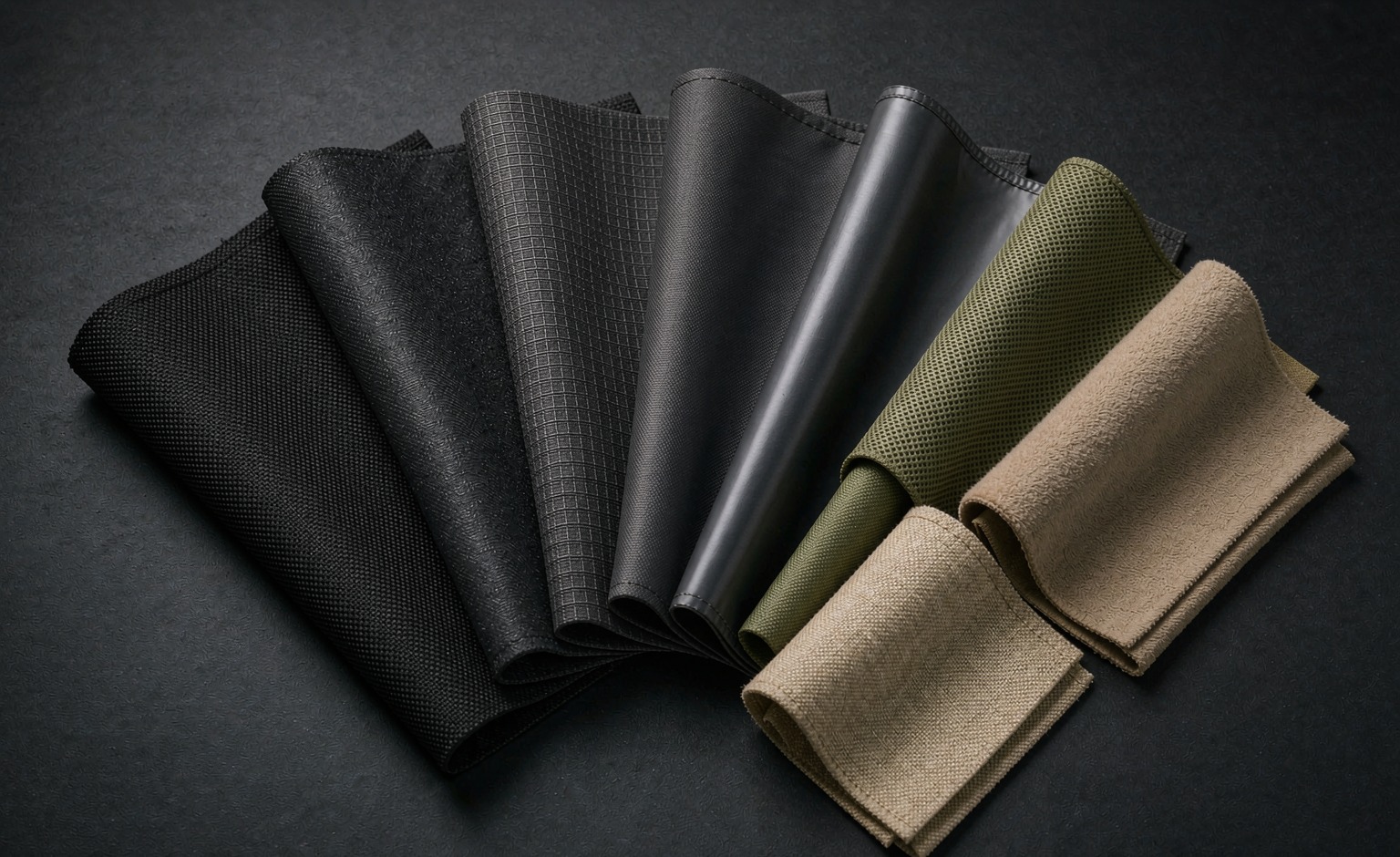
Commuting destroys bags through repetition rather than through load: at roughly two hundred and fifty round trips a year, a commuter shell accumulates more handling cycles in eighteen months than a travel bag sees in five years, and the governing limits become abrasion, seam fatigue and coating delamination rather than tensile strength. Three specification lines follow directly from that cycle count - an abrasion floor expressed in cycles under ASTM D3884 or ISO 12947, a coating bond verified after ISO 6330 conditioning, and a device bay dimensioned over a cased laptop with a suspended floor that survives a packed load. Add a transit envelope that fits a crowded carriage and a closure usable one-handed while standing, and the brief is complete. Commercial terms are unremarkable: a floor of 500 pieces per reference, a sample turned round in 6-10 working days, then 35-50 days in bulk before the lot is judged at AQL 2.5.
Counting the duty cycle before writing the specification
The commuter duty cycle is best expressed as cycles rather than as kilometres. A five-day commuter makes about two hundred and fifty round trips annually, and each trip includes a load, a carry, a set-down, a security or ticket interaction, a stow and a retrieval. Multiplied out, that is well over a thousand handling events a year on the same closures, handles and base corners.
That count reorders the failure ranking. Tensile strength, which dominates field and expedition specifications, rarely governs here; abrasion at wear points, seam fatigue at handle anchors and coating degradation from daily cleaning do. A specification copied from a hiking or travel programme therefore overspecifies the shell and underspecifies the parts that actually fail.
A second consequence is that comfort is dominated by duration rather than by mass. A commuter carries four to six kilograms for thirty to sixty minutes, twice a day, and the complaint that drives returns is shoulder and back fatigue rather than catastrophic failure. Harness specification should be written against that duration and mass, with a stated load and a stated wear period rather than a volume figure.
The third consequence is commercial. Because the duty cycle is relentless, warranty exposure accrues across the whole sold fleet rather than at the heavy-use tail, which is why a marginally cheaper shell that loses coating in year two is a worse buy than one costing slightly more. Lifecycle cost, not unit cost, is the correct comparison basis.
Selection rule: Selection rule: Count the daily duty cycle before writing any specification, and record how many times the bag is set down, opened and wiped in one working day, because those three counts decide the reinforcement plan for a commuting range of 500 units.
Transit envelope: fitting a crowded carriage
A commuter bag has to occupy less space than its capacity suggests, because it competes for room on a crowded train or bus and is frequently held rather than worn. The governing dimension is depth from the wearer's back, and the practical control is a stated maximum loaded depth with a compression system that pulls the load in when the bag is half full.
Compression straps do the work here, and the common specification error is placing them only across the face. Straps that pass under the load as well as over it reduce depth materially and stop contents from settling into a bulge at the base; a face-only strap just flattens the front panel and leaves the bulge.
Grab points are the second transit requirement and the one most often underbuilt. A bag is lifted into an overhead rack by its top handle dozens of times a month, and that handle is usually rated for far less than the loaded mass. Both the top handle and any side grab point should be specified against the loaded mass, with the anchor reinforcement stated on the drawing rather than left to the sewer's judgement.
Base behaviour matters too. Commuters set bags down on wet platforms and dirty floors far more often than any other user group, so the base panel deserves a coated or welded material and a shape that sheds water rather than a fabric that wicks it into the lining. A work-oriented modular platform already treats the base as a structural component, and that approach transfers directly to a commuter shell.
Bottom line: Bottom line: Cap the depth of any commuter chassis so the chassis fits a crowded carriage without being removed, and publish that dimension alongside the 25 mm grid pitch so module depth is accounted for in the same figure.
Rain, splash and the daily wipe-down
Commuter rain exposure is different in kind from hiking rain. It is short, frequent and followed by an indoor drying period, and it is usually accompanied by a wipe-down with whatever cleaning product is to hand. That combination attacks coatings more aggressively than sustained rain does, because the cleaning agent is doing chemical work that water alone does not.
The specification response is a coating that survives both. AATCC 127 gives the hydrostatic head for material selection, but the figure that matters for commuters is retained performance after repeated cleaning, so the material should be tested after a defined number of wipe cycles with a stated agent rather than only as received.
Delamination is the failure to design against. Alcohol-based and quaternary sanitiser solutions attack the bond between coating and cloth, and the first visible symptom is a milky patch at a fold followed by flaking. Testing after ISO 6330 laundering catches part of it; a wipe-cycle test catches the rest, and both are cheap compared with a fleet-wide coating failure.
Drainage and drying complete the picture. A commuter bag that gets wet internally at eight in the morning has to be dry by the evening commute, so linings should be chosen for drying behaviour rather than only for appearance, and pockets should not trap water at their base. A drainage path at the base of the shell costs nothing at design stage and removes a category of complaint.
What commuters actually carry, measured
| Category | Representative mass | Retrieval frequency | Construction response |
|---|---|---|---|
| Laptop, cased | Heavy, dense | Twice daily | Suspended bay, rear position |
| Charger and cables | Light, tangle-prone | Daily | Retained loops, separate pocket |
| Transit pass and phone | Light | Many times daily | External quick-access pocket |
| Lunch container | Medium, leak risk | Twice daily | Lined, wipeable compartment |
| Layer or light jacket | Bulky, light | Daily, seasonal | Compression volume, outer pocket |
| Documents and notebook | Medium, flat | Several times daily | Flat sleeve, no curl |
Verdict: Verdict: Design for the mass commuters actually carry rather than the mass the chassis could hold, and put the laptop sleeve against the back panel with the heaviest module no further outboard than the second column of a 38 mm pitch panel.
Access behaviour in crowded space
Commuter access happens standing up, often with one hand, frequently in a crowd. That single constraint eliminates several otherwise attractive designs: a top-loader that requires both hands and a flat surface, a roll-top that needs two hands to unroll, and any closure positioned where a neighbour's body blocks it.
The workable pattern is a quick-access external pocket on the harness side or the outer face for the transit pass and phone, plus a main opening that can be worked one-handed while the bag is worn on one shoulder. Magnetic or hook-and-loop closures score well on speed and poorly on security in a crowd; a zip with a long pull scores well on both if the pull can be found by touch.
Orientation of the opening matters for the same reason. A rear-panel opening keeps the zip away from a crowd but forces the bag off the back; a front opening allows access while worn on one shoulder but exposes the zip. The choice should follow the observed behaviour of the target user group rather than a house style.
Silent hardware is the detail almost nobody specifies and every commuter notices. Metal pulls that rattle against a zip, and buckles that click against each other, generate complaints disproportionate to their engineering significance. Specifying a retained pull and a quiet buckle is a small cost with an outsized effect on perceived quality.
Which modules earn their place on a commuter chassis
Module economics on a commuter bag are unforgiving, because a module that is not used weekly carries its own mass and cost every single day. The discipline is a usage test: any pouch that a user would not reach for in a normal week leaves the specification. On most commuter platforms that leaves three or four modules - a device sleeve or organiser, a cable and charger pouch, a lunch or layer compartment, and sometimes a small personal-item pouch.
Attachment should stay on the standard lattice so the module set can change without a new chassis: 25 mm tape, rows 38 mm apart vertically, repeating on a 50 mm pitch. A commuter chassis built to those numbers can carry a work pouch during the week and a small travel pouch at the weekend, which is exactly the flexibility the platform is supposed to deliver.
Internal mounting beats external mounting for commuters in most cases, because a crowded carriage punishes anything that protrudes. Where a module must be external, it should be shallow and its profile should follow the shell rather than standing off it. The small everyday-carry module family is the right reference for depth and profile in this context.
The final rule is that a module must not compromise the closure. A pouch mounted across a zip line makes the main opening awkward, and that is discovered by users on the first commute. Checking module positions against the closure path is a drawing-level task that costs nothing and prevents a design that is technically modular and practically annoying.
Takeaway: Takeaway: Let attach-rate data decide which modules survive on a commuter chassis, and cut any pouch that owners add in week one and remove by week four regardless of how well the pouch photographs, then re-cost the reduced set inside a 6-10 working day sampling round.
Wear points and the reinforcement each one needs
| Wear point | Mechanism | Reinforcement | Verification |
|---|---|---|---|
| Base corners | Abrasion from setting down | Coated panel, wrapped corner | ASTM D3884 on the panel |
| Handle anchors | Cyclic lifting at loaded mass | Bar tack plus internal stiffener | Static pull to stated load |
| Harness contact | Rubbing against clothing | Abrasion-class lining | ISO 12947 cycles |
| Zip line | Daily cycling with grit | Coated zip, storm flap | Cycle test with contamination |
| Pocket mouth | Repeated one-handed entry | Bound edge, same class as shell | Extraction cycles |
Seasonal and climate variation in a commuter range
A commuter range sold across climates meets conditions its specification rarely anticipates. Winter adds a bulky layer and gloves, which changes both the volume needed and the retrieval behaviour; summer adds rain jackets and higher humidity inside the bag; monsoon or tropical markets add sustained rain and a drying problem that a temperate test plan never exposes. Writing a single specification and shipping it everywhere is the reason commuter products fail unevenly across markets.
The efficient response is a base specification with climate variants rather than separate products. The shell, harness and bay stay constant; the variants change the coating class, the drainage detail and the lining's drying behaviour. That keeps one pattern and one tooling set while letting each market get a product suited to it, and it is a good example of what a modular platform is for.
Glove use deserves its own line because it changes pocket geometry rather than fabric. A pocket mouth that is comfortable for a bare hand is often unusable in a winter glove, and the fix is a wider mouth with a stiffened lip rather than a larger pocket. Buyers who test retrieval with a gloved hand at sampling avoid a whole category of seasonal complaint.
Drying behaviour is the counterpart in wet markets. A lining that holds moisture, a base pocket without an escape route, and a harness that stays damp against the wearer's back produce odour complaints within weeks. Specifying drying by a measured time to dryness under stated conditions turns that from an opinion into a requirement.
Finally, the reorder calendar follows climate, and a range planned on a single annual drop will be out of step with markets whose seasons are inverted. Planning two drops against the same retained reference and material lot is usually cheaper than expediting one.
Retail channel also shapes the brief in ways that are easy to overlook. A product sold through a marketplace is judged on photographs and on the first week of returns, so appearance and immediate perceived quality dominate; the same product sold through a corporate or uniform channel is judged on durability over a service period, so abrasion class and spares availability dominate. Writing one specification for both channels usually satisfies neither, and the difference is worth stating explicitly at brief stage rather than discovering it in the returns data. Where a range must serve both, the usual compromise is to specify to the harsher durability case and let photography and trim carry the marketplace presentation, because durability is far harder to add later than appearance. That ordering also protects the reorder, since a specification written to the harsher case survives a channel change without being rewritten.
Programme gates, costing and what to check at release
The gate sequence for a commuter reference is conventional, with two additions. At sample approval, add a wipe-cycle test on the coated shell and a loaded handle pull, because those are the two commuter-specific failures and both are cheap to fix before tooling. At in-line inspection, add a check on handle anchor stitch density, because anchor strength is assembly-dependent and drifts when an operator changes.
Release inspection runs at AQL 2.5 under ISO 2859-1 sampling principles. Cosmetic and functional classes should be separated; a commuter bag with a perfect shell and a rattling pull is a functional complaint waiting to happen, and averaging it into a cosmetic class hides it.
Timing and volume follow the standard shape. Sampling takes 6-10 working days for a conventional construction, extending to 12-15 where a welded base, a moulded back panel or a coated zip is qualified. Bulk then occupies 35-50 days. Five hundred pieces is the floor for each reference, and dividing that across shades is permitted only down to a per-shade minimum, because below that length the dye lot drifts more than a range will tolerate.
Money splits into three lines. Per-unit pricing is indicative only and quoted FOB Xiamen. Up front, badge screens or dies cost USD 300-2,500 depending on technique, and the sample development charge of USD 50-150 is returned when the order is confirmed. For movement, allow 25-35 days by sea, 5-8 by air and 3-5 by courier, and remember that roughly 28 CBM fills a 20GP while about 68 fills a 40HQ, which is what decides whether another reference can travel alongside at no real cost.
Behind that calendar, 137 operators tend 149 machines arranged as seven lines across 4,950 m2 of verified floor, with monthly output quoted at 200,000 pieces. For a commuter range the relevant property is repeatability rather than peak volume: reorders arrive in short cycles, and a base with spare line capacity absorbs them without pushing a new launch backwards.
Two further items belong in a commuter brief and are usually absent. The first is a stated service life in cycles rather than in years, because a commuter product is used at a known frequency and a warranty expressed in calendar time is either generous or meaningless depending on the user. A figure in cycles can be tested, and it aligns the warranty with the engineering.
The second is a documented spares position. Commuters do not discard a bag because a pull broke; they discard it because no replacement part exists. Naming the components that will be stocked - pulls, buckles, a harness set - and the period for which they will be available converts a warranty from a promise into a process, and it is one of the few things that measurably reduces returns in this category.
Spec rule: Spec rule: Price the commuter range at 500 units per reference, allow 35-50 days for production, and release only after AQL 2.5 inspection plus a wipe-down cycle on the finished article.
Frequently asked questions
Why do bags fail faster on a commute than on travel?
Because the cycle count dominates. About two hundred and fifty round trips a year means over a thousand handling events, so abrasion, seam fatigue and coating breakdown govern rather than tensile strength.
What abrasion test suits a commuter shell?
ASTM D3884 or ISO 12947, reported as cycles to a defined end point and run on the actual laminated panel. Pair it with a retained-coating check after conditioning, because delamination ends service life first.
How deep should a commuter bag be when loaded?
Set a maximum loaded depth and specify compression straps that pass under the load as well as over it. Face-only straps flatten the front panel but leave a bulge at the base.
How strong should the top handle be?
Rated against the loaded mass, not the empty bag, because commuters lift the bag into overhead racks dozens of times a month. The anchor reinforcement belongs on the drawing with a stated stitch density.
Does daily cleaning damage a waterproof coating?
They do. Alcohol-based and quaternary sanitiser solutions break down the bond between film and cloth, and the first sign is a whitened patch along a fold line that later sheds. Testing a defined number of wipe cycles with a named agent catches it.
What hydrostatic head figure should a commuter shell carry?
Enough for sustained shower exposure, selected by AATCC 127, but the decisive number is performance retained after cleaning and laundering rather than the as-received value.
Which modules are worth keeping on a commuter chassis?
Those used weekly: a device sleeve or organiser, a cable pouch, and a lunch or layer compartment. Any pouch not reached for in a normal week adds daily mass and cost for nothing.
Should commuter modules mount inside or outside the shell?
Inside in most cases, because crowded carriages punish protrusions. Where external mounting is needed the pouch should be shallow and follow the shell profile.
What makes a bag usable one-handed while standing?
An external quick-access pocket for pass and phone, plus a main opening that works with the bag worn on one shoulder. Top-loaders and roll-tops generally fail this requirement.
Why do commuters complain about rattling hardware?
Metal pulls striking a zip and buckles clicking together are audible throughout a quiet carriage. A retained pull and a quiet buckle cost little and change perceived quality substantially.
How long does sampling take for a commuter reference?
Allow 6-10 working days for a straightforward build. Qualifying a welded base, a moulded back panel or a coated chain extends it to 12-15, with the additional days going on material and component checks rather than on sewing.
What is the single most underrated commuter requirement?
Drying. A lining, a base pocket and a harness that hold moisture generate odour complaints within weeks in any wet market, and it is specified as a time to dryness rather than as a fabric choice.
What are the release and commercial terms?
The floor is 500 pieces per reference and the lot is judged at AQL 2.5 under ISO 2859-1. Badge screens or dies cost USD 300-2,500 by technique, the sample development charge of USD 50-150 comes back on confirmation, and unit pricing is indicative only, quoted FOB Xiamen.
Should a commuter range use one specification globally?
Usually not. Keep the shell, harness and bay constant and vary coating class, drainage and lining drying behaviour by climate. That holds one tooling set while letting each market get a suitable product.
How should drying behaviour be specified?
As a measured time to dryness under stated conditions, rather than as a material choice. It is the property that prevents odour complaints in wet markets, and it is testable on a sample.
Why test retrieval with a gloved hand?
Because winter gloves change what pocket geometry works. A mouth sized for a bare hand is often unusable in a glove, and the fix is a wider mouth with a stiffened lip rather than a bigger pocket.