Home › Field notes › Webbing Material Selection: Nylon versus Polyester Tape for Modular Pa
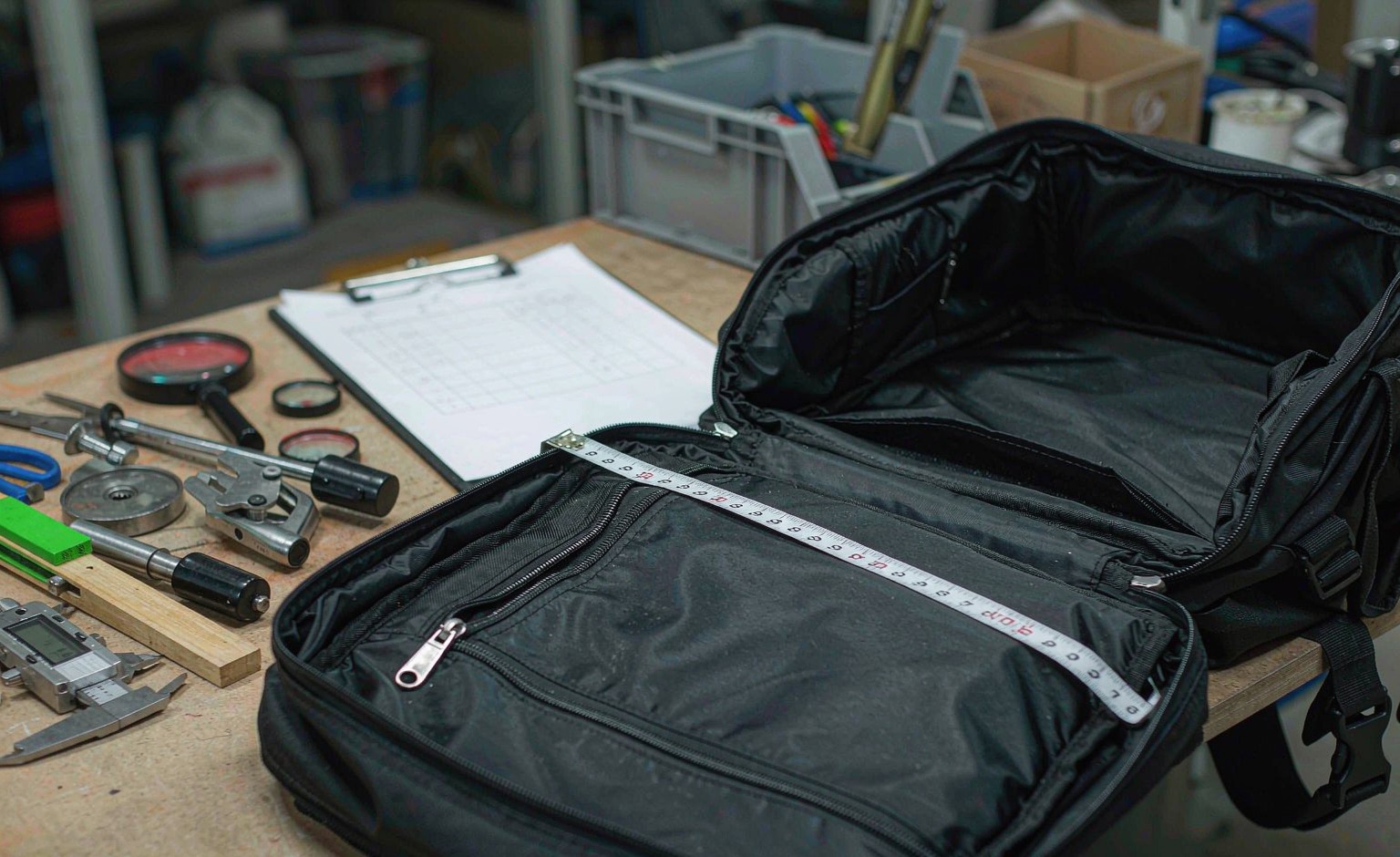
Webbing material selection between nylon and polyester tape is decided by stretch, sun and water in that order: nylon takes repeated shock loading and resists abrasion better, polyester holds its length when wet and loses far less strength under ultraviolet exposure, so a panel that lives outdoors in a fixed geometry wants polyester while a strap that absorbs repeated snatch loads wants nylon. On a 25 mm flat tape the two families sit close on ultimate tensile strength, typically 8-12 kN, but nylon elongates around 18-22 percent at break against roughly 12-15 percent for polyester, and nylon takes up about 4 percent moisture by mass against under 1 percent for polyester. On the production side, our 4,950 m² SGS-verified production floor carries 7 production lines and 149 machines with a 200,000 unit monthly ceiling; sampling takes 6-10 working days and volume production 35-50 days at MOQ 500. Tape tensile work follows ASTM D5034, abrasion resistance follows ASTM D3884, and colour fastness to rubbing follows AATCC 8. Scope covers civilian carriage only, with no weapon carriage, ballistic protection or defence-certification claim attached to any figure here.
What actually changes when the tape polymer changes
A webbing tape is a woven structure, and the polymer behind it sets four behaviours that no weave change can fully compensate for: how much the tape stretches under load, how much water it takes up, how it survives sunlight, and how it can be dyed. Weave changes move these by a few percent; polymer changes move them by multiples.
The structures themselves are conventional. A flat tape for panel rows is usually a plain weave with a settled thickness between 1.0 and 1.4 mm at 25 mm width; a tubular tape used for strap runs has no distinct edge and sits slightly thicker for the same width. Twill weaves give a softer hand and better conformity around a hardware bar, at some cost in edge stability.
Polymer choice then interacts with the geometry that carries the pouch. A grid face built at 25 mm tape width, 38 mm vertical spacing and 50 mm horizontal repeat depends on the tape holding its width under load; a tape that narrows when pulled lets a strap walk, and a tape that lengthens lets a pouch sag. That is the practical reason elongation, rather than ultimate strength, is usually the deciding property on a panel.
Two things do not change with polymer and are worth separating out in a specification. Tape width tolerance and thickness tolerance are weaving variables, and a buyer who specifies polymer but not tolerance will receive whatever the mill habitually produces, which is often plus or minus 1 mm on width.
Selection rule: Specify polymer, weave, width tolerance and thickness tolerance as four separate callouts on a 25 mm tape, and decide the polymer on elongation and ultraviolet behaviour rather than on ultimate tensile strength, because both families break well above any load a carried module can generate.
Tensile strength and elongation under working load
On paper the two families look equivalent. A 25 mm flat nylon tape and a 25 mm flat polyester tape of comparable construction both break somewhere in the 8-12 kN band, which is an order of magnitude above anything a pouch strap will see. Strength is almost never the binding constraint, and a specification that selects on it is optimising the wrong property.
Elongation is where they separate. Nylon stretches around 18-22 percent at break and, more importantly, recovers elastically from repeated moderate loads. Polyester sits nearer 12-15 percent at break and recovers less, which means a polyester strap returns closer to its original length after a snatch load but transmits a sharper shock to the anchoring when it does.
Creep is the third behaviour and the one most often missed. Under a sustained load, nylon continues to lengthen slowly over hours; polyester creeps far less. On a panel where a pouch hangs for days at a time, that difference shows as a small but permanent sag in the grid rows with nylon, and as almost none with polyester.
Working load practice follows from all three. Where a tape carries a snatch load, such as a compression strap over a shifting load or a strap that catches on equipment, nylon's elastic recovery is worth having. Where a tape holds geometry, such as a panel row or a ladder run, polyester's lower creep keeps the geometry where it was drawn.
Verdict: Choose nylon for straps that absorb repeated shock and polyester for tapes that hold panel geometry, working from elongation and creep rather than from a breaking strength both families already exceed by an order of magnitude.
Moisture regain, wet strength and dimensional stability
Nylon takes up roughly 4 percent of its mass in water at saturation; polyester takes up under 1 percent. That difference produces three field behaviours worth writing into a buying decision, and none of them is a strength issue in the simple sense.
First, wet dimensions. A nylon tape that has absorbed moisture is slightly wider and slightly longer than a dry one, and a panel sewn with dry tape on a humid day will tighten when it dries. On a long grid run, a 4 percent uptake translates into a measurable change in row pitch, which is why tapes destined for panel work should be conditioned before cutting.
Second, wet strength. Wet nylon loses a modest fraction of its tensile strength and regains it on drying, so the effect is reversible. The consequence that matters is not breakage but geometry: a wet panel is a slightly different panel, and a strap woven through it behaves differently until it dries.
Third, freeze behaviour. Water held inside a nylon tape freezes, and frozen tape is stiff and loses conformity around hardware. On winter programmes the practical answer is polyester for any tape that stays outside, or a specification note that the panel is expected to stiffen below freezing.
Mildew and staining follow the same variable. A tape that holds water holds whatever was dissolved in it, so a nylon tape used on a pack that gets stored damp will show staining before a polyester one does.
Bottom line: Condition tape before cutting on any panel whose row pitch is a functional callout, expect roughly 4 percent moisture uptake on nylon against under 1 percent on polyester, and default to polyester where the pack will be stored wet or used below freezing.
Abrasion, edge wear and contact with hardware
Abrasion on a webbing tape happens in three places: against the hardware bar it runs through, against the fabric it rubs, and at its own cut edge where it is folded back on itself. Nylon has the better reputation on the first two and a worse one on the third.
Against hardware, nylon's combination of toughness and surface compliance means it wears well on a steel or acetal bar and it conforms around a small radius without cutting itself. Polyester is harder and less compliant, so on a tight-radius bar it tends to wear the bar rather than itself, which sounds favourable until the bar develops a groove.
At the cut edge, polyester behaves better. A heat-cut nylon edge can curl and fray more readily than a heat-cut polyester edge, and a frayed tape end is the common start of a threading complaint on a panel row. Sealed and folded ends are the mitigation on either polymer, and the fold should be specified rather than left to habit.
Abrasion testing on tape follows ASTM D3884 on a rotary platform, and it is worth running the test on the tape as supplied rather than on a flat fabric coupon, because tape edge construction dominates the result. Compare cycle counts to a defined endpoint, not to a visual grade, or the numbers will not travel between suppliers.
Takeaway: Take nylon where the tape runs over hardware under repeated movement, take polyester where a cut edge stays exposed, and specify heat-sealed folded ends on either polymer because a frayed tape end starts more threading complaints than any other single defect.
Dye route, colour fastness and ultraviolet behaviour
The dye route is a cost and a capability difference that buyers rarely see on a quotation. Nylon dyes with acid dyes at around 100 degrees Celsius. Polyester needs disperse dyes at roughly 130 degrees with pressure equipment, which fewer tape mills run and which adds energy cost per kilogram.
That has three consequences. Polyester tape in a non-stock shade carries a longer lead time and usually a higher minimum dye lot. Nylon in the same shade can often be turned around faster. And shade matching between a nylon tape and a polyester face fabric is a genuine problem, because the two take different dye classes and will not reliably match from the same recipe.
Fastness behaviour splits the other way. Polyester holds light fastness better and is the safer choice where the tape sits in direct sun for years. Nylon is more prone to ultraviolet yellowing and strength loss, and on a light shade the yellowing is visible before any strength loss is measurable. Colour fastness to rubbing is checked to AATCC 8, and it is worth specifying a grade rather than a visual approval, because a tape that crocks onto a light face fabric is a return waiting to happen.
One practical route solves the mismatch: solution-dyed polyester, where the pigment goes into the polymer before extrusion. It costs more per metre, gives the best light fastness available on tape and removes the shade-matching problem for dark colours, which is why it is often the right answer for outdoor programmes despite the unit cost.
Judgement: Use solution-dyed polyester for any tape that will sit in direct sun or must match a dark face, accept a longer dye lead time and a higher minimum lot on piece-dyed polyester, and never assume a nylon tape and a polyester face can be matched from one recipe.
Cost, lead time and supply risk
Landed cost between the two families is closer than the price list suggests. Nylon polymer costs more per kilogram, but the dye route is cheaper and faster. Polyester polymer is cheaper but the high-temperature disperse route costs more per kilogram and adds equipment constraints. For a dark shade in volume the two often land within a few percent of each other.
Supply risk is the sharper difference. Nylon tape capacity is concentrated in fewer mills and is more sensitive to polymer feedstock swings, so a programme that locks a single nylon reference carries more disruption risk than one that qualifies two polyester sources. Qualifying a second source is cheap insurance on either polymer and should be done before the first bulk order rather than after a shortage.
Minimum dye lots drive the small-programme decision. A non-stock shade on polyester can carry a minimum that exceeds what a 500 unit first order consumes, which forces either a stock colour or a carry-over of dyed tape inventory against future orders. That is a commercial decision that belongs in the costing conversation, not in the sampling conversation.
Lead time is straightforward: stock shades in either polymer ship in days, piece-dyed nylon in roughly two to three weeks, piece-dyed polyester in roughly three to five weeks depending on mill loading. Build the tape lead time into the sampling clock rather than discovering it after the sample is approved.
Webbing material selection compared across tape families
Three tape families cover nearly all modular work. Nylon 6.6 in a flat or tubular construction is the shock-absorbing choice. Polyester, either piece-dyed or solution-dyed, is the geometry-holding and sun-resistant choice. A blend with a polyester core and nylon face, or a co-woven construction, exists to buy some of each and is worth considering only where both requirements are genuinely present.
| Selection criterion | Nylon 6.6 tape | Polyester tape | Nylon-faced polyester core |
|---|---|---|---|
| Elongation at break, 25 mm flat | 18-22 percent | 12-15 percent | 15-18 percent |
| Moisture regain at saturation | About 4 percent | Under 1 percent | About 2 percent |
| Creep under sustained load | Noticeable over hours | Very low | Low |
| Ultraviolet strength retention | Moderate, yellows first | Good | Moderate at the face |
| Abrasion against a hardware bar | Excellent | Good | Excellent at the face |
| Behaviour at a heat-cut edge | Curls and frays more readily | Seals cleanly | Seals cleanly |
| Dye route and lead time | Acid dyes near 100 degrees, 2-3 weeks | Disperse dyes near 130 degrees, 3-5 weeks | Two-stage, longest |
| Best fit in a modular programme | Compression and shock straps | Panel rows, ladder runs, outdoor use | Mixed duty at higher cost |
Read that table by requirement rather than by column. A programme that needs both shock absorption and geometry holding should split the specification across the bag, using nylon on the compression straps and polyester on the panel, rather than paying for a blended tape everywhere. Splitting is cheaper and each tape then works at what it is best at.
Where a blended tape is used, note that the nylon face and the polyester core age at different rates outdoors. The face loses strength and yellows while the core is largely unaffected, so the tape can look tired while still testing close to its original figure, which is a cosmetic rather than a structural signal.
Spec rule: Split the specification rather than compromise it: nylon on compression and shock straps, polyester on panel rows and anywhere the pack lives outdoors, and reserve blended tape for the rare case where one tape genuinely does both jobs.
Hardware fit: tape thickness as a tolerance problem
Tape and hardware are bought from different suppliers and fitted together, which makes thickness a tolerance problem rather than a preference. A side-release buckle or a ladder-lock is moulded for a tape thickness band, and a tape outside that band either slips under load or refuses to adjust.
The failure modes are asymmetric. A tape too thin for the hardware lets the bar bite unevenly, and the strap creeps under load because the grip depends on friction across the full tape width. A tape too thick will not pass through the slot at all, or passes with so much friction that adjustment becomes a two-handed operation, which users solve by leaving the strap loose.
| Hardware type | Tape construction that fits | Mismatch failure |
|---|---|---|
| Side-release buckle, 25 mm | Flat tape, 1.1-1.3 mm | Too thin: strap creeps under load |
| Ladder-lock and triglide | Flat tape, 1.0-1.2 mm, stiff finish | Too thick: adjustment needs two hands |
| Cam buckle | Flat tape, 1.2-1.4 mm, smooth face | Too soft: teeth slip and mark the tape |
| Threaded panel row anchoring | Flat tape, 1.0-1.2 mm, sealed ends | Frayed end: strap will not thread |
| Shoulder strap pad run | Tubular tape, softer hand | Flat tape: pad rotates on the strap |
| Webbing loop for a carabiner | Tubular tape, bar-tacked | Flat tape: edge wear at the contact point |
Two checks catch most mismatches before bulk. Pass the production tape through the production hardware by hand on the pre-production sample rather than trusting a nominal size match, and pull a loaded strap to see whether it creeps at the bar. Both take minutes and both are the kind of check that does not happen if nobody is assigned to it.
Programme controls: qualification, sampling and release
Our production team qualifies tape on the same 4,950 m² SGS-verified floor that runs the sewing: 7 production lines, 149 machines, 137 people and 200,000 units a month, with production experience in bags going back to 2004 and the company founded in 2014. A quotation lands in 24-48 hours; sample sets take 6-10 working days, or 12-15 when a custom shade is involved; volume production takes 35-50 days at MOQ 500 per reference; release follows AQL 2.5 inspection with zero tolerance on critical defects. Sampling charges are USD 50-150, refunded against the order, and tooling or screens for branded hardware run USD 300-2,500.
Tape qualification evidence is cheap to keep and worth keeping: the mill data sheet with polymer and construction, the tensile reading per lot against ASTM D5034, the abrasion cycle count against ASTM D3884, the crock grade against AATCC 8, and a retained swatch from the approved lot for shade comparison on repeat orders.
Related reading on this site covers MOLLE system engineering, the reinforcement schedule in bar tack placement on modular panels, and platform context under modular hiking backpack and modular work backpack. Component options are listed on the products page.
Frequently asked questions
Which webbing material is stronger, nylon or polyester?
Ultimate strength is close: both families break in the 8-12 kN band on a 25 mm flat tape, far above any load a carried module generates. Decide on elongation, creep and ultraviolet behaviour instead, where nylon at 18-22 percent and polyester at 12-15 percent differ by multiples.
How much does nylon webbing stretch compared with polyester?
Nylon runs about 18-22 percent elongation at break and polyester about 12-15 percent on a 25 mm flat tape. The more useful difference is creep: nylon keeps lengthening slowly under sustained load while polyester barely moves, so panel rows stay tighter.
Does nylon webbing absorb water?
Yes, roughly 4 percent of its mass at saturation against under 1 percent for polyester. That changes wet dimensions enough to matter across a grid run at 38 mm row pitch, so condition tape before cutting wherever pitch is a functional callout.
When should polyester webbing be chosen over nylon?
Choose polyester where the pack lives outdoors, where tape holds panel geometry at 38 mm row pitch rather than absorbing shock, or where the pack is stored wet or used below freezing. Its ultraviolet retention and low creep both suit fixed geometry.
Which webbing resists abrasion better, nylon or polyester?
Nylon performs better against a hardware bar, because it is tough and compliant at 25 mm width. Polyester behaves better at a heat-cut edge, sealing cleanly where nylon tends to curl and fray. Sealed folded ends solve the edge issue on either polymer.
Which webbing holds colour better in sunlight?
Polyester, and solution-dyed polyester best of all, because pigment enters the polymer before extrusion. Nylon yellows under ultraviolet before any strength loss is measurable, which matters most on light shades, on tapes wider than 25 mm, and on any strap left in direct sun for 6 months or longer.
Why is a polyester tape harder to match to a nylon face fabric?
The two take different dye classes: nylon uses acid dyes near 100 degrees and polyester needs disperse dyes near 130 degrees. One recipe will not reliably colour both, so specify the shade against each substrate and approve separate lab dips.
How long does a custom webbing shade take?
Stock shades ship in days. Piece-dyed nylon takes roughly 2-3 weeks and piece-dyed polyester 3-5 weeks depending on mill loading. Sampling overall runs 6-10 working days, or 12-15 where a custom shade is involved, so build the 3-5 week tape lead time into the plan before bulk cutting starts.
What tape thickness fits a 25 mm side-release buckle?
Plan on 1.1-1.3 mm for a flat tape. Thinner and the bar bites unevenly so the strap creeps under load; thicker and the slot either refuses the tape or makes adjustment a two-handed job across the full 25 mm width.
Should panel rows and compression straps use the same tape?
No. Split the specification: polyester on panel rows and ladder runs at 38 mm pitch where geometry matters, nylon on compression straps where shock absorption helps. Splitting costs less than a blended tape and lets each tape work at its strength.
How is webbing abrasion tested?
On a rotary platform to ASTM D3884, tested on the tape as supplied rather than on a fabric coupon, because edge construction dominates the result. Record cycles to a defined endpoint in 500 cycle steps rather than grading by eye.
Which standards apply to webbing on modular bags?
Tensile work follows ASTM D5034, abrasion follows ASTM D3884, crocking follows AATCC 8, and release follows ISO 2859-1 level II at AQL 2.5. Retain the mill data sheet and a swatch from every approved tape lot, and file both against the order number.
What is the MOQ for a bag built on custom webbing?
MOQ is 500 units per reference. Watch the tape mill minimum dye lot as well, since a non-stock polyester shade can exceed what a first order consumes and may force a stock colour or a carry-over against future 3-5 week lead times.
How is webbing verified on a pre-production sample?
Check width against the 25 mm callout and thickness against the hardware band at 1.1-1.3 mm, pass the production tape through the production hardware by hand, pull a loaded strap to see whether it creeps, and keep a retained swatch.
Does wet webbing lose strength permanently?
Wet nylon loses a modest fraction of tensile strength and regains it on drying, so the loss is reversible. The practical consequence is dimensional: a wet 25 mm tape is slightly wider and longer, and a strap behaves differently until it dries.
Why does a strap creep at the buckle on some bags?
Usually a tape too thin for the hardware, so the bar grips unevenly across the 25 mm width. Confirm thickness against the moulded band of the buckle and retest under load on the pre-production sample rather than trusting a nominal size match.