Products
One platform, nine configurations
Every product family on this page is a configuration of a single modular platform, not nine separate developments. The shared carrier holds the expensive and fit-sensitive decisions — back geometry, shoulder harness, load path — while the module layer changes with the use case. MOQ is 500 units per colourway, sampling takes 6-10 working days and bulk production runs 35-50 days.
Configuration envelope
| Family | Capacity band | Defining structure | Primary use |
|---|---|---|---|
| Modular backpacks | 20-45 L | Full grid front and sides, 3-6 module positions | Platform carrier |
| Tactical backpacks (civilian) | 25-50 L | Dense grid, compression, hydration routing | Field and range use |
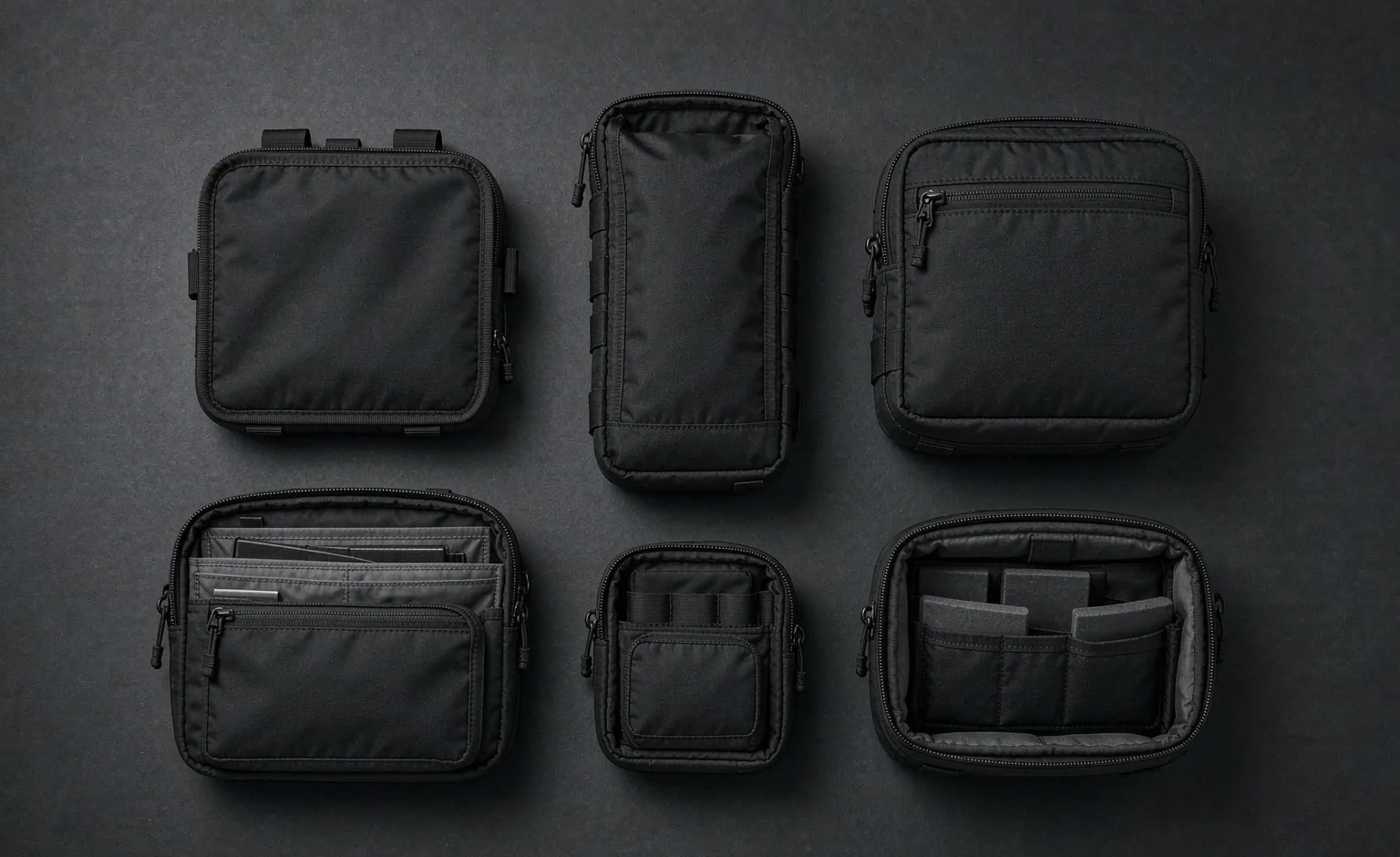
| MOLLE pouches and panels | 0.5-6 L | Grid-compatible rear panel, numbered slots | Module ecosystem |
| Convertible backpacks | 30-45 L | Stowable harness, top and side handles | Travel and commute |
| Modular EDC and slings | 4-12 L | One-shoulder carry, front module face | Everyday carry |
| Chest rigs and waist packs | 2-8 L | Front-body or hip carry, adjustable webbing | Access-heavy tasks |
| Travel systems | 35-50 L | Clamshell opening, packing units, teardown | Cabin and multi-stop |
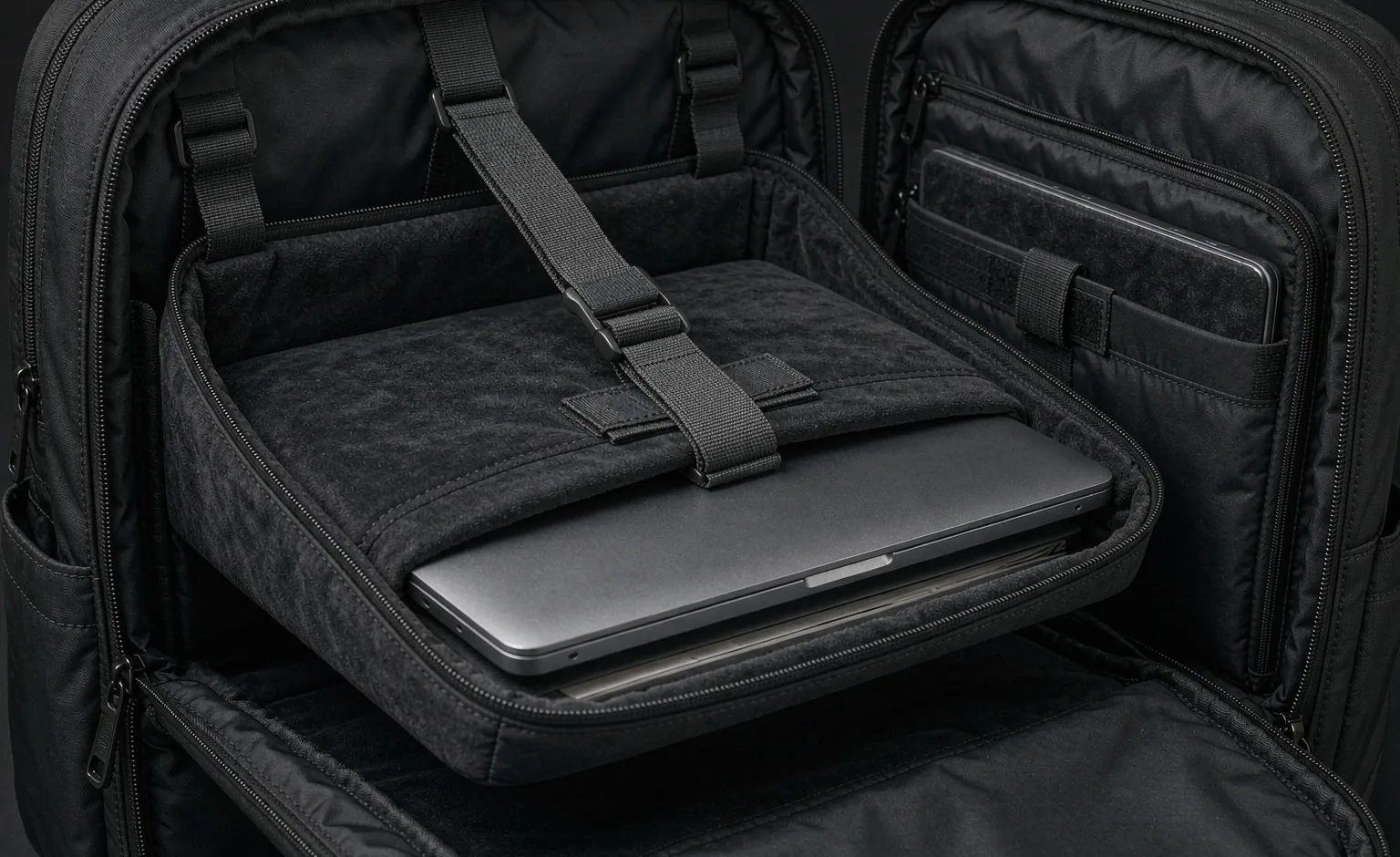
| Work and laptop carriers | 18-30 L | Suspended sleeve, low-visibility exterior | Commute and site |
| Hiking systems | 35-65 L | Load-transfer harness, hip-belt modules | Trail and multi-day |
Capacity bands are indicative planning ranges, not a stock list. The point of the table is the third column: what makes each family distinct is its structure, not its size.
Choosing a starting configuration
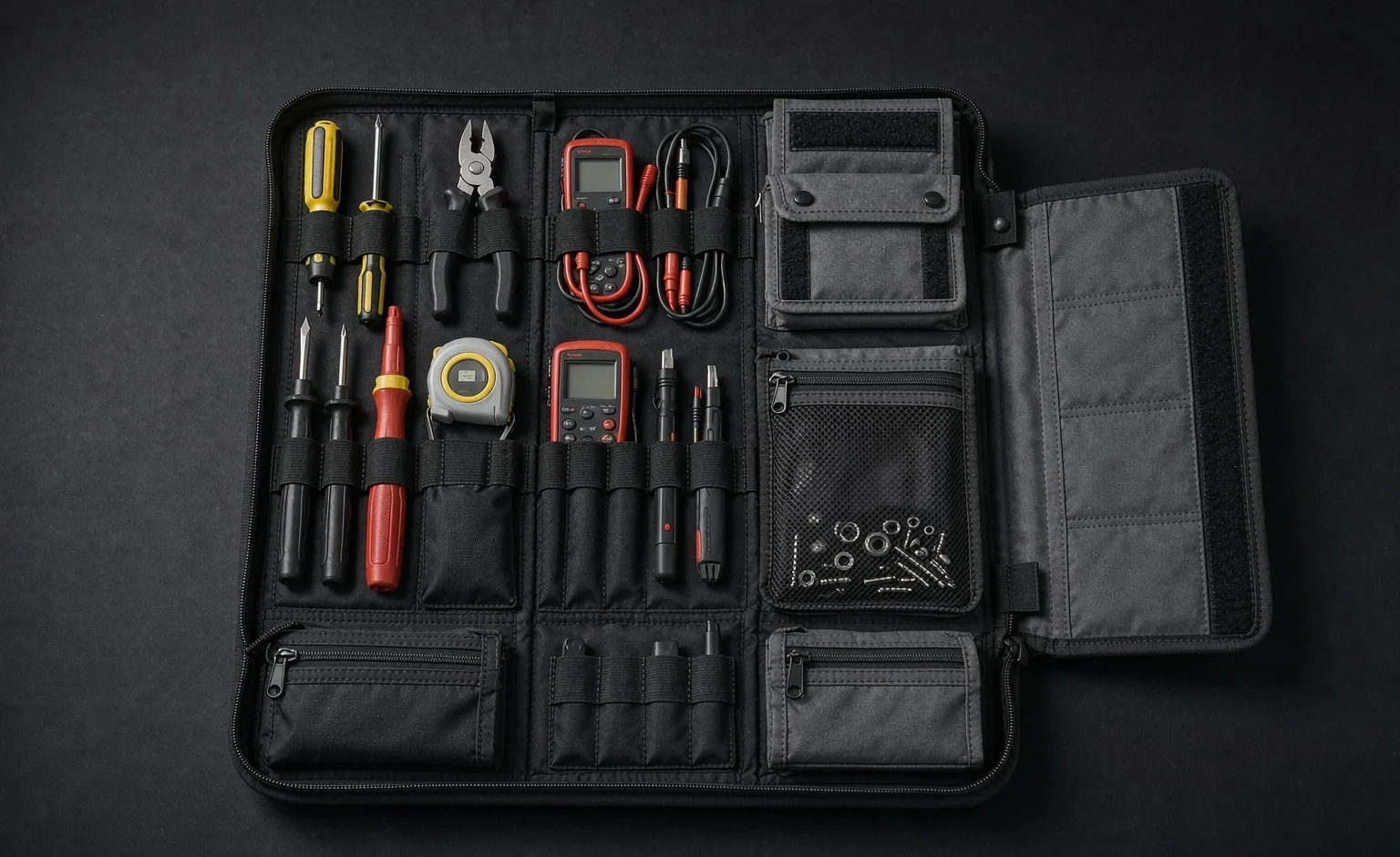
Start from the task, not the capacity. A field-service programme needs tool indexing and abrasion resistance, so it lands on a dense-grid carrier with an open tool module. A commuter programme needs a suspended laptop sleeve and a quiet exterior, which pushes toward a low-visibility shell with fewer external attachment points. Both can share the same module interface and the same material platform.
Selection rule: Start with one carrier and three modules; extend the module range only after the first season shows which modules actually sell, because every additional module carries its own MOQ, its own pattern work and its own test obligations.