Home › Field notes › Carton Drop Test for Export Packing: Sequence, Verdict and ISTA 3A Lin
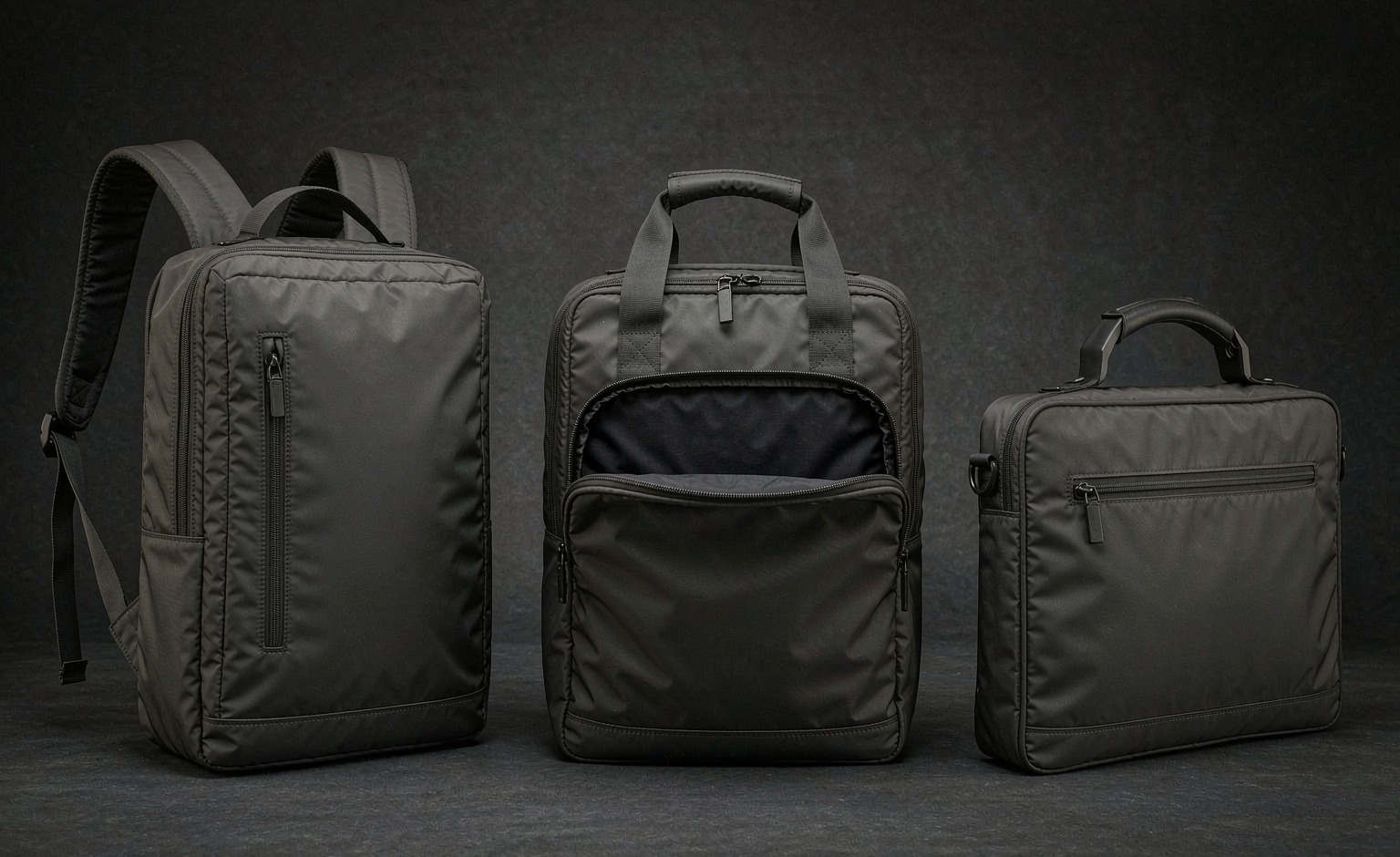
A carton drop test reproduces the handling insults an export carton receives in transit, then compares the package against acceptance criteria written before the first impact, so it is a simulation of distribution rather than a measurement of board strength. Three variables govern whether the result means anything: the drop height agreed for the destination channel, the sequence of faces, edges and corners struck, and the condition of the carton at the moment it is released, since heat, humidity and prior compression change how the same box behaves. Drop heights and the weight bands they apply to must be agreed from the applicable standard for the destination channel rather than carried across from an unrelated programme, because parcel networks differ in the inputs they publish. Where units travel singly as parcels, ISTA 3A provides a complete sequence of which drop testing forms one element. Ordering terms remain fixed at MOQ 500, sampling in 6–10 working days, builds of 35–50 days and sea transit of 25–35 days.
Why a Carton Drop Test Simulates Handling Rather Than Measures Strength
Two questions get conflated when a carton lands badly. The first asks how much compression a box survives stacked in a container, which is a board and flute question answered by compression testing. The second asks what happens when a handler drops it, a belt transfers it badly, or a tail-lift tips it, and that is a question about energy entering a corner and travelling through a pack-out. A drop programme addresses the second; buying heavier board to solve the second often costs money without addressing how the contents are arranged.
Simulation means accepting that energy, orientation and repetition matter more than a single extreme event. Distribution exposes cartons to many moderate impacts at unpredictable orientations, and it is often the accumulation that opens a closure rather than one dramatic fall. Designing the test around one drop face therefore understates reality, which is why sequence and criterion writing precede any physical work.
The unit under test must be the unit that ships. That sounds obvious and is routinely broken: a green weaker carton gets tested because it was convenient, or the pack-out tested lacks the inner dividers, polybags or instruction sheets that will actually accompany the goods. Results describe the specimen, so building the specimen carefully is half the work.
Finally, remember what a pass means. A carton surviving the agreed sequence means it tolerated that sequence, in that condition, with that pack-out, on that day. It is not a property of the carton specification in the abstract, and reusing the report after the pack-out changes is the most common way a good result becomes misleading.
Spec rule: Define the shipping unit, the pack-out contents, the agreed sequence and the written acceptance criteria before any carton is released, because drop results describe one assembled specimen rather than a carton grade.
Drop Height and Package Weight: Where the Figures Come From
Height and weight are paired variables in every published drop protocol, and pairing is the part teams forget. Published programmes derive a height from the mass of the package, generally giving lighter parcels a greater fall and heavier units a shorter one, reflecting how handlers actually move them: small parcels get thrown, heavy ones get lowered. Copying a height from another programme without carrying its weight band across produces numbers nobody can defend.
Because networks differ, the applicable figure must be agreed from the applicable standard for the destination channel, or from the retailer's own documented requirement where one exists, rather than selected by habit. Several families publish their own schemes, covering parcel carriers, warehousing handling, and retail distribution, and their weight bands do not line up. Choosing one at the outset and writing it into the test request avoids the familiar argument where two laboratories produce different results from identical cartons.
Weight itself should be recorded rather than assumed. Weigh the packed unit including inner packing and its closure, since a tear strip, tape, strap or stretch wrap all add mass and influence which band applies. Where product ship in units and whose pack-out differs across colourways, test the heaviest and lightest and note which was used.
Tolerance around height deserves equal attention. The release mechanism, the way the carton is supported beforehand and the exact point from which height is measured all drift in practice, so the request should state how the height was measured and which face was nearest the floor at the moment the support was removed.
| Programme input | How it changes the result | Source to agree it from | Common shortcut |
|---|---|---|---|
| Drop height | Sets energy entering the struck feature | The standard or retailer requirement for the destination channel | Copying a figure from an unrelated programme |
| Weight band | Determines which published height applies | Weighed shipping unit including all inner packing | Using product weight without packaging |
| Struck feature | Corners concentrate energy, faces distribute it | The sequence set by the chosen programme | Dropping flat every time for convenience |
| Number of impacts | Accumulation opens closures that survive one fall | The named programme sequence | Stopping after the first pass |
| Release method | Imparts unintended rotation or initial velocity | The apparatus requirement in the method | Free release by hand from a measured mark |
| Conditioning state | Moisture changes board stiffness dramatically | The conditioning atmosphere named in the method | Testing straight from a warm production area |
Takeaway: Agree drop height together with its weight band from the standard applicable to the destination channel, weigh the complete shipping unit rather than the product, and record how the height was measured before any carton leaves the rig.
Sequence of Impacts Across Faces, Edges and Corners
Sequence exists because handling is not polite. A carton dropped corner-first concentrates the entire energy into a small area, and since the board cannot distribute it, the damage localises at that point and frequently propagates into the closure. Edges behave similarly with slightly more distribution, and faces spread energy best, which is precisely why face-only testing flatters almost any carton.
The order of strikes matters as much as their identities. A closure weakened by an early corner impact behaves differently when the next drop lands on the same face, so the sequence has to be followed rather than approximated. Programmes in this family specify which features are struck, how many times, and in what order; following a published sequence also makes results comparable to earlier work rather than unique to this laboratory.
Orientation notation prevents confusion between the people writing the request and the people doing the work. Numbered faces, then edges identified by the two faces meeting there, then corners named by the three faces converging, give everybody a reference that survives translation. Sketches attached to the request settle arguments faster than prose descriptions written after the fact.
Support and release likewise come from the method rather than improvisation. The carton has to start in a defined position with no imparted spin, and whatever mechanism suspends it must release cleanly rather than push. A sloppy release turns a controlled test into an uncontrolled one while producing photographs that look perfectly professional.
Conditioning Before Release and the Effect of Prior Handling
Corrugated board is hygroscopic, and its stiffness falls markedly as it absorbs moisture. A carton that performs acceptably at lower humidity can perform poorly after a humid spell in a port warehouse, which is why protocols specify a conditioning atmosphere and a dwell period, typically a controlled temperature and relative humidity held for a stated duration before testing begins. The exact atmosphere belongs to the referenced method or the retail requirement and should never be invented for convenience.
Temperature interacts with everything else in the pack-out. Adhesives on tape and labels soften or stiffen, polymer films and coatings change flexibility, and some foam and moulded pulp lose resilience when chilled. Testing only at ambient conditions therefore says nothing about a winter arrival or a container that sat under deck in tropical heat.
Prior handling deserves attention because real cartons rarely arrive at a drop rig untouched. Units that have already been stacked pallet-high, strapped, moved on a roller conveyor and carried across a yard have taken compression and vibration before the formal sequence starts. Where the destination network has obvious stacking or long-distance movement, adding a conditioning phase representing that history produces results that track complaints far better.
Conditioning introduces practicalities worth planning. Cartons need airflow around all faces rather than being stacked tightly in the chamber, sufficient dwell time that the board reaches equilibrium rather than having simply been in the room, and repeat measurement of the condition on removal so the record states what actually happened.
Judgement: Run drop work only on cartons conditioned to the atmosphere named in the referenced method, confirm equilibrium rather than mere residence time, and add a handling history stage wherever the destination network involves significant stacking or long-distance movement.
Interpreting Damage: Acceptance Criteria Written Before Impact
Arguments about test results almost always trace back to criteria written after the box opened. A meaningful criterion distinguishes three outcomes: the carton may be damaged provided the contents are undamaged and the unit remains handleable; a limited amount of closure distortion is acceptable where the tape remains bonded; or any visible damage is unacceptable because the unit retails in its carton. All three are legitimate in different channels, but they cannot all be applied to one result.
Content protection is usually the real question. Scuffed board is cosmetic; a crushed corner that reached through to a moulded shell, cracked engagement hardware, or a split seam on the sewn article is functional. Define which components count as protected — closures, hardware, printed surfaces, structural seams — and inspect them deliberately after the sequence rather than trusting a quick visual pass.
Handleability covers everything downstream of the test. A carton that lost its stackability, whose tape peeled enough to catch on equipment, or whose weight shifted enough to make manual handling unsafe, creates distribution risk even though nothing inside broke. Where pallets are built from these units, a single failed box can destabilise a layer.
| Observation | Severity class | How to inspect | Decision supported |
|---|---|---|---|
| Scuffing and print abrasion on outer faces | Cosmetic | Visual review with the carton upright | Acceptable unless the unit retails in its carton |
| Corner crush confined to the board | Limited | Measure indentation and check all closure lines | Accept where contents and stackability survive |
| Tape peel along part of the closure | Structural | Lift gently and note remaining bond length | Re-tape method change before any re-test |
| Closure fully opened | Critical | Open fully and check for missing contents | Reject the pack-out and revise closure |
| Damage reaching through to a component | Critical | Unpack and inspect every protected part | Increase internal protection, not board grade |
| Carton distorted enough to break a pallet layer | Structural | Build a sample layer and check stability | Revise unit height or add edge protection |
Selection rule: Write acceptance criteria covering cosmetic limits, closure integrity, content protection and stackability before testing starts, and unpack every specimen regardless of how well the carton looks.
Carton Variables That Move a Result Without Any Change in Board Grade
Two cartons from the same declared specification can perform differently because several variables sit outside the grade callout. Flute profile changes cushioning and stacking behaviour: taller flutes cushion impacts but resist compression differently, while finer flutes print better and resist crushing. Board combination changes how the faces share load. Manufacturer tolerances on caliper and moisture at dispatch are real and rarely discussed at quotation.
Closure method deserves more attention than it gets. Tape width, tape grade, whether a water-activated or pressure-sensitive product is used, whether the seam is centred or off, and how much tape extends over the ends all change whether a corner impact opens the box. A strapped carton behaves differently again, and strapping tension applied inconsistently during packing adds variation nobody planned for.
Inner arrangement frequently decides outcomes. Void fill quantity, whether the contents are centred or loaded to one side, whether heavy components rest against a closure, and whether an inner carton or sleeve carries the product all redistribute impact energy. Adding inner protection often costs less than upgrading the board and delivers more.
Pack-out trials also need to cover how units from the same shipping product range share cartons, because a mixed carton behaves differently from a uniform one. Vetted partner facilities provide the packing trials that separate these variables, because changing one factor at a time across matched specimen sets is the only way to know which variable mattered. Those facilities run 7 production lines holding 149 machines staffed by 137 people on 4,950 m², scheduled around 200,000 units monthly. QUANZHOU JUNYUAN BAGS coordinates those trials, established 2014, its owner having entered bag production in 2004. That experiment is cheap when run during development and expensive when run after a retail complaint arrives.
Where ISTA 3A Sits and What It Adds Over Standalone Drops
Distribution simulation packages combine several hazards rather than one. In the parcel family, ISTA 3A covers individual packaged products moving through a parcel delivery system, and it combines atmospheric preconditioning, random vibration, shock including drops, and further vibration into one sequence. Standalone drop work sits inside that structure as one element and cannot replace the rest.
The reason the combination matters is order. Vibration loosens closures and settles contents before any drop occurs, so cartons arrive at the impact stage already changed, exactly as they do in a vehicle. Because bags travel as soft goods whose internal arrangement shifts, that settling stage frequently explains field failures that drop-only testing never reproduced.
Choosing between routes comes down to how the unit actually travels. Goods shipped as single parcels through a carrier network suit the parcel sequence. Goods palletised and moved as unit loads face different hazards, dominated by compression, handling equipment and vehicle vibration rather than by individual parcel drops. ISO 2859-1 governs attribute inspection of finished units rather than transit simulation, and the two should never be conflated in a specification.
A practical approach starts with the cheapest informative stage: condition the units, run drop work alone to establish a baseline, then add vibration ahead of and behind the impacts where the channel justifies it. Each added stage costs time and money, so spend it where the destination network is known to be punishing rather than spreading it evenly.
Bottom line: Use standalone drop work to establish a pack-out baseline, then move to the full parcel sequence for goods travelling singly, because vibration before impact reproduces closure settling that a drop-only programme structurally misses.
Field Diagnosis: Tracing Returned Damage Back to One Insult
Returned cartons carry evidence, and reading it well converts warranty cost into a specification change. Location first: damage concentrated at corners suggests edge and corner impacts, typically manual handling or a transfer between conveyors. Damage distributed along one face suggests the unit fell flat or was crushed against something broad. Symmetric crushing on the lower third points to stacking compression rather than impact, which no amount of drop tuning will fix.
Pattern across a shipment refines the diagnosis considerably. If every damaged unit shows the same feature affected, the insult was systematic — probably a machine, a belt transfer or a pallet configuration — rather than random handler behaviour. Scattered damage with varied features points to general handling severity, which is addressed through pack-out resilience rather than a specific mechanical fix.
Cross-checking with dispatch records helps too. Modules shipped inside a shared platform carton arrive with known weights, unit counts and pack-out drawings, so the damaged unit can be reconstructed in the laboratory and its failure reproduced deliberately. Serial-matched packing documentation lets that reconstruction use the same carton lot rather than a convenient substitute.
Finally, note which channel produced the complaint and test that channel rather than the one that is easiest to simulate. Overseas volume mainly moves by sea across 25–35 days, urgent air shipments take 5–8 days and express sample movements run 3–5 days, with 20GP holding about 28 CBM and 40HQ roughly 68 CBM; each route carries a different hazard mix, and the dominant complaint should define which route gets validated first.
Frequently asked questions
What does a carton drop test actually establish?
It establishes whether a packed shipping unit tolerates a defined sequence of impacts in a defined condition, judged against criteria written beforehand. It is a simulation of handling rather than a measurement of board grade, so it informs pack-out design and closure choice more directly than it informs board selection. Results sit beside the AQL 2.5 release record.
- Sequence agreed first
- Criteria written first
- Specimen built as shipped
Where should the drop height come from?
From the standard applicable to the destination channel, or the retailer's documented requirement where one exists, because parcel networks publish different height and weight schemes. Height always pairs with a weight band, so the figure and its band must be carried together rather than copied between unrelated programmes. Decide before the 35–50 day build starts.
Why do lighter parcels usually drop from greater heights?
Because published schemes reflect real handling behaviour: small light parcels get thrown, carried in batches and dropped further, while heavy units are lowered by handlers or equipment. The pairing of weight and height is deliberate, which is why using a heavy unit's height for a light one understates exposure. The same logic applies across a 25–35 day sea route.
Does exported volume always need ISTA 3A rather than drop testing alone?
No. Standalone drops suit palletised freight where compression dominates, while goods travelling singly as parcels benefit from the full sequence of conditioning, vibration and shock. Starting with drops establishes a baseline cheaply, then adding vibration before impact addresses closure settling that a drop-only route misses. Cartons still travel by sea for 25–35 days.
How many impacts should one carton receive?
The number comes from the named sequence rather than from preference, because accumulation opens closures that survive an individual fall. Where frequencies are being compared, keep the total number identical across every specimen, otherwise the comparison measures different exposures rather than different pack-outs. Keep counts identical across the 500-piece lot being qualified.
Should the carton be conditioned before testing?
Yes. Corrugated board absorbs moisture and loses stiffness, so cartons should reach equilibrium under the atmosphere named in the referenced method, with the condition recorded on removal. Testing straight from a warm production area produces optimistic numbers that humid transit conditions will not reproduce. Transit still runs 25–35 days by sea.
Can a supplier reuse an earlier report after a change in pack-out?
No. Results describe one assembled shipping unit, so any change to inner arrangement, closure tape, unit count or protected component invalidates comparison with the earlier work. Re-test or clearly note the difference, because the common failure is reusing a good result after the pack-out quietly changed. Re-test inside the 6–10 working day window.
What counts as a failed result if the product looks fine?
Depends entirely on the criteria agreed beforehand. Scuffed board may be cosmetic and acceptable; a fully opened closure, damage reaching a protected component, or distortion that destabilises a pallet layer is not. Unpack every specimen and inspect named components rather than trusting an external visual pass. Decide this before the 35–50 day build closes.
Why is packing six generic units a poor specimen choice?
Because the report then describes a different unit from the one that ships. Missing inserts, absent instruction sheets and fewer polybags change how energy travels through the box, so specimens must include every element present on the day the retailer receives the carton. Build specimens during the 6–10 working day sampling stage.
Which carton variables change results without a board change?
Flute profile, board combination, manufacturer caliper tolerance, tape width and grade, whether strapping is used and at what tension, plus how contents are centred inside the box. Void fill quantity often outperforms a board upgrade on cost, so changing one factor at a time is worth doing during development. Try it before locking the 35–50 day production slot.
How do you tell impact damage from stacking damage on a return?
Corner-localised damage implies impact, distributed face damage implies a flat fall or broad contact, and symmetric crushing in the lower third implies compression under stack load. Where a whole shipment shows the same feature damaged, the cause was systematic handling rather than random behaviour. Most volume still travels 25–35 days by sea.
Which closure choices most often cause a carton to open in transit?
Tape selection and application sit behind most opened cartons. Specify tape grade and width, how far the tape extends over each end, centred or balanced application, and strap tension where straps are used, then confirm those settings survived production by inspecting packed units before they leave the floor. Check them within the 6–10 working day sample stage.
What transit times apply to exported cartons?
Planned volume moves by sea across 25–35 days, urgent shipments travel by air in 5–8 days, and samples or small parts move by courier in 3–5 days. Container capacity sits around 28 CBM for a 20GP and 68 CBM for a 40HQ, so container loading plans determine how much stacking exposure cartons see.
What order terms apply to a validated export pack-out?
Export programmes follow one frame: a 500-piece minimum per reference, first articles across 6–10 working days, stretching to 12–15 where the build is complex, then 35–50 days of volume after inputs and approvals close. Settlement runs T/T 30/70 against FOB Xiamen terms, development charges of USD 50–150 return when the order is confirmed, and print screens or tooling fall between USD 300 and 2,500.