Home › Field notes › Colour Matching and the Lab Dip Process: Rounds, Light and Disputes
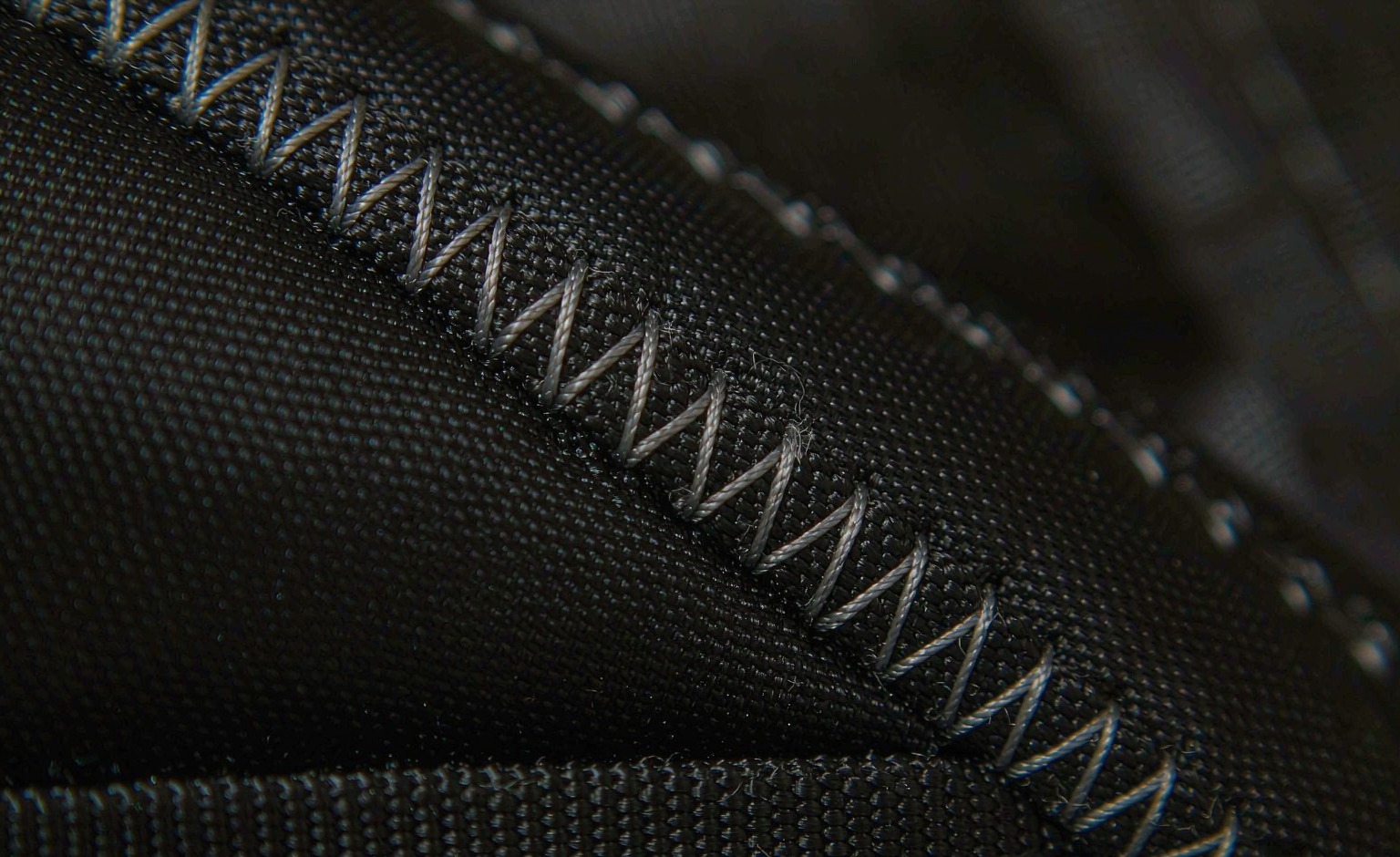
A lab dip is a small dye trial on the actual substrate — shell fabric, webbing or thread — produced against a reference and submitted for written approval, and it exists because a colour name cannot specify a shade. Two or three rounds are the normal path to convergence; more are needed on fluorescent shades, deep blacks and recycled yarns. Dips and a first article come back in 6-10 working days, 12-15 when the programme is demanding, and 35-50 days of bulk production follow approval, with 500 pieces per reference as the minimum run. Figures are indicative, quoted FOB Xiamen, and cover civilian product — outdoor, commuter, trade and first-aid categories — while the achievable match and its tolerance must be agreed in writing rather than assumed.
What a Lab Dip Is, and Why a Colour Name Is Not a Colour
A lab dip is a physical sample of the real material, dyed in a laboratory-scale bath to a recipe calculated from a reference, dried and finished in the same way the bulk will be, and submitted for approval. It is not a drawing, not a digital proof and not a Pantone code. It is a piece of cloth or tape that a buyer can hold next to the reference and sign.
The reason a name cannot do the work is that dyeing is a chemical result, not a printed value. The same target shade on a polyester shell and on a nylon webbing is reached by different dye classes — disperse for polyester, acid for nylon — and the two dyestuffs have different gamuts. A shade achievable on one may sit outside the gamut of the other, in which case no recipe exists that reaches it, and the honest answer is a near-match with a stated tolerance rather than a promise.
Three variables beyond the dye itself move the result. The first is substrate geometry: a flat woven face, a dense 25 mm webbing and a thin sewing thread present the same dye to the eye differently, because specular reflection depends on surface form. The second is lustre: a filament yarn reflects and a spun yarn scatters, so one reads deeper than the other at identical dye concentration. The third is finish — a calendering pass, a DWR application or a PU coating all change the surface and therefore the reading.
That is why a dip is always made on the actual production material. A dip prepared on a substitute fabric of similar denier and colour is the single most common cause of a bulk lot that does not match an approved sample, and the error only appears weeks later, when the bulk fabric arrives.
The Lab Dip Sequence: From Reference Swatch to Signed Standard
A colour-critical programme follows a fixed sequence, and the sequence is worth writing into the specification because each stage closes a different question. Skipping a stage is what creates the argument later.
The first stage is reference capture: the buyer supplies a physical swatch, a Pantone reference, or both, and states which one governs if they disagree. The second is recipe calculation and the first dip on the named substrate. The third is submission and judgement under a named light source. The fourth is correction, where the recipe is adjusted from the measured difference. The fifth is the signed standard — two identical swatches, one retained by each side, both stored away from light.
What closes each stage matters more than how long it takes. A judgement made on a screen is not a judgement; a photograph of a dip is not a standard. The dipped material has to travel, be held next to the reference, and be signed. Where programmes run across time zones, that physical step is the one that decides whether a 35-50 day bulk run starts on time.
| Decision criterion | Physical signed swatch | Pantone textile reference | Instrumental value with tolerance |
|---|---|---|---|
| What it actually is | A piece of the production material, dyed and finished | A printed or dyed-cotton chip from a commercial system | A CIELAB reading plus a stated tolerance band |
| Substrate it represents | The exact shell, webbing or thread being bought | Cotton or paper, not the bag material | Any substrate that can be measured |
| Behaviour under different light | Metameric with the reference, and it shows | Metameric, and the mismatch is often invisible until bulk | Illuminant has to be named or the value is meaningless |
| Use in a dispute | Strongest: both sides hold the same object | Weak alone: two readings of one code are both defensible | Strong if instrument, illuminant and observer are all named |
| Stability over time | Fades if stored in light; re-verify periodically | Fades and is subject to edition changes | Stable, provided the instrument is calibrated |
| Governing role in a specification | Should govern above all others | Useful as a starting target only | Best used alongside a physical swatch |
The practical recommendation follows from the last row. A printed reference is a starting point; a physical signed swatch is the standard; an instrumental value is the tie-breaker that turns an argument into a measurement. A programme that has all three, ranked in that order, rarely reaches a dispute at all.
Spec rule: Rank the references explicitly — the signed physical swatch governs, the Pantone code is the stated target that produced it, and the instrumental reading with its illuminant and observer named is the measurement used to settle any disagreement.
How Many Rounds a Dip Takes to Converge, and What Pushes It Higher
Two or three rounds is the normal answer, and the distribution matters more than the average. A first dip on a mid-tone shade over a stable white or dyed base usually lands close enough that a second round finishes it. A first dip on a fluorescent, a deep black, a metallic-looking shade or a recycled-content yarn frequently needs three or four, and occasionally does not converge at all on the substrate chosen.
Three mechanisms drive the count. The first is gamut: if the target sits near the edge of what the dyestuff can do on that fibre, each round moves less and the tail is long. The second is base shade variation: a recycled polyester feedstock carries a slightly different base from lot to lot, so a recipe that worked last season needs re-calculation. The third is finish: a coating or DWR applied after dyeing shifts the reading, and if the dip is judged before finishing while the bulk is judged after, every round is measured against a moving target.
Two practices cut the count. Send the reference and the target substrate together and require the dip to be finished exactly as bulk will be — coated, calendered or DWR-treated before it is submitted. And judge all colours in a programme at once rather than one at a time, because a shade approved in isolation often looks wrong beside the trims that surround it.
| Shade family on a bag programme | Rounds typically needed | Limiting mechanism | Practice that shortens the loop |
|---|---|---|---|
| Mid-tone over a stable dyed base | 1-2 | None; recipe space is comfortable | Approve with an instrumental reading on the first pass |
| Pastel and light neutrals | 2-3 | Base shade and optical brightener dominate the result | Fix the base fabric lot before dipping |
| Deep black and navy | 2-4 | Depth is limited by dye exhaustion, not by recipe | Accept a depth target rather than a hue target |
| Fluorescent and high-visibility | 3-4 or no convergence | Outside the fast gamut of most disperse systems | Choose the shade from a swatch book that exists |
| Recycled-content polyester | 3-4 | Feedstock base shifts between lots | Dip against the actual lot reserved for the order |
| Metallic, pearlescent or iridescent | Often does not converge | Effect comes from the finish, not from dye | Specify the finish and accept a wider tolerance |
Verdict: Budget two to three rounds for a normal shade and four for fluorescent, deep black or recycled-content work, require every dip to be finished exactly as bulk will be finished, and treat a fourth round with no movement as a signal to change the target rather than to keep adjusting the recipe.
Light Sources and Metamerism: Why a Match Moves Between Rooms
Most colour disputes are not dye disputes. They are lighting disputes, and they are decided by a phenomenon with a name: metamerism. Two samples are metameric when their reflectance curves differ but produce the same colour sensation under one illuminant, so they match in the office and separate in daylight.
Four sources appear in a bag programme. D65 represents average daylight and is the default for approval. TL84 or CWF represents the fluorescent lighting of a retail store, and a shade approved only under it will be rejected on a pavement. Illuminant A represents domestic tungsten, which is where a warm grey turns brown. A UV component is included when the material contains optical brighteners, because those fluoresce and change apparent brightness.
The mechanism matters because it is not a defect. Two dye recipes that reach the same D65 reading can legitimately differ under store lighting, and neither supplier nor buyer is wrong — the specification simply did not say which source governs. Every fluorescent brightener in a white or pale fabric makes this worse, which is why optical brightener content is a specification item on pale shades.
- Name the primary illuminant — normally D65 — and name a secondary one for store-checked programmes.
- View at a consistent geometry, roughly 45° illumination with the observer at 90°, since a flop angle on a coated shell changes everything.
- View dry and, where the product will get wet, wet, because a soaked 600D shell reads two steps darker.
- Re-approve after finishing, since a DWR or coating pass shifts the reading after the dye is already fixed.
Takeaway: Write the illuminant, the viewing geometry and the wet-or-dry condition into the colour clause — D65 as primary, a store source as secondary where retail matters — because a metameric pair is a specification failure rather than a dyeing failure, and no amount of re-dipping will fix a match that was never defined.
Reading Colour Difference: Grey Scale Versus Instrumental Values
Two languages describe a colour difference, and they do not translate perfectly. One is a visual grey scale rating, the other is a computed distance in colour space. A specification that uses one without the other is either unmeasurable or unarguable.
The grey scale rating is a visual comparison against a standard pair of grey chips, read from 1 to 5 in half steps, where 5 means no perceptible difference and 4 means a slight one. It is the method built into the ISO 105 series for assessing change in colour, and the pairing with ISO 105-A02 is what makes a fastness result readable. Because it is visual, it depends on the observer, the booth and the geometry, which is exactly why it has to be paired with a named condition.
The instrumental reading removes the observer. A spectrophotometer measures the sample and the standard and returns CIELAB coordinates, and the difference is computed as a single number under ASTM D2244, with the illuminant and observer declared as part of the result. A number is reproducible between parties, which is its whole value: two people can disagree about a grey scale step and still agree on a measured distance.
Which tolerance to write is a commercial decision, not a technical one, and it should be made per material group. Tighter bands cost more because they raise the rejection rate at the dye house and increase the number of dips. The pattern that works is a single control material — usually the shell, because it has the largest visible area — with everything else measured against it and given its own band.
| Assessment method | What it actually measures | Where it belongs in a programme | Form the tolerance takes |
|---|---|---|---|
| Grey scale for change in colour | Perceived difference against standard grey chip pairs | Fastness results under the ISO 105 series | A rating of 4 or better, stated in writing |
| Instrumental colour difference | Computed distance between sample and standard coordinates | Approval of dips and release of bulk lots | A stated limit computed per ASTM D2244 |
| Washing fastness test | Change and staining after a domestic laundering cycle | Shell, webbing and thread on any laundered product | ISO 105-C06 result read on the grey scale |
| Crocking test | Transfer of colour under dry and wet rubbing | Dark shades, prints and coated trims | AATCC 8 rating, dry and wet separately |
| Light fastness test | Resistance to fading under xenon exposure | Outdoor product and any fluorescent shade | ISO 105-B02 rating against blue wool references |
Judgement: Use the grey scale for fastness results and the instrumental distance for approval and release, name the control material, and set one band per material group rather than one band for the whole bag, because a single tight number applied to thread, webbing and shell alike will fail a programme that would otherwise pass.
Where Dips Disagree: the Six Recurring Disputes and the Clause That Prevents Each
Almost every colour claim falls into one of six patterns, and each has a clause that prevents it. The clause costs nothing at the specification stage and a great deal once bulk fabric has been cut.
The first is approval under the wrong light, and it is prevented by naming the illuminant. The second is a dip made on substitute material, prevented by naming the substrate and requiring the dip to be cut from the production base. The third is wet-versus-dry, prevented by stating the condition under which judgement happens. The fourth is post-finish shift, prevented by requiring the dip to be finished as bulk will be, including coating and DWR. The fifth is lot drift, where a re-order matches the reference but not the previous shipment, prevented by retaining a swatch from the first bulk lot and dipping against it. The sixth is the missing counter-sample: one side holds the only signed swatch, and when it fades there is nothing left to compare.
| Visible symptom at goods-in | Root cause behind it | Clause that prevents the dispute |
|---|---|---|
| Matches in the office, fails on the pavement | Approved under store lighting rather than daylight | Name D65 as primary and a secondary source for retail checks |
| Bulk fabric differs from the approved dip | Dip produced on a substitute base fabric | Require the dip to be cut from the reserved production lot |
| Shade looks correct dry and wrong when wet | Judgement made without a wet condition | State dry or wet viewing, and inspect both on dark shades |
| Shift appears after coating or DWR | Dip judged before the finish was applied | Require the dipped piece to be finished exactly as bulk |
| Re-order does not match the earlier shipment | Dye lot drift between production runs | Retain a bulk swatch and dip the re-order against it |
| Nobody can produce the signed reference | Only one swatch existed and it faded | Two signed swatches, stored dark, re-verified periodically |
One further clause is worth adding because it settles money rather than colour: who pays for rounds beyond the agreed number. Where the target has not moved and the recipe has, the supplier carries the extra dips; where the buyer changes the reference after approval, an additional sampling charge applies. Writing that distinction down before the first dip is faster than arguing about it after the fourth.
Bottom line: Six clauses — governing illuminant, named substrate, dry or wet condition, finished-as-bulk requirement, retained bulk-lot swatch and two signed references — prevent nearly every colour dispute, and the seventh, on who funds extra rounds, prevents the only one that is about money rather than shade.
Sampling, Dips and the Calendar for a Colour-Critical Programme
Dips sit on the critical path, and on a colour-critical custom modular backpack programme on a modular backpack platform they sit there twice: once during sampling and again when the bulk lot is dyed. Planning for one and not the other is the usual reason a 35-50 day production window slips at the end.
The calendar runs as follows. A quotation comes back in 24-48 hours against a reference, a substrate list and a quantity. Dips and a first article return in 6-10 working days where the shade is conventional; 12-15 working days applies where the programme is demanding, where several materials must be matched to one control, or where a wash trial has to be read first. Production then occupies 35-50 days from sign-off of the pre-production sample, and 500 pieces per reference is the minimum run. Goods are released against AQL 2.5, sampled per ISO 2859-1 at level II, critical 0, major 2.5, minor 4.0.
Charges follow the same shape as any other sampled element. One-off screens, plates or moulds are quoted at USD 300-2,500 where a branded element is involved, while the USD 50-150 sample charge is refundable against a later order. Additional dip rounds beyond the agreed number are the one item to settle in advance, since the cost belongs to whoever moved the target.
Colour is an inspection item with a method attached. The retained swatch is brought to goods-in, the lot is compared under the named illuminant, and any instrumental check is run with the instrument and conditions named in the specification. A bulk lot that sits outside the agreed band is a major defect at AQL 2.5, which is why the band has to be a number rather than an impression.
Selection rule: Put the dips on the critical path twice, allow 6-10 working days for conventional shades and 12-15 for matched multi-material programmes, require the pre-production sample to be finished exactly as bulk, and hold release against AQL 2.5 with the retained swatch and the named illuminant at goods-in.
Gates, Records and the Production Facts Behind These Figures
Programme work is coordinated through four gates that a buyer can audit: reference and substrate confirmation, a first article with its dips, a pre-production sample held as the physical standard, and an AQL 2.5 release check before shipment. Colour differs from other specification items in one way — every gate produces a physical object that must be stored dark and produced later — so the record here is a swatch cabinet as much as a file.
Our 4,950 m² SGS-verified production floor occupies that space with 137 people operating 149 machines across 7 production lines, producing 200,000 units a month. Bag production experience behind the programme dates to 2004, with the company founded in 2014. Capacity matters to colour in a specific way: a dye house slot has to be booked inside the 35-50 day window, and a lot booked late is a lot that gets dyed against a base from a different delivery, which is precisely how lot drift starts.
Commercial terms are fixed. Quotations are indicative, valid against a stated reference, substrate list and quantity, quoted FOB Xiamen, and re-issued within 24-48 hours when the target moves. Terms run T/T 30/70, the balance falling due on inspection sign-off. Freight is quoted separately — sea 25-35 days, air 5-8 days, express 3-5 days — with freight planning using 28 CBM to a 20GP container and 68 CBM to a 40HQ.
One boundary is worth stating plainly: no dye system reaches every target on every substrate, and no lab dip should be represented as a guarantee of an exact shade. What can be agreed is a target, a method, an illuminant and a tolerance band, and those four written items are what make a colour result defensible. The scope excludes any military certification, ballistic protection or weapon carriage claim.
Frequently asked questions
What is a lab dip in bag production?
A lab dip is a small dye trial on the actual production material — shell, webbing or thread — dyed and finished as bulk will be, then submitted for written approval. It turns a target into an achievable shade. Dips take 6-10 working days, 12-15 on a demanding programme; MOQ 500; bulk 35-50 days.
Why does a lab dip take more than one round to approve?
Because the first recipe is a calculation, not a result. Dye uptake depends on fibre, denier, base shade and finish, so the first dip lands near the target and the second closes the gap. Budget 2-3 rounds. Sampling 6-10 working days; sampling charge USD 50-150, refunded on order.
How many lab dip rounds should a colour-critical programme budget?
Two to three for conventional shades, four for fluorescent, deep black or recycled-content yarns. If a fourth round shows no movement, the target is outside the dyestuff gamut and should change. Sampling 12-15 working days on demanding programmes; MOQ 500; quote in 24-48 hours.
Which light source should a lab dip be approved under?
D65, which represents average daylight, with a secondary store source such as TL84 where the product is sold indoors. Naming the illuminant prevents most disputes, since a metameric pair matches in one room and fails in another. Bulk runs 35-50 days; AQL 2.5 on release.
What is metamerism and why does it cause colour disputes?
Metamerism is a pair of samples whose reflectance curves differ but which produce the same colour under one light and different colours under another. It is a specification failure, not a dyeing fault. Fix it by naming the illuminant. Sampling 6-10 working days; MOQ 500.
Should colour approval use a grey scale or an instrumental reading?
Both, in different jobs. The grey scale reads fastness results under the ISO 105 series; an instrumental distance computed per ASTM D2244 decides dip approval and lot release, with illuminant and observer named. Inspection runs at AQL 2.5; bulk 35-50 days.
Why does a bulk dye lot differ from the approved lab dip?
Usually the dip was made on a substitute base, judged before finishing, or approved under a different light. Retain a swatch from the first bulk lot and dip re-orders against it. Sampling 6-10 working days; MOQ 500; AQL 2.5 before shipment.
Can a recycled polyester shell match the same shade as virgin material?
Usually close, not identical. Recycled feedstock shifts the base shade between lots, so dips should be made against the lot reserved for the order, and the tolerance band should allow for it. Budget 3-4 rounds; sampling 12-15 working days; bulk 35-50 days.
Does a coating or DWR finish change an approved shade?
Yes. A coating or DWR pass changes surface reflection and usually deepens the reading, so a dip judged before finishing will not match bulk judged after. Require the dipped piece to be finished exactly as bulk. Sampling 6-10 working days; MOQ 500.
How long does a lab dip add to the sampling schedule?
Dips run inside the sampling window rather than after it: 6-10 working days for a conventional shade and 12-15 where several materials must be matched to one control. Production then occupies 35-50 days. MOQ 500; quotation returned in 24-48 hours.
What should be written into a colour specification to prevent disputes?
Governing illuminant, named substrate, dry or wet viewing, finished-as-bulk requirement, retained bulk-lot swatch, two signed references and the tolerance per material group, plus the method behind each band, since a number without a method is read two ways at goods-in. Add who funds extra rounds. Sampling 6-10 working days; AQL 2.5; FOB Xiamen.
Who pays for lab dip rounds beyond the first?
Whoever moved the target. If the reference is unchanged and the recipe is being corrected, the supplier funds the extra rounds; if the buyer alters the reference after approval, an additional sampling charge applies. Settle it before dipping. Sample charge USD 50-150.
Can webbing and thread be matched to the shell colour?
They can be matched closely, but rarely identically, because nylon and polyester take different dye classes and a thin thread reads lighter than a flat face. Set one control material and a band per trim. See the guide on trim tolerance by material group.
How is colour checked during inspection before shipment?
The retained swatch is produced at goods-in, the lot is compared under the named illuminant, and any instrumental check uses the stated conditions. A lot outside the agreed band is a major defect. Inspection at AQL 2.5 per ISO 2859-1 level II; bulk 35-50 days.