Home › Field notes › CPSIA Requirements for Bags: Children's Product Tests and Scope Limits
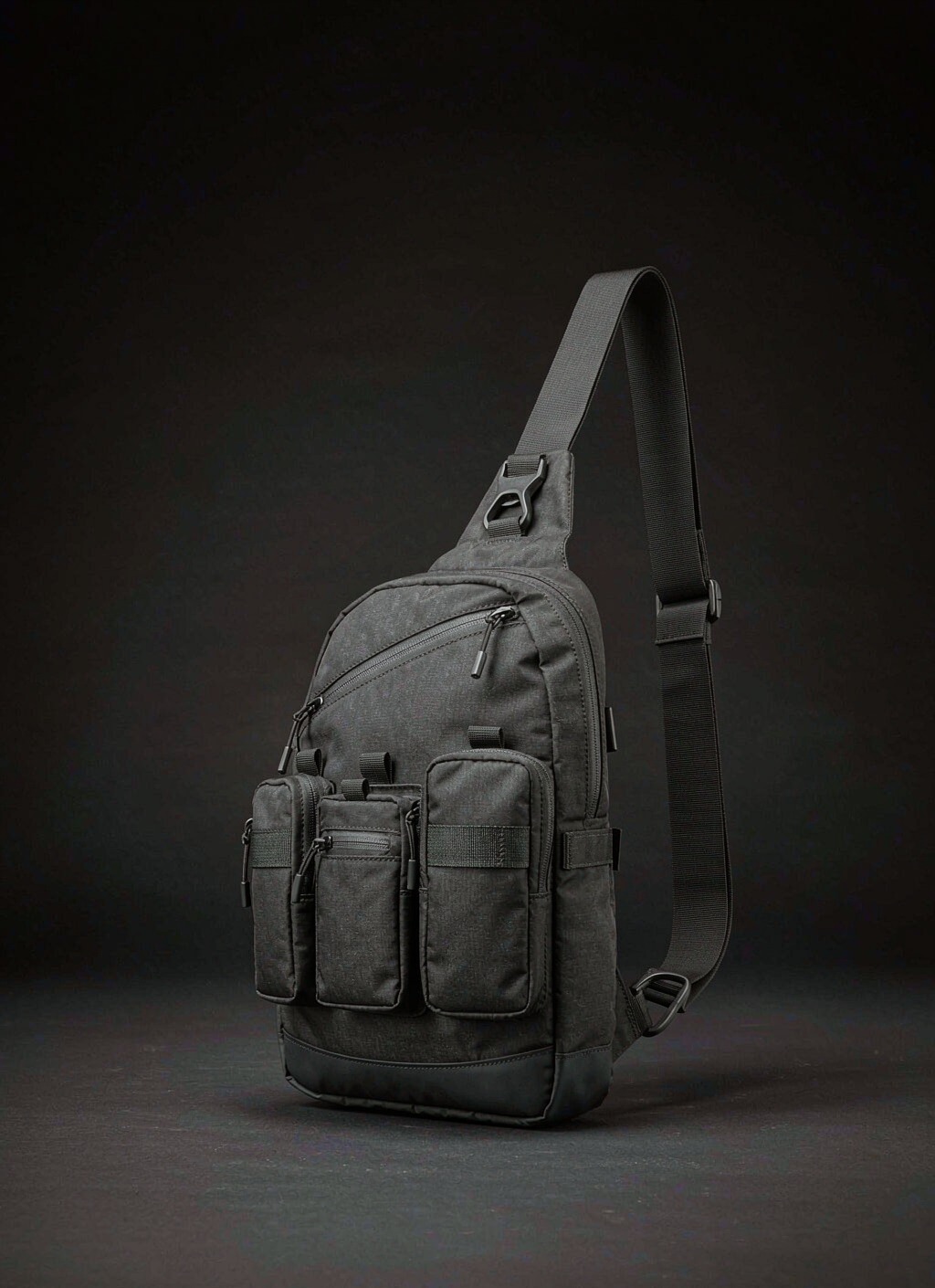
CPSIA reaches a bag only when the finished article is a children's product, and that classification is decided by intended user, marketing, sizing and age cues rather than by the category name on a purchase order. Inside the definition, three duties stack up: third-party testing at an accepted laboratory, a written Children's Product Certificate, and a permanent tracking mark on product and packaging. Outside it, an adult pack owes general consumer-product obligations and no children's-product certificate at all. Commercial gates sit behind any compliance work: MOQ 500 per reference, samples in 6-10 working days, volume across 35-50 days, and release by attribute inspection at AQL 2.5. This is general trade information, not legal advice. The brand remains the responsible party for compliance in its destination market. Nothing below states that any modular backpack specified here is a children's product or has been tested to CPSIA.
Where CPSIA Applies and Where It Stops for Bag Programmes
The Consumer Product Safety Improvement Act is United States legislation administered by the Consumer Product Safety Commission, and it does not reach every sewn good that crosses a border. Its duties fall into three tiers. The first covers all consumer products, whatever the user. The second attaches only to products designed or intended primarily for children 12 years or younger. The third is narrower again and covers children's toys and child care articles. A 30 L load-carriage pack sold through work and outdoor channels sits in the first tier. A 12 L school satchel printed with characters and merchandised for younger pupils sits in the second. A bag with a silicone teething tag hanging from a zipper pull sits in the third.
The tier decides everything downstream, because the three best-known CPSIA duties — third-party testing, the written certificate, and the permanent tracking label — are children's-product duties. Where a style sits in the first tier the importer still owes general obligations: accurate country-of-origin marking, no banned hazardous substances, and reporting duties where a defect or substantial hazard emerges. No children's-product certificate arises. Buyers who skip the classification step and order a full children's-product panel on an adult pack pay for parameters no rule requires, then file a certificate asserting a regulatory status the product never claimed.
Read the current statutory text and the rule pages published at CPSIA before any requirement is written into a specification sheet, because the commission revises thresholds and scope over time and a tech pack cloned from an old file can cite rules that have since moved on.
Bottom line: Classify the finished article by intended user before commissioning laboratory work, because third-party testing, a children's-product certificate and a permanent tracking mark are duties of the second and third tiers only, and a general-use adult bag carries none of them.
How the Children's Product Definition Is Actually Decided
Classification is not a checkbox on a purchase order. The commission looks at a declared statement of intended use, then at whether the market reasonably reads the product the same way. Four kinds of evidence carry weight: the manufacturer's own statement about who the product is for, the packaging and merchandising surrounding it, the physical design cues a purchaser sees, and any age-labelling guidance the industry treats as authoritative.
Design cues do most of the work in a buyer review. A 4,950 m² SGS-verified production floor can sew the same shell in two colourways and the two outcomes differ: a 20 L body with cartoon print, shortened shoulder geometry and a 60 cm strap run reads as a child's article, while the same volume in plain colour with a tool-panel interior and a 25 mm webbing grid reads as adult equipment. Size alone rarely decides; a small organiser pouch sold as a camera accessory is not a child's product because it is small.
Retail context matters as much as the object. A style displayed in a stationery aisle beside lunch boxes is marketed to children even if the maker never wrote that down. The same style listed on an industrial supply site under "small parts case" is not. The importer should record the decision in writing at the point of purchase, together with the merchandising it intends to use, because that record is what a reviewer or regulator reads later.
Verdict: Write an intended-use statement for every style before sampling starts, covering declared age, merchandising channel and the design cues that support it, since the recorded decision — not the physical bag alone — is what fixes CPSIA obligations for that reference.
Lead and Phthalates: Which Rules Reach a Sewn Bag
Two substance rules dominate children's-product testing for soft goods. Total lead applies to accessible substrates of a children's product at the ceilings published under the statute, with a separate and lower ceiling for paint or similar surface coatings. Phthalates are handled differently: the prohibition on specified phthalates at the published de minimis level is written for children's toys and child care articles, not for every children's product, so a school bag frequently falls outside it while a bag sold with a teething component does not.
Mapping the rule onto a bill of materials is where programmes are won or lost. Lead exposure in a bag usually comes from surface coatings, printed graphics, PVC or PU skins, metal hardware with a leaded brass or zinc-alloy substrate, and the coating on a zipper slider. Phthalate exposure tracks plasticised layers: soft PVC trim, screen-print inks, heat-transfer films, and the plastisol on a puller. Base cloth in polyester or nylon rarely drives either result, which is why a well-planned test plan costs far less than testing every line in a 40-row BOM.
Accessibility is the second filter. A component the user cannot reach under reasonably foreseeable use and abuse is treated differently from a handle the user grips for 8 hours a day. Where a coating sits under a bonded lining, the laboratory needs to know that, because the specimen preparation changes the result. Reference the toy standard ASTM F963 only when the article genuinely is a toy or child care article; applying its logic to a tool roll produces reports no reviewer asked for.
Spec rule: List every accessible substrate, coating, print layer and metal part on a single BOM sheet before selecting test parameters, then test the coated or plasticised lines first, because lead and phthalate findings concentrate there rather than in base woven cloth.
Third-Party Testing, Accepted Laboratories and the Certificate
Children's-product testing has to be performed by a laboratory accepted by the commission, and the acceptance route runs through accreditation to ISO/IEC 17025 with the relevant parameters inside the accredited scope. A general accreditation mark is not enough: the scope listing has to name the parameter, which is why a laboratory providing a lead result while its schedule covers only textile colour fastness is a documentation failure even when the number is correct.
The certificate that follows is a document, not a laboratory report. It identifies the product, cites each rule the product is subject to, names the importer or domestic manufacturer, records the date and place of manufacture, and records the date and place of testing together with the laboratory that performed it. The certificate may be based on a finished-product test or on a reasonable testing programme supported by component-level results, and the supporting records have to exist and be producible.
| Certificate field | Content that has to appear | Where the data normally comes from |
|---|---|---|
| Product identification | Style number, description, and enough detail to distinguish the article from similar styles | Brand tech pack and confirmed sample |
| Rule citation | Each CPSC rule the finished article is subject to, listed individually | Brand compliance counsel or consultant |
| Responsible party | Importer or domestic manufacturer name, address and telephone contact | Brand entity, never the production side |
| Manufacture record | Date of manufacture and city or country where the article was produced | Production schedule and packing records |
| Testing record | Date and place of testing, plus the name of the laboratory | Third-party laboratory report |
| Supporting file | Test results or reasonable testing programme evidence retained and producible | Laboratory reports plus BOM declarations |
Who signs matters. The certificate belongs to the importer or, for domestic goods, the domestic manufacturer. A production base can supply the data the certificate rests on — material declarations, laboratory reports for named components, and manufacturing dates — but the signature line is the brand's, because the party placing goods on the market carries the duty.
Spec rule: Require the laboratory's accreditation schedule with each report and confirm the tested parameters appear in that schedule, because a certificate resting on a report from outside an accredited scope fails review even when every measured value passes.
Tracking Labels and Permanent Marks on a Sewn Product
A children's product needs a distinguishing permanent mark on the article and on its packaging, legible to the ultimate purchaser, carrying the name of the manufacturer or private labeler, the location and date of production, and cohort information such as a lot, batch or run number. The mark has to survive reasonably foreseeable handling, which for soft goods means it cannot be a paper hangtag alone.
Placement on a bag is an engineering decision as much as a compliance one. Options that survive service: a woven label sewn into an interior seam allowance, a printed mark on the reverse of a webbing tab, a heat-transfer mark on the inside face of a pocket, or a stamped line on a lining panel behind the back padding. Placement that fails: an ink-jet print on an unlined surface where abrasion removes it, a sticker on a polybag, and any mark hidden under a bonded panel that cannot be read without cutting the bag.
Cohort numbering should tie to something a production schedule can actually reconstruct — a cutting lot, a sewing line and a week number — so a recall or a complaint can be bounded to a set of cartons. Our production team can stamp the lot onto the interior label and mirror the same number on the export carton, but the numbering scheme is the brand's to define, because the brand is the party that has to explain it later.
Takeaway: Put the permanent tracking mark on a surface that survives abrasion, laundering and sunlight — an interior woven label or the reverse of a load-bearing webbing tab — and mirror the same lot code on every export carton so a cohort can be bounded to shippable units.
Duty by Product Class: General-Use Bag versus Children's Bag
The comparison below is the fastest way to settle a scope argument inside a sourcing meeting. Read it left to right for one style at a time; do not read it as a property of a factory, because the same production line can run an adult tool bag in the morning and a child's satchel in the afternoon, and the two carry different paperwork.
| Obligation | Adult general-use bag | Bag marketed to children | Bag sold with a child care component |
|---|---|---|---|
| Children's product classification | Not triggered | Triggered | Triggered |
| Third-party laboratory testing | Not required by this statute | Required at an accepted laboratory | Required at an accepted laboratory |
| Written children's product certificate | None | Required, signed by importer | Required, signed by importer |
| Substrate total lead ceiling | Not applied | Applied to accessible parts | Applied to accessible parts |
| Surface coating lead ceiling | Not applied | Applied to coated layers | Applied to coated layers |
| Phthalate prohibition | Not applied | Applies only if toy or child care article | Applies |
| Permanent tracking mark | Not required by this rule | Required on product and packaging | Required on product and packaging |
| Small parts hazard assessment | Not applicable | Assess detachable trim and pullers | Assess detachable trim and pullers |
Two patterns recur in disputes. The first is over-classification: a distributor sells an adult pack to a school-uniform catalogue, the merchandising changes, and the article moves tiers without any change to the physical product. The second is under-classification: a brand adds a novelty charm or a teether to an existing style to lift sell-through and quietly pulls the article into the narrowest tier. Both are controlled by a written classification record reviewed at every artwork change.
Judgement: Re-run the classification whenever artwork, merchandising channel or attached trim changes, because a component added for margin can move a finished bag from the first tier into the third and pull testing, certificate and tracking duties with it.
What a Production Partner Can and Cannot Put in the File
A realistic document request is the difference between a compliance file that closes and one that stalls. What the production side can supply: a component-level bill of materials naming each material and its supplier, material declarations for coatings and inks, third-party laboratory reports for named components or for the finished article, manufacturing dates and lot records, and retained samples in the confirmed construction. All of that is generated inside the production process and belongs in the file.
What it cannot supply is the legal conclusion. A production base does not decide the destination market's classification, does not sign the importer's certificate, and cannot certify market access. A request phrased as "send the CPSIA certificate" is therefore the wrong request; the correct request names the document — material declaration, laboratory report for parameter X on component Y, lot record for production week Z — and states the format.
For our own programmes the boundary is explicit. Modular backpacks, chest modules and pouch systems specified through this site are engineered as adult load carriage: hiking, commuting, worksite tools, first aid and organised daily carry. They are not presented as children's products, no children's-product certificate is issued for them, and no CPSIA test result is published on their behalf. A buyer who intends to merchandise a style to children takes the classification decision, commissions the testing and signs the certificate, with the material data supplied as input.
Selection rule: Ask a production partner for material declarations, named laboratory reports and lot records rather than for a compliance verdict, then have the brand's own counsel classify the article and sign the certificate that follows.
Documents That Survive a Buyer Review
Reviewers read files in a fixed order: classification record, bill of materials, laboratory reports with accreditation scope, certificate, tracking-mark artwork and placement, then lot records tying cartons to production weeks. A file assembled in that order closes in one sitting; a folder of 60 unlabelled PDFs does not.
Three habits make the difference. Name every file with style number, parameter and date so a reviewer can sort without opening documents. Keep the BOM revision number on every laboratory report, because a report on revision 2 says nothing about revision 5 with a new ink. Retain the confirmed sample from the tested build, because the physical reference is what settles an argument about whether the tested article matches the shipped article.
On the production side, the SGS-verified production base behind these programmes holds a 4,950 m² floor with 137 people, 7 production lines and 149 machines, and a monthly output ceiling near 200,000 units, with work moving sampling to PP sample to AQL 2.5 inspection and then to shipment. Those figures speak to throughput and release discipline; they make no statement about any substance limit or any certificate. The founder's team has worked in bag production since 2004, and the operating company was established in 2014, which is context for process continuity rather than a compliance claim.
Calendar, Cost and Where Testing Sits in the Programme
Laboratory work belongs on the schedule as its own line, not folded into sampling. Samples take 6-10 working days for a standard build and 12-15 where tooling or a complex module stack is involved; mass production runs 35-50 days after approval; sea freight from FOB Xiamen adds 25-35 days, air 5-8 days and courier 3-5 days. A test slot is booked against the confirmed sample, so any re-sample after a failed parameter pushes the slot and the production window together.
Cost is driven by parameter count and by how many distinct materials are tested, not by unit volume. A style with 12 coated or printed lines costs far more to test than one with 3, which argues for consolidating coatings and inks across a range at the design stage. Sampling fees run USD 50-150 per reference and are refundable against the order; tooling and screens run USD 300-2,500 where a new hardware or print process is needed. Commercial terms are T/T 30/70 with MOQ 500 per reference.
Plan the parameter list at quotation stage, not after the PP sample, and the laboratory slot can be booked in parallel with tooling. Plan it late and the whole programme waits. Detailed construction data for modular backpack platforms and for custom modular backpack programmes helps the laboratory scope a specimen list before a single sample is cut, and the MOLLE attachment grid page sets out the webbing and stitch callouts that appear in a hardware BOM.
Frequently asked questions
What makes a bag a children's product under CPSIA?
A bag becomes a children's product when it is designed or intended primarily for users 12 or younger, judged from the declared intended use, the merchandising and packaging, and design cues such as print theme, volume and strap geometry. Size alone does not decide: an adult tool pouch can be small. Record the classification in writing at MOQ 500 quotation stage with the artwork and channel it applies to, then re-check it whenever either changes.
Does CPSIA apply to a modular backpack sold for adult hiking?
A pack merchandised and engineered for adult hiking sits in the general-use tier, so the children's-product duties do not attach: no children's-product certificate and no tracking mark arise from this statute. General consumer-product obligations still do. Sampling takes 6-10 working days and mass production 35-50 days, so a classification review adds no time if it is done before the tech pack is frozen.
How is the intended age of a bag decided in practice?
The commission weighs four things: the maker's own statement of intended use, the way the product is packaged and displayed, physical design cues a purchaser sees, and recognised age-grading practice. A 20 L body with character print in a stationery aisle reads as a child's article; the same body in plain colour with tool organisation does not. Write the decision down before sampling, which takes 6-10 working days.
What lead limits apply to children's bags under CPSIA?
Children's products are held to a total-lead ceiling in accessible substrates and a separate, lower ceiling for paint or similar surface coatings; the published figures sit in the rule text at CPSC, which is the only source worth quoting. In a bag, lead concentrates in coatings, prints, PVC or PU skins, and hardware alloys. Base woven cloth rarely drives a result at MOQ 500 volumes.
Which phthalates are restricted and do they apply to bags?
The listed phthalates are prohibited at the published de minimis level in children's toys and child care articles, not in every children's product, so a plain school bag often falls outside the prohibition while a bag sold with a teething component falls inside it. Plasticised layers carry the risk: soft PVC trim, screen-print inks and heat-transfer films. Test those lines first; sampling takes 6-10 working days.
Who has to issue a Children's Product Certificate for an imported bag?
The importer of record signs it; for domestically made goods the domestic manufacturer does. The document names the product, cites each applicable rule, gives the responsible party's contact details, records date and place of manufacture, and records date and place of testing with the laboratory. A production base supplies the underlying data but not the signature, and bulk runs take 35-50 days.
Can a production base sign the certificate on the brand's behalf?
No. The certificate belongs to the party placing goods on the market, and a production partner can only feed it: material declarations, laboratory reports for named components, and manufacturing dates with lot codes. A request for a signed certificate from the production side signals the requester has misread the rule. Build the file at MOQ 500 quotation stage, not after 35-50 days of mass production.
How often does a children's bag have to be retested?
Testing is repeated whenever the material set changes, when a supplier for a coated or printed component changes, and on any periodic cadence the brand's compliance adviser sets. A reasonable testing programme can rest on component-level results plus finished-article checks. Tie each report to a BOM revision number so a report on revision 2 is never read as covering revision 5. Sampling fees run USD 50-150, refundable on order.
What information goes on a CPSIA tracking label for a bag?
The permanent mark carries the manufacturer or private labeler name, the location and date of production, and cohort information such as lot, batch or run number, and it has to appear on the article and on its packaging. For soft goods pick a placement that survives handling: an interior woven label or the reverse of a webbing tab. Mirror the lot code on export cartons; 20GP holds about 28 CBM.
Where can a permanent tracking mark be placed on a sewn bag?
Durable placements include a woven label sewn into an interior seam allowance, a printed mark on the reverse of a 25 mm webbing tab, a heat-transfer mark on a pocket's inside face, or a stamped line on lining behind back padding. Avoid ink-jet print on unlined faces, stickers, and marks hidden under bonded panels. Confirm placement on the PP sample before 35-50 days of bulk starts.
Does a general-use bag need third-party testing at all?
Children's-product testing is not required for an adult general-use bag under this statute, though brands routinely commission voluntary testing for commercial reasons such as retailer onboarding. If a retailer asks for a report, ask which parameters it wants, because an unspecified request usually produces a children's-product panel nobody needs. Sampling takes 6-10 working days; complex builds take 12-15.
How long does CPSIA testing add to a sampling schedule?
Book the laboratory slot against the confirmed sample: it can overlap tooling, never a replacement build. A first sample needs 6-10 working days and a complex one 12-15; a failed parameter forces both a new sample and a new slot, setting back volume output, which itself needs 35-50 days. Ocean transit then adds 25-35 days ex-Xiamen.
What documents should a buyer request from a production partner?
Request items by name: a component-level BOM with suppliers, material declarations for coatings and inks, laboratory reports for named parameters on named components with the accreditation schedule, manufacturing dates and lot records, and a retained sample from the tested build. Order the file classification, BOM, reports, certificate, tracking artwork, lot records. MOQ 500 per reference; T/T 30/70.
Should a brand print a small-parts warning on a bag?
A warning is considered where a detachable trim, puller or charm presents a choking hazard to a young child; the assessment depends on the trimmed part, the age group and the testing route, so it belongs with the classification decision rather than as blanket artwork. Adding such trim to an adult style can also move the article into a narrower tier. Settle the point while the tech pack is still open.
When should a compliance file be rebuilt after a material change?
Rebuild whenever a coated, printed or metal component changes supplier or specification, and whenever a new colourway introduces ink or plating not previously tested. Keep BOM revision numbers on reports so stale documents cannot be cited. A change found after 35-50 days of mass production means re-testing finished goods and possibly a revised certificate from the importer of record.