Home › Field notes › Return Reasons for Modular Backpacks: Five Root Causes and Fixes
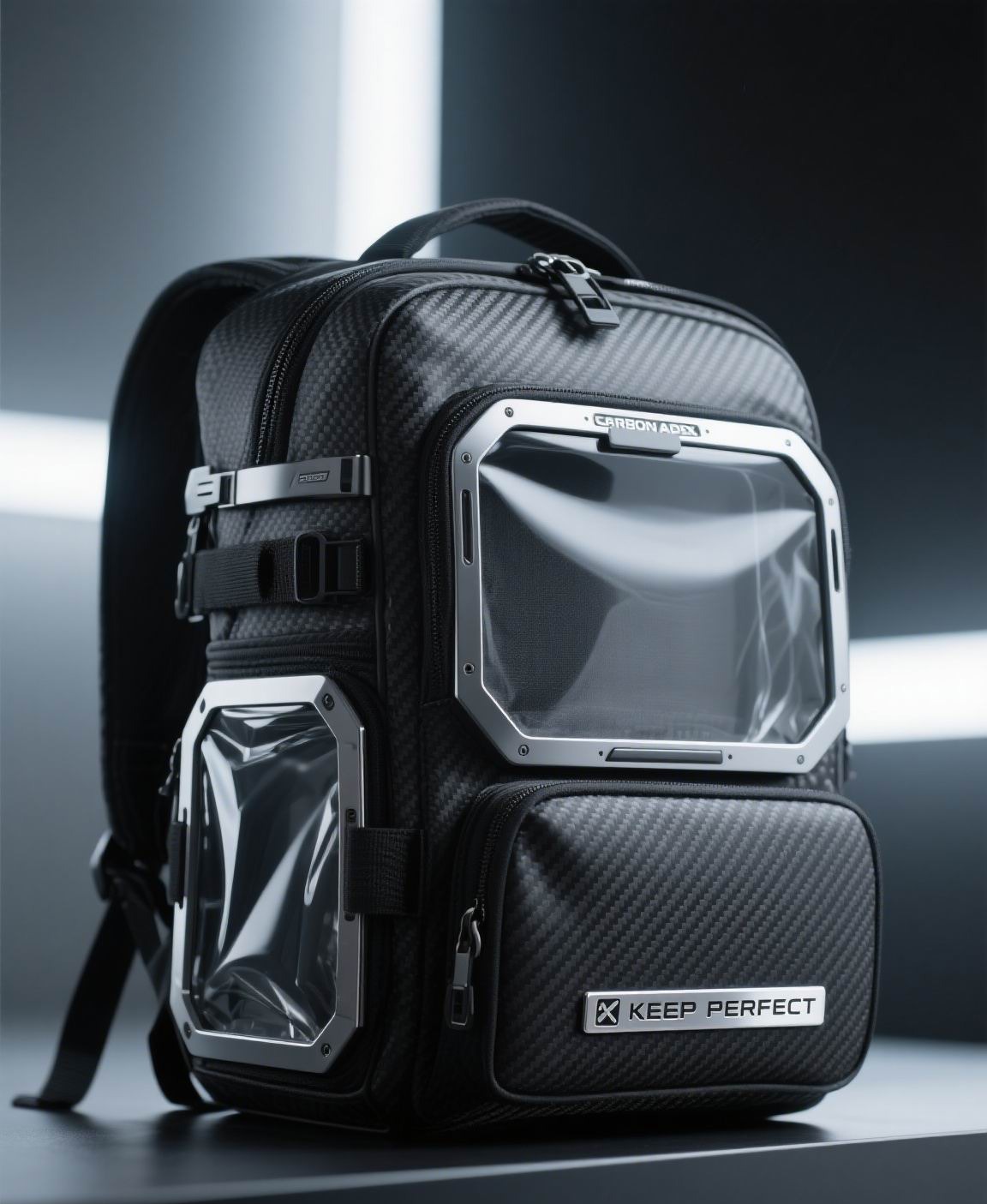
Return reasons for modular backpacks reduce to five recurring design causes — an interface that refuses the pouch, a module that works loose, a stated capacity the buyer cannot reach, a shade difference between the carrier and the module, and volatiles trapped in packing — rather than to scattered sewing faults. Each cause has a different intervention point: drawing stage, hardware selection, measurement protocol, dye-lot planning or aeration before packing. Commercial terms are unchanged whatever the fault — minimum order quantity 500 units per reference, first samples back within 6-10 working days, series build of 35-50 days, inspection to AQL 2.5 and shipment FOB Xiamen. The boundary: this concerns civilian load carriage only, for commuting, trade tools, hiking and first aid, with no ballistic claim, no weapon carriage and no military certification statement of any kind; the unit counts used later in this page are an illustrative worked example for showing the arithmetic, not observed market data.
How Return Reasons for Modular Backpacks Map to Five Design Causes
A returns line is a symptom, not a diagnosis. "Pouch will not fit", "the side pocket fell off in a week", "much smaller than the photo suggests", "the grey panel is a different grey" and "smells of glue" read like five unrelated complaints, and four of them were decided months earlier: at the drawing stage, at the component approval stage, at the specification writing stage or at the packing bench. The first job on receipt of returned goods is therefore not repair but attribution — pairing each received unit with the single decision point at which that outcome became unavoidable.
Attribution works only if every unit gets exactly one primary cause. A unit returned because a module detached may also have a shade complaint logged in the same message; recording both as primary causes doubles the sample and hides which fix pays. Record one primary cause, list the rest as notes, and then rank clusters by unit count.
The illustrative arithmetic below uses a round 100 returned units so the percentages are easy to read. The distribution is not a market statistic and should not be quoted as one: every programme's split differs with its channel, its demographic and its price band. What transfers between programmes is the apportioning method and the sequence in which corrections are funded.
| Symptom recorded at goods-in | Design root cause | Stage that made it unavoidable | First intervention point |
|---|---|---|---|
| Buyer's existing pouch will not thread onto the grid | Spacing accumulated outside tolerance across ten or more rows | Pattern grading of the panel | Cumulative-pitch gauge used as a mandatory Check |
| New module will not sit flat or rattles when threaded | Interface geometry, not strength, underspecified | Drawing stage | Compatibility statement plus portrait-geometry test block |
| Module found detached after normal daily use | Tail creep through the hardware, or low engagement force | Component selection | Routing of the free end plus pull-off window |
| Bag will not swallow the kit advertised for it | External dimensions converted to litres without a fill protocol | Specification writing | Fill protocol written into the specification as a method |
| Carrier body and add-on pouch visibly different shade | Separate dye lots booked for two references | Colour approval and booking | One dye lot reserved across every reference in the drop |
| Chemical smell on opening the polybag | Coating solvents or foam laminate sealed too early | Packing instruction | Aeration interval plus vented polybag before closing |
Two clusters in the table are worth separating in your own records although they merge in the buyer's words. "Wrong size" covers both a genuine capacity overstatement and a buyer who misread the use case; ask in the returns form whether the buyer measured before deciding, because the second group is handled by better photography rather than by a larger bag. Platform-level descriptions on the modular backpack platform page and grid detail on the MOLLE attachment grid page give the shared vocabulary these codes need.
Selection rule: Record one primary root cause per returned unit within 48 hours of goods-in, and fund corrections only for clusters whose unit share clears a threshold agreed inside the company, because spreading development cost across five small fixes delivers no measurable reduction in the following quarter's rate.
Interface Mismatch: When the Pouch Will Not Mate With the Grid
Thread failure has two faces and they need different instruments. Either the pouch can be threaded but sits loose, which is a wear-life problem, or it cannot be threaded at all, which is a geometry problem reported as "does not fit". The standard grid — 25 mm webbing, 38 mm vertical spacing and a 50 mm horizontal repeat — leaves only a small amount of slack between strap and webbing, and that slack disappears fast when stitch drift accumulates down a column of twelve rows.
Drift is cumulative, not random. If each row lands 0.3 mm long because the panel was graded from centre outward and the fabric relaxed under the needle, twelve rows put the twelfth opening roughly 3.6 mm from nominal, which is enough for a stiff-backed pouch whose own tabs sit at nominal to refuse entry at the bottom of the panel while entering comfortably at the top. This is why a single-row check passes units that fail in the field: inspectors check row three, buyers use row twelve.
A cumulative-pitch gauge costing little to make prevents it. Cut a strip to the nominal repeat for twelve rows plus half the accepted tolerance, and require every tenth panel and every colour change to accept the gauge along its full height, not just at one position. ISO 2859-1 gives the sampling plan under which that gauge is applied at AQL 2.5, with Critical defects at 0, Major at 2.5 and Minor at 4.0.
The remedy for units already in the field rarely means a replacement body. Three options exist and they differ in cost by an order of magnitude: issue a soft-backed adapter sleeve that bridges the grid, re-cut the backing of the specific pouch family, or accept returns on that family alone. Which one is right depends on how many units share the affected lot, since the difference between 500 and 5,000 affected pieces changes whether a re-cut pays for itself.
Verdict: Specify cumulative pitch over twelve rows rather than row-to-row pitch, and make a full-height gauge pass a release condition at goods-in, because the cost of adding one line to the drawing is negligible while a shipped lot that fails at row twelve is recovered only through returns handling that costs several times the unit value.
Module Detachment in Service: Creep, Accidental Release and Pull-Out
Detachment arrives by three mechanisms, and the score marks differ. Strap creep is gradual: the free tail slips through a ladderlock or friction buckle a fraction of a millimetre per load cycle, so the module loosens over days and eventually drops. Accidental release is sudden: a snap or side-release disengages under a snag, usually because engagement depth is short or grit has raised the release force above what the return spring can hold. Pull-out is structural: the stitching holding the pouch header to the body fails, taking fabric with it.
Each mechanism needs a different witness mark, and recording the wrong one wastes the sample. A crept tail shows a polished, glazed line where it passed through the hardware and retains full strength; a released snap shows no deformation at all and clicks home when refitted; a pulled-out header shows thread loops, usually starting at the first or last stitch where the needle reversal sits. Photograph all three at the same scale with a 10 mm reference in frame, because later comparison between lots depends on consistent framing.
Verification should be written as internal acceptance rather than as a claim about any external standard. A 150-cycle attach-and-release run on the same pouch, with a 1 kg load hung for 60 seconds at each cycle end, separates routing designs that look identical on the bench. Seam work on the header is then tested to ASTM D5034 for tensile strength, and the result is recorded against lot rather than against style so a drift shows as a trend line rather than as a pass or fail.
The three cheapest interventions, in order of effect per unit cost, are: route the free tail back through the hardware so load direction opposes slip; bar-tack the header root with a 12 mm box and require the stitch count per 25 mm to be stated on the drawing; and add a short elastic keeper that takes up the free length. Together they address creep, pull-out and accidental release for a few cents of labour, which is why they belong in the first revision rather than the third.
Bottom line: Diagnose detachment from witness marks before ordering any change, because routing fixes creep, stitch count fixes pull-out and engagement depth fixes accidental release, and applying any one of these to the wrong mechanism leaves the return rate where it was while consuming the sample round.
Capacity Misjudgement: Stated Volume Versus What Actually Packs
Litres are the most frequently returned attribute of a bag and the least standardised measurement in the industry. Multiply external width by depth by height and you get a rectangular block that no soft bag reaches, because panels curve inward, foam eats space and a full-width body cannot be filled to its own seams. The same 30-litre shell may honestly hold 26 litres of rolled clothing and only 21 litres of rigid tool cases, which is why the volume claim needs a fill protocol stating what was used as the medium.
A usable protocol takes five minutes to write and eliminates a whole complaint cluster. State the medium, typically 20 mm polystyrene beads or clean dry sand in a membrane bag; state whether the measurement is internal or external; state whether lid pockets, side pockets and admin zones count toward the headline figure or are reported separately; and state the fill height relative to the zip line. Photograph the test load beside the bag at every listing shoot, using objects whose dimensions are printed on screen.
Modularity changes this calculation in a way that surprises buyers. Bolting a 3-litre pouch to the exterior adds 3 litres of accessible space but removes the usable interior against which it sits only if the pouch compresses the main body; more importantly, four external modules move the centre of mass outward and make a well-packed 28-litre body feel heavier than it weighs. The pocket or pouch contents also tend to be dense — batteries, tool rolls — so most of the added mass lands away from the spine.
The practical form for a listing is a three-part statement: total measured volume with the protocol named, volume of the main cavity separately, and the maximum carried mass recommended for comfort. Where a programme spans several sizes, use one protocol across all of them, because comparing a bead-measured small bag against a water-measured large one produces step changes in the apparent range that buyers notice immediately.
Takeaway: Publish one measurement protocol covering medium, internal or external reference and whether exterior modules are counted, and apply it unchanged to every reference in the range, since the return cluster caused by inconsistent internal rules is larger than any generated by the absolute figure itself.
Shade Differences Between Carrier Bodies and Their Modules
Colour complaint arises where two references meet, which is exactly what a modular platform guarantees. A carrier dyed in March and a pouch dyed in August will not match, even from the same nominal card, because dyestuff lots, bath temperature and fabric construction all move the result. A 600D weave and a 420D weave offered as "the same colour" almost never agree under shop lighting, and adding a PU or TPU face to one of them guarantees disagreement.
Inspection practice has to reflect that it is a two-part comparison. Book a single dye lot reservation covering carrier, modules and webbing at the moment the annual drop is planned, not when each purchase order is raised; then set a numeric tolerance around the sealed standard rather than an adjective, because "close enough" is decided differently by a warehouse checker and by a customer standing at a shop counter.
Rubbing fastness and crocking are adjacent issues that turn into colour complaints after a week of use rather than at unpacking. Colour transfer is checked against ISO standards for colour fastness and rubbing behaviour, and where a dark carrier meets a light module panel the dark side is the one that must be tested, since transfer always travels from the deeper shade.
The commercial answer is acceptance grouping. Rather than reject a whole lot for a small step, sort finished units into two acceptance groups and ship each customer order from one group, so no parcel contains a visible step. Grouping costs labour — typically a few seconds per unit under a light booth — and needs shade labels on cartons, but avoids both full replacement and the discount that a mismatched delivery invites.
Judgement: Reserve one dye lot per annual drop across carriers, modules and webbing, write a numeric tolerance against a sealed standard swatch, and group finished units into named shade sets at packing, because sorting at the bench costs a few seconds per unit while sorting after dispatch costs the outbound freight twice plus a replacement.
Odour Complaints and the Time Window in Which They Appear
Odour is the fastest cluster to arrive and the easiest to misread. A sensory complaint reaching reviews within 72 hours of delivery is frequently a packaging problem — volatiles from a coating, a foam laminate or a fresh print trapped in a sealed polybag — rather than a permanent property of the product. Leaving the same bag open in a ventilated room for 48 hours often resolves it, which is precisely why returns handling should ask how long the unit had been open before the complaint was written.
Four sources account for nearly everything: solvent retained in PU or PVC coatings; amines and residual blowing agent in laminated foam; low-grade adhesive used for seam sealing or for backing a lining; and printing ink laid down too thick and packed before curing completes. All four have the same signature — the smell is strongest immediately after opening and decays — and all four have the same production-side control, which is time.
A workable control sets three gates. First, a minimum aeration interval between the last coating and lamination stage and the packing bench, counted in hours and recorded on the traveller. Second, an interval between print and packing for applied graphics. Third, a sensory check: two or three people smell an untouched sample immediately after 24 hours in a closed bag and again after 24 hours open, and the result is recorded as a simple pass or fail against a reference retained from the last approved lot.
Packing changes complete the picture. Vented polybags, silica sachets sized to the internal volume, and an instruction card telling the buyer to open and air the product for a day cost very little against a return handling cost that includes inbound freight, inspection labour and often a write-off, since a returned bag with a smell cannot always be resold at full price.
Spec rule: Write three timed gates into the packing instruction — coating-to-lamination aeration, print-to-packing cure and a two-stage sensory check at 24 hours closed and 24 hours open — because the complaint arrives within 72 hours of delivery regardless of whether the product itself would have been acceptable after airing.
Which Root Cause Deserves the Engineering Budget First
Not every correctable cause deserves money this revision. Ranking needs two axes: how many units a fix touches over the next twelve months, and how long the fix takes to reach the production line relative to that cycle. A correction requiring new tooling during a peak season arrives after the orders it was meant to protect have already shipped, which is why it may be better to hold it and apply a floor-level workaround in the interim.
| Decision criterion | Drawing-level change | Pattern or tooling change | Material or trim substitution |
|---|---|---|---|
| Direct cost to implement | Very low: a revised drawing and one sample round | Moderate: pattern re-cut plus USD 300-2,500 for tooling or screens | Low to moderate, depending on minimum buy |
| Elapsed time to production | One sampling round of 6-10 working days | Two rounds, 12-15 working days each for complex builds | One round plus material lead time |
| Evidence required before release | Dimensional check and one cycle run | Full fit test across the module family | Lab result plus a wear run |
| How long the fix holds | Permanent once the drawing is reissued | Permanent for that pattern | Reverts if the supplier changes source |
| Most useful when | The cause is tolerances or coding | The cause is interface geometry | The cause is smell, transfer or creep |
| Risk introduced | Minimal | Old and new patterns may coexist in stock | Colour or hand feel may shift |
Reading the table in sequence gives a defensible plan. Apportion clusters, attach each to the cheapest lever that genuinely closes it, then check every selected lever against the production calendar: sampling takes 6-10 working days and 12-15 for complex builds, series production occupies 35-50 days, and sea freight runs 25-35 days, so any correction that must land on shelf in ninety days starts inside two weeks or not at all.
Our production team runs a 4,950 m² SGS-verified production floor where 137 people work 7 production lines served by 149 machines, and monthly output across all programmes sits near 200,000 units. Bag production has been the founder's trade since 2004 and the company has operated since 2014, so a request that arrives with a root-cause code attached rather than a photograph gets a specification answer rather than a quotation exercise.
Writing Corrective Changes Into the Next Technical Pack and Batch
A correction that is not written into the pack will be forgotten by the next season, because line supervisors work from the drawings they are issued rather than from an email thread. Every accepted change therefore needs four fields: what changed, why it changed, what evidence justifies it under the sampling plan, and from which date or serial block it applies. Without the fourth field nobody can answer questions about units made between approval and implementation.
The evidence field should name the plan and the defect classes. Finished lots are inspected at AQL 2.5 under ISO 2859-1 level II, with Critical defects set at 0, Major at 2.5 and Minor at 4.0, and each root cause should map to one of those classes in advance so a checker does not have to adjudicate at the bench during a busy week.
Commercial terms stay constant across corrective rounds. Minimum quantity is 500 units per reference, the sampling fee is USD 50-150 and is refunded against the order, tooling or screens run USD 300-2,500, settlement is T/T 30/70, quotations are issued within 24-48 hours on an indicative FOB Xiamen basis, and landed planning uses 28 CBM for a 20GP against 68 CBM for a 40HQ.
How those checks are documented, and how defect class decisions are recorded against a lot, is set out under the inspection and verification services page. Add the primary cause code to the form, require a photograph against every code above a set threshold, and review the codes quarterly against the clusters that were funded, because the only proof that a correction worked is the movement of that one code in the following quarter.
Frequently asked questions
What are the most common return reasons for modular backpacks?
They cluster into five: an interface that will not take the buyer's pouch, a module that detaches in use, a capacity claim larger than the packable volume, a visible shade step between the carrier and its add-on, and trapped volatiles noticed on unpacking. Prices and gates stay the same regardless — 500 units minimum, samples in 6-10 working days, production 35-50 days.
- One primary cause per returned unit
- Photograph with a 10 mm scale
- Review codes each quarter
Why does a modular backpack pouch refuse to fit the attachment grid?
Usually cumulative pitch drift, not a single bad row. Twelve rows each 0.3 mm long put the final opening roughly 3.6 mm off nominal against the stated 25 mm webbing, 38 mm vertical spacing and 50 mm horizontal repeat. Check with a full-height go/no-go gauge.
How much webbing spacing tolerance should a modular panel allow?
Specify cumulative pitch over twelve rows rather than row-to-row. A practical internal limit is about 2 mm of total drift across twelve rows, verified with a gauge at every tenth panel, applying ISO 2859-1 sampling at AQL 2.5 with Critical defects at 0, Major 2.5 and Minor 4.0.
How many return causes should a small brand fix in one revision?
One or two. Budget 6-10 working days per sample round and 35-50 days of series production, and remember that two simultaneous pattern changes make attribution impossible if only one cluster improves. Fix the largest unit cluster first, then re-measure before starting the next.
What causes a module to detach after normal daily use?
Three mechanisms: strap creep through friction hardware, accidental release of a snap with short engagement, and stitch pull-out at the pouch header. Distinguish them by witness marks — polished tail for creep, no deformation for release, visible thread loops for pull-out — then fix routing, engagement or stitch count respectively.
Which test shows that module attachment will survive service?
An internal cycle run: attach and release the same pouch 150 times with a 1 kg load hung for 60 seconds at each cycle end, then test the header seam tensile strength to ASTM D5034. Record results against lot so drift shows as a trend rather than a binary outcome.
Why do buyers say a modular backpack is smaller than advertised?
Because litres are usually computed from external dimensions, which describe a rectangular block no soft body reaches. Publish a fill protocol naming the medium, whether the figure is internal or external, and whether exterior modules count, then apply it to every reference in the range.
Should exterior module volume be added to the headline litre claim?
Report it separately. A 3-litre pouch adds accessible space but neither frees interior room nor improves comfort, since dense pouch contents sit away from the spine and move the centre of mass outward. Listing main cavity and module volume separately prevents the mismatched-expectation cluster.
How do you prevent shade differences between carrier and module?
Reserve one dye lot across carriers, modules and webbing at the planning stage, write a numeric tolerance against a sealed standard swatch, and group finished units into named shade sets so a single order never contains a visible step. Bench sorting costs seconds per unit versus double freight later.
What causes chemical odour complaints on new backpacks?
Four sources: retained solvent in PU or PVC coatings, blowing agent in laminated foam, low-grade adhesive, and print ink packed before full cure. All decay after opening, so set timed gates for coating-to-lamination aeration and print-to-packing intervals, plus a two-stage sensory check.
How quickly must odour complaints be logged to be useful?
Within 72 hours of delivery, since that is when the complaint normally appears and before airing removes the evidence. The returns form should ask how long the bag had been open, because a smell that clears within 48 hours of airing is a packing issue rather than a permanent product property.
How much does it cost to correct a return root cause?
Drawing-level corrections cost one sample round with a USD 50-150 sampling fee refunded on the order; pattern or tooling corrections add USD 300-2,500. Both sit inside the same 500-unit minimum per reference and the same 35-50 day series schedule, quoted within 24-48 hours FOB Xiamen.
How long does a corrective batch take to reach the warehouse?
Count backwards: 6-10 working days for sampling (12-15 for complex builds), 35-50 days for series production, then 25-35 days by sea, 5-8 by air or 3-5 by express. A correction that must be on shelf within ninety days therefore has to start within about a fortnight.
How should returned units be recorded to make future analysis possible?
Assign one primary cause code per unit plus a photograph against a 10 mm scale, capture channel and lot number, and keep the codes stable across seasons. A consistent coding frame is what turns a returns pile into evidence that justifies the next specification change.