Home › Field notes › Eco-Friendly Materials for Sustainable Modular Bags: Trade-Offs
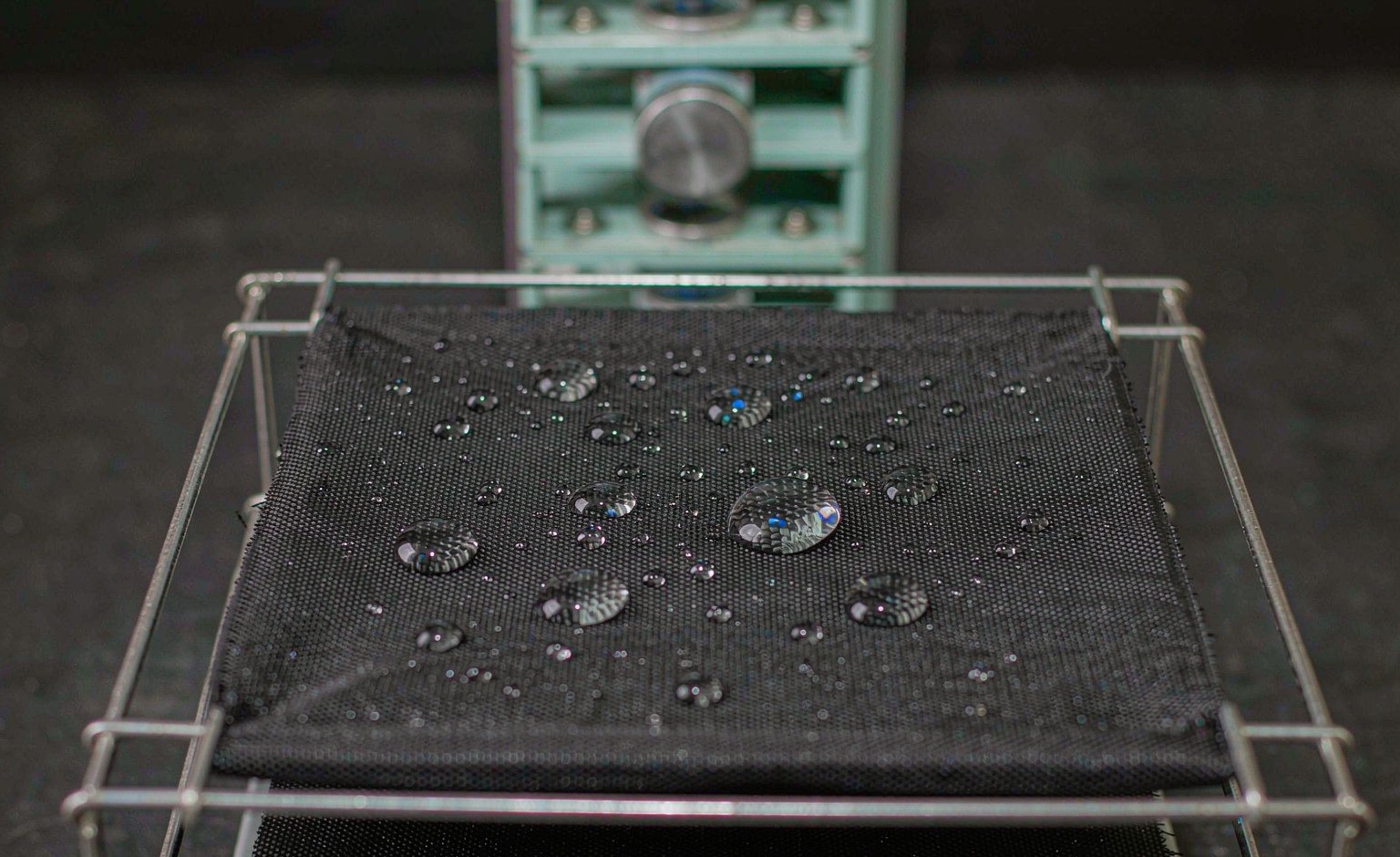
Eco-friendly materials change a modular bag programme in two places at once: the bill of materials, where every substitution costs strength, water resistance or money, and the end-of-life story, where modularity either helps or is irrelevant. A recycled shell on a pouch that cannot be separated from its hardware is a marketing claim, not a design outcome. The workable sequence is to pick the fibre and coating for performance first, then design the module so it can be disassembled, then document it. Start with the interface: 25 mm webbing and a frozen row pitch are what let a recycled pouch replace a virgin one next season without invalidating the chassis, and expect MOQ 500 per material variant when a mill has to run a colour. The two halves of that decision interact: fibre and finish are chosen together, hardware follows the textile, and serviceability is constrained by both. Treat every substitution as an engineering change with a settling test rather than as a line on a marketing brief.
What sustainable has to mean before it enters a specification
Sustainability in a soft-goods brief is four separate decisions that are usually collapsed into one adjective. The first is fibre origin: recycled content versus virgin, and the chain-of-custody paperwork that proves it. The second is finish chemistry: the coating, the durable water repellent and the dye route. The third is hardware: plating, substrate and whether the metal can be separated at end of life. The fourth, and the one most often skipped, is serviceability: whether a worn module can be replaced without discarding the body it attaches to.
Collapsing those four into "made from recycled bottles" is how programmes end up with a claim that cannot survive a retailer questionnaire. A buyer asking about recycled content will follow with questions about the coating, and then about the hardware, and then about whether the item can be repaired. A specification that answers all four in advance turns a two-week email exchange into a single document.
Modularity is a genuine advantage here, but only if it is used deliberately. A modular system lets a brand replace the part that wears - the pouch that rubs against a hip, the strap that takes UV - instead of the whole carrier. That is a real materials saving across a product lifetime, and it is worth more than a recycled-content percentage on a product that will be thrown away whole. Design for it: publish the spare-part list, keep the interface frozen, and make the module the smallest replaceable unit.
Sequence also decides whether the four choices are compatible. Fibre and finish are chosen together, because a coating that performs on virgin polyester may bond differently to a recycled face with a different surface energy. Hardware is chosen after the textile, because the plating specification depends on which parts sit against skin. Serviceability is designed last and constrained by all three, which is why a programme that begins with the repair story usually has to revisit the hardware.
Spec rule: Define sustainable as documented chemistry, verified recycled content and repairability together, because substituting one for another produces a claim that fails the first questionnaire received once MOQ 500 is requested.
Recycled yarns: the strength question nobody puts in the brief
Recycled polyester and recycled nylon are mature inputs, and both behave differently from their virgin equivalents in ways that matter to a load-bearing module. Mechanically recycled feedstock carries a molecular-weight distribution that is wider than virgin polymer, which shows up as greater lot-to-lot variance in tensile and tear strength. Chemically recycled feedstock is closer to virgin behaviour and closer to virgin price. Neither is automatically worse; the point is that the variance is the thing to control, not the average.
Control it in the specification by writing a minimum rather than a target. State the minimum grab tensile and the minimum tear strength the fabric must meet after coating rather than greige, because coating and heat-setting change both. Then require a test report per dye lot for the first few lots, and per shipment once the mill has a track record. ASTM D5034 covers the grab tensile method for the fabric and the seam; ISO 12947 covers abrasion, which is the property that actually decides whether a recycled face fabric chalks and pills at the hip contact point.
Dye route matters as much as fibre. Solution-dyed yarn carries the pigment in the polymer and avoids a wet dye process entirely, which is the largest single water and energy saving available in a textile bill of materials. Piece-dyed fabric gives a wider colour range at short notice and a larger water footprint. For a programme with a stable colour story, solution-dyed is the better answer; for a programme that must chase seasonal colour, plan the dye route as a cost and a documentation line rather than as a talking point.
Recycled content claims need chain of custody rather than adjectives, so trace yarn through transaction certificates issued under GRS and reconcile the stated percentage against what each purchase actually delivered.
Coatings, laminates and water-repellent chemistry
The finish is where most sustainability claims quietly fail. A recycled face fabric laminated to a conventional coating still carries the coating's chemistry through the product's whole life and into whatever recycling stream it enters. The practical options are a polyurethane coating, a thermoplastic elastomer film, or a PVC-free coating system, and the differences show up in hydrolysis resistance, hand feel and price rather than in the marketing line.
| Substitution | Gain | Cost paid | Settling method |
|---|---|---|---|
| Recycled polyester face | Lower virgin feedstock | Lot variance in tensile | ASTM D5034 per dye lot |
| Solution-dyed yarn | Avoids wet dye process | Narrower colour range | Shade band agreed with mill |
| PVC-free coating | Removes chlorinated chemistry | Hydrolysis risk in humid storage | ASTM D751 adhesion, aged |
| Short-chain or non-fluorinated repellent | Removes fluorinated chemistry | Lower oil and stain resistance | AATCC 127 then ISO 6330 |
| Uncoated face with dense weave | Recyclable as one polymer | Less water shedding | AATCC 127 with stated head |
Read the fourth row carefully. A non-fluorinated durable water repellent changes the product: it sheds less oil, it wets out sooner under sustained pressure, and it needs re-treatment more often. That is acceptable for an urban organizer and unacceptable for a pouch sold on weather protection. Decide which one you are selling before the finish is chosen, and write the hydrostatic figure from AATCC 127 into the specification so the product page and the test report say the same thing.
Wash durability is the other half of the claim. AATCC 127 gives the initial value; ISO 6330 gives the domestic washing procedure to re-test after. A repellent that passes at zero washes and fails at five supports a shower-resistant claim and not a waterproof one, and the distinction is exactly what a trading-standards enquiry will turn on.
Bottom line: Treat durable water repellency as a care-dependent property rather than a permanent finish, testing after stated cleaning cycles and writing that caveat into product copy before the 6-10 working days prototype is judged.
Hardware: plating, substrates and the separation problem
Hardware is the least-discussed part of a sustainable brief and often the largest obstacle. A plated steel buckle on a recycled shell cannot be recycled with it, and the plating bath is the most chemically intensive step in the entire bill of materials. The options are a corrosion-resistant alloy or engineering polymer instead of plated steel, a closed-loop plating vendor with documented effluent treatment, or a mechanical finish that needs no bath.
Skin contact adds a chemical requirement on top of the environmental one. EN 1811 is the reference method for nickel release from items in prolonged contact with skin, and a part-level report is what you want rather than a material-level one, because plating thickness varies with geometry and a thin corner will release more than the flat face the material was tested on. AATCC 8 covers colour transfer, which is how you catch a dyed webbing crocking onto a light-coloured garment at the hip.
Then design for separation. A module whose hardware is riveted through four layers cannot be disassembled by anyone, including a recycler. The cheap fix is to make every metal part removable with a common tool and to state it in the product documentation. It costs one line in the tech pack and it is the difference between a disassembly story that is true and one that is merely printed.
Mono-material construction and the disassembly argument
Mono-material design - one polymer family throughout the textile build - is the single most effective thing a soft-goods programme can do for recyclability, and it is the hardest to achieve on a modular product because modules attract mixed trims. The realistic target is mono-material per component rather than per product: a pouch whose shell, lining, webbing and thread are all one polymer family, attached to a body by hardware that can be removed.
| Route | Separation effort | Spare-part logic | End-of-life outcome |
|---|---|---|---|
| Bonded and riveted assembly | Destructive | Whole unit replaced | Landfill or energy recovery |
| Stitched monopolymer, hardware riveted | Cutting required | Whole unit replaced | Textile fraction recoverable only |
| Stitched monopolymer, hardware on removable fixings | Hand tool, under two minutes | Module is the replaceable unit | Both fractions recoverable |
The third route is the one that makes modularity an environmental argument rather than a commercial one. It also happens to be better commercially: a module that can be removed with a screwdriver can be sold as a spare part, and spare parts are the highest-margin line in an accessory catalogue because they are bought by customers who already own the chassis.
Write the disassembly instruction as a real document, with the tool named and the step order listed. Retailer questionnaires increasingly ask for it, and a two-line answer backed by a photograph is worth more than a paragraph of intent.
Takeaway: Count fasteners and material types per module and publish both numbers, since a disassembly story workshops can verify always outlasts any adjective printed on a hangtag.
The evidence pack behind a material claim
Every claim on a product page should trace to a method and an acceptance line. Build the evidence pack as a table inside the tech pack so nobody has to guess which report supports which sentence, and require the reports to be current, dated and issued against the production material rather than a laboratory sample of a similar fabric.
| Stated claim | Method referenced | Acceptance line | Review cadence |
|---|---|---|---|
| Recycled fibre content | Chain-of-custody records | Transaction document per lot | Every lot until stable |
| Structural seam strength | ASTM D5034 | Minimum grab force after coating | Per dye lot initially |
| Abrasion resistance | ISO 12947 | Stated rub count to stated endpoint | Per material change |
| Coating adhesion | ASTM D751 | No delamination after ageing | Per coating batch |
| Water resistance | AATCC 127 | Stated hydrostatic head | Per lot |
| Repellent after washing | ISO 6330 then AATCC 127 | Retained head at stated wash count | Per season |
| Nickel release, skin contact | EN 1811 | Below stated release limit | Per hardware part |
| Colour transfer | AATCC 8 | Stated grey-scale rating | Per colour |
Filing matters as much as testing. Keep the reports in the same folder as the tech pack, name them by material and lot, and give the marketplace onboarding team a single index. A brand that answers a documentation request in one email earns shelf space faster than one that answers in six.
Substance screening belongs beside the recycled claim, with skin-adjacent components documented within OEKO-TEX Standard 100 limits instead of assumed clean because the base polymer once held a drink.
Certification and audit documents buyers ask for
The documentation stack is short and standard. OEKO-TEX Standard 100 covers the textile inputs against a restricted substance list and is accepted by most European retailers as the first filter. REACH (EC 1907/2006) declarations cover the EU chemical position. California Prop 65 warnings apply where a listed substance sits above a safe-harbour level. CPSIA documentation applies where an item is presented for children. BSCI covers social compliance at the assembly site and ISO 9001 covers the quality system.
Read the scope line on every certificate. An OEKO-TEX certificate issued against a fabric does not cover the finished pouch; an ISO 9001 certificate whose scope covers cut-and-sew does not cover hardware sub-assembly done elsewhere. Ask for the certificate number, the scope statement and the issue date, and check that the legal entity named matches the one on the invoice. A certificate that fails at the buyer's audit is worse than an honest gap, because it suggests the paperwork was not read.
Then keep the declarations current. Restricted-substance lists change, and a declaration that was valid at sampling may not be valid at the third re-order. Put a review date on the compliance folder and tie it to the re-order calendar rather than to the launch calendar.
Judgement: Review certification folders against the reorder calendar rather than the launch one, because expired evidence discovered mid-season stops a shipment after all other work is finished.
What sustainable choices cost in money and calendar
Every substitution carries a price, and the honest answer is that most of them cost more at low volume than at scale. Recycled yarns in common specifications are close to virgin pricing; the premium appears when a colour or a construction is unusual and the mill has to run a dedicated lot. That is why MOQ 500 applies per material variant as well as per product: a mill minimum is a real constraint and it is the reason a first sustainable programme should consolidate colour.
Calendar cost is usually larger than money cost. A new recycled fabric with no history needs a sampling round of 6-10 working days for a straightforward pouch and 12-15 where a custom part or printed panel is involved, and it may need two rounds if the first fails abrasion or coating adhesion. Budget one extra round for any material that has never run on this product family before, and treat the sample charge of USD 50-150 as trivial next to the calendar it consumes.
Screens, dies and small tooling sit at USD 300-2,500, and a woven label in a recycled yarn is one of the cheaper items in that band. Mass production 35-50 days is the planning figure and assumes fabric and hardware were released together. Where a programme is switching material on an existing chassis, run one pilot lot before committing the season: the risk is not that the new fabric fails, it is that it behaves differently on the sewing line and the seam settings need to change.
There is a second, quieter cost in sustainable sourcing: the documentation itself. Chain-of-custody records, restricted-substance declarations and part-level nickel reports all have to be collected, translated where needed and kept current, and that administrative load is a line item in any honest budget. Programmes that batch it - one documentation round per season covering every lot - spend less on compliance than programmes that collect it per shipment, and they answer retailer questionnaires faster.
Verdict: Sustainable choices cost calendar as well as money, so show merchandising both columns and let any extension at the 35-50 days stage be booked deliberately rather than absorbed silently.
How to write the material section of a tech pack
A tech pack that says "recycled polyester" is not a specification. Write the fibre, the construction, the finish and the four numbers that control performance: minimum grab tensile after coating, minimum tear strength, abrasion rub count to a stated endpoint, and hydrostatic head where water is claimed. Add the dye route, because it drives both the environmental story and the colour range. Add the hardware substrate and finish, plus the nickel-release requirement where skin contact applies.
Then add the two administrative blocks that make the rest enforceable. The first is the traceability block: fibre origin, coating vendor, hardware vendor, and the document that evidences each. The second is the change-control block: any substitution of a named material requires a new test report and a re-approved sample, and the cost of that round sits with whoever requests the change.
Close with the serviceability statement: which parts are replaceable, which tool removes the hardware, and what the spare-part list is. That single block is what converts a material choice into a sustainability position, and it is the part of the document a retailer questionnaire is most likely to quote back at you.
Frequently asked questions
Is recycled polyester as strong as virgin polyester for a load-bearing pouch?
Often close, but the average hides the problem: recycled feedstock shows wider lot-to-lot variance. Specify a minimum grab tensile and tear strength measured after coating, and require a report per dye lot until the mill has a track record. ASTM D5034 is the method to cite.
Which water-repellent chemistry should a sustainable programme use?
A non-fluorinated or short-chain finish removes fluorinated chemistry but sheds oil less well and wets out sooner under pressure. Fine for an urban organizer, wrong for weather protection. Set the hydrostatic figure with AATCC 127 and re-check after ISO 6330 washing.
Does a PVC-free coating change how a product ages?
It can. Some PVC-free systems are more prone to hydrolysis in humid storage, which shows as a sticky or flaking back face after a season. Require coating adhesion to ASTM D751 on aged samples and store finished goods with a documented humidity limit.
Why is hardware the hardest part of a sustainable brief?
Plating is the most chemically intensive step in the bill of materials, and a riveted metal part cannot be separated from the textile at end of life. Use a corrosion-resistant alloy or polymer, specify removable fixings, and require a part-level nickel-release report to EN 1811.
What is mono-material design and is it realistic on a modular bag?
One polymer family across shell, lining, webbing and thread. Per product it is hard because modules attract mixed trims; per component it is achievable. A monopolymer pouch with hardware on removable fixings lets both fractions be recovered and sold as spare parts.
How is a recycled-content claim evidenced to a retailer?
With chain-of-custody documentation tied to the lot, not with a logo. Ask for the transaction record for each production lot, keep it with the tech pack, and give the marketplace team a single index so a documentation request is answered in one email.
Which test methods belong in a sustainable materials tech pack?
ASTM D5034 for grab tensile, ISO 12947 for abrasion, ASTM D751 for coating adhesion, AATCC 127 for water resistance, ISO 6330 for wash durability, EN 1811 for nickel release, AATCC 8 for colour transfer, and a defined sampling plan for bulk.
Does switching to recycled fabric change the production calendar?
Usually by one sampling round rather than by weeks of sewing. Expect 6-10 working days for a straightforward pouch and 12-15 with a custom part, and budget a second round for any material that has never run on the product family. Mass production stays 35-50 days.
What does a sustainable material switch cost at low volume?
Most of the premium is mill minimums rather than yarn price. MOQ 500 applies per material variant, so consolidating colour is the cheapest lever available. Screens, dies and small tooling add USD 300-2,500, and the sample charge of USD 50-150 is credited back on order.
Should a brand run a pilot lot before changing material?
Yes, on any existing chassis. The risk is not that the fabric fails a laboratory test, it is that it behaves differently on the line: different feed, different seam settings, different shrinkage. One pilot lot finds that before a season's worth of bulk does.
Which certificates do European and US buyers ask for first?
OEKO-TEX Standard 100 on the textiles, REACH (EC 1907/2006) declarations for the EU, California Prop 65 warnings where listed substances are present, CPSIA documentation for children's items, BSCI for social compliance and ISO 9001 for the quality system.
What is the most common failure in a sustainability documentation pack?
Scope mismatch. A certificate issued against a fabric does not cover a finished pouch, and a quality-system certificate covering cut-and-sew does not cover hardware sub-assembly elsewhere. Check number, scope statement and issue date on every document.
How does modularity itself reduce material waste?
By making the worn part the smallest replaceable unit. A pouch that rubs through at the hip can be swapped while the body stays in service, which avoids discarding a whole carrier. It only works if the interface is frozen and the spare part is actually stocked.
Do certifications need renewing between re-orders?
Yes. Restricted-substance lists change and certificates expire. Put a review date on the compliance folder and tie it to the re-order calendar rather than the launch, so the third shipment carries documentation as current as the first.