Home › Field notes › Modular Backpack for Language School Programmes: Load, Level Identific
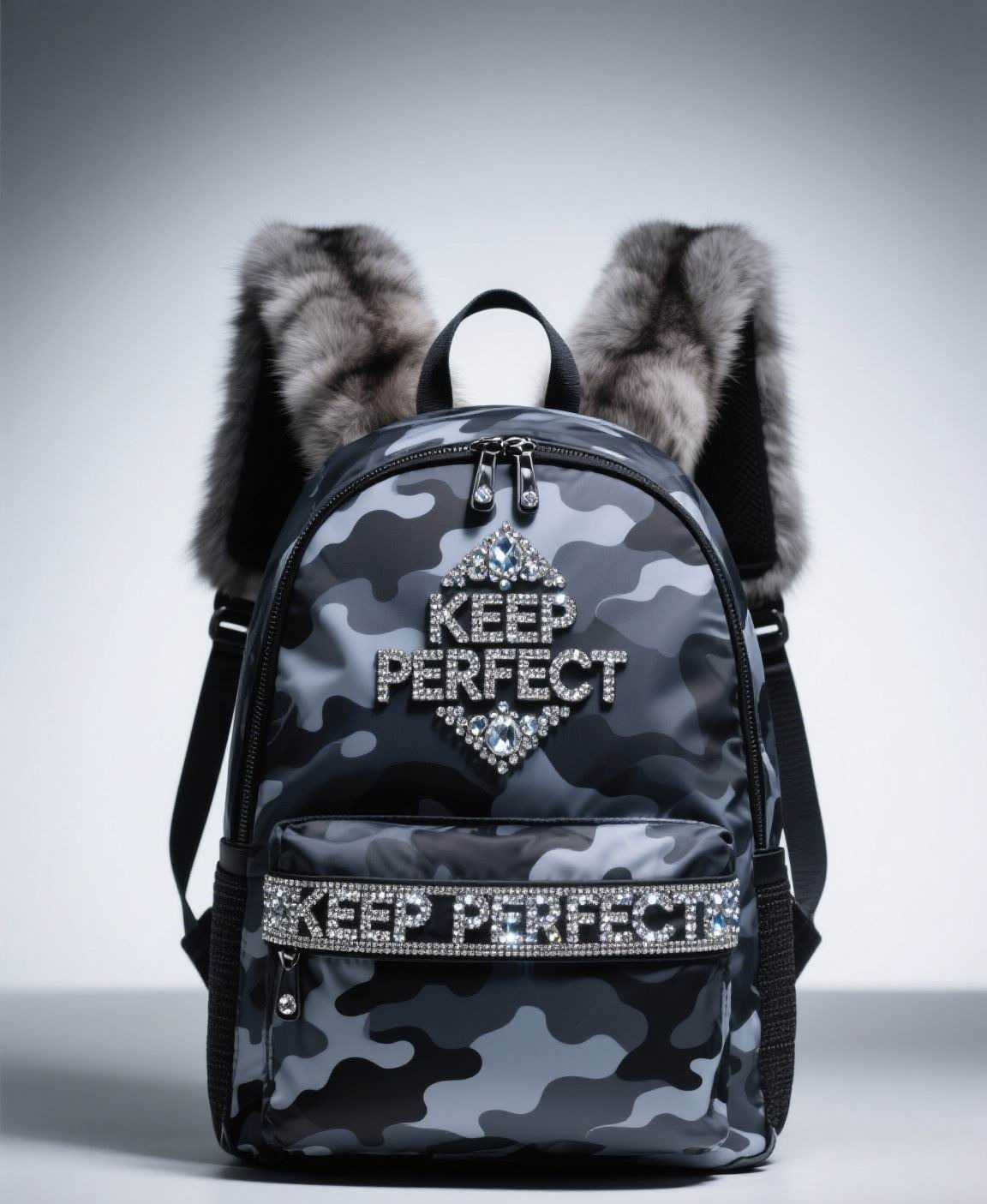
A modular backpack for language school programmes is an 18-26 litre platform sized for textbooks, a device and a folder, carrying a level-identification system that survives a term of daily use and a wipe-down between intakes. Volume starts at 500 units per design, sampling runs 6-10 working days, the bulk run takes 35-50 days, and inspection follows AQL 2.5, quoted FOB Xiamen. The boundary is that this page specifies the bag: load budget, identification, cleaning and colour continuity across intakes. It does not advise on curriculum, procurement law or regulatory conformity, which the buying institution confirms with its own advisers.
What a Language School Programme Bag Actually Carries
The contents list for a language course is heavier and flatter than most people expect. Three to five books at 0.6-1.4 kg each, a workbook or two, a folder of handouts in A4, a tablet or a phone, a charger and a cable, headphones, a pencil case, a water bottle of 500-750 ml, and a light layer for the walk home. Measured carry mass lands at 3-6 kg for a full-time learner, and the flattest item — the A4 folder at 210 x 297 mm — is the one that dictates the panel dimensions.
Two usage facts shape the design more than the contents do. The bag is carried for four to eight hours a day with two to four breaks, and it spends those breaks on the floor, on a chair back or on a hook rather than on the learner's shoulders. That means the base and the lower corners take the abrasion while the shell takes very little, and a bag designed for trail wear often fails here in the wrong places: a heavy face cloth and a light base is the wrong way round for a classroom.
Class size and level count drive the rest. A class of 20-30 learners is normal, and a school running four to six levels needs a way to tell a B1 group from a B2 group without reading a label. Identification is therefore a design requirement rather than a decoration, and it has to work after a term of wiping, after a wash, and after a learner has stuck something of their own over it.
The modular element answers the part of the list that changes. A device sleeve, a pencil wallet and a bottle pocket can be moved between rows on a 50 mm horizontal repeat with a 38 mm vertical pitch, woven from 25 mm webbing, so the same platform serves a conversation-heavy beginner class and a written-exam advanced class. Base options are listed under modular backpack platforms and configuration work runs through custom modular backpack programmes.
Bottom line: Size the bag from the flattest item and the measured carry mass rather than from a litre figure, and put the durability budget into the base and lower corners, because a classroom bag is set down on a floor four to eight times a day and rarely worn long enough to abrade the face cloth.
Sizing the Bag: Format, Mass and the Load a Learner Carries
Three dimensions govern the fit: the flat document panel, the device sleeve and the bottle pocket. A document panel needs about 320 x 240 mm of uninterrupted space to take an A4 folder without curling the corner. A device sleeve needs roughly 280 x 200 x 20 mm of internal clearance for a 10.9-inch tablet in a case, with 2-3 mm of spare depth so a case with a keyboard does not strain the seam. A side pocket takes a 70-75 mm diameter bottle and needs an elasticated mouth to hold a half-full one upright.
Empty mass is the number most specifications omit. A learner carrying 4 kg of books has a budget, and an empty bag at 1.6 kg spends a third of it before anything is packed. Targeting 0.7-1.2 kg empty for an 18-26 litre platform is realistic with a 420-600D face cloth and a modest stiffener, and the saving goes directly into what the learner is willing to carry.
Strap geometry follows mass. At 3-4 kg a 38 mm strap with a reasonable pad is comfortable for the walk to class; at 5-6 kg a 50 mm strap with a contoured pad and a sternum link is the honest answer, and the sternum link matters more here than on a trail pack because the load is carried on pavements with frequent stops.
| Programme level | Typical contents | Measured carry mass | Platform volume and strap |
|---|---|---|---|
| Foundation, A1-A2 | Two books, workbook, folder, phone | 2.5-3.5 kg | 18-20 L, 38 mm strap |
| Intermediate, B1-B2 | Three to four books, tablet, charger | 3.5-5 kg | 20-24 L, 38-45 mm strap |
| Advanced, C1-C2 | Four to five books, tablet, folder, headphones | 4.5-6 kg | 24-26 L, 50 mm strap with sternum link |
| Teacher or leader kit | Teacher book, tablet, stationery, water bottle | 3-4.5 kg | 20-24 L, 45 mm strap |
| Evening adult class | One book, notebook, tablet, water bottle | 2-3 kg | 16-20 L, 38 mm strap |
One reference rarely covers all five rows. Schools usually buy two: a 20 litre platform for foundation and evening classes and a 24-26 litre platform for intermediate and advanced, with the teacher kit using the larger of the two. Two references double the colour decisions but not the 500-unit minimum, which applies per design.
Selection rule: Fix the document panel at about 320 x 240 mm, the device sleeve at roughly 280 x 200 x 20 mm and the empty mass under 1.2 kg for a 24 litre platform, because those three numbers decide whether a learner uses the bag or carries the books by hand.
Class and Level Identification: Colour Coding, ID Panels and Name Labelling
Identification has to solve three different problems. Staff need to see the level from across a room. The learner needs to find their own bag on a rack of thirty. And the school needs to reuse the same bag next intake without re-labelling the whole fleet. Those three pull in different directions, and no single method does all of them well.
A colour-coded level is fastest for staff and useless for the individual, because twenty learners share the same colour. A printed or embroidered level mark is durable but permanent, which fights reuse. A name window with a replaceable card solves the individual problem and the reuse problem at once, at the cost of a card that gets lost. The practical answer is a combination: a level accent colour on the trim, plus a name window carrying a card that is rewritten at each intake.
| Method | Where it sits | Survives a term of cleaning | Reusable next intake |
|---|---|---|---|
| Level accent colour on trim and pulls | Zip tape, pulls, binding | Yes, colour is in the material | Yes, colour is not level-specific once reassigned |
| Embroidered level patch | Front panel | Yes, survives washing | No, stitched for one level |
| Name window with a replaceable card | Side or shoulder strap | Window yes, card may need replacing | Yes, card is rewritten |
| Removable silicone or rubber tag | Zip pull | Yes, wipe-clean | Yes, swapped in seconds |
| Writable label panel | Inside the lid | No, ink fades under wiping | Partly, needs a fresh pen |
| Printed class timetable panel | Inside pocket | Poor, print lifts with detergent | No, reprinted each term |
The name window deserves a dimension in the specification rather than a note: a transparent panel of about 60 x 25 mm with a sealed top edge, holding a card that can be slipped out and rewritten. Below about 50 mm of width the card has to be folded and the fold obscures the name. A window placed on the shoulder strap reads well on a rack; a window on the base panel reads well on a floor; the rack case is more common.
Verdict: Specify a level accent colour in the trim for staff, a rewriteable name window of about 60 x 25 mm for the learner, and avoid permanent embroidered level marks unless the school has committed to one reference per level for the life of the programme.
Durability and Cleaning: Abrasion, Seam Strength and the Wipe-Down Routine
Wear on a classroom bag concentrates at five points: the base corners, the lower front panel, the strap attachment, the zip tape at the curve, and the mouth binding. A specification that spreads the same cloth over the whole bag spends its budget where the wear is not. A 600D panel across the base and 150 mm up each side, with a 420D face elsewhere, is the usual answer and costs very little in mass.
Abrasion resistance is measured on a Martindale-type apparatus and reported against ISO 12947, with the cycle count and the end point written into the specification rather than assumed. Seam strength of the woven cloth is measured to ASTM D5034 and coating adhesion to ASTM D751 where a laminated base is used; both are recorded as results with the method named. Domestic washing behaviour is described in ISO 6330, and the care wording on the sewn label has to match what the construction can actually survive.
Cleaning is a termly event, not a daily one. The daily routine is a wipe-down of the base and the handle; the termly routine is a wash at a modest temperature with a mild detergent and air drying, and the bag has to come out of that with the print intact and the stiffener flat. A programme running three intakes a year is asking for perhaps twelve to twenty wash cycles over a two-year life, which is a very different test from a bag washed weekly.
Two details decide whether it survives. Print applied to a coated base panel lifts under detergent, so printed marks go on woven panels only. And a stiffener that is not fully enclosed absorbs water and dries curly, which is why the back panel stiffener is specified as closed-cell foam in a sealed sleeve. Where the bag is used by younger learners, a certificate against OEKO-TEX Standard 100 is held against the reference for the skin-contact materials.
Judgement: Put a heavier cloth on the base and 150 mm up each side, keep printed marks off coated panels, enclose the stiffener in a sealed sleeve, and set the abrasion cycle count and the wash method as named results, because those four decisions are what separates a bag that lasts six terms from one that fails in two.
Bulk Procurement Colour Strategy: Base Shell, Accent and Dye-Lot Continuity
Colour is where a school programme quietly becomes expensive. A minimum of 500 units applies per design, and a school wanting five level colours at 200 units each is asking for five separate dye lots that none of them can reach. The strategy is to buy colours where the volume is and to move level identity onto components that do not carry a dye lot of their own.
The usual structure is one or two base shell colours at full volume, with the level identity carried by zip tape, pulls, binding and a removable tag. A 25 mm binding tape and a set of moulded pulls are stocked in several colours at low minimum, so the same 1,000-unit shell can be finished as four level variants. Where a school genuinely wants five shell colours, the alternative is to print an accent panel rather than dye a cloth, which trades a unit-cost increase for volume flexibility.
| Strategy | Effect on unit counts | Continuity on re-order | Where it breaks down |
|---|---|---|---|
| One base shell, level accent on trim | One large dye lot, best price | Excellent, one reference to match | Levels look similar from a distance |
| Two base shells, accents by level | Two lots, both economic | Good, two references | Pairing errors at packing |
| One shell colour per level | Five small lots, worst price | Poor, five matches per re-order | Each colour must clear the 500-unit minimum |
| Printed accent panel on a neutral shell | One lot plus a print setup | Good if artwork is archived | Print durability under washing |
| Removable coloured tag only | One lot, tags bought separately | Best, tags are reissued | Tags are lost; needs a spares stock |
Dye-lot continuity is the second half of the problem. A re-order twelve to thirty-six months later has to match the bags already in service, which means a sealed reference standard held by both sides and a numeric colour tolerance agreed against it rather than a verbal description. Solution-dyed cloth holds shade between lots better than piece-dyed cloth, and it is worth specifying where a fleet is expected to grow over several years. Colour transfer between components is checked to AATCC 8 so a dark trim rubbing on a light shell is caught before the fleet ships.
Takeaway: Buy one or two shell colours at full volume and carry level identity on trim, pulls and removable tags, then hold a sealed colour reference with a numeric tolerance so a re-order three intakes later lands in the same shade.
Reordering Across Intakes: Consistency, Spare Modules and Off-Term Storage
A school with three intakes a year is really running a rolling programme, and the second order is where consistency is won or lost. The controls are unglamorous: keep the sealed pre-production sample, archive the artwork and the colour standard, and record the batch code of every delivery against the intake it served. Without the batch record, a complaint about a shade difference eighteen months later cannot be resolved, because nobody can say which lot is which.
Spare modules and spare parts are bought with the first order, not after the first failure. A sensible holding is 3-5% of the fleet in the highest-wear items — a spare device sleeve, a replacement bottle pocket, a set of pulls — plus a small stock of the removable identification tags, which are lost at a far higher rate than anything else. Ordering spares separately later costs more per unit and arrives in a different dye lot.
Off-term storage damages more bags than learners do. Cartons stacked four or five high in a store room over a long holiday compress the stiffener and crease the shell, and a damp room grows mould on any cloth that was packed away slightly wet. The specification should state a dry store, cartons stacked no more than a stated number high, and bags dried before they are boxed. A silica sachet per carton is cheap insurance on a coastal campus.
Spec rule: Archive the sealed sample, the artwork files and the colour standard with the first order, buy 3-5% spares in the highest-wear items at the same time, and write the storage conditions into the delivery note, because the second order is only reproducible if the first one was documented.
How to Choose a Modular Backpack for a Language School Programme
Work the decisions in this order; each one constrains the next.
- List the contents with masses and the flattest item, then set the carry mass budget.
- Fix the platform size, the document panel and the device sleeve dimensions.
- Set the empty-mass target and the strap width for the heaviest level.
- Choose the identification set: level accent, name window, removable tag.
- Set the durability specification: base cloth, abrasion cycles, seam strength, wash method.
- Choose the colour strategy and the dye-lot control, including the tolerance standard.
- Decide the spare parts and spare module holding as a percentage of the fleet.
- Write the inspection list with defect classes and the batch coding rule.
Step six is the one that gets decided too late, usually after the shell colour has already been dyed. Step eight is the one that gets written too thin: a defect class list that says only workmanship leaves an inspector to decide whether a crooked name window is critical, major or minor on the day of the inspection, and two inspectors will decide differently.
Programme Facts: Capacity, Sampling and Inspection for Education Buyers
Programme work is coordinated through our 4,950 m² SGS-verified production floor, where 7 production lines and 149 machines are run by a team of 137 people, and capacity sits at roughly 200,000 units a month. The founder's bag production work began in 2004 and the company has operated since 2014, so questions about trim colour, print placement or wash durability are answered against a running schedule rather than against a catalogue.
An education order moves through sampling, a pre-production approval sample, inspection at AQL 2.5 and shipment, with the batch code recorded against the intake it serves. Testing and documentation are handled on the testing and inspection page, and the wider range of platform sizes is shown under the product range.
Lead Time, Freight Cube and Planning Against the School Calendar
School buying is calendar-driven, which makes the arithmetic simple and the consequences sharp. First samples are produced in 6-10 working days, or 12-15 for a more demanding construction, with a sample charge of USD 50-150 credited back against the order. New tooling or print screens cost USD 300-2,500. The bulk run takes 35-50 days, and terms are T/T 30/70, quoted FOB Xiamen.
Transit then decides whether the bag lands before the intake. Sea transit is 25-35 days, air 5-8 days, courier 3-5 days. A term starting in early autumn is normally ordered in the spring, and the buffer exists because a late artwork approval cannot be compressed: once cutting starts, a change to a trim colour costs the rework plus the delay, both inside the 35-50 day window.
Cube is generous on a classroom bag because it packs flat. Carton planning works on roughly 28 CBM for a 20GP and 68 CBM for a 40HQ, and a 20 litre classroom platform folded with modules detached occupies a fraction of the volume of the same bag assembled. That is why schools consolidating two intakes into one shipment often save more on freight than the air-sea difference would cost them.
Frequently asked questions
What size of modular backpack suits a language school programme?
Eighteen to twenty-six litres covers most programmes: 18-20 L for foundation and evening classes, 24-26 L for intermediate and advanced. The document panel needs about 320 x 240 mm and the device sleeve roughly 280 x 200 x 20 mm, with empty mass kept under 1.2 kg.
- Two references cover five programme levels
- Minimum order is 500 units per design
- Sampling takes 6-10 working days
How much does a language learner's loaded bag weigh?
Measured carry mass is 3-6 kg depending on level: 2.5-3.5 kg at foundation and 4.5-6 kg at advanced. Three to five books at 0.6-1.4 kg each account for most of it, which is why the empty-mass target of 0.7-1.2 kg matters as much as the volume figure.
How should class levels be identified on a school bag?
Use a level accent colour in the trim for staff, plus a rewriteable name window of about 60 x 25 mm for the learner. Permanent embroidered level marks only make sense where the school has committed to one reference per level, because they cannot be reassigned at the next intake.
Which identification method survives a term of cleaning?
A level accent colour in the material and a sealed transparent name window both survive; a writable label panel does not, because the ink fades under wiping, and a printed timetable panel lifts under detergent. Removable silicone tags are wipe-clean and are swapped in seconds.
How often should a school bag be washed?
Design for a daily wipe-down of the base and handle plus a termly wash at a modest temperature with mild detergent and air drying. Three intakes a year over two years means roughly twelve to twenty wash cycles, which is far less demanding than weekly laundering but still rules out print on coated panels.
Which parts of a language school bag wear out first?
Base corners, the lower front panel, the strap attachment, the zip tape at the curve and the mouth binding. A 600D panel across the base and 150 mm up each side, with a lighter 420D face elsewhere, puts the budget where the wear actually is.
How is abrasion resistance specified for a school bag?
Abrasion is measured on a Martindale-type apparatus and reported against ISO 12947, with the cycle count and end point written into the specification. Seam strength is measured to ASTM D5034 and coating adhesion to ASTM D751 on laminated bases, each recorded as a result with the method named.
Why does the minimum order quantity matter for level colours?
The 500-unit minimum applies per design, so five level colours at 200 units each would mean five small, expensive dye lots. Buying one or two shell colours at full volume and carrying level identity on trim, pulls and removable tags keeps a single dye lot economical.
How is colour matched on a re-order a year later?
Hold a sealed colour reference standard on both sides and agree a numeric tolerance against it, then archive the artwork files. Solution-dyed cloth holds shade between lots better than piece-dyed cloth, and colour transfer between components is checked to AATCC 8 before the fleet ships.
What spare parts should a school buy with the first order?
About 3-5% of the fleet in the highest-wear items: a spare device sleeve, a replacement bottle pocket and a set of pulls. Removable identification tags are lost at a much higher rate, so they are stocked more generously; buying them later costs more and arrives in a different dye lot.
How should bags be stored between intakes?
In a dry store, dried before boxing, with cartons stacked no more than a stated height to avoid creasing the stiffener. Compression and damp are the two storage faults that damage more bags than learners do, and a silica sachet per carton is cheap on a coastal campus.
Can one bag serve both adult evening classes and full-time learners?
Only at the smaller end. Evening classes carry 2-3 kg and suit 16-20 L; full-time advanced learners carry 4.5-6 kg and need 24-26 L with a 50 mm strap and a sternum link. Most schools buy two references, which does not change the 500-unit minimum per design.
What inspection level applies to a school bag order?
Inspection at AQL 2.5 with critical, major and minor classes defined in advance, and the batch code recorded against the intake it serves. A defect list that says only workmanship leaves an inspector to classify a crooked name window on the day.
When should a school place an order for an autumn intake?
Count backwards: 6-10 working days for samples, 12-15 for a demanding construction, 35-50 days for the bulk run, then 25-35 days by sea or 5-8 days by air. Late artwork approval cannot be compressed once cutting starts, which is why the spring order date is the safe one.