Home › Field notes › Modular Backpack for Search and Rescue Teams: Long-Duration Carry, Mov
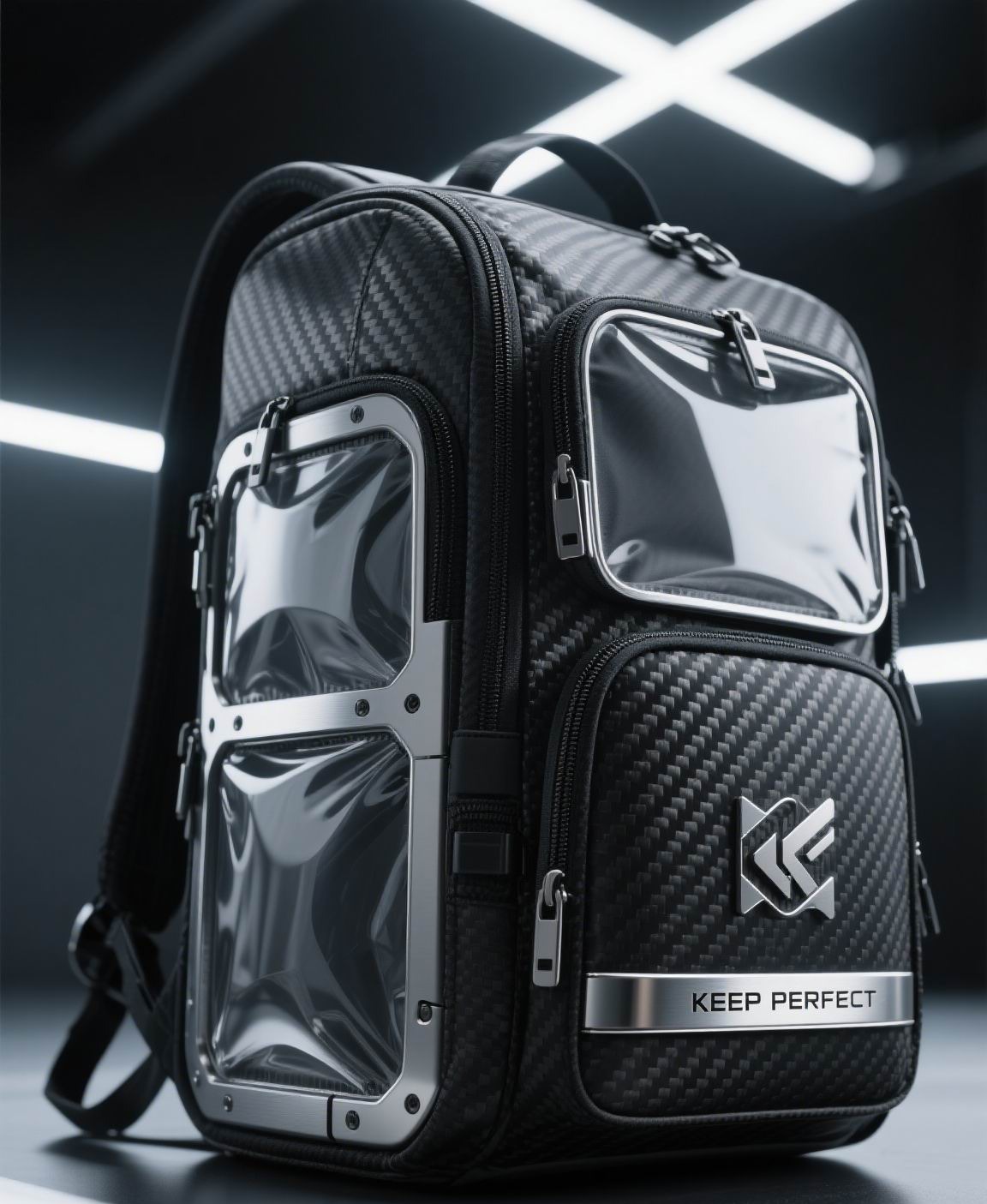
A modular backpack for search and rescue teams is a long-duration carry platform built so that a defined set of equipment stays reachable while the wearer is moving, stays identifiable after dark, and shares one interface with the rest of the team's modules. Orders begin at 500 units per reference, prototypes take 6-10 working days, production takes 35-50 days, inspection is fixed at AQL 2.5 and pricing is quoted FOB Xiamen. Scope is civilian search work — mountain rescue, wilderness search and community teams — and what follows covers load carriage and organisation only, not clinical content, not weapon carriage and not protective armour.
What a Search Day Asks of a Pack That a Day Hike Does Not
A search day is longer, heavier and less predictable than a day hike, and each of those three differences changes the specification. A day hike is planned around a route that exists; a search task is planned around an area that may have no path in it at all. The pack therefore has to be stable on ground that tilts, slips and changes underfoot, and it has to stay comfortable for a carry measured in hours rather than in a single climb.
Duration is the first difference. An eight to fourteen hour carry with a loaded pack is a load-carriage problem rather than a capacity problem: the chassis has to keep most of the mass on the hips for the whole period, and it has to do so after the wearer has tired. A pack that is comfortable for the first two hours and punishing for the tenth has not been specified for this work, whatever its volume.
The second difference is that the pack is opened while being worn. On a hike a pack is put down to be opened; on a search task that is frequently not possible, either because there is nowhere dry to put it or because stopping costs time. That single constraint drives the whole reach specification, and it is the reason hip belt and harness-mounted access matters more here than on any recreational pack.
The third difference is that the pack belongs to a team. It may be issued rather than personally owned, it may be carried by someone who did not pack it, and it has to accept modules drawn from a shared pool. Personal preference is a weaker design input than it is anywhere else in the bag market, because the pack is a piece of team equipment.
The scope here is civilian. Mountain rescue, wilderness search and community teams operate under their own rules and their own training, and the pack is a load-carriage and organisation item for that work. This page concerns neither military application nor weapon carriage nor protective armour, and no article described below is presented as meeting any armed-forces standard.
Spec rule: Specify a search pack around an eight to fourteen hour loaded carry on off-trail ground with the harness doing most of the work, access available while the pack is worn, and a module interface shared with the rest of the team, rather than around volume alone.
Load Transfer: The Harness Figures Behind a Long Carry
Load transfer is the single largest comfort variable and it is specifiable. The target most load-carriage work aims at is for the hip belt to carry the great majority of the mass, commonly stated as 70-80 per cent, with the shoulders stabilising rather than supporting. A pack that puts half its load on the shoulders is comfortable for an hour and becomes a problem by the eighth.
Three figures decide whether that target is met. Torso adjustment range sets whether the harness can be fitted to the people who will actually carry it, and an issued pack needs a range wide enough to cover the team rather than a fixed size. Hip belt width and stiffness set how much mass the belt can carry before it rolls or digs. Load-lifter angle sets whether the top of the pack is pulled toward the back or allowed to swing away from it.
Frame stiffness is the hidden variable. A soft pack carrying 12 kg sags, and a sagging pack moves its centre of mass away from the wearer's back, which increases the moment the shoulders have to resist. The remedy is a frame element stiff enough to hold the load close, and that element is specified by its flex behaviour rather than by its material name, because two sheet materials of the same thickness behave very differently.
| Judgement | Removable frame sheet | Full internal frame | External carry frame |
|---|---|---|---|
| Load path to the hip belt | Partial, depends on the sheet | Direct and predictable | Direct, highest capacity |
| Stability on tilting ground | Lowest, load swings | High, load held close | Moderate, wide profile |
| Torsional control when scrambling | Poor | Good | Moderate |
| Weight added to the chassis | Least | Moderate | Greatest |
| Behaviour when packed empty | Rolls down smallest | Holds its shape | Bulky and awkward |
| Suits a load of | Up to about 8 kg | 8 to 16 kg | Above 16 kg |
Fit is verified on people rather than on a drawing. A harness that measures correctly and cannot be adjusted by a wearer in a jacket and gloves is a harness that will be worn wrongly, and the most common field failure is a hip belt riding on the waist rather than on the iliac crest, which transfers nothing.
Verdict: Specify a full internal frame with a stated torso adjustment range, a hip belt wide and stiff enough to hold 70-80 per cent of the load on the hips, and load lifters pulling the top of the pack toward the back, because a soft chassis carrying 12 kg moves its mass away from the wearer and shifts the work to the shoulders.
Reach While Moving: What Has to Be Available Without Stopping
The reach specification is written as a list of items and a position for each. Anything needed more often than once an hour belongs somewhere reachable without taking the pack off; everything else can live in the main cavity. The list is short, and it is short because a harness crowded with pouches stops the wearer from moving properly.
Three positions do the work. Hip belt pouches carry small, dense items and are reachable by dropping either hand without breaking stride, which is why they are the first choice for the most frequently used items. Harness and sternum-strap mountings carry a radio or a small pouch on the chest where the wearer can see it. A side or wand pocket carries anything long that has to be drawn one-handed, and its depth is specified so the item cannot fall out when the wearer bends.
Two positions should be avoided for anything that matters. Anything on the very top of the pack under a lid is reachable only by someone with a free hand above shoulder height, and anything low and to the rear requires the pack to come off. Both look convenient on a specification sheet and neither behaves well on a slope.
The interface is what makes the arrangement adjustable. A standardised grid lets a team move a pouch after a season of real use rather than accepting the position the designer chose, and that grid repeats every 50 mm horizontally across 25 mm webbing spaced 38 mm apart vertically, documented on the attachment grid page. Reach is therefore not fixed at the design stage; it is tuned.
Glove compatibility applies to every item on the list. A pouch that opens with a bare thumb is not a pouch that opens with a cold one, and search work happens in conditions where bare hands are the exception. Pull features are specified by projection and width in millimetres rather than described as "easy grip".
Takeaway: Place anything needed more than once an hour on the hip belt, the harness or a deep side pocket, avoid lid-top and low-rear positions, and specify every pull by projection and width in millimetres, because a grip that works bare-handed fails in a cold glove.
Night Identification: Retroreflective Area, Body Colour and Lamp Mounting
After dark a search pack has to solve two different problems: being seen, and being identified as a member of the team. Those are not the same requirement and one feature does not cover both. Being seen is mostly a matter of area and contrast; being identified is a matter of a recognisable colour and a consistent marking position.
Retroreflective material returns light toward its source rather than scattering it, which is why it outperforms a bright colour under a headlamp or a vehicle beam. It is written as a measured area with a stated placement, never as a descriptive phrase: a 5 mm piping run down one seam is trim, and a panel of stated area on the rear and on the shoulder fronts is identification. Placement governs too, since a panel on the harness front is masked by the wearer's own torso when seen from behind.
Pack colour is picked for separation from the operating terrain rather than for looks. In temperate mountain terrain a dark pack disappears against rock and shadow at dusk; a mid or high-visibility shade separates from the background but collects soiling and shows every scuff. Most teams settle on a mid shade for the body with high-contrast panels, which is a compromise worth making deliberately rather than by default.
| Identification method | Problem it solves | Where it stops working |
|---|---|---|
| Retroreflective panel of stated area | Being seen at distance under a beam | When abraded, soiled or facing away |
| High-contrast body colour | Being identified as part of the team | Against terrain of a similar tone |
| Attached lamp with a mounting point | Being seen without an external beam | Flat battery, or no defined mounting |
| Retroreflective trim on a moving part | Motion cue at close range | Narrow trim reads poorly beyond 30 m |
| Team colour coding per role | Role identification within a team | More than four colours stops reading as a system |
Lamp mounting is a design feature rather than an accessory. A defined webbing loop or elastic anchor on the shoulder and a second on the rear lets a lamp be placed where it does the work, and without it a lamp ends up clipped somewhere random and usually pointing the wrong way. The mounting is specified by webbing width and position in millimetres.
Bottom line: Specify retroreflective area in square centimetres on the rear and shoulder fronts, choose body colour for contrast against the operating terrain, and provide defined lamp anchors on shoulder and rear, because being seen and being identified are separate requirements needing separate features.
Fitting Into a Team Equipment System: Interface Compatibility
A team pack is only half a system; the other half is the module pool it has to accept. Compatibility is therefore a purchasing criterion with a measurable definition: the same attachment grid, the same envelope increments, the same colour coding and the same closure geometry across every chassis and every module the team owns.
The grid is the foundation and it is the one thing that should never vary within a fleet. Once a team commits to a webbing width and a spacing repeat, every module bought afterwards either fits or does not, and there is no ambiguity at issue time. Envelope increments follow the same logic: modules are dimensioned in whole columns against the repeat, so two modules side by side always share the grid cleanly.
Colour coding is the layer that fails most often. A system with one colour per role and no more than four colours reads at a glance; a system with a colour per item reads as noise. The discipline is to code by role or by function and to repeat the same colour on the pouch, the label and the inventory card, so the colour means one thing everywhere in the fleet.
The commercial argument for compatibility is the spare pool. A fleet on one interface can hold a single stock of spare modules covering several chassis, whereas a fleet on two interfaces has to hold two pools and will still run out of the wrong one. Over a few seasons the spare pool is usually worth more than any feature difference between two candidate packs.
Compatibility also has a training dimension. A team member who has learned where a module sits on one chassis can move to another chassis in the same fleet without relearning, and that transferability is worth real time in the field. Body-worn items are usually standardised with modular chest and waist platforms, which extends the same rule to the smallest items in the fleet.
Selection rule: Standardise a team fleet on one attachment grid, one envelope increment, one colour-per-role scheme of no more than four colours and one closure geometry, because a single interface lets one spare pool serve every chassis while two interfaces double the stock and still run short of the wrong module.
Abrasion, Weather and Terrain: Where a Search Pack Wears Out
Search packs wear out in predictable places, and the wear pattern is different from the one a travel or commuting pack shows. A travel pack fails at zips and at the base; a search pack fails at the points that touch rock, and it fails there because the wearer is scrambling rather than walking.
Three zones account for most of it. The underside of the shoulder strap abrades against clothing and against rock when the wearer chimney-moves or crawls. The hip belt edge abrades where it wraps the body and contacts the ground when the wearer kneels. The lower rear panel abrades where the pack is set down on rough ground dozens of times a day, and on a search task the pack is set down far more often than on a hike.
The cloth is qualified for this rather than chosen by feel. Abrasion resistance of textile fabrics is determined by the Martindale method in ISO 12947 and by the rotary platform procedure in ASTM D3884, and the two do not rank materials identically, so the method is named in the specification together with the acceptance criterion rather than left implicit.
| Abrasion zone | Governing test method | Construction answer |
|---|---|---|
| Shoulder strap underside | ISO 12947 Martindale | Higher denier face cloth, bound edge |
| Hip belt edge and wing | ASTM D3884 rotary platform | Bound or turned edge, denser foam |
| Lower rear panel | ISO 12947 plus a loaded set-down trial | Reinforced panel, replaceable skid |
| Side wand pocket mouth | ASTM D3884 on the binding | Abrasion-resistant binding tape |
| Base seam | Both, plus a seam strength check | Bound seam, panel wrap |
Weather behaviour is specified as a set of conditions rather than as a claim. How far the coated shell holds out water is determined by the AATCC 127 procedure; how the article is washed afterwards follows the domestic sequence in ISO 6330; and neither figure says anything about a seam, which is why a taped or bound seam is its own line in the specification rather than a footnote to the cloth figure.
Drainage is the detail that separates a usable pack in wet terrain from a miserable one. Any cavity that can hold water needs a drain path at its lowest point, and a pack that holds a litre of water in its base after a stream crossing is carrying weight it did not plan for.
Judgement: Name the abrasion test method and its acceptance criterion for the strap underside, hip belt edge and lower rear panel, and add a drain path to every cavity that can hold water, because the two methods do not rank materials identically and a wet base is unplanned weight.
Weight Budget: Base Load, Consumables and How a Team Splits Them
A search pack carries two classes of mass and they behave differently. Base load is the equipment that is always there and never moves; consumables are what gets used across a shift. Specifying the pack means deciding how much of each it has to hold and where each sits.
Base load rides high and tight against the spine, since it never moves and since where it sits governs comfort across the whole carry. Consumables sit where they can be reached and where their removal does not change how the pack behaves, which usually means an outer or upper position. A pack that carries its consumables at the bottom becomes a different pack as the shift goes on, and not a better one.
Teams split consumables rather than duplicating them. A group of four does not each carry a full set of everything; it carries one shared set distributed across members, which lowers the individual load and raises the group's total. The pack supports this by making the shared items identifiable and by giving each member the same module positions, so anybody can hand anything to anybody without explanation.
The budget is written as a number with a tolerance, not as a maximum. A chassis specified for a 12 kg working load with a stated maximum is easier to buy against than one specified as "up to 20 kg", because the maximum tells you nothing about how the pack behaves at the load it will actually see. Behaviour at the working load is the specification; the maximum is a safety statement.
Long approach carries and off-trail work share most of their requirements with modular hiking backpack platforms, and most teams find a hiking-derived chassis with a reinforced panel works better than a purpose-built box, because the approach is usually the longest part of the task.
Programme Facts: Search Packs and the Production Base Behind Them
On the production side, 7 lines and 149 machines worked by 137 people occupy an SGS-verified 4,950 m² floor with monthly capacity near 200,000 units, and chassis drawings are held against the same grid repeat as every module in the range. Holding one repeat across the catalogue is what lets a pack ordered this year accept a module ordered three years ago.
Bag production experience dates from 2004 for the founder, and the business has operated since 2014. A search pack programme follows the familiar route: approval sample, a pre-production piece counter-signed, bulk under batch records, release inspection at AQL 2.5. First samples need 6-10 working days, or 12-15 with a complex harness, and a run then takes 35-50 days.
A Specification Checklist for a Search Team Pack
Every line below can be measured on a finished pack or demonstrated on a wearer. Anything that cannot be checked belongs in a preference list, and preference lists are where two parties later discover they meant different things by the same word.
- State the working load in kilograms and how the pack behaves at that load, not only a maximum.
- Specify torso adjustment range, hip belt width and stiffness, and load-lifter angle.
- Name the frame approach and specify the frame element by flex behaviour rather than material name.
- List the items that must be reachable while worn and assign each to hip belt, harness or side pocket.
- Dimension every pull feature by projection and width in millimetres for a gloved hand.
- State retroreflective area in square centimetres and its position on rear and shoulder fronts.
- Provide defined lamp anchors and state webbing width and position.
- Name the abrasion test method and acceptance criterion for each wear zone, plus drain paths.
Commercial terms sit beside the engineering and change none of it: payment is T/T 30/70, the first order stands at 500 units per reference, and prices quoted FOB Xiamen stay indicative. Tooling for a bespoke harness or frame element runs from USD 300 to USD 2,500, with the USD 50-150 sample charge credited back once the order is placed. Delivery depends on mode: roughly 25-35 days if it sails, 5-8 if it flies, 3-5 by courier. Fleet-wide interface decisions are made on custom modular backpack programmes, and the chassis range available today is catalogued on the products page.
The line that decides whether a fleet works is the interface one. A team pack that accepts only its own modules is a product; one that accepts the team's whole pool is a system, and search teams buy systems.
Frequently asked questions
What makes a modular backpack suitable for search and rescue teams?
A long-duration load path that keeps 70-80 per cent of the mass on the hips, access to frequently used items while the pack is worn, night identification by stated retroreflective area, and one shared module interface. Orders open at 500 units per reference.
- Hips carry most of the load
- Access without stopping
- One interface across the fleet
What scope of search work does this page cover?
Civilian search only: mountain rescue, wilderness search and community teams working under their own rules. The pack is a load-carriage and organisation item, and nothing here extends to armed-forces use, weapon carriage or protective armour.
- Mountain rescue
- Wilderness search
- Community teams
How long should a search pack stay comfortable?
It is specified for an eight to fourteen hour loaded carry on off-trail ground. A pack comfortable for two hours and punishing by the tenth has not been specified for this work, whatever its volume says on the label.
- 8 to 14 hour carry
- Off-trail stability
- Comfort after tiring
How much of the load should a hip belt carry?
The usual target in load-carriage work is 70-80 per cent on the hips with the shoulders stabilising rather than supporting. A pack putting half its load on the shoulders is comfortable for an hour and becomes a problem by the eighth.
- 70 to 80 per cent on hips
- Belt width and stiffness specified
- Load-lifter angle set
Which frame approach suits a search pack best?
A full internal frame for a working load of 8-16 kg, because it holds the load close to the back and controls torsion when scrambling. A removable sheet suits up to about 8 kg; an external frame suits above 16 kg but is bulky when empty.
- Sheet: up to 8 kg
- Internal frame: 8 to 16 kg
- External frame: above 16 kg
Why does frame stiffness matter more than pack volume?
Because a soft chassis carrying 12 kg sags, which moves the centre of mass away from the back and increases the moment the shoulders must resist. Stiffness is specified by flex behaviour rather than by material name, since two sheets of equal thickness behave differently.
- Sag moves mass away from the back
- Specify flex, not material
- Working load, not maximum
Where should frequently used equipment sit on a search pack?
On the hip belt, the harness or a deep side pocket, all reachable while the pack is worn. Lid-top and low-rear positions look convenient on paper and behave badly on a slope, because they need a free hand above shoulder height or the pack off the back.
- Hip belt for the most frequent
- Harness for radios
- Deep side pocket for long items
How should retroreflective marking be specified?
As a measured area with a stated placement, on the rear panel and the shoulder fronts. A 5 mm piping run is trim; a panel of stated area is identification. Panels on the harness front are hidden by the wearer's own body from behind.
- Area in square centimetres
- Rear plus shoulder fronts
- Trim beyond 30 m reads poorly
Why is a defined lamp mounting point worth specifying?
Because without one a lamp gets clipped somewhere random and usually points the wrong way. A webbing loop or elastic anchor on the shoulder and a second on the rear, specified by webbing width and position in millimetres, puts the light where it does work.
- Shoulder and rear anchors
- Webbing width stated
- Position in millimetres
Why should a whole team standardise on one module interface?
Because one interface lets a single spare pool serve every chassis, while two interfaces force two pools that still run short of the wrong module. It also lets a member move between chassis without relearning where anything sits.
- One spare pool
- Transferable training
- One grid, one envelope increment
Which abrasion tests apply to a search pack?
The Martindale method in ISO 12947 and the rotary platform procedure in ASTM D3884, applied to the shoulder strap underside, hip belt edge and lower rear panel. The two do not rank materials identically, so the method and the acceptance criterion are both named.
- ISO 12947 Martindale
- ASTM D3884 rotary platform
- Name method plus criterion
How is weather resistance specified without overclaiming?
By naming the test and the figure: water hold-out of the coated shell under AATCC 127, washing behaviour under ISO 6330, and seam construction as its own separate line. A cloth figure says nothing about a seam, so the two are always specified together.
- AATCC 127 water hold-out
- ISO 6330 washing
- Taped or bound seam as its own line
Why does a search pack need drainage?
Because any cavity that can hold water will hold it, and a pack carrying a litre of water in its base after a stream crossing is carrying weight the team did not plan for. A drain path at the lowest point of every such cavity costs very little.
- Drain at the lowest point
- Avoid unplanned water weight
- Check after a wet crossing
How should a team split consumables across members?
By distributing one shared set across the group rather than duplicating a full set per person, which lowers individual load and raises group total. The pack supports it by using identical module positions so anybody can hand anything over without explanation.
- One shared set, distributed
- Identical module positions
- Shared items clearly marked
How long does a search pack programme take?
First samples need 6-10 working days, or 12-15 with a complex harness, and a run then takes 35-50 days from approval of the pre-production piece. The opening order stands at 500 units per reference and quotes return in 24-48 hours.
- First sample 6-10 working days
- Complex harness 12-15
- Run 35-50 days
Should a search team buy a hiking-derived chassis?
Usually yes. The approach is often the longest part of the task, so a hiking-derived chassis with a reinforced lower panel and bound edges typically outperforms a purpose-built box. Add the abrasion specification rather than changing the category.
- Approach dominates the task
- Reinforce the lower panel
- Keep the shared grid