Home › Field notes › Modular Backpacks for School: Organize Your Campus Life Better
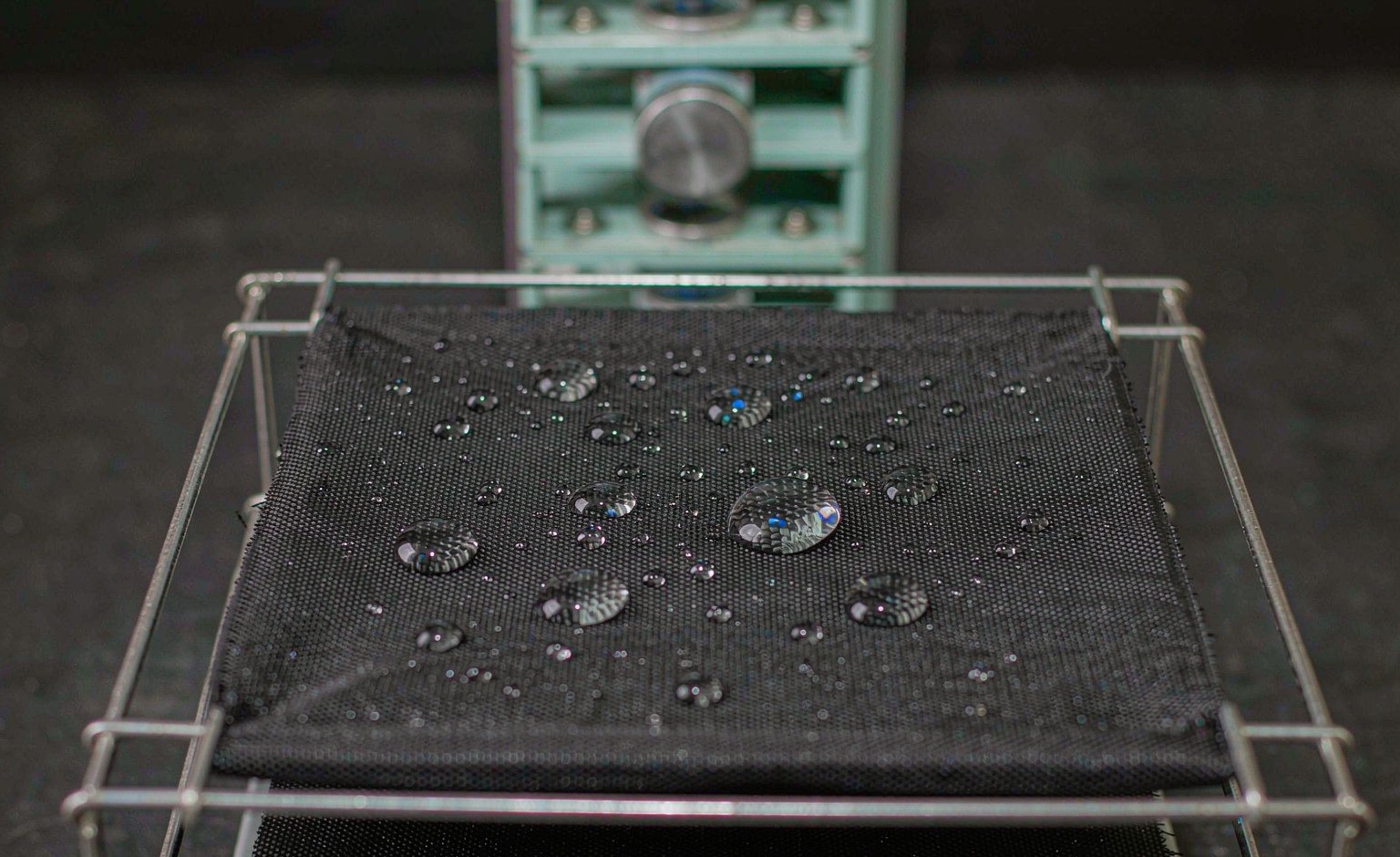
A modular backpack earns its place on a campus by separating wet, heavy and delicate items that would otherwise share one compartment: a laptop, a water bottle, a wet umbrella and a lunch do not belong together, and a single-compartment bag guarantees that at least one of them is damaged by the end of a term. The commercial constraint is equally hard: campus ranges must land before enrolment week, which means the purchase order is placed while the previous term is still running. This article inventories the loads students carry, sets compartment rules tested against a full semester, and works the procurement calendar backwards from the first day of term. Reference figures are MOQ 500, sampling at 6-10 working days, bulk at 35-50 days and sea freight at 25-35 days.
What the campus duty cycle actually contains
Campus carry is not a lighter version of hiking or commuting. It has a distinct signature: high daily mass relative to the wearer's body weight, a fixed timetable that forces the same load every day, long periods worn on one shoulder, and frequent contact with floors, desks and corridor walls.
The mass is the defining factor. A secondary-school student routinely carries several kilograms of books and device, and the same load is carried five days a week for a term. That repetition is what turns a marginal seam into a failure, and it is why campus products should be specified closer to work-grade than to fashion-grade construction.
One-shoulder wear is the second defining factor and the most damaging. A bag worn on one shoulder loads the harness asymmetrically, twists the body, and drags one strap across the shoulder seam of a coat or blazer. Products aimed at this market need a harness that tolerates asymmetric wear without deforming, which means a reinforced yoke and a strap attachment that resists lateral pull.
Finally, campus bags are set down on hard surfaces constantly, usually while loaded, usually with the base taking the impact. Base construction is therefore more important on a campus bag than on almost any other consumer category, and it is one of the cheapest things to get right.
There is also a social dimension that engineering tends to overlook. A campus bag is judged in front of peers every day, and a product that functions well but reads as wrong for the age group will not be carried, however good its load path. That does not mean styling should dominate the specification; it means the appearance constraints should be stated in the brief alongside the load constraints so both are solved at once rather than fought over later.
Selection rule: Specify campus products against a written load inventory instead of a litre figure, because damage comes from what students carry every day, and write that inventory before any order is placed at MOQ 500.
Load inventory: what students carry and what it does to the bag
Specify against a written load inventory rather than against a capacity figure. Capacity in litres says nothing about what damages the bag; the inventory does.
| Item carried | Weight class | Damage it causes | Compartment rule |
|---|---|---|---|
| Laptop or tablet | Heavy, rigid, fragile | Corner impact through the shell | Suspended sleeve, raised base, no floor contact |
| Textbooks and binders | Heavy, dense, sharp-cornered | Seam stress at the base and side gussets | Dedicated flat sleeve against the back panel |
| Water bottle | Heavy, leaking risk | Condensation damage to paper and devices | External or isolated lined sleeve |
| Lunch container | Medium, leak and odour risk | Soiling that is difficult to remove | Wipe-clean lined compartment, isolated |
| Sports kit and shoes | Bulky, soiled, odorous | Contaminating clean items | Detachable module vented to the outside |
| Wet umbrella or rain shell | Light but wet | Soaking everything adjacent | External wet pocket with a drain path |
| Instrument or art folder | Oversized, rigid | Distorting the body and straining zips | Oversize flat pocket or external strap carry |
The device sleeve is the single most consequential specification in this category. It must be suspended so the device never touches the floor when the bag is set down, padded on all six faces rather than two, and sized to the device in a case rather than to the bare device. A sleeve that fits a bare laptop does not fit a laptop in a sleeve. Where a range spans several screen sizes, engineer to the largest device including its case and use a removable padded insert for the smaller ones, rather than cutting a separate pattern for each size.
Wet and soiled items need separation, not merely a pocket. A vented external compartment for sports kit and a drainable pocket for a wet umbrella prevent the odour complaints that otherwise dominate reviews of campus bags after the first month.
Verdict: Give sports kit a vented external compartment and wet gear a drainable pocket, settling both no later than the close of sampling, which occupies 6-10 working days for a standard build, since odour complaints otherwise dominate reviews by the end of the first month.
Compartment rules that survive a semester
A compartment plan that photographs well can still fail by week six. Three rules produce a layout that holds up.
Rule one: heavy and flat against the back. Textbooks and devices belong in a sleeve adjacent to the back panel, because that keeps the centre of mass close to the spine and stops the bag pulling away from the body. A heavy load in an outer compartment produces exactly the tipping behaviour that makes a bag feel heavier than it is.
Rule two: one compartment per contamination class. Clean paper, food, wet items and soiled kit should not share airspace. Four contamination classes is more than most bags provide, which is why modular designs do well here: a detachable, wipe-clean module solves the soiled-kit class without contaminating the main body.
Rule three: no pocket requires a tool to operate. Students open their bags between classes, often while walking, often with one hand occupied. A stiff zip, a tight magnetic closure or a buckle that needs two hands will be defeated by users who simply leave the pocket open, and then the compartment has failed regardless of its design.
Tare mass deserves a specification line of its own here. A shell that is already substantial before a single book goes in reduces what a student can add, and the starting load is high relative to body mass. Set a target tare figure at brief stage and re-check it each season, because ranges drift heavier gradually and nobody notices until the duty cycle no longer works.
Add a visible organisational cue. Internal pockets in different colours, or printed icons at each position, teach the layout in a day and reduce the rummaging that otherwise dominates the user experience.
Leave one compartment genuinely unstructured. Students carry items that fit no category: a project, a costume, an instrument. A bag where every litre is assigned to a purpose cannot absorb those, and the user responds by overstuffing the main compartment, which is precisely the behaviour that breaks zips and seams. One flexible volume is a design feature, not an oversight.
Bottom line: Put heavy flat items against the back, leave one flexible volume for oversized objects and freeze the layout before the 6-10 working day sampling round, because users answer a missing pocket by overstuffing the main compartment.
Sizing across age groups without multiplying stocking units
Campus ranges span a wide age band, and the temptation is to produce a separate pattern for each group. That multiplies stocking units and fragments a 500-unit minimum across too many variants.
The economical approach is two shells with a common harness architecture. A smaller shell with a narrower body and shorter back panel covers the younger end; a larger shell covers secondary and tertiary users. Both use the same strap geometry, the same hardware set and the same module interface, so accessories and spare parts are shared.
Colourways then differentiate rather than patterns. A range of two shells in four colourways gives eight listings with two sets of tooling, against eight listings with eight sets of tooling if each listing is separately patterned.
The harness is where adjustment earns its cost. A back panel length that adjusts over a meaningful range lets one shell cover a broader band, and an adjustable sternum strap accommodates the chest depth difference that separates the age groups more sharply than height does.
Strap width is the remaining variable, and it should scale with the shell rather than with the age label. A narrow strap on a heavy load cuts into the shoulder regardless of who is wearing it, so the larger shell should carry a wider strap with more padding, and the smaller one a proportionally narrower strap. Sharing the buckle and adjuster hardware across both keeps the spare-part inventory common while the strap itself differs.
Takeaway: Serve two age groups from one graded pattern by varying strap width and padding while sharing buckles and adjusters, so the 500-unit minimum stays with one chassis instead of being fragmented across two incompatible ones.
The three places campus bags fail first
Warranty data is consistent across the category. Three locations account for most claims, and all three are specification decisions.
The base. Loaded bags set down on concrete abrade and puncture the bottom panel. A double-layer base with an abrasion-resistant fabric, plus feet or a reinforced strip, costs a small amount and removes the largest single claim category. Where a bag has a suspended device sleeve, the sleeve base must be raised clear of the floor by a defined margin.
The strap attachment. One-shoulder wear applies a lateral pull at the top of the strap that a straight vertical seam resists poorly. A reinforced yoke, a box-stitched attachment, and a webbing tail carried down into the back panel distribute that load and prevent the tear that otherwise appears midway through the first term.
The main zip. Overstuffing applies lateral stress at the closure, and a zip that is too light will separate. Specifying YKK #8 for the main opening on a campus body, with a gusset that stops contents pressing directly against the chain, addresses the second-largest claim category.
All three are cheap relative to the cost of a warranty programme, and all three are visible in a specification review before tooling. None of them are visible in a product photograph, which is why they are so often missed.
A fourth location deserves an honourable mention because it generates complaints rather than claims: the lining of the document sleeve. Ring binders and textbook corners are sharp, and a light lining used to save cost will be cut through within a term. Specifying a heavier lining in that one sleeve costs very little and removes a category of damage that users notice immediately.
Compliance for school-age products
Products aimed at school-age users attract a specific compliance set, and the requirements attach to the product as sold rather than to the intent behind it. A bag marketed to students is a children's product in several jurisdictions regardless of how it is styled.
CPSIA coverage applies in the United States, including lead content limits and tracking label requirements. California Prop 65 declarations apply to listed substances, and REACH (EC 1907/2006) applies in the European market. Nickel release per EN 1811 applies to metal components in prolonged skin contact, which on a campus bag includes buckles, sliders and any decorative metal.
Testing must be tied to named materials and named components, not to a generic product declaration. A report covering a zip puller from one supplier does not cover the same part from another, and a change of hardware supplier mid-programme invalidates the report even if the part looks identical.
Small parts deserve particular attention on the younger end of the range. Detachable modules introduce removable components, and any small detachable element needs a retention strength and a choke-risk review. Modular design and small-part regulation intersect here, and it is better to resolve it at design stage than after a retailer's compliance team raises it.
Judgement: Resolve children’s-product classification, lead limits, tracking labels and small-part retention during design rather than after a retailer raises them, because those requirements attach to the product as sold and rework after the 35-50 day run is expensive.
Procurement calendar worked backwards from enrolment week
Campus programmes have an immovable deadline, and the calendar should be built from that date backwards with named buffers at each junction.
| Step counted backwards | Days consumed | Governing constraint |
|---|---|---|
| First day of term | Fixed date | Institutional calendar; cannot move |
| Retail shelf date | Two to three weeks earlier | Distributor intake cut-off |
| Sea transit and destination handling | 25-35 days plus handling | Booking must precede peak season |
| Packing, inspection and documents | 4-6 days | AQL 2.5 sample size by lot |
| Bulk production | 35-50 days | Number of colourways and material lines |
| Sample approval and bulk release | 2-3 days | Internal sign-off routing |
| Sampling | 6-10 working days | Complex build extends to 12-15 |
| Brief finalisation and compliance booking | 1-3 weeks | Laboratory slot availability |
The step that surprises buyers is compliance booking. Laboratory slots tighten before a back-to-school season, and a test report that takes three weeks in February can take six in May. Book testing with the brief, not with the finished sample.
Working the calendar backwards typically places the purchase order in the quarter before the term begins, which means the range is designed and sampled while the previous season's sell-through data is still incomplete. Accept that and design for it: keep the chassis stable across seasons and vary colourways, which is exactly the strategy modular architecture supports.
Spec rule: Build the calendar backwards from enrolment week with named buffers at every junction and sea transit of 25-35 days counted in full, then hold the chassis stable across seasons and vary colourways so reversible decisions carry the risk.
Warranty signals and the modification each one prompts
Treat warranty claims as specification feedback. Each recurring claim maps to a modification, and the mapping should be maintained as a living document rather than handled case by case.
| Claim category | Failure mechanism | Modification applied |
|---|---|---|
| Base worn through | Abrasion against concrete under load | Double-layer base with abrasion-resistant fabric and feet |
| Strap torn at the top | Lateral pull from one-shoulder wear | Reinforced yoke; webbing carried into the panel |
| Zip separated | Lateral stress from overstuffing | Gauge raised to YKK #8; gusset added |
| Device damaged | Sleeve contacting the floor | Suspended sleeve with a raised base margin |
| Odour in main compartment | Soiled kit sharing airspace | Detachable vented module for kit |
| Lining torn by binders | Sharp corners against a light lining | Heavier lining in the document sleeve |
Close the loop by writing the modification into the specification for the next season and confirming it in the following lot's inspection plan. A modification that is applied once and then dropped reappears as a claim within two terms.
Returns also carry positive information. A claim rate that falls after a modification confirms the diagnosis; one that does not means the root cause was wrong, and the next review should start from the mechanism rather than from the symptom.
Cost architecture for a campus range
Campus is a price-sensitive channel, and the cost structure is decided at specification rather than at negotiation. Four levers do most of the work.
Shell count is the largest lever. Two shells across the whole age band, as described earlier, avoids duplicating tooling and pattern development and concentrates volume into fewer material lines, which improves both price and schedule.
Hardware standardisation is the second. Stock buckles, standard slider shapes and catalogue webbing colours avoid tooling charges of USD 300-2,500 per item and, more importantly, avoid the specialist shop queue that sits between sampling and bulk.
One lever is frequently overlooked entirely: the hangtag and the size statement. Campus products are bought by a parent as often as by a student, and the person paying reads the capacity and the device size before anything else. A clear stated device size range on the tag does more for conversion in this channel than any amount of pocket engineering.
Colourway count is the third and the one most often overused. Each colourway needs its own material reservation and cutting run. Two colourways per shell is efficient; four is defensible for a large programme; six fragments a 500-unit minimum into runs too small to cut economically.
The fourth lever is the module strategy. A detachable kit module adds a purchase reason and a second sale without adding a full product development cycle, and it uses the same interface as the rest of the range. Our production team typically sees campus programmes reach a workable unit cost at MOQ 500 with two shells, two colourways each and one shared module, dispatched FOB Xiamen under T/T 30/70 with sea transit of 25-35 days. Ranges that need a broader assortment can extend through shared-chassis modular platforms rather than by adding patterns.
Frequently asked questions
What capacity suits a secondary-school student?
Typically 20-28 litres, depending on whether a device and textbooks are carried together. Capacity alone is the wrong question; specify against a written load inventory of device, books, bottle and kit instead.
How should a laptop sleeve be built for campus use?
Suspended, padded on all six faces, raised clear of the floor by a defined margin, and sized to the device in a case rather than to the bare device. A sleeve sized to a bare laptop does not fit one in a case.
Why do campus bags wear through at the base?
Because loaded bags are set down on concrete repeatedly. A double-layer base in an abrasion-resistant fabric, with feet or a reinforced strip, removes the largest single warranty claim category in this market.
How many shells does a campus range need?
Two. A smaller shell for the younger end and a larger one for secondary and tertiary users, sharing a harness architecture, hardware set and module interface, covers the band without multiplying stocking units.
Which zip gauge suits a campus main compartment?
YKK #8, with a gusset that stops contents pressing directly against the chain. Overstuffing applies lateral stress at the closure, and a lighter gauge separates within a term.
Does CPSIA apply to a bag sold to students?
In the United States, yes, for products aimed at school-age users, including lead content limits and tracking labels. Apply REACH (EC 1907/2006) and California Prop 65 declarations for the respective markets.
Are detachable modules a small-part risk?
They can be. Any small removable element needs a retention strength check and a choke-risk review at the design stage, particularly on the younger end of the range.
When must a back-to-school order be placed?
Work backwards from the first day of term: subtract shelf lead time, 25-35 days of sea transit, 4-6 days for packing and inspection, 35-50 days of bulk, and 6-10 working days of sampling. That places the order roughly a term ahead.
Why should laboratory testing be booked early?
Slots tighten before a back-to-school season, and a report that takes three weeks in February can take six in May. Book compliance testing with the brief rather than with the finished sample.
How do I stop odour complaints on campus bags?
Separate contamination classes rather than pockets. A detachable, vented module for sports kit, and a drainable external pocket for wet items, prevent soiled and damp contents sharing airspace with clean items.
What causes straps to tear at the top?
Lateral pull from one-shoulder wear against a straight vertical seam. A reinforced yoke with the webbing carried down into the back panel distributes that load and prevents the mid-term tear.
How many colourways are efficient for a campus range?
Two per shell is efficient and four is defensible for a large programme. Six fragments a 500-unit minimum into cutting runs too small to be economical.
What are the sampling and bulk windows for this category?
Sampling runs 6-10 working days, extending to 12-15 for a laminated or moulded panel. Bulk occupies 35-50 days at MOQ 500, released per AQL 2.5 and dispatched FOB Xiamen.
Should a campus bag have a wet compartment?
Yes. A drainable external pocket for a wet umbrella or rain shell prevents everything adjacent becoming soaked, which is a common complaint within the first month of a term.