Home › Field notes › Modular Bag for Volunteer Distribution Teams: Issue Speed, Zoning, Rec
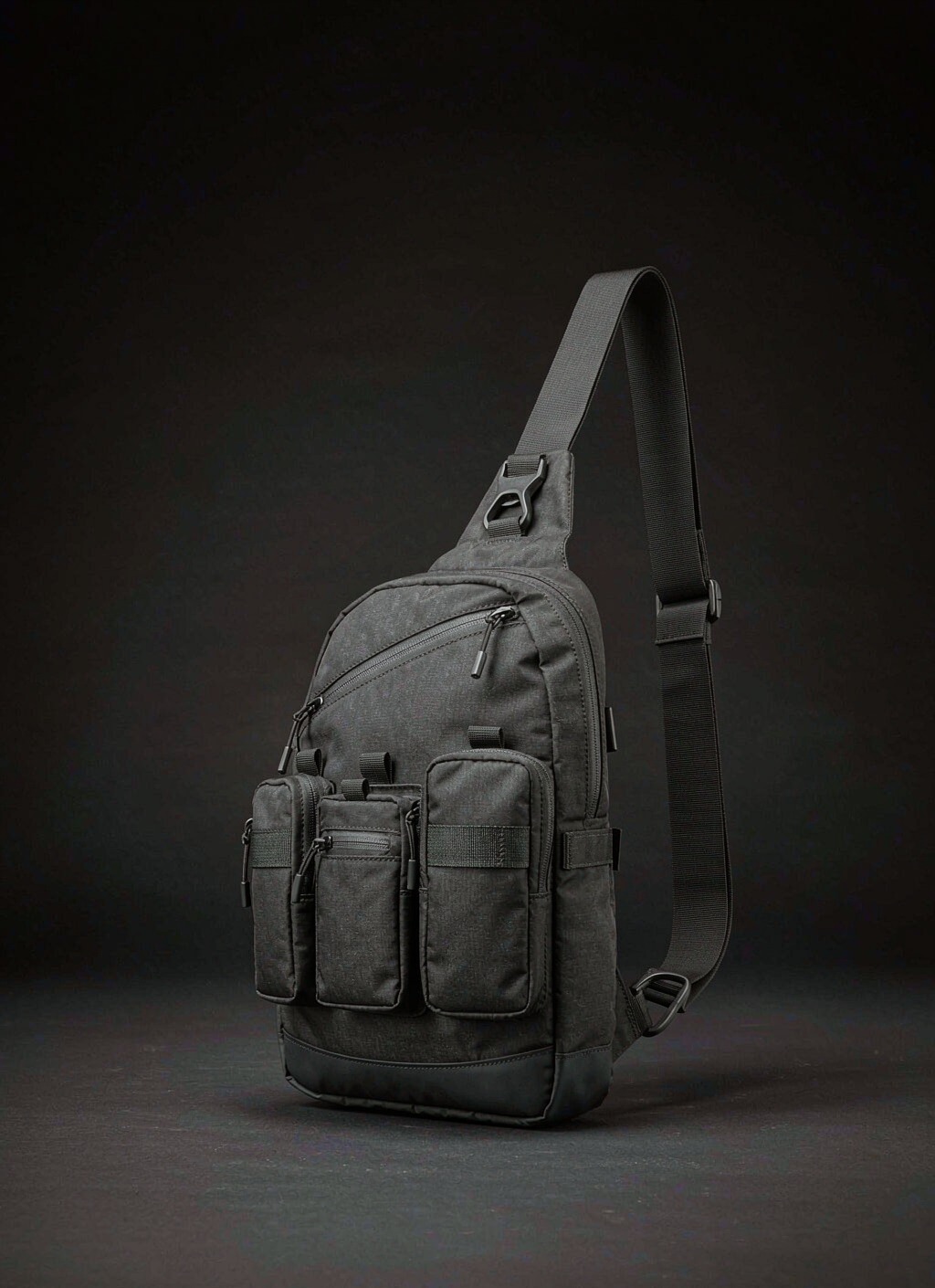
A modular bag for volunteer distribution teams is a pre-kitted carrier zoned to match the item list, because the hand-over has to take about half a minute and be verified by a volunteer who has never seen the kit before. Each reference starts at 500 pieces, sample turnaround is 6-10 working days, bulk work needs 35-50 days, and every lot is inspected to AQL 2.5, priced FOB Xiamen. This page stays with the bag and the distribution mechanics — packing, zoning, recovery and restocking. It offers no view on aid eligibility, safe distribution practice or any regulated relief requirement, which the operating organisation defines for itself.
What a Volunteer Distribution Team Needs From a Bag
A distribution day is a queue problem. Two hundred to five hundred recipients arrive over a few hours, a volunteer with perhaps ten minutes of briefing hands each one a bag, and the whole interaction lasts thirty to sixty seconds. Anything in the bag's design that adds ten seconds per recipient adds between thirty minutes and ninety minutes to the day, which is usually more than the site can absorb.
Three consequences follow. The bag must arrive already packed, or packed to a pattern a volunteer can complete in under a minute without reading instructions. The contents must be verifiable at a glance, because a missing item is discovered by the recipient at home rather than by the volunteer at the table. And the bag must be handed over closed and intact, which means a closure that a volunteer can operate one-handed while the other hand is managing a clipboard or a form.
The bag also has a second life that most specifications ignore. Many programmes ask recipients to return the empty bag at a collection point, either for reuse at the next distribution or for recycling. That turns the bag into a returnable asset, which changes the design: it needs to survive an inspection, a wipe-down and a re-kit, and it needs to fold flat enough that a thousand empties can be stored without a warehouse.
Judgement: Treat the distribution bag as a throughput device with a return leg rather than as a gift bag, and specify it against hand-over seconds, glance-verifiability and a fold-flat storage dimension, because those three decide whether a site clears its queue and whether the empties come back.
Issue Speed: Pre-Kitting, Queue Throughput and One-Hand Opening
Issue speed is decided before the site opens. A bag pre-kitted at origin — contents packed, checklist card inserted, closure set, carton opened and stacked — reduces the volunteer's job to lifting and handing over, which is a five to ten second action. A bag packed at the site by volunteers from bulk cartons is a two to four minute action per unit once counting, checking and closing are included, and it is the point where errors enter.
Pre-kitting at origin has a cost and a condition. The cost is carton volume: a packed bag occupies roughly two to three times the cube of a folded one, so a container that would carry 8,000 folded units may carry only about 3,000 packed ones. The condition is that the kit list must be frozen early enough for packing to happen inside the production window rather than after it.
| Issue format | Preparation per unit | Hand-over time | Failure it invites |
|---|---|---|---|
| Pre-kitted at origin, carton opened on site | Under 10 seconds, unpacking only | 5-10 seconds | Cube cost; kit list must be frozen early |
| Part-kitted: bulky items in, consumables added on site | 30-45 seconds | 20-30 seconds | Consumables miscounted at the table |
| Packed fully on site from bulk cartons | 2-4 minutes | 60-120 seconds | Missing items found at home |
| Recipient self-selects from marked bays | None, layout set once | 90-180 seconds | Queue dwell; stock-out at popular bays |
| Empty bag issued, contents in a sealed module | 10-15 seconds | 10-15 seconds | Module separated from the bag |
Closure choice is the remaining variable. A zip that runs the full width of the mouth can be closed one-handed in about two seconds and shows clearly when it is shut. A roll-top needs two hands and a surface. A hook-and-loop flap is fast but the peel sound and the grit pickup make it the wrong choice on a dusty site. Where the bag is handed over sealed, a simple tamper-evident tie or a numbered seal is cheaper than any closure upgrade.
Takeaway: Pre-kit at origin wherever the kit list can be frozen early, budget two to three times the folded cube for packed units, and specify a full-width zip the volunteer can close one-handed, because a closure that needs two hands and a table is what turns a five-second hand-over into a queue.
Item-List Zoning: Mapping Compartments to a Distribution Checklist
Zoning is the practice of giving every line on the checklist its own physical place, so that a missing item is visible as an empty space rather than discoverable only by counting. It is the single highest-value design decision in a distribution bag, and it costs nothing in unit price when it is done at specification.
The mapping works best at four to six zones for a list of eight to twelve lines. Fewer zones than that forces unrelated items to share a space and defeats the visual check; more zones than that makes each one too small for the item and slows the packer. Every zone gets a printed or woven identifier matching the checklist line number, so a volunteer reading line four knows to look at zone four.
| Zone | Checklist line it holds | Visual cue when filled | Packing note |
|---|---|---|---|
| Zone 1, front upper | Hygiene kit, one per recipient | Printed card visible through a mesh face | Pack first; heavy enough to stay put |
| Zone 2, front lower | Clothing item, folded flat | Fold edge flush with the seam line | Fold to the panel width, not the pocket width |
| Zone 3, main cavity | Blanket or larger textile item | Cavity filled to the top seam | Compress last; it holds the rest in place |
| Zone 4, internal sleeve | Document, voucher or instruction sheet | Corner showing above the sleeve lip | Insert after textiles to avoid creasing |
| Zone 5, side pocket | Bottle or liquid item | Upright, cap at the top | Pack upright; cartons are stacked this way up |
| Zone 6, detachable module | Optional or site-specific item | Module attached to the marked row | Attached on site so it can be varied by location |
Zone six is the useful one. A detachable module on the attachment grid lets the same base bag serve three sites with different optional items: the module is the only thing that changes, and it is attached at the distribution point in about ten seconds. Grid geometry for that interface is documented on the MOLLE attachment grid page.
Selection rule: Give each checklist line its own numbered zone and keep the count at four to six for an eight to twelve line list, because a missing item then shows as an empty space that a volunteer spots in a glance instead of a count that takes fifteen seconds.
Empty-Bag Recovery: Return Flow, Inspection and Reset to Reissue State
Recovery is where a reusable distribution programme either works or quietly becomes a single-use one. The empty has to come back, be checked, be cleaned, be re-kitted and be stored, and each step has a handling time that has to fit the volunteer budget. Programmes that plan the forward leg and improvise the return leg usually see return rates well under half.
Return is a design and a communications problem together. A bag that folds flat, carries a return instruction printed inside the lid, and has an obvious place for a return point code is far more likely to come back than one with no instruction. Programmes that reach 85-95% returns usually combine a printed instruction, a collection point on the same route as the recipient's next errand, and a bag that is genuinely useful afterwards.
| Recovery step | Performed by | Minutes per unit | Typical reject rate |
|---|---|---|---|
| Collection and count at the return point | Two volunteers | Under 0.5 | Not applicable |
| Visual inspection for tears, broken hardware, wet | Trained volunteer | 1.0-1.5 | 3-8% of returns |
| Wipe-down or spot clean, then air dry | Volunteer team | 1.5-2.5 | None if dry |
| Small repair: slider, buckle or a seam | One skilled volunteer | 10-20 | 1-3% of returns |
| Fold flat and band for storage | Any volunteer | 0.3-0.5 | None |
| Re-kit for the next distribution day | Packing team | 0.5-1.0 | None |
The third row is the one that decides storage. A bag that dries flat and folds to about 350 x 250 x 60 mm can be stacked a thousand to a pallet; a bag with a semi-rigid base that will not fold needs shelving, and shelving is what stops a reuse programme in a small depot. Folding instructions printed on the bag cost nothing and are the difference between a tidy stack and a heap.
Verdict: Design the return leg at the same time as the bag — flat fold around 350 x 250 x 60 mm, a printed return instruction inside the lid, and a repair path for the 3-8% of empties that come back damaged — because a reuse programme is won at the collection point and not at the distribution table.
Large-Batch Consistency: Dimensional and Colour Control Across Thousands
A distribution order is measured in thousands: 5,000 to 20,000 units is a normal range, and at that scale the question is not whether the first bag is right but whether the ten-thousandth one is the same. Consistency failures are cheap individually and expensive collectively, because a volunteer's packing routine is built around a dimension and a colour, and a bag that is 15 mm narrower will not take the folded item that the previous nine thousand took.
Three controls do the work. A dimensional tolerance written into the specification, in millimetres, on the panel width, the mouth opening and the zone heights. A colour standard sealed and held by both sides with a numeric tolerance, so a re-order or a second production line lands in the same shade. And a defined inspection sampling plan so the check is statistical rather than a glance into one carton.
The sampling plan most often used in this industry is defined in ISO 2859-1, applied at AQL 2.5 with critical, major and minor classes written out in advance; the classes matter because a 10 mm dimensional shortfall is major while a 2 mm one is minor, and the difference decides whether a carton is accepted. Seam strength of the shell cloth is tested under ASTM D5034, and adhesion on any laminated panel under ASTM D751, with results recorded against the lot. Crocking is checked to AATCC 8 so a dark trim cannot mark a light shell in a humid container.
Spreading a large order across more than one production line is normal and safe if the controls are in place: the same sealed standard, the same tolerance band and the same defect list are issued to each line, and the first-off units from each line are compared side by side before the run continues. Without that comparison, two lines drift apart and the drift is discovered at the distribution site.
Bottom line: Write a millimetre tolerance on panel width, mouth opening and zone heights, hold a sealed colour standard with an agreed tolerance band, and compare first-off units from every line side by side, because at 5,000 units and above the defect that costs the most is drift rather than a fault.
Packing, Kitting and Carton Logic for a Distribution Programme
Carton logic is decided by how the bags meet the volunteer. A carton holding 25-40 folded units, packed so the mouth of each bag faces the same way, lets a team open a carton and start packing without reorienting anything. A carton holding units in random orientation costs a few seconds each, and at 20,000 units that is real money in volunteer time.
Where packing happens at origin, the carton becomes the packing station: bags are laid out, each zone is filled in sequence by a different person, and the carton is closed. That line layout is worth designing with the bag, because zone order should follow the packing sequence — heavy and flat items first, textile last — so each bag is handled once rather than twice.
Cube then decides the freight line. Cube planning uses 28 CBM per 20GP and 68 CBM per 40HQ, and a folded 20 litre bag occupies a small fraction of that, which is why a folded order of 20,000 units usually fits one container while the same order pre-kitted may need three. Programmes that pre-kit at origin usually split the shipment: packed units go by sea to arrive first, and a reserve of folded units travels with them for topping up at the site.
Marking is the last piece. A carton marked with the reference, the zone map version and a pack date can be traced if a packing fault is found on day two; an unmarked carton cannot, and the whole day's distribution is then called into question rather than one carton.
Spec rule: Pack 25-40 folded units per carton in one orientation, order the zones to follow the packing sequence, mark each carton with the reference and the zone map version, and plan cube at 28 CBM per 20GP and 68 CBM per 40HQ, because carton logic is what turns a warehouse of bags into a packing line that a volunteer team can run.
How to Choose a Modular Bag for Volunteer Distribution Teams
Sequence the decisions as follows.
- Freeze the checklist; the item list drives the zone count and the pack sequence.
- Choose the issue format from the queue target, and accept the cube consequence.
- Set the bag size from the largest folded item, not from a litre figure.
- Map zones to checklist lines, numbered, with the visual cue for each.
- Choose the closure for one-handed operation and for a visible shut state.
- Design the return leg: flat-fold dimension, printed instruction, repair path.
- Write the tolerance set: dimensions, colour standard, seam strength, inspection plan.
- Set the carton logic, marking rule and the reserve quantity of folded units.
Step one is the one that gets skipped and the one that costs the most to skip. A checklist that changes after packing starts invalidates the zone map, and a zone map that no longer matches the list turns glance-verification back into counting, which is the failure the whole design was meant to prevent.
Programme Facts: Floor, Lines and Inspection for Bulk Distribution Runs
The production lines we schedule against sit inside 4,950 m² of SGS-verified floor: 7 lines, 149 machines, 137 people and close to 200,000 units of monthly output. Our founder has been making bags since 2004, and the company has been running since 2014, so questions about zone layout, carton orientation or running the same reference on two lines are answered against actual capacity rather than against a brochure.
A distribution run goes sample, pre-production sign-off, inspection to AQL 2.5, then loading, with the sealed colour standard and the dimensional tolerance issued to every line before cutting. Packing, marking and verification options are described on the packing and inspection verification page, and the base platform choices sit under convertible backpack platforms.
Lead Time, Freight Options and Delivery Against a Campaign Date
A distribution date is fixed and public, which makes the schedule unforgiving. Sample turnaround is 6-10 working days, rising to 12-15 for a complex build, with a sampling fee of USD 50-150 refunded on the order; tooling or screens for a bespoke panel or print run at USD 300-2,500. Bulk work needs 35-50 days, settlement is by T/T 30/70 on FOB Xiamen, and a quote comes back in 24-48 hours against a written specification.
Freight is then chosen against the date rather than the rate. Sea takes 25-35 days, air 5-8 and express 3-5. For a planned campaign the whole chain — sampling, production and sea transit — is counted backwards from the distribution day with a buffer, because the two events that cannot be compressed are a late kit-list change after packing has started and a certificate query at customs.
The reserve is the cheapest insurance. Shipping 5-10% of the order as folded, unkit units alongside the packed ones gives the site something to fall back on if a zone map turns out wrong on day one, and the reserve doubles as the top-up stock for a second distribution day. Air freighting the reserve later costs several times the sea rate and arrives after the queue has already been missed.
Frequently asked questions
What makes a modular bag suitable for volunteer distribution teams?
A zone per checklist line, a closure a volunteer can shut one-handed, and a flat fold for return and storage. Hand-over should take 30-60 seconds and a missing item should show as an empty zone. Orders start at 500 units, sampling takes 6-10 working days and bulk work 35-50 days.
- Four to six zones for eight to twelve lines
- Full-width zip, visible shut state
- Inspection to AQL 2.5
How fast can a volunteer hand over a distribution bag?
Five to ten seconds if the bag was pre-kitted at origin; twenty to thirty seconds if consumables are added at the table; sixty to one hundred and twenty seconds if it is packed on site from bulk cartons. At three hundred recipients the difference is over an hour of queue time.
Should distribution bags be pre-kitted at origin or packed on site?
Pre-kit at origin wherever the kit list can be frozen early: it turns the volunteer's job into lifting and handing over. The cost is cube, since a packed bag occupies about two to three times the volume of a folded one, so a container carrying 8,000 folded units may take only about 3,000 packed ones.
How many compartments should a distribution bag have?
Four to six zones for a checklist of eight to twelve lines. Fewer forces unrelated items to share a space and defeats the glance check; more makes each compartment too small and slows the packer. Number each zone to match its checklist line.
How does zoning prevent missing items in a distribution bag?
Each checklist line gets its own numbered compartment, so a missing item appears as an empty space rather than requiring a count. Zone four holds checklist line four, and a volunteer reading the list knows exactly where to look, which removes the fifteen-second count per bag.
Which closure works best on a distribution bag?
A full-width zip that can be closed one-handed in about two seconds and shows clearly when it is shut. A roll-top needs two hands and a surface; a hook-and-loop flap is fast but picks up grit and is loud on a dusty site. A numbered seal is cheaper than any closure upgrade.
What return rate can a reuse programme expect for empty bags?
Programmes combining a printed return instruction, a convenient collection point and a genuinely useful bag reach 85-95%. Without those three, returns fall well under half. Design the return leg with the bag: a flat fold of about 350 x 250 x 60 mm and a repair path for the 3-8% of empties that come back damaged.
How long does it take to reset a returned bag for reissue?
About three to six minutes in total: under half a minute to collect and count, one to one and a half to inspect, one and a half to two and a half to wipe down and dry, then under a minute each to fold and re-kit. Repairs on the 1-3% needing one take ten to twenty minutes.
How is consistency controlled across a 20,000-unit bag order?
A millimetre tolerance on panel width, mouth opening and zone heights, a sealed colour standard with a numeric tolerance, and inspection at AQL 2.5 under the plan in ISO 2859-1. Where two lines run the same reference, first-off units from each are compared side by side before the run continues.
What tests apply to a bulk distribution bag order?
Seam strength to ASTM D5034, coating adhesion to ASTM D751 on laminated panels, colour transfer to AATCC 8, and dimensional checks against the written tolerance. Results are recorded against the lot, and inspection follows AQL 2.5 with the defect classes fixed in advance.
How many bags should go in one export carton?
Twenty-five to forty folded units, all in one orientation so a team can open the carton and start packing without reorienting anything. Random orientation costs a few seconds per unit, which is real volunteer time at 20,000 units, and each carton is marked with the reference and the zone map version.
How much container space does a distribution bag order need?
Cube planning uses 28 CBM per 20GP and 68 CBM per 40HQ. A folded 20 litre bag uses a small fraction of that, so 20,000 folded units usually fit one container while the same quantity pre-kitted may need three, which is why packed and folded units are often split across the shipment.
What is the minimum order and sampling time for a distribution bag?
500 units per reference, indicative only FOB Xiamen. Sample turnaround is 6-10 working days, rising to 12-15 for a complex build, with a fee of USD 50-150 refunded on the order; tooling or screens cost USD 300-2,500. Bulk work needs 35-50 days on T/T 30/70.
Should a distribution order include a reserve of unpacked bags?
Yes, about 5-10% of the order shipped folded and unkit. It gives the site a fallback if a zone map proves wrong on day one and doubles as top-up stock for a second distribution day. Air freighting a reserve later costs several times the sea rate and arrives after the queue has been missed.