Home › Field notes › OEKO-TEX Standard 100: Limit Catalogue, Product Classes and Misuse
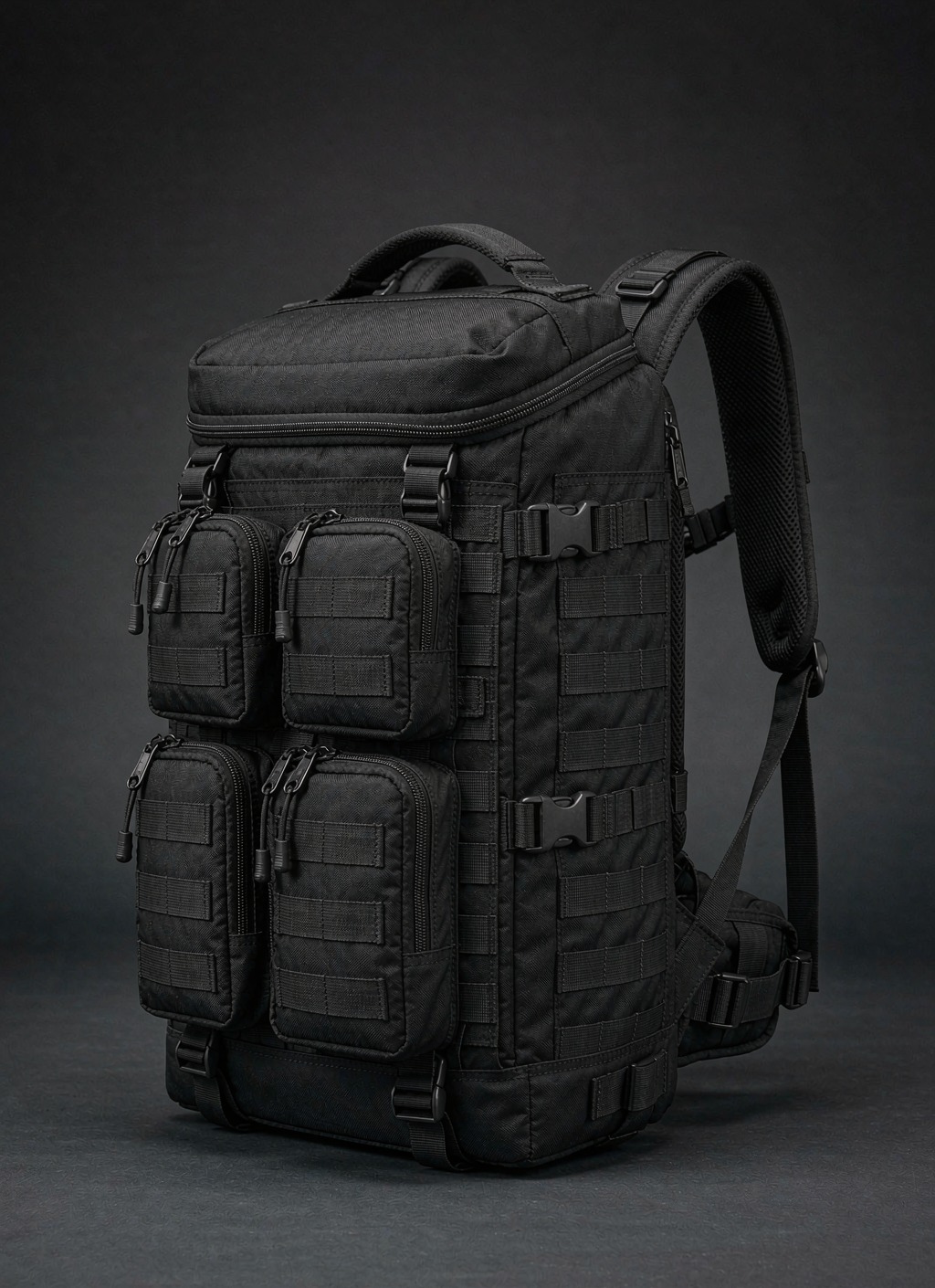
OEKO-TEX Standard 100 is a voluntary label that certifies a defined article, tested against a published catalogue of limit values for harmful substances, and the certificate is only as useful as the scope written into it. Product classes run I to IV in order of skin-contact intensity: class I covers articles for babies and toddlers, class II next-to-skin textile, class III textile without direct skin contact, and class IV furnishing and decorative material. A backpack shell touching a shirt, not bare skin, generally lands in class II or III, and a lining or strap underside can differ from the shell. Commercial gates are unchanged by certification: MOQ 500 per reference, sampling 6-10 working days, mass production 35-50 days, and release inspection at AQL 2.5. Treat this page as general trade information and not as legal advice: responsibility for conformity rests with the brand importing the article into its destination market.
What Standard 100 Tests and Who Issues the Certificate
Standard 100 is issued by the OEKO-TEX association through its member institutes and testing laboratories. It is a product-related label: a defined article is tested against a catalogue of parameters with published limit values, and when the results sit inside those values the article may be labelled. The catalogue covers regulated and non-regulated substances, including legally banned and controlled substances, substances known to be harmful but not yet regulated, and health-relevant parameters such as colour fastness and skin-friendly pH.
Parameters are grouped rather than itemised in marketing copy: banned azo colorants, formaldehyde, extractable heavy metals, pesticides, chlorinated phenols, phthalates and plasticisers, organotin compounds, PFAS-related parameters, and emissions-related items. Limit values are published by the issuing body and tighten as the product class rises, which is the whole reason the class assignment matters. The current catalogue and the class definitions are maintained by OEKO-TEX Standard 100, and should be read there rather than from a supplier slide.
Two structural facts decide how much a certificate is worth. It is issued for a defined article with a defined material composition, and it is issued for a limited validity period with renewal checks. A certificate for one fabric construction does not cover a second construction, and a certificate issued last cycle says nothing about this cycle's dye lot.
Selection rule: Read the article description on the certificate before accepting it, because Standard 100 certifies one defined article with one material composition for one validity period, and any change to construction, dye lot or component supplier puts the article outside the scope as written.
Product Class I to IV: Where a Bag Actually Lands
The four classes exist because skin contact and the user's vulnerability change the acceptable dose. Class I covers articles for babies and toddlers, class II articles with largely direct skin contact, class III articles without or with little direct skin contact, and class IV furnishing and decorative material. A garment lining is treated differently from a curtain for that reason.
Assigning a bag is a component-level exercise, not a style-level one. A backpack shell sits over clothing, which usually places it in class II or III depending on how the brand declares use; a strap underside that touches a shirt sleeve for hours is argued into the stricter class by cautious buyers; a baby carrier panel or an infant-changing mat inside a travel system sits in class I. A single bag can therefore carry components tested to two classes, and the certificate should say so rather than collapse both into the loosest one.
The failure pattern is predictable: a buyer asks for "class I certification" on a general-purpose pack because it sounds strongest, the laboratory quotes testing against a class I catalogue the design cannot meet, and the programme stalls at the quotation stage. Class I is not a quality grade. It is a statement about who wears the article and where.
Verdict: Assign class per component by declared end use, then quote testing to that class, because asking for class I on an adult pack buys a specification the article was never designed to meet and adds cost with no market value.
The Limit Catalogue Is a Set, Not a Pass Mark
Standard 100 results arrive as a parameter set, each measured against its own limit value for the declared class. There is no single score. A certificate is issued when every parameter in the applicable part of the catalogue is within limit for that class, which means a single failing parameter — a plasticiser in a print, a heavy metal in a plating — holds the whole article back.
That structure has a practical consequence for bag programmes: the risk is concentrated in trims, not in the shell. Woven polyester or nylon body cloth from a mainstream mill with a valid certificate rarely causes a failure. Coatings, plastisol prints, PU skins, foam laminates, elastic, hook-and-loop tape, zipper tape and plating on hardware are where results move, because those layers carry the plasticisers, solvents and metals the catalogue tracks. Testing spend should follow that distribution rather than being spread evenly across a 40-line BOM.
Colour is the second concentration. Dark and saturated shades, particularly reds, navies and blacks, carry more extraction risk than undyed or pale shades, and a certificate covering three colourways does not automatically extend to a fourth added later. When a range grows from 3 to 12 colourways, the certificate has to grow with it or the label stops being defensible.
Spec rule: Budget testing against coated, printed, laminated and plated lines in every colourway intended for sale, because Standard 100 failures cluster in trims and dark shades while body cloth from a certificated mill almost never drives the result.
Certificate Scope: Article, Component and Supply-Chain Boundaries
A certificate names an article, and the scope runs to the components listed on it. That is why a Standard 100 certificate held by a fabric mill covers the fabric, not the bag made from it; sewing the cloth into a product with a printed label, a foam back panel and metal hardware creates a new article needing assessment as an assembly.
Supply-chain recognition works through stages. Material certificates held upstream can be recognised downstream when the buying party holds its own certification and the material certificates are valid and cover the supplied article, which avoids retesting everything at every step. The mechanism requires each party in the chain to be certified and each certificate to be current, so a gap at one stage breaks the recognition for everything above it.
The second boundary is geographical and temporal: certificates are issued for a defined period and renewed, and the renewal re-checks the article. A certificate image copied out of a 2019 presentation is not evidence of anything in this buying cycle. The certificate number and validity dates are the fields that settle the question, and they are the fields buyers consistently fail to read.
Takeaway: Treat a mill certificate as covering the input material only, and require the finished article to be assessed with its trims, prints, foam and hardware, since assembling certified cloth with uncertified components produces an article outside any certificate in the file.
Four Misuses of the Label in Bag Sourcing
Misuse one: presenting a mill's fabric certificate as a finished-product certificate. Misuse two: presenting a certificate for one colourway as covering the entire range. Misuse three: presenting an expired certificate as current. Misuse four, the subtlest: using the label to imply performance the standard never measured — that the fabric is waterproof, abrasion-resistant, or stronger than a competitor's.
| Claim as written | Why the claim fails | Field that settles the question |
|---|---|---|
| Supplier holds OEKO-TEX fabric certificate so the bag is certified | Certificate covers the input cloth, not the assembled article with trims | Article description on the certificate |
| One colourway tested, twelve sold under the label | Colourants drive extraction results; untested shades are outside scope | Colour list attached to the certificate |
| Certificate image attached to a quotation | Validity period has lapsed; renewal was never performed | Issue date and expiry date |
| Label used to imply waterproof or high-strength performance | Standard 100 measures substance parameters, not mechanical performance | Parameter list on the test report |
| Label treated as blanket legal compliance in the EU or US | Statutory duties run separately from a voluntary label | Destination market rule text |
Each misuse is defensible to correct, which is what makes them persistent: no single claim is false in isolation, and the buyer has to read three fields together — article, colour and date — to see the gap. A reviewer who checks only the logo misses all of them.
Judgement: Check article description, colour coverage and validity dates as one set on every Standard 100 certificate, because each misuse above is invisible when the fields are read individually and obvious when they are read together.
Standard 100 Compared with REACH and Proposition 65
Three instruments get confused constantly, and they do different jobs. Standard 100 is a voluntary, product-related label with a published limit catalogue and a defined article scope. REACH (EC 1907/2006) is a European chemicals regulation attaching duties to roles in the supply chain, with restriction entries, a candidate list carrying communication duties and an authorisation list. California Proposition 65 is a warning statute: it obliges a business to warn before a knowing exposure to a listed chemical, and it does not ban products.
| Instrument | Trigger | Evidence produced | Who carries the duty |
|---|---|---|---|
| OEKO-TEX Standard 100 | Voluntary decision to label an article | Certificate plus parameter results for a defined article | Certificate holder, renewed periodically |
| REACH (EC 1907/2006) | Placing an article on the EU market | Restriction compliance, candidate-list communication, declarations | EU importer or established supplier |
| California Proposition 65 | Knowing exposure to a listed chemical | Content testing or exposure assessment plus warning placement | Business selling into California |
Overlap exists but is not identity. A substance restricted under REACH may also appear in the Standard 100 catalogue, so one test round can serve both; but passing a voluntary catalogue does not discharge a statutory duty, and a statutory restriction list contains entries no voluntary catalogue includes. Treat the label as evidence supporting a file, never as the file.
Bottom line: Run Standard 100 as a voluntary, article-scoped substance label and keep REACH restriction checks and any Proposition 65 warning decision as separate workstreams, because passing one does not discharge the other and the duties attach to different parties.
How to Read a Certificate Number and Check It
A Standard 100 certificate carries an identifying number, the issuing institute, the certificate holder, the article description, the product class, the validity dates, and the scope of what was tested. Verification runs through the issuing body's own checking route rather than through the certificate holder, which is the point: a document the holder can edit is not verification.
The fields to compare against the purchase order are the holder name, the article description, and the dates. Where a brand buys from a supplier whose name does not appear on the certificate, the brand is relying on a document issued to somebody else, and the recognition chain has to be documented — typically a valid material certificate plus the buyer's own certification — or the gap has to be closed with new testing.
Validity is the field most often skipped. Certificates are issued for a limited period and renewed with re-checks, so a certificate issued before a material change does not describe the article being shipped after it. For a programme running 35-50 days of mass production followed by 25-35 days of sea freight, the certificate in the file has to be current at the date of shipment, not at the date of quotation.
Judgement: Verify through the issuing body's own register rather than the holder's copy, and confirm holder name, article description and validity dates match the purchase order, because a certificate issued to another party or lapsed before shipment supports nothing.
Budget, Test Planning and the Production Base
Cost in substance testing follows parameter count, component count and colourway count. A disciplined plan tests body cloth once per construction where the mill certificate is current and recognised, then concentrates spend on coated, printed, laminated and plated lines across every colourway. Sharing one coating and ink set across a whole range is the cheapest design lever available, turning 12 test lines into 3.
Timing is simple once it is planned: the laboratory slot is booked against the confirmed sample, so it can overlap tooling but never a re-sample. A standard build returns as a sample in 6-10 working days and complex stacks in 12-15; volume then needs 35-50 days. Ocean transit ex-Xiamen is 25-35 days, airfreight 5-8 and express 3-5. A charge of USD 50-150 per reference covers sampling and is credited back once the order lands, while a new die or screen set costs USD 300-2,500.
On the production side, vetted partner facilities provide a 4,950 m² SGS-verified floor staffed by 137 people, with 149 machines tending 7 production lines and monthly capacity around 200,000 units, running sampling, PP sample, AQL 2.5 release inspection and shipment in that order. Those figures describe throughput and inspection discipline, not any substance result. Experience on the sewing floor reaches back to 2004, and the operating entity dates from 2014.
Writing the Requirement Into a Specification Sheet
A defensible requirement names the standard, the product class, the article, the colourways and the currency of the certificate at shipment. Vague lines such as "materials must be OEKO-TEX certified" invite exactly the five misuses listed earlier, because they do not say which article, which class or which date.
Pair the label requirement with construction callouts so the substance claim and the mechanical claim stay separate. A shell specified at a defined denier and weave with a defined coating is testable for substances and for strength; a shell specified only as "OEKO-TEX fabric" is testable for substances and for nothing else. Where programmes attach modules through an attachment grid, the attachment grid reference lists the geometric callouts, and modular hiking backpack configurations show where coated panels and hardware concentrate in a typical build.
Close the loop at goods receipt. Certificates belong in the same release pack as the AQL 2.5 inspection record, so the document the buyer relies on is dated to the shipment rather than to the quotation. Range planning for multi-colour programmes is described under modular travel backpack configurations, where trims and linings recur across several sizes.
Frequently asked questions
What does an OEKO-TEX Standard 100 certificate actually cover?
It covers a defined article with a defined material composition, tested against a published catalogue of limit values for the declared product class, for a limited validity period that is renewed with re-checks. It does not cover performance. When the composition, colourway or component supplier changes, the article as shipped moves outside the scope as written. Plan the test list before the first sample is cut.
Which product class applies to a backpack under Standard 100?
Classes run I to IV by skin-contact intensity: I for babies and toddlers, II for largely direct skin contact, III for little or no skin contact, IV for furnishing material. A backpack shell worn over clothing usually lands in class II or III; a strap underside touching a shirt can be argued stricter. Assign class per component at MOQ 500 quotation stage.
Why is class I the wrong request for an adult pack?
Class I is a statement about who uses the article, not a quality grade, and its limit values are the strictest in the catalogue. Requesting it for an adult pack buys testing the design was never specified to meet, adds cost and delays the programme, because a failing parameter holds the whole certificate. A simple build returns in 6-10 working days; a complex one in 12-15.
Does a mill's Standard 100 certificate cover the finished bag?
No. It covers the input material. Sewing certified cloth into an article with prints, foam, elastic, hook-and-loop tape and plated hardware creates a new article needing assessment as an assembly, unless the downstream buyer holds its own certification and the upstream certificate is recognised and current. Confirm before mass production, which runs 35-50 days.
How is a Standard 100 certificate number verified?
Verification runs through the issuing body's own checking route rather than through the certificate holder, comparing holder name, article description, product class and validity dates against the purchase order. A document supplied as an image by the holder is not verification. Keep the check current at shipment, after 35-50 days of output followed by 25-35 days at sea.
How long is a Standard 100 certificate valid?
Certificates are issued for a limited period and renewed, with the article re-checked at renewal. The precise dates sit on the certificate itself and are the only authoritative source, so read them there rather than assuming a standard duration. Validity has to hold at the date of shipment, not at quotation, where MOQ 500 and T/T 30/70 are agreed.
Does Standard 100 test colour fastness or strength?
The catalogue includes health-relevant parameters such as colour fastness and skin-friendly pH alongside substance parameters, but it is not a mechanical specification. Abrasion resistance, tear strength and coating adhesion sit in separate methods and need separate commissioning. Write substance and performance requirements as two lines; sampling takes 6-10 working days and tooling costs USD 300-2,500.
How does Standard 100 relate to REACH compliance?
REACH is a European chemicals regulation attaching duties to roles in the supply chain, with restriction entries, candidate-list communication duties and an authorisation list. Some substances appear in both, so one test round can serve both, but passing a voluntary catalogue does not discharge a statutory duty. Keep the workstreams separate from MOQ 500 quotation onwards.
Is Standard 100 a substitute for a Proposition 65 warning decision?
No. Proposition 65 is a California warning statute triggered by exposure to a listed chemical, and the warning decision depends on the chemical, the exposure route and the sales channel. A voluntary substance label is evidence in the file, not a legal determination. Decide warning placement separately before 35-50 days of mass production begins.
Which components in a bag most often cause a Standard 100 failure?
Risk concentrates in coatings, plastisol prints, PU skins, foam laminates, elastic, hook-and-loop tape, zipper tape and plating on hardware, because those layers carry the plasticisers, solvents and metals the catalogue tracks. Body cloth from a certificated mainstream mill rarely drives a result. Test those lines first; USD 50-150 per sample comes back on the order.
How many colourways should be tested for one style?
Every colourway intended for sale, because colourants drive extraction results and dark saturated shades carry more risk than pale ones. A certificate listing three shades does not extend to a fourth added later. Consolidating coatings and inks across a range lowers the count; 20GP holds about 28 CBM, 40HQ about 68 CBM.
What should a specification sheet say about Standard 100?
Name the standard, the product class, the article including its trims, the colourways covered, and the requirement that the certificate is current at shipment. Vague lines inviting misuse say only that materials are certified. Pair the substance line with construction callouts so strength and coating claims remain separately testable.
When should substance testing be booked in the programme calendar?
Against the confirmed sample, so it runs in parallel with tooling but not with a re-sample. A confirmed sample needs 6-10 working days, complex stacks 12-15, volume 35-50, and ocean transit 25-35 days ex-Xiamen. A late plan leaves the whole programme waiting on a laboratory booking instead of on the 7 production lines.
Can a buyer rely on a certificate issued to another company?
Only where a documented recognition chain exists: the upstream certificate is current, covers the supplied article, and the downstream party holds its own certification. Otherwise the buyer is relying on a document issued to somebody else. Where the chain breaks, close the gap with new testing before 35-50 days of mass production starts.