Home › Field notes › 30/70 Payment Milestones for Bag Orders: Deposit Cover and Balance Tri
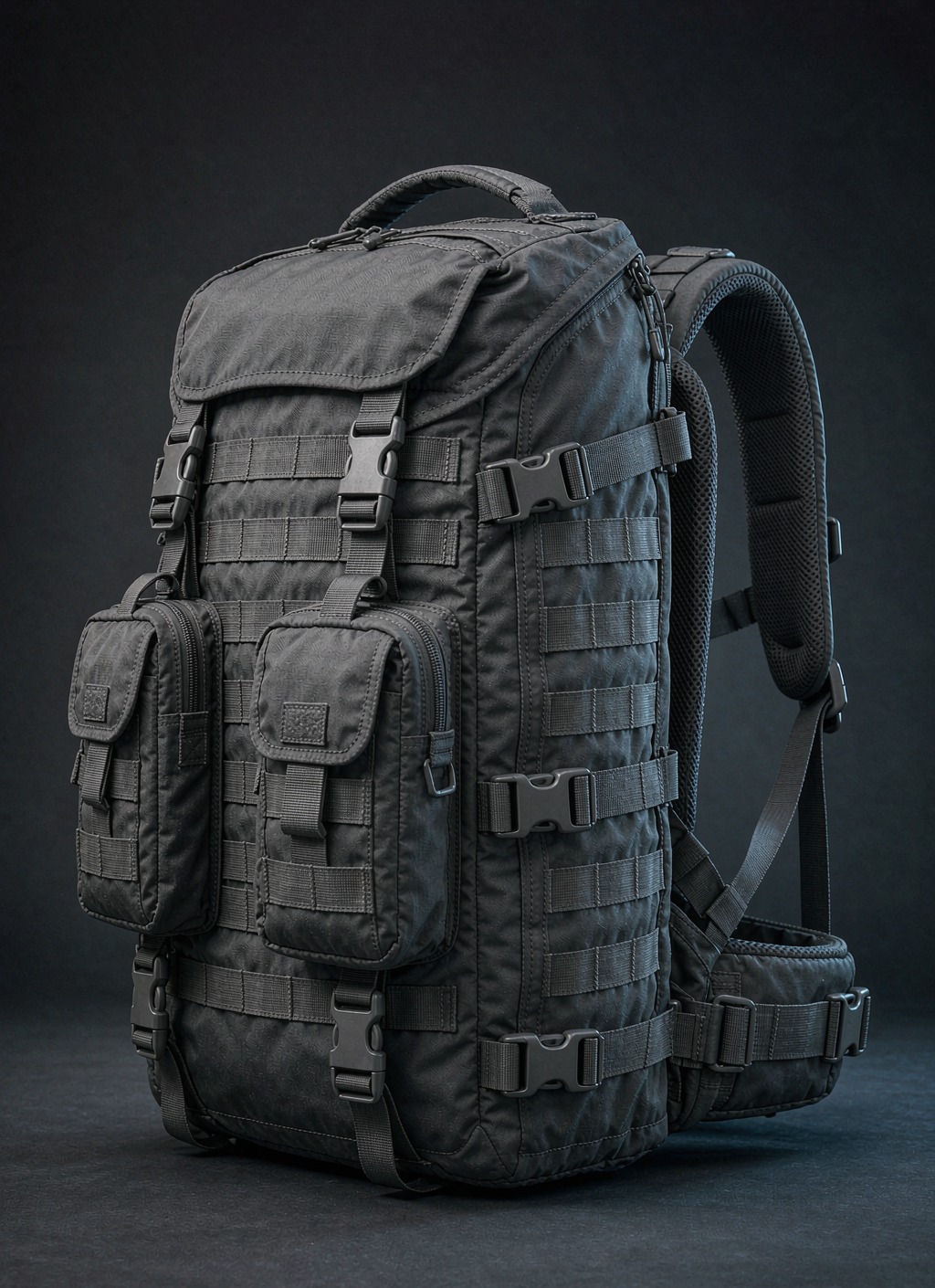
A 30/70 milestone structure asks for 30 percent when the order is confirmed and 70 percent against a stated evidence point once the goods exist, so the deposit buys committed capacity and booked materials while the balance buys verified output. The design only works if the second trigger is an inspection result rather than a dispatch notice, because leverage disappears the moment goods leave the origin port. The arrangement used here is T/T 30/70 written against a 500-unit reference: the first article is finished in 6-10 working days, bulk then occupies 35-50 days, and nothing is released until an inspection at AQL 2.5 returns a pass. This is general trade information, not legal or financial advice. Terms must be confirmed in the written contract.
What the 30 Percent Deposit Is Actually Buying
A deposit is often described as a sign of commitment, which is true but not useful. What it buys is three concrete things, and naming them makes the number defensible. The first is capacity: a production slot on one of 7 lines is reserved for a window, and a reserved slot that is not used is capacity that cannot be sold again. The second is materials: cloth, webbing, hardware and packaging are ordered against the order, and much of it is shade- or specification-specific and therefore not returnable. The third is preparatory work: pattern correction, marker making, screen or die preparation where a mark is applied, and the sampling round itself.
The materials bucket is the one buyers underestimate, because it is invisible in a quotation. A reference in a specific shade requires a dye lot, and a dye lot has a minimum quantity that does not shrink because the buyer's order is small. Hardware in a specific finish, a custom puller, a moulded component or a printed label all behave the same way: the supplier making them has a minimum too, and that minimum is upstream of the bag assembly line. A deposit that covers these bookings means the order can start immediately when the sample is approved instead of waiting for a second round of purchasing.
The preparatory work bucket is smaller and more visible: a sampling fee of USD 50-150, refundable against a subsequent order, and where a physical tool is needed a one-off figure in the indicative USD 300-2,500 band for tooling or screens. Both are raised before bulk begins. Treating them as part of the deposit stage rather than as a separate argument later keeps the schedule intact, because neither can be started until it is funded.
The size of the deposit is a consequence of those three buckets rather than a number chosen for negotiation. Thirty percent is enough to fund material booking and preparatory work on a 500-unit reference without asking the buyer to finance the whole run, and it is small enough that a buyer who has to walk away from an unapproved sample has not funded a production order. Neither figure is universal, and the right split depends on how much of the order value sits in non-returnable inputs.
Verdict: Read the 30 percent as funding for capacity reservation, non-returnable material bookings and pre-production preparation, and judge any proposed deposit by whether it covers those three items on a 500-unit reference rather than by how it compares with a number quoted elsewhere.
Why the 70 Percent Balance Belongs to Inspection, Not Dispatch
The single most consequential choice in a milestone structure is what the balance hangs on. Hang it on dispatch and the buyer pays for goods that have not been verified and are already on the water. Hang it on inspection and the buyer pays for goods that have been measured against the specification while they remain at the production site. The difference is not administrative; it decides whether a shortfall is corrected on the line or argued about from two continents after the goods have sailed.
Inspection works as a trigger because it produces a document. An AQL 2.5 inspection drawn to ISO 2859-1 at general inspection level II, with acceptance limits of Critical 0, Major 2.5 and Minor 4.0, ends in a report that either passes or fails against a stated sample size. That report is the event the balance attaches to. It is objective, it exists before the goods move, and both parties can read it without interpretation.
Dispatch fails as a trigger for a simpler reason: it is a fact about location, not about quality. Goods can be dispatched conforming, non-conforming, incomplete, wrongly packed or mislabelled. A payment released on the dispatch notice pays for all five equally. Once the container is on the water, the practical remedies shrink to a claim after arrival, which is slower, more expensive and, on a 500-unit order, frequently more costly than the goods.
There is a legitimate objection: a seller asked to finance production to the point of inspection is carrying a larger share of the working capital. That is true, and it is the reason the deposit exists and the reason the split is 30/70 rather than something closer to zero up front. The structure is a balance of exposure, not a statement about trust, and it should be discussed in those terms rather than as a concession either way.
One refinement settles most arguments. Where the buyer wants to inspect at origin and the seller wants payment certainty, the balance can be released against a passed inspection with the goods held pending payment, which gives the seller a finished, verified, packable order and gives the buyer goods that have not moved. That construction is common on first orders and usually disappears by the third repeat, once both sides have a record.
Bottom line: Attach the 70 percent to a passed AQL 2.5 inspection report issued before the goods leave the origin facility, because dispatch proves only that goods moved, while a report against acceptance limits of Critical 0, Major 2.5 and Minor 4.0 proves what moved.
Milestone Shapes Compared: What Each Trigger Protects
30/70 is the common shape, not the only one, and the right way to evaluate a shape is to ask what each trigger protects and for whom. Five structures turn up repeatedly in bag programmes. Each can be defensible; what matters is whether the buyer understands which exposure it leaves open before agreeing to it.
The first two differ only in the balance trigger, and that one difference is worth more than the entire rest of the negotiation. The third, balance against shipping documents, is common in commodity trade where the goods are fungible and a document genuinely represents them; it is weaker for a made-to-order branded reference, where the document says nothing about whether the bag matches the approved sample. The fourth, a single payment after delivery, removes the deposit's capacity reservation function entirely, which usually shows up as a later slot in the queue. The fifth, progress billing, suits long runs that exceed a single production window.
| Milestone shape | Deposit released on | Balance released on | Exposure left with the buyer | Exposure left with the seller |
|---|---|---|---|---|
| T/T 30/70 against inspection | Order confirmation | Passed AQL 2.5 report before loading | Deposit only, 30 percent | Production cost until inspection passes |
| T/T 30/70 against dispatch | Order confirmation | Dispatch notice or cargo-ready note | Quality risk from the moment goods leave | Minimal once goods are loaded |
| 30/70 against shipping documents | Order confirmation | Presentation of the bill of lading | Quality and conformity risk for the whole transit | Documentation workload |
| Single payment after delivery | Nothing paid up front | Arrival at the buyer's facility | None, but no reserved production slot | Full order value for 35-50 days plus transit |
| Progress billing by production stage | Confirmation, then staged percentages | Completion of each agreed stage | Funds committed before output is verifiable | Administration of each stage claim |
Reading that comparison in terms of consequence rather than preference: the buyer's exposure under the dispatch variant is quality risk over a 25-35 day transit on 500 units, and the seller's exposure under the post-delivery variant is the full order value for a 35-50 day run plus transit. Neither is unreasonable; both should be chosen with the number in view.
Selection rule: Select the inspection-triggered variant when the order is made to the buyer's specification and the buyer has no second source, and accept a document-triggered variant only when the goods are standard, unbranded and readily resold, since that is the only case where a document represents the goods.
Triggers That Can Be Verified in Writing, and the Evidence That Closes Each
A milestone is only as good as the evidence that closes it. Vague triggers — "when production is finished", "before shipment", "on completion" — produce arguments, because each side holds a different definition. The remedy is to attach a document to every trigger and to name who issues it. Four triggers cover almost every bag programme, and each has a natural piece of evidence.
Sample approval is the first. The evidence is a signed pre-production sample, held by both parties, dated and marked with the revision it represents. Everything downstream is measured against it, including the inspection. Where a programme runs across a MOLLE attachment grid or a modular pouch set, the approved sample should include the pouch-to-panel fit and the webbing geometry, not only the main shell, because those are the parts most often reworked.
Inspection is the second and the most argued about. The evidence is the AQL 2.5 report with its sample size, its defect counts by class and its pass or fail conclusion, together with photographs of any defect found. A report that lists counts without a conclusion is not closure. Nor is a report drawn against a specification nobody signed, which is why sample approval comes first.
Cargo-ready is the third, and it is the date the whole logistics file hangs on. The evidence is a packing list with carton count, dimensions and gross weight matched to the physical cargo, plus confirmation that the goods are packed and available. That is the number the forwarder books against, and it is the number that should appear in the contract rather than a shipping date derived from it.
| Trigger event | Document that closes it | Party that issues it | What it leaves unproven |
|---|---|---|---|
| Order confirmed | Countersigned pro forma or order acknowledgement with specification revision | Both parties | That materials are available or capacity is reserved |
| Sample approved | Dated pre-production sample with revision reference | Buyer, countersigned by the seller | That the bulk run will match it |
| Inspection passed | AQL 2.5 report with sample size and defect counts by class | The inspection function | Performance over the service life |
| Cargo ready | Packing list with carton count, dimensions and gross weight | The packing department | That a vessel has been booked |
| Goods loaded | On-board bill of lading | The carrier | Conformity to the approved sample |
Payment note: Attach one named document to every payment trigger before the order starts, because a milestone defined by a state rather than by a document will be interpreted differently by the party paying and the party being paid.
How the Deposit Stage Meets the Sampling Clock
The deposit stage and the sampling stage overlap, and understanding the overlap explains most first-order timelines. Sampling takes 6-10 working days for a standard construction and 12-15 working days where the build is demanding — a complex moulding, an unusual frame sheet, a multi-panel shell. That clock starts when the specification is settled and the sampling fee is funded, not when the enquiry arrives. A deposit paid late pushes the sample, and a pushed sample pushes everything behind it.
Bulk then occupies 35-50 days, and that window is measured from sample approval, not from deposit. Two consequences follow. A buyer who delays sample approval by two weeks has not delayed the order by two weeks; on a tight calendar the delay can cost a production slot entirely, because the line was reserved for a window that has now passed. And a buyer who funds the deposit but not the sampling round gains nothing, because the sample is the gate.
The sampling fee of USD 50-150, returned as a credit when an order follows, and one-off tooling or screen figures in the indicative USD 300-2,500 band, sit at this stage. Construction options that affect that clock are shown on the product pages, and milestone wording can be settled through the enquiry desk before the order is raised. Both are small relative to a 500-unit order and both are delay multipliers if they are argued about rather than paid. The efficient sequence is to settle the specification, fund the sampling round, approve the sample, then start the clock on bulk.
One further point about the PP sample: it is the reference the inspector works to. Where the approved sample and the written specification disagree — and they regularly do, because a sample shows a stitch that the drawing never mentioned — the inspector is left choosing between two authorities. Reconciling them at approval time costs minutes; reconciling them at inspection costs the slot.
Judgement: Fund the sampling round at the same time as the deposit rather than after it, because the 6-10 working day sample clock and the 35-50 day bulk clock run consecutively, and any gap between funding and approval is added straight onto the delivery date.
When a Milestone Slips: Delay, Rework, Re-Inspection and the Second Look
Milestones slip for four reasons, and each has a different cost owner. Material arrives late, which is usually nobody's fault and is absorbed into the 35-50 day window if it is caught early. A defect is found at inspection, which triggers rework and a second inspection. The buyer changes the specification after approval, which restarts the affected part of the run. Or capacity is displaced by a larger order, which is a commercial decision that should have been visible in the booking.
Re-inspection is the item most often left out of a contract. If a first inspection fails at Major 2.5, the goods are reworked and presented again, and someone pays for the second look. Stating that in advance — typically the party whose output caused the failure — removes an argument at the exact moment both sides are least inclined to be generous. It also creates an incentive that improves first-pass yield, which is worth more than the inspection fee.
Specification change after approval deserves its own clause, because it is the one delay nobody budgets for. A change to a fabric, a hardware finish or a logo placement after the PP sample is signed reopens purchasing, may reopen tooling at USD 300-2,500, and cannot be absorbed into the remaining window on a 500-unit run. Changes before approval are cheap and normal; the same change made a week later is neither.
What does not belong in a milestone discussion is a penalty for delay expressed as a percentage of order value without a cap, or any arrangement that functions as financing. Payment milestone clauses allocate risk between two parties to a sale; they are not credit instruments, and mixing the two makes both worse. General export and compliance guidance, including documentation expectations for shipments, is maintained at trade.gov, and trade and customs reference material is published by the WTO.
Spec rule: Write three clauses into every milestone schedule — who pays for a re-inspection after a failed AQL 2.5 report, how a post-approval specification change is costed and scheduled, and what happens to the reserved slot when the buyer's approval is late.
How to Choose a Milestone Structure for a 500-Unit First Order
Choosing a structure starts with one question: how much of the order value is recoverable if the buyer walks away. On a plain reference in a stock shade with no custom hardware, a large share of the material is reusable and the seller's exposure to a cancelled order is limited. On a reference with a custom moulded puller, a dyed shade and a printed lining, most of the input is specific to that buyer and the deposit is doing real work. The more specific the inputs, the more the deposit is justified.
The second question is whether the buyer can inspect at origin. A buyer using a third-party inspection function at the production site can hang the balance on the report comfortably. A buyer who cannot, and who will only see the goods on arrival, has a genuine problem: no milestone structure fully substitutes for not seeing the goods. The practical mitigation is a detailed approval sample, photographed and signed, plus a documented packing check, rather than a financial adjustment.
The SGS-verified production base behind this work holds 7 production lines and 149 machines, staffed by 137 people on 4,950 m² and rated at 200,000 units a month; bag production experience in the founding team reaches back to 2004 and the business was set up in 2014. The sequence is sampling, pre-production sample, inspection at AQL 2.5 drawn to ISO 2859-1 with limits of Critical 0, Major 2.5 and Minor 4.0, then shipment. A reference starts at 500 units, and the sample round occupies 6-10 working days, or 12-15 where the build is intricate, ahead of a 35-50 day bulk run. Programme details and the inspection and sampling services that sit behind those gates are set out on the services page.
Standard terms are T/T 30/70, quoted FOB Xiamen. Where a buyer needs a different structure, that conversation works better when it is framed as an exchange: what the buyer is asking the seller to carry, and what the buyer is offering in return, usually a longer programme commitment or a larger first quantity.
Contract note: Start a first 500-unit order on T/T 30/70 with the balance against a passed AQL 2.5 inspection, and vary the split only in proportion to how much of the input is buyer-specific, because that is the portion of the order the seller cannot redeploy.
Documents That Should Travel With Every Payment Request
A payment request that arrives without evidence is a request, not a milestone. Four documents make the request self-explanatory, and requiring them is a routine administrative step rather than a sign of distrust. First, the invoice, citing the order reference and the specification revision it is raised against. Second, the trigger evidence named in the contract — sample approval record, inspection report or packing list. Third, where relevant, photographs of the actual goods in their packed state. Fourth, a statement of what happens next and when.
The revision reference matters more than it appears to. A programme running to revision three of a specification, invoiced against revision one, creates an ambiguity that surfaces later as a claim. One line on the invoice removes it. The same applies to the quantity: 500 units ordered, 500 packed and 500 invoiced is only meaningful if all three figures appear.
Photographs of packed cartons are underrated. They cost nothing, they settle questions about marking and packing method before the container is sealed, and they are the cheapest available evidence that what was inspected is what was loaded. On a first order especially, ask for carton-level photographs with the marking visible.
Finally, keep the whole file together. Order acknowledgement, sample approval, inspection report, packing list, invoice and bill of lading belong in one folder per order, because the place a dispute is resolved is the place the documents are, and reconstructing a file twelve weeks later is how small problems become large ones.
This is general trade information, not legal or financial advice. Terms must be confirmed in the written contract, and any payment structure belongs in front of the buyer's own legal adviser before both parties sign. All sums on this page are indicative, quoted FOB Xiamen against a 500-unit order.
Practical check: Require invoice, trigger evidence, packed-goods photographs and a forward schedule with every request, because a milestone without its document is a date on a calendar rather than a payment condition.
Frequently asked questions
What does the 30 percent deposit cover on a 500-unit bag order?
Three things: a reserved production slot, material bookings that cannot be returned, and pre-production preparation including the sampling round. It is not a penalty or a financing arrangement. On a 500-unit reference those three items are what make the order startable the day the sample is approved.
- Reserved line capacity
- Non-returnable materials
- Sampling and preparation
Why should the 70 percent balance hang on inspection rather than dispatch?
Because dispatch proves goods moved, not that they conform. An inspection at AQL 2.5, with acceptance numbers of Critical 0, Major 2.5 and Minor 4.0, produces a pass or fail before the goods leave, when a defect is still correctable. After loading, the buyer's remedy becomes a claim across a 25-35 day transit.
- Inspection is verifiable
- Correction still possible
- Dispatch proves nothing about quality
How does a T/T 30/70 structure work across a first order?
Thirty percent is wired on order confirmation, the sample is built in 6-10 working days and approved, bulk runs 35-50 days, an AQL 2.5 inspection is drawn, and the remaining 70 percent is released against the passed report before loading. Each step has a document attached.
- 30 on confirmation
- 70 on passed inspection
- Sample approval in between
Which document closes the inspection milestone?
An AQL 2.5 report drawn to ISO 2859-1 at general level II, giving the sample size, defect counts by class and a stated pass or fail. Photographs of any defect found should accompany it. A report with counts but no conclusion does not close a payment condition.
- Sample size stated
- Counts by defect class
- Explicit pass or fail
When is the deposit due relative to sampling?
At the same time or before. The 6-10 working day sample clock starts when the specification is settled and the sampling fee of USD 50-150 is funded, so a late deposit pushes the sample and, behind it, the 35-50 day bulk window.
- Fund before sampling
- Sample 6-10 working days
- Bulk 35-50 days
Does the sampling fee count against the deposit?
No, it is a separate line of USD 50-150, returned as a credit when an order follows. Tooling or screens, where needed, are a separate one-off figure in the indicative USD 300-2,500 band. Neither should be netted off the deposit without being recorded.
- Sampling fee separate
- USD 50-150, refundable
- Tooling quoted separately
What happens if an AQL 2.5 inspection fails on the first attempt?
The goods are reworked and presented again, and the contract should already state who funds the second look — normally the party whose output caused the failure. Budget the re-inspection time as well as the fee, since it falls outside the 35-50 day run.
- Rework then re-present
- Funding named in advance
- Time is the real cost
Can a buyer change the specification after the sample is approved?
Yes, but it is the most expensive change available. A fabric, hardware or placement change after approval reopens purchasing and may reopen tooling at USD 300-2,500, and it cannot be absorbed inside the remaining window on a 500-unit run. Change before approval instead.
- Cheap before approval
- Reopens purchasing
- May reopen tooling
Should a single payment after delivery be used instead of 30/70?
Rarely. It removes the deposit's capacity reservation function, so the order usually takes a later slot, and it asks the seller to carry the full order value for 35-50 days plus transit. It works only where the buyer's volume already guarantees a standing slot.
- Loses reserved capacity
- Later production slot
- Suits standing volume only
How does a progress billing structure differ from 30/70?
Progress billing releases staged percentages as each production stage completes, so funds are committed before output is verifiable, and administration grows with the number of stages. It suits runs longer than a single window, not a standard 500-unit order.
- Staged by production phase
- Funds committed early
- More administration
What evidence should accompany a payment request?
An invoice citing the order and specification revision, the trigger document named in the contract, photographs of the packed cartons with marking visible, and a note of the next step and its date. Four items, none of them unusual, and each one prevents a specific argument.
- Invoice with revision
- Trigger evidence
- Packed carton photographs
Why is the balance not released against the bill of lading?
A bill of lading evidences carriage, not conformity. It suits fungible commodity goods that can be resold; a branded, made-to-specification reference cannot be resold, so the document leaves the buyer carrying quality risk for the whole transit.
- Evidences carriage only
- Suits resalable goods
- Weak for branded runs
How much of a deposit is justified by buyer-specific inputs?
In proportion to them. A stock shade with standard hardware leaves most material redeployable, so a smaller deposit is defensible; a custom dyed shade, a moulded puller and a printed lining leave almost nothing redeployable, which is exactly what the deposit funds.
- More specific means more deposit
- Stock inputs are redeployable
- Custom inputs are not
When does the 35-50 day production clock start?
From approved pre-production sample, not from deposit and not from enquiry. Anything that delays approval — a late sample decision, an unpaid sampling fee, a specification question — is added to the delivery date rather than absorbed into the window.
- Starts at sample approval
- Not at deposit
- Delays are additive