Home › Field notes › Polybag Specification and Thickness: Gauge, Resin Marking, Warning Tex
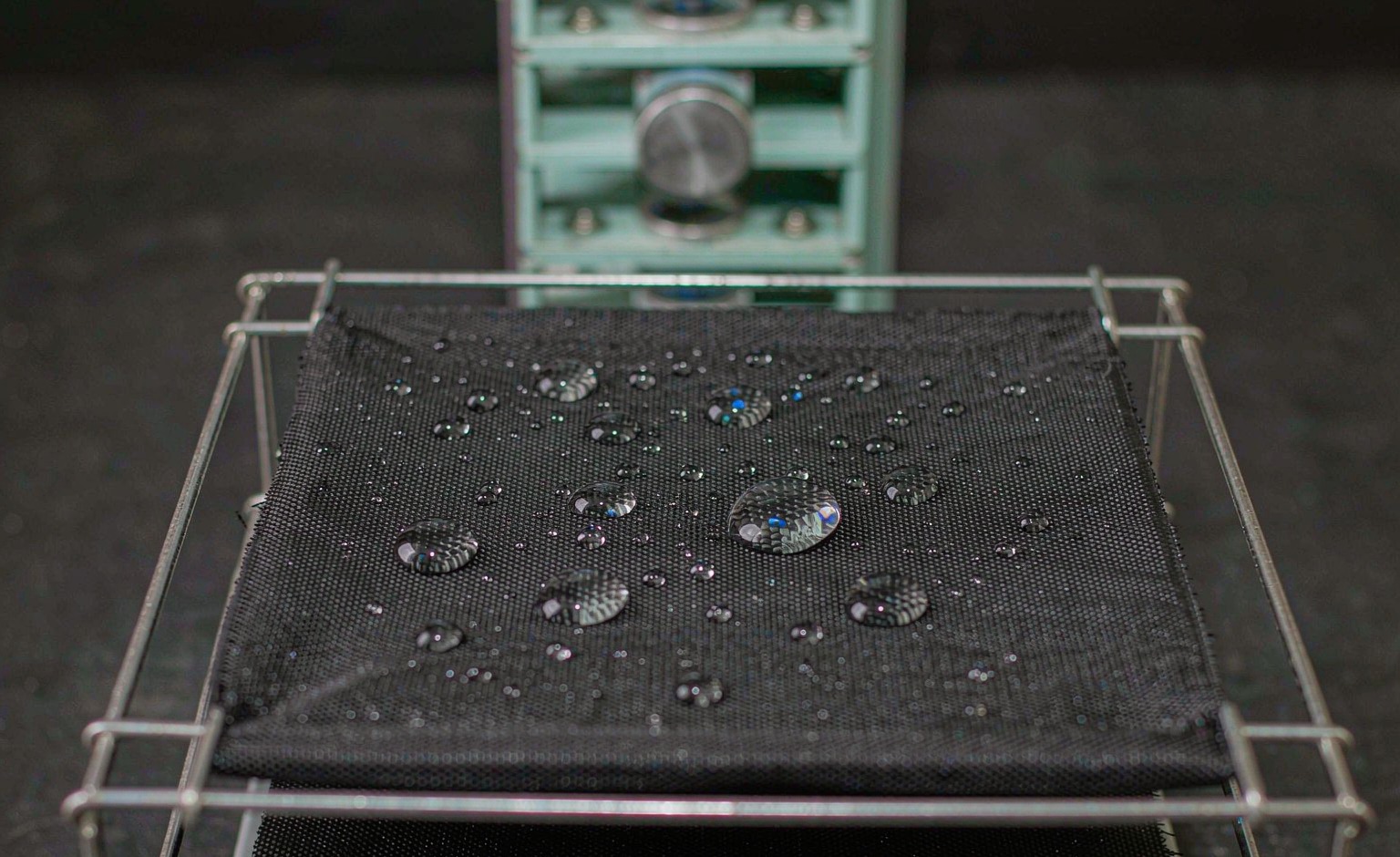
A polybag specification fixes five things: the resin, the gauge in one named unit, the print with any mandated warning text, the ventilation, and the closure method. Printed bags are ordered from 500 units per reference, run inside a 35-50 day production window and are inspected to AQL 2.5 as part of the packing check, with prices quoted FOB Xiamen. The boundary is that resin marking and warning wording are set by the destination, not by the packer: the correct marking for a given market is checked with your customs broker or with the retailer accepting delivery, and none of this is legal advice.
What a Polybag Specification Has to State Before It Can Be Ordered
A polybag looks like a commodity and is specified like one until it fails. Five fields decide whether it works: the resin and any recycled content, the thickness in one named unit, the print including warning text, the ventilation pattern, and how the bag closes. Leaving any of the five to "standard" transfers the decision to whoever is cheapest that week.
Resin is stated as a polymer type, most often polyethylene in low-density or high-density form, or polypropylene where clarity and stiffness are wanted. Each behaves differently: low-density film is softer and more tear-resistant at the same thickness, high-density film is stiffer and noisier and can be run thinner for the same feel, while polypropylene gives clarity at the cost of crack resistance at low temperature. Recycled content changes the mechanical picture again and has to be stated as a percentage with its documentation route.
Thickness is the field that causes the most purchasing errors, because the same number means different things in different unit systems. A figure written without its unit is not a specification. The specification states the unit, the measurement method and the tolerance, and the tolerance matters as much as the target: a nominal figure with no minus tolerance permits a bag that is systematically thinner than the buyer believes.
Print, ventilation and closure are specified together because they interact. A printed area reduces the stretch of the film locally, ventilation holes relieve the pressure that would otherwise burst a sealed bag during a temperature cycle, and a closure that seals fully defeats the purpose of those holes. Where the bag is the sales unit for a hanging retail programme, the specification also fixes the suspension hole position.
Bottom line: Write all five fields — resin, gauge with unit, print, ventilation and closure — onto one drawing before any price is requested, because a quote taken on "standard" bags is a quote for whatever film was cheapest on the day.
Thickness Units Compared: Micron, Mil and Gauge in Purchasing Terms
Three unit systems are in circulation and they are not interchangeable. Micron, written µm, is one thousandth of a millimetre and is the unit used across most of Asia and Europe. Mil is one thousandth of an inch and is the unit used in North America. Gauge is a legacy system in which the number rises with thickness on its own scale. Because the numbers are not convertible by inspection, a specification that omits the unit is a specification that will be misunderstood somewhere in the chain.
| Unit | Definition | Where it is normally quoted |
|---|---|---|
| Micron (µm) | One thousandth of a millimetre | Asia and Europe film buying |
| Mil | One thousandth of an inch | North American packing specs |
| Gauge | Legacy scale rising with thickness | Legacy UK and Commonwealth specs |
| Grammage (g/m²) | Mass per area, used with density | Where film is bought by weight |
Conversion matters because the same physical film reads as a small number in one system and a large number in another, and a buyer comparing two quotes without converting will pick the thinner bag believing it is thicker. The practical control is to specify in one system, name the conversion on the drawing, and require the supplier to report the measured value in that same system on the packing record.
Measurement is taken at several points across the film because extruded film is not perfectly uniform, and the specification states how many points and what spread is acceptable. A single reading on a single bag is not evidence. Where the programme is sensitive, the incoming check measures a sample from each delivered lot rather than trusting the mill certificate.
Spec rule: State the gauge in one named unit with a plus and minus tolerance and require the measured value in that same unit on the packing record, because a figure quoted without its unit is the most common way a thinner film enters a programme.
Resin Identification and Recycled Content: Which Marking Is Which
Two markings are routinely confused. A resin identification code identifies the polymer so the film can be sorted at end of life; it says nothing about where the material came from. A recycled-content statement is a claim about the input and has to be backed by transaction records for the batches used. Printing one does not authorise the other.
Chemical compliance is a separate question from both. Restricted-substance obligations on articles placed on the European market sit under REACH (EC 1907/2006), and the specific substances and thresholds applicable to a given article are settled with the customs broker or the receiving retailer rather than assumed from a previous programme. Ink and adhesive are part of the article for this purpose, so a compliant film printed with a non-compliant ink is not a compliant bag.
Recycled content adds a documentation chain. Where a brand states post-consumer or post-industrial content, the figure is normally evidenced through a chain-of-custody standard such as the one administered by Textile Exchange, with transaction certificates tied to the film lots actually used. Certificate reference, validity period and scope travel with the bag artwork so the claim can be checked again at reprint.
Selection rule: Print a resin identification code whenever the destination runs kerbside film collection, and print a recycled-content figure only when transaction certificates for the actual film lots can be produced, because the first is a sorting instruction and the second is a substantiated claim.
Why Thin Polybags Split in the Warehouse: Failure Modes by Handling Stage
A bag that survives packing can still fail four weeks later, and the failure is almost always a combination of under-gauge film, unrelieved pressure and a handling event. Splitting in the warehouse is expensive because it is discovered after the goods have already been paid for and are no longer where they can be cheaply re-packed.
The handling stages are distinct. Picking puts a point load on a corner. Conveyor transport abrades the film against a belt. Cartonisation compresses the bag against neighbouring units. Container transport adds a slow temperature and humidity cycle, and unloading removes support from a stack that has settled. A film that survives each stage individually can fail the combination.
Transport testing exists to expose exactly that combination. ISTA 3A covers parcel delivery systems for individual packaged products shipped through a general parcel network, and it is referenced for ISTA 3A transit testing when a packed unit has to be qualified before a channel is opened. A bag that has never been through a sequence test is an assumption, not a specification.
| Handling stage | Typical failure | Film property that resists it |
|---|---|---|
| Order picking | Corner puncture from a fingernail or tool | Puncture resistance |
| Conveyor run | Abrasion thinning along a belt contact | Abrasion resistance, slip additive |
| Carton compression | Seam burst at the fold | Seal strength, gauge at the fold |
| Container transit | Pressure burst across a temperature cycle | Ventilation, elasticity |
| Destuffing | Tear propagating from a small nick | Tear propagation resistance |
Pressure is the failure that surprises buyers most. A bag sealed at sea level and shipped through a temperature cycle in a container experiences internal pressure change; without ventilation holes the film takes the load at its weakest point, which is normally a seal corner. Ventilation is therefore a specification field, not a decoration.
Verdict: Raise the gauge one step whenever the packed unit will travel by parcel network or sit in a container through a temperature cycle, and add ventilation, because those two conditions turn a film that passed packing into one that splits at destuffing.
Print, Warning Text and Ventilation: What Goes on the Bag and Where
Print content splits into three groups: brand and reference, handling information such as a barcode or a size statement, and any mandated warning. The first two are commercial and the brand controls them. The third is destination-market dependent and is settled with the customs broker or the receiving retailer before any plate is cut.
Warning text is the field most often added late. Where a destination requires a statement about suffocation risk or about the bag not being a toy, the wording, the language, the type size and the placement are all part of the requirement, and a correct statement printed too small does not satisfy it. Placement matters too: text on the back of a bag that is packed print-side-in is never read.
Ventilation is specified as hole diameter, hole count and position, and it interacts with the print. Holes are normally punched away from the printed area so the text is not broken, and away from the seal so the seal is not weakened. A bag intended to be the retail sales unit and the transit bag at the same time has the hardest ventilation problem, because it must breathe in transit and still look clean on shelf.
Ink choice is part of the specification for a coated article. Solvent-based ink on a film held against a coated cloth can transfer into the coating during storage under compression, which is a storage-duration problem rather than a print-quality problem. The check is a contact test over a defined period against the actual material, not a rub test on the day of print.
Takeaway: Fix warning wording, language, type size and placement with your broker before the plate is cut, and punch ventilation away from both the printed area and the seal, because a late warning addition forces a reprint of the whole bag run.
Closure Methods Compared: Self-Adhesive Flap, Heat Seal and Resealable Zip
Closure decides how the packer works, how the customer opens the bag, and whether the bag can be reused. Three methods cover most programmes: a self-adhesive flap on the bag itself, a heat seal applied at packing, and a resealable profile closed by hand. Each has a cost and a failure mode that does not appear on a specification sheet.
| Closure | Packing speed | Customer opening | Failure it introduces |
|---|---|---|---|
| Self-adhesive flap | Fast, no machine | Peel and reseal once or twice | Adhesive loses grip in cold storage |
| Heat seal | Slower, needs a sealer and settings | Tear or cut open | Seam burst if settings drift |
| Resealable profile | Slowest, hand alignment | Open and close repeatedly | Profile misalignment at packing |
| Loose fold, no closure | Fastest | Nothing to open | Contents lost in transit |
The adhesive flap is the default for a reason: it needs no machine, it is fast, and it tolerates a range of fill volumes. Its weakness is temperature and dust — adhesive on a dusty or cold surface grips poorly, and a bag that opens in transit is worse than no bag. Heat sealing is stronger and cleaner but introduces a process variable: seal temperature, dwell and pressure have to be set for the film and re-checked when the film lot changes.
Resealable profiles are chosen when the bag is part of the product, for example where the customer is expected to store the article in it. They cost more per unit and slow packing, so they are normally reserved for a channel where the bag is visible to the customer rather than removed in a warehouse.
Judgement: Choose a self-adhesive flap where the bag is removed in a warehouse and packing speed governs cost, choose a heat seal where the pack travels through a parcel network and must not open, and choose a resealable profile only where the bag is part of the customer experience.
Gauge Selection by Product Weight, Fill and Channel
Gauge is chosen from the load, not from a habit. The two inputs are the mass of the packed article and the sharpness of its own hardware, because a bag rarely fails from the cloth — it fails where a buckle corner, a zip pull or a strap end presses on the film. A soft article of low mass can run thin; the same mass with exposed hardware cannot.
Channel sets the second input. A bag that is removed at a distribution centre and the article put straight on shelf has a short life and a low bar. A bag that is the unit of sale on a hanging display has to survive the shelf as well as the transit. A bag that is the outer pack in a parcel network carries the full journey and is the case where the gauge decision is actually tested.
The working method is to name the heaviest and sharpest reference in the programme, specify the bag for that reference, and then decide whether lighter references can step down. Running one gauge across a programme simplifies purchasing and removes a mispick risk at packing; running two gauges saves film on the light references and adds a mix-up risk. Programmes under about 500 units per reference rarely justify two gauges.
Where the packed unit also has to survive a drop sequence, the bag is qualified with the carton rather than alone, and the outer carton decision is covered in export carton specification and ECT. A bag and a carton specified independently usually produce a pack that is strong in one place and weak in another.
Programme Facts: Where Film Is Bought, Checked and Packed
On the production side, film is bought against a drawing that names resin, gauge with unit, print, ventilation and closure, and the delivered lot is checked against that drawing before it reaches the packing bench. Our production team runs the packing line to that drawing, and any substitution of film lot, ink or adhesive is treated as a change and re-qualified rather than quietly swapped.
Programme work is coordinated through our 4,950 m² SGS-verified production floor, where 137 people, 7 production lines and 149 machines deliver close to 200,000 units a month. Bag making has been the founder's trade since 2004 and the company dates from 2014, and packing specifications sit alongside the assembly specifications rather than being left to the bench.
Polybag Cost, Freight Cube and Re-Packing Economics
Film is bought by weight, so gauge is a direct cost line and also a cube line: thinner film means more bags per roll and less storage, but a split bag costs an article. The economic question is not the price of the film; it is the price of the film plus the cost of the failures it produces.
Freight is where the second-order effect appears. Bagging does not change the number of cartons, but a bag that fails forces a re-pack at the destination, and a re-pack consumes warehouse labour that costs more per unit than the film saved. Where goods move by sea in 25-35 days, by air in 5-8 days, or by express courier in 3-5 days, the replacement bag almost always travels faster and therefore more expensively than the goods it protects.
Cube planning runs against 20GP ≈28 CBM and 40HQ ≈68 CBM, and bagged goods pack marginally differently from unbagged goods because the film adds slip between units and can change how a carton fills. That difference is small per carton and large across a container, so the carton count is recalculated after the bag specification is fixed rather than before.
Frequently asked questions
What thickness should a polybag be for a packed backpack?
The gauge follows the mass and the sharpness of the packed article: a soft, light reference can run thin, while the same mass with exposed buckle corners or a zip pull pressing on the film needs the next step up. Programmes under 500 units per reference rarely justify carrying two gauges.
- Name the heaviest and sharpest reference first
- State the unit and the tolerance
- Step down only if volume supports it
What is the difference between micron, mil and gauge?
Micron is one thousandth of a millimetre, mil is one thousandth of an inch, and gauge is a legacy scale rising with thickness. The same film reads as a small number in one system and a larger number in another, so a specification must name one unit and require the measured value reported in it.
Why do polybags split inside the warehouse?
Usually a combination of under-gauge film, unrelieved pressure and a handling event rather than one cause. Ventilation holes relieve the pressure change a sealed bag sees through a container temperature cycle, and the failure typically appears at a seal corner during destuffing.
Does a polybag need ventilation holes?
Yes where the bag is sealed and will travel through a temperature cycle, because the film otherwise takes the pressure load at its weakest point. Holes are specified by diameter, count and position, and are punched away from both the printed area and the seal.
Which transport test applies to a bagged retail unit?
ISTA 3A covers individual packaged products moving through a general parcel delivery network and is the usual reference for ISTA 3A transit testing. Where the bag is only removed in a distribution centre, the test is run on the carton instead, and the outer pack is covered in export carton specification.
Is a resin code the same as a recycled-content claim?
No. A resin identification code tells a sorting facility which polymer the film is; it says nothing about where the material came from. A recycled-content figure is a claim about the input and needs transaction certificates tied to the film lots actually used.
How long does a printed polybag take to produce?
Printed bags are made inside the production window rather than adding to it, so the 35-50 day run normally absorbs them. What adds time is a late change to warning wording or artwork, which restarts the plate and can hold packing.
Can recycled film be used at the same gauge as virgin film?
Often not, because recycled content changes the mechanical behaviour of the film. The specification is set from the actual film rather than from a habit, and the incoming check measures thickness at several points on a sample from each delivered lot.
Does warning text on a polybag have a required type size?
Where a destination mandates a statement, the wording, language, type size and placement are all part of the requirement and are destination-market dependent. Confirm the full requirement with your broker or the retailer before the plate is cut, because a correct statement printed too small still fails.
Which closure is best for a bag removed at a distribution centre?
A self-adhesive flap: it needs no machine, it is fast, and the bag is opened once and discarded. Heat sealing suits a bag that must not open in transit, and a resealable profile suits a bag that forms part of the customer experience.
How is polybag thickness checked on incoming lots?
By measuring several points across a sample of bags from each delivered lot and comparing the spread with the stated tolerance, rather than taking one reading from one bag. Film from an extruder is never perfectly uniform, so the spread is the evidence.
Can ink from a printed bag transfer onto the product?
Yes. Solvent-based ink held against a coated cloth under compression in storage can transfer, which is a storage-duration problem rather than a print-quality one. The check is a contact test over a defined period against the actual material.
Does bagging change how many cartons fit in a container?
Yes, marginally. Film adds slip between units and can change how a carton fills, so the carton count is recalculated after the bag is specified and planned against 20GP ≈28 CBM or 40HQ ≈68 CBM.
What is the minimum order for a printed polybag?
Printed bags start at 500 units per reference, the same gate as the article itself. Below that quantity the plate and setup cost dominates, so a plain bag with a printed label applied at packing is usually the more economical route.
How do sea, air and express transit affect a re-bagging decision?
Sea freight runs 25-35 days, air 5-8 days and express courier 3-5 days, so replacement film for a delivered shipment normally flies while the goods themselves already moved by sea. That is why the gauge decision is made before packing rather than after a failure report.