Home › Field notes › Pre-Production Sample Approval: What the PP Signature Actually Covers
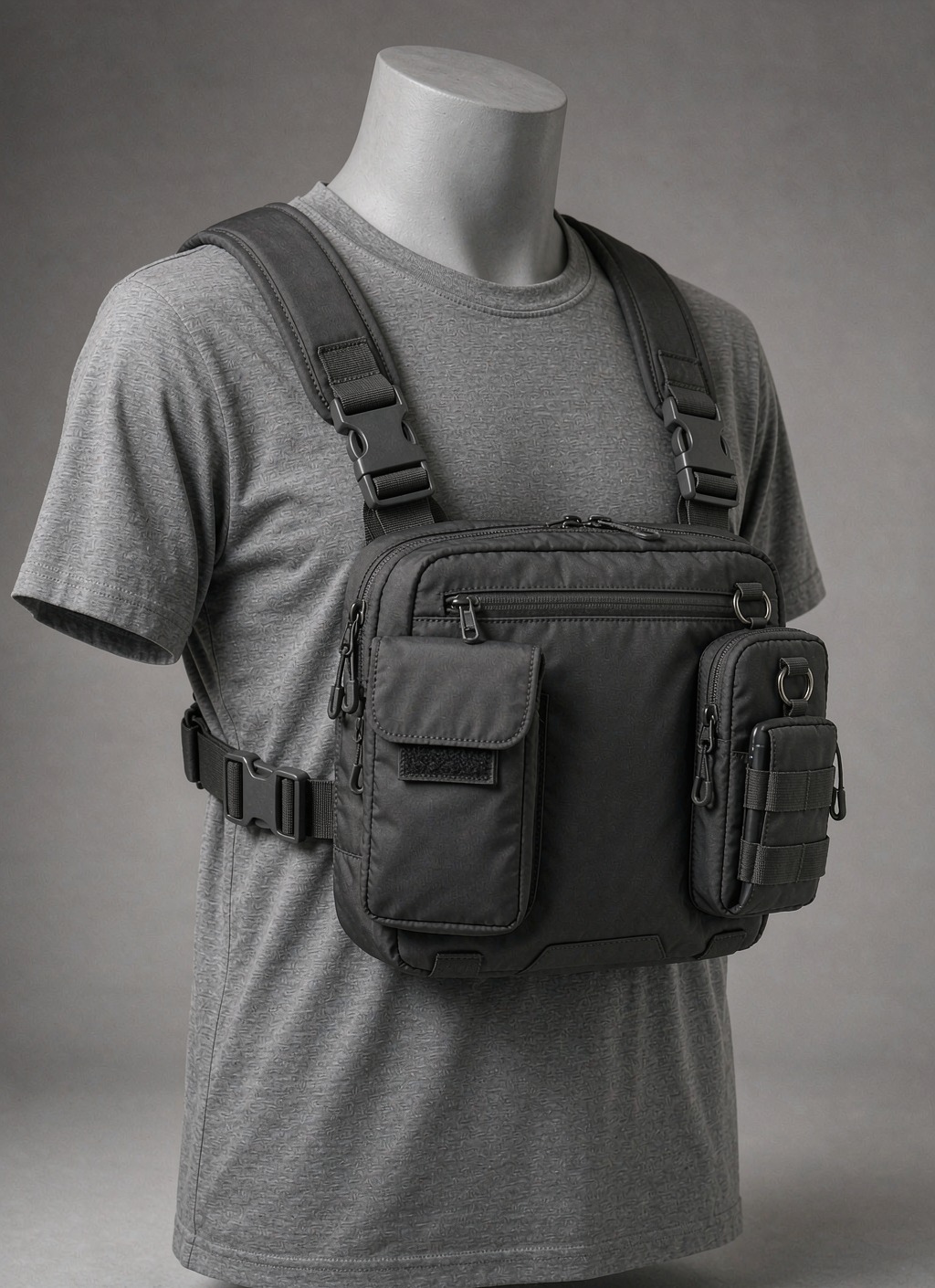
A pre-production sample is the first piece built from production tooling, production patterns and the confirmed component set, and signing it declares that the specification is frozen for the run that follows. Approval closes a prototype stage of 6-10 working days, extended to 12-15 on a demanding construction, and releases a bulk schedule of 35-50 days against a 500-unit floor per reference, with release under an AQL 2.5 attribute plan. Anything altered after the signature is a change request carrying its own cost and its own calendar rather than a continuation of sampling. These are indicative figures quoted FOB Xiamen and apply to civilian load-carriage goods; nothing here is legal advice.
What a Pre-Production Sample Is, and What It Is Not
The distinguishing feature of a pre-production piece is what it was made from. An earlier prototype may have been cut by hand, sewn on a general-purpose machine and assembled with whatever components were to hand. The approval piece is made from the production patterns, on the line that will run the order, with the components that will be bought for it. That difference is the entire point.
It is not, however, a statistical statement about the run. One piece tells a buyer that the specification can be built; it says nothing about how much variation will appear across 500 units. Uniformity is handled separately, at release, by attribute sampling against an AQL 2.5 plan drawn from ISO 2859-1. Approving one piece and assuming the run will match is the most common misreading of the process.
It is also not a durability result. A piece can be dimensionally perfect and still fail abrasion, seam strength or colour fastness later, because those are laboratory questions. Where the approval is meant to cover performance as well as appearance, the test reports have to be part of the approval pack rather than assumed from the look of the piece.
Finally, it is not a packing approval unless the packing is included. A carton, an inner arrangement and a marking schedule are separate artefacts, and a parcel sequence run to ISTA 3A is what qualifies them. Signing a bag without signing its packing leaves the most damage-prone part of the shipment unapproved.
Verdict: Treat the approval piece as evidence that the specification can be built from production tooling and components — not as evidence about run uniformity, laboratory performance or packing, all three of which need their own approvals.
Five Artefacts That Belong in the Approval Pack
An approval pack is a folder, not a photograph. The piece itself is the centre of it, but the piece alone cannot answer the questions that will be asked six months later, when somebody wants to know why a production unit differs from what was signed off. Five artefacts close that gap.
| Artefact | What it proves | Who signs it |
|---|---|---|
| Approval piece, retained | The specification can be built on the production line | Technical reviewer, countersigned by production engineering |
| Specification sheet with revision number | What was approved, in dimensions and materials | Technical reviewer on the buyer's side |
| Component schedule with part numbers | Which hardware, webbing, thread and closures were used | Production engineering |
| Test reports referenced by the pack | Performance claims were measured, not assumed | Laboratory or inspection function |
| Packing and marking schedule | Carton, inner arrangement and transit qualification | Logistics owner on the buyer's side |
The revision number is the field most often left blank and the one that decides later arguments. A specification sheet without a revision number cannot distinguish the version that was approved from the version that was built, and once bulk is cut there is no way back to the distinction.
Component part numbers deserve the same care. A schedule that says YKK #8 is incomplete without the slider type, the tape colour and the finish; a schedule that names the exact part number can be checked against what arrives.
Takeaway: Assemble the pack as five artefacts — retained piece, revision-numbered specification, part-numbered component schedule, referenced test reports and a packing schedule — because any one of the five being absent leaves a question that cannot be answered later.
Who Signs, and With What Authority
Signature authority is rarely written down and frequently assumed, which is why approvals get challenged after the fact. The useful way to allocate it is by consequence: whoever can absorb the consequence of a decision should sign that decision, and nobody should sign a class of change whose consequence they cannot carry.
| Role | What this signature covers | Where it stops | Escalation route |
|---|---|---|---|
| Technical reviewer, buyer's side | Dimensions, function, attachment fit, appearance | Cannot alter commercial terms or the schedule | Commercial owner where cost or date moves |
| Production engineering | Buildability, component availability, process settings | Cannot accept a deviation that alters the specification | Technical reviewer where the drawing changes |
| Commercial owner, buyer's side | Cost consequence and schedule consequence | Cannot approve a technical deviation alone | Both technical signatures where both move |
| Inspection function | Conformance of the piece to the stated plan | Cannot redefine the acceptance criteria | Technical reviewer where criteria change |
| Logistics owner | Carton, packing, marking and transit qualification | Cannot approve the product itself | Technical reviewer where the product changes |
One structural rule prevents most problems: no single signature covers a change that moves both the specification and the schedule. Those need the technical and the commercial signatures together, because each party is otherwise agreeing to something they cannot deliver alone.
Delegation should be written rather than assumed. A named deputy with the same authority keeps a programme moving when the principal is unavailable, and an unwritten delegation produces an approval that nobody will defend later.
Judgement: Allocate signature authority by consequence — technical signatures for specification, commercial signatures for cost and date, and both together where a change moves both — and record a named deputy for each role in the approval pack.
What the Signature Represents Once It Is Given
The signature does three things at once, and buyers usually intend only the first. It confirms the piece conforms to the stated specification. It freezes that specification for the run that follows. And it transfers the cost of subsequent change to whoever requests it. All three happen whether or not they were intended.
The freeze is the part with the longest reach. After approval, the specification is the reference against which the run is inspected and against which any claim is assessed. A buyer who approves a piece and then asks for a different pocket depth has not made a small request; they have requested a change against a frozen reference, and the change carries whatever it costs to make at that point in the calendar.
Cost transfer follows automatically and is the part most often disputed. If the production side builds to the approved specification and the buyer then wants something different, the cost of the difference belongs to the buyer. If the production side builds something other than the approved specification, the cost belongs to the production side. That allocation only works if the approved state is documented, which returns the argument to the pack.
The signature also does one thing it is often assumed to do but does not: it does not warrant the design. Approving a piece says the design was built as specified; it does not say the design is fit for a purpose the buyer never stated.
Spec rule: Record that the signature confirms conformance, freezes the specification and transfers the cost of later change to the requesting party, and state that it does not warrant fitness for a purpose not written into the specification.
PP Sample, Shipment Sample and Golden Reference Compared
Three kinds of sample appear in a bag programme and they are routinely confused, because all three are physical pieces of the same product. The differences are in when they are made, what question they answer, and what happens to them afterwards.
| Sample type | When it is produced | Question it answers and use afterwards |
|---|---|---|
| Pre-production approval piece | Before bulk, from production tooling and patterns | Can the specification be built? Retained as the approval reference |
| Shipment sample | Drawn from the finished bulk lot before dispatch | Does this lot match the approval? Used for claims and for the next repeat |
| Golden reference | Selected from an approved lot and sealed | What does approved look like? Held against future seasons and future lines |
| Revised approval piece | After an approved change, before the affected run | Does the change build correctly? Supersedes the earlier approval for that point |
| Counter sample | Produced by the buyer or a third party for comparison | Do both sides read the specification alike? Used to settle interpretation gaps |
| Retention piece | Kept from each lot for a stated period | What was shipped? Used where a claim arrives months later |
The retention piece is the one most programmes skip and the one that decides old claims. A lot kept for a stated period, stored with its lot number and dispatch date, answers questions that no photograph can answer once the goods have been in service for months.
The golden reference is the one most programmes lose. It should be sealed, dated, and stored somewhere with a named owner, because it is the only artefact that lets a future season be judged against what was actually approved rather than against memory.
Bottom line: Produce and keep all three — an approval piece before bulk, a shipment sample from each lot and a sealed golden reference — because each answers a different question and none of them substitutes for another.
What a Change Costs Once the Piece Is Signed
After sign-off, the cost of a change is set by where the order has reached rather than by how large the change is. The same alteration is cheap before cutting, expensive during assembly and close to impossible once goods are packed. That is the whole principle, and it is worth stating plainly because it is what the signature is really about.
Before material is bought, a change costs paperwork: a revised drawing, a revised schedule, possibly a fresh approval piece. During bulk it costs material and labour, because panels already cut cannot be un-cut and components already fitted cannot be recovered cleanly. After packing it costs the lot, since reworking packed goods means unpacking, remaking, repacking and re-inspecting.
Two classes survive sign-off better than the rest. A marking or labelling change is usually cheap at almost any point, because it touches the last operation rather than the structure. A packing change is cheap before booking and expensive after, for the same reason: it sits at the end.
Structural and material changes are the opposite. A different cloth after sign-off means re-qualification of the finish and possibly a fresh approval piece; a different hardware part means new components and a re-proven fixing method. Both land in the same place as a late revision — they consume the slot.
Selection rule: Price any post-approval change by the stage the order has reached — paperwork before material is bought, material and labour during assembly, the whole lot after packing — and push marking and packing changes as late as possible while pulling structural and material changes forward.
Countersigning, Retention Periods and the Record
A single-sided approval is a weak document. Countersigning — production engineering signing that the piece can be built at volume, alongside the buyer's technical reviewer signing that it is what was wanted — converts an opinion into an agreement and removes the most common later claim, which is that one side misunderstood the other.
Retention periods should be stated in the pack rather than left to habit. A sensible arrangement keeps the approval piece and a retention piece from each lot for a defined period after dispatch, long enough to cover the claim window in the destination market, with the storage location and the named owner recorded.
Storage conditions matter more than they appear to. A piece stored in direct light will fade, and a piece stored damp will mould, so a retention reference kept badly becomes evidence against whoever kept it. A dark, dry, sealed environment is not a luxury; it is what makes the reference usable.
One practical point closes the loop between approval and dispatch. The signature page should name the lot numbering scheme as well, so that a carton arriving months later can be traced back through the lot record to the approval piece and the retention piece held against it. Without that link the folder is a history rather than a control, and a claim arriving after several months in service cannot be assessed against anything.
Where several references share one approval pack — a size run, or a set of colourways on a common shell — the pack should say so explicitly and list the references it covers. A pack that silently covers more references than it names is the commonest source of dispute when one of them differs from the rest.
The record itself should be a single folder: approval pack, signature page with names and dates, deviation notes, retention schedule with storage location, and the lot record linking each shipment back to the approval it was built against. One folder per reference, held by a named owner on each side.
Countersign every approval with production engineering, state the retention period and the storage conditions inside the pack, and keep one folder per reference linking each lot back to the approval it was built against.
Programme Gates, Documents and the Approval Calendar
Vetted partner facilities provide 4,950 m² of SGS-verified floor holding 149 machines spread over 7 production lines, worked by 137 people at 200,000 units per month. Bag production experience in the organisation goes back to 2004 and the business was established in 2014. Quotations are returned in 24-48 hours. An approval piece takes 6-10 working days, or 12-15 for a demanding construction, and the run it releases occupies 35-50 days from a minimum of 500 units per reference. Final release is an AQL 2.5 attribute check — nil critical, 2.5 major, 4.0 minor — under ISO 2859-1 general inspection level II, sold FOB Xiamen against T/T 30/70, and then allow 25-35 days for sea, 5-8 for air and 3-5 for courier.
Approval sits at a specific point in that calendar and the position matters. Signing early preserves the bulk slot but approves a less mature piece; signing late protects the specification but risks the booking. The practical compromise is to approve the structural and dimensional content early and leave cosmetic and marking content open for a short, stated window afterwards.
Where a construction carries an attachment grid, the approval should reference the interface dimensions explicitly rather than by photograph. A grid with stated spacing and stated webbing width can be checked on a production piece; a grid approved from a photograph cannot be checked at all.
Approval connects to the rest of the programme: tooling release is described in the tooling and screen charge guide, the component schedule draws on the tactical backpack platform where load carriage is in scope, the sequence is scheduled through the approval and inspection services desk, and the custom modular backpack route sets the gate list. Company background sits on the about page.
Signing structural and dimensional content early while holding cosmetic and marking content open for a short stated window protects the bulk booking without leaving the specification immature.
Frequently asked questions
What is a pre-production sample in bag production?
It is the first piece built from production patterns, on the production line, with the components bought for the order. It proves the specification can be built at volume. It does not prove run uniformity, which is handled at release under an AQL 2.5 plan.
What does signing a PP sample actually commit a buyer to?
Three things: the piece conforms, the specification is frozen for the following run, and the cost of later change moves to whoever requests it. It does not warrant fitness for a purpose never written into the specification.
Who should sign the pre-production approval?
The buyer's technical reviewer for dimensions and function, countersigned by production engineering for buildability. Where a change moves cost or date, the commercial owner signs as well. Record a named deputy for each role.
How long does it take to produce an approval piece?
6-10 working days for a standard construction and 12-15 for a demanding one, with the quotation returned in 24-48 hours. The run it then releases occupies 35-50 days from a minimum of 500 units per reference.
Is a PP sample the same as a golden sample?
No. The approval piece is made before bulk and answers whether the specification can be built. A golden reference is sealed from an approved lot and is held to judge later seasons. Both should be kept.
What documents belong in an approval pack?
Five: the retained piece, a specification sheet carrying a revision number, a component schedule with part numbers, referenced test reports, and a packing schedule. A missing revision number makes later arguments unanswerable.
What happens if a change is requested after sign-off?
Cost follows the stage reached. Before material is bought it is paperwork; during assembly it is material and labour; after packing it is the lot. Labelling changes stay cheap late; structural and material changes do not.
Should the packing be approved separately from the bag?
Yes. Carton, inner arrangement and marking are separate artefacts, and transit qualification to ISTA 3A belongs to them. Signing a bag without its packing leaves the most damage-prone part of the shipment unapproved.
How does AQL 2.5 relate to the approval piece?
The approval proves one piece can be built; AQL 2.5 governs the release of the run. Inspection is drawn from ISO 2859-1 with critical nil, major 2.5 and minor 4.0, applied after the 35-50 day production window.
How long should an approval piece be retained?
For a stated period after dispatch, long enough to cover the claim window in the destination market. Store it dark, dry and sealed, since a faded or mouldy reference becomes evidence against whoever kept it.
Can an approval be given by email?
Only if the email names the revision number, the piece, the date and the signatory. A bare approval with no revision reference cannot distinguish the version approved from the version built once bulk is cut.
Does approval cover laboratory performance?
Only where the test reports are part of the pack. A piece can be dimensionally correct and still fail abrasion, seam strength or colour fastness, because those are laboratory questions rather than visual ones.
What is a counter sample and when is it useful?
A piece produced by the buyer or a third party for comparison. It is useful where the two sides may be reading the specification differently, since it settles interpretation gaps before bulk rather than after.
Should approval wait until every cosmetic detail is settled?
No. Approve structural and dimensional content early to protect the bulk booking, then hold cosmetic and marking content open for a short stated window. Signing everything late risks the 35-50 day slot.