Home › Field notes › Sampling Fee and Refund Terms: What Is Charged and How Credit Returns
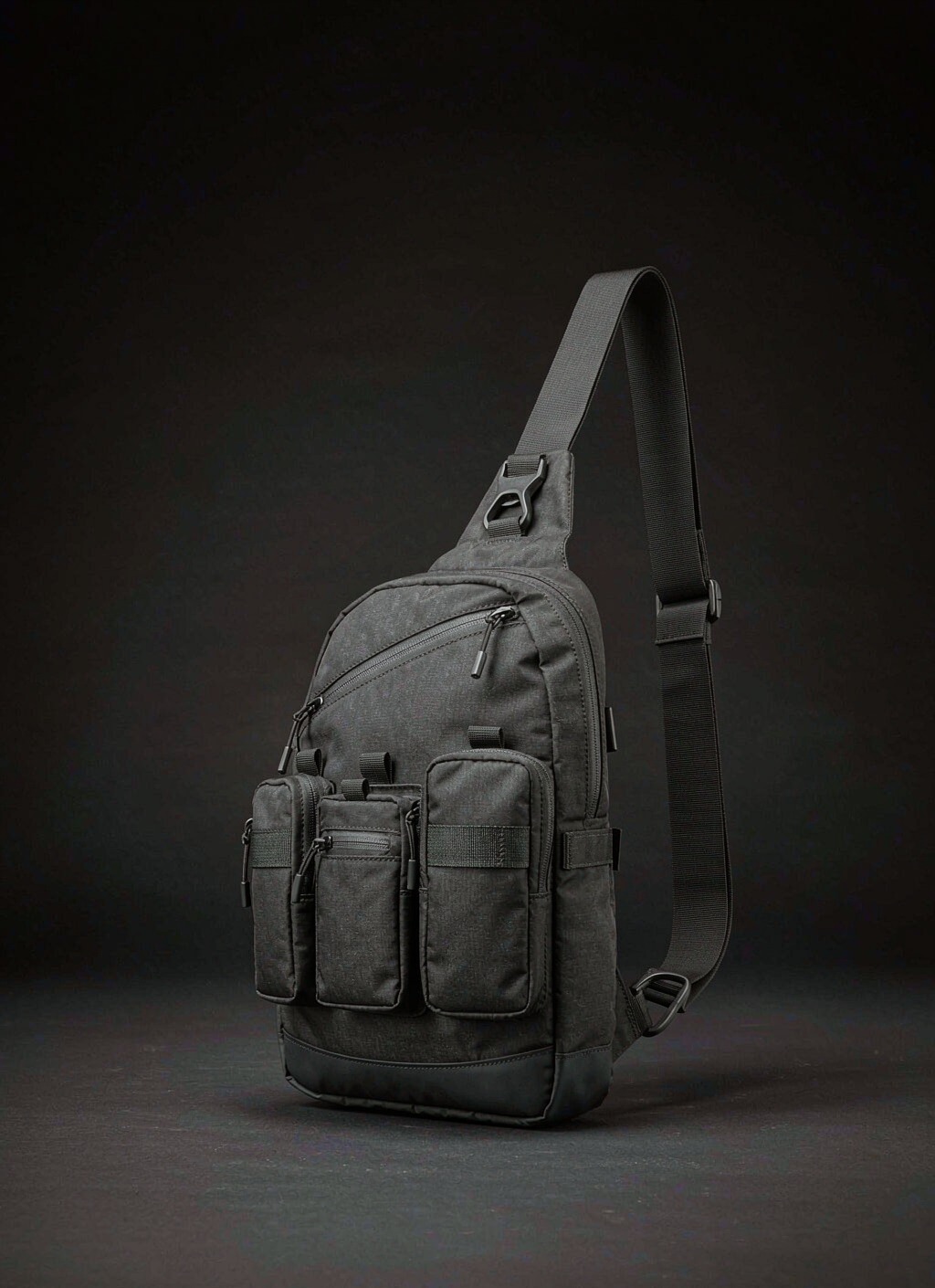
A sampling fee is charged because one prototype costs more to build than one unit inside a bulk run: patterns are cut by hand, a line is interrupted for a single piece, materials arrive in sample lengths and the finished item is packed and shipped alone. The indicative fee is USD 50-150 per reference and returns to the buyer as credit once an order is placed, while one-off tooling sits on a separate line at USD 300-2,500 and is treated as a capital item rather than a deposit. A production order starts at 500 units per reference, a first piece is completed within 6-10 working days, or within 12-15 where the construction is involved, and the volume run then occupies 35-50 days. These are indicative figures quoted FOB Xiamen and this page is general trade information, not legal advice.
Why One Prototype Costs More Than One Unit in a Bulk Run
Bulk economics come from repetition. A cutting table lays a marker across many plies at once, an operator sews the same seam hundreds of times, and material arrives on a roll bought at length. None of that applies to a single piece. One prototype needs its own marker, its own setup, an operator pulled off repetitive work, and components sourced in ones and twos rather than in production bags.
The line interruption is the part buyers underestimate. A production line is balanced around repeated operations with jigs in place and settings fixed. Building one unusual piece on it means changing settings, making a jig or doing without one, and then changing back — and the cost of that disruption belongs to the single piece, not to a run of 500.
Material is the third element and the one that surprises people, because sample quantities cannot be bought at production prices. A cloth supplier sells a roll, not a metre, and a hardware supplier sells bags of 1,000 rather than a handful. Buying small quantities at a premium, and paying freight on them, is a real cost that has to be recovered somewhere.
Shipment is the last element and it is not trivial. One packed carton moving by courier costs a meaningful share of the fee on its own, and the packing time around it is skilled labour. A fee of USD 50-150 per reference is therefore not a margin line; it is a partial recovery of four identifiable costs.
Selection rule: Judge a sampling fee by whether it recovers setup, short-length material, line disruption and courier shipment, and treat any figure far below USD 50-150 with caution, because the shortfall is usually recovered later in unit price.
Refund, Credit or Forfeit: Three Settlement Models Compared
Three settlement models appear in quotations and the word refundable is applied to all of them, which is where trouble starts. Under a refund model the fee is paid back in cash once the order reaches the agreed floor. Under a credit model it is deducted from the bulk invoice, which is commoner because it avoids a separate transfer and keeps the accounting inside one order. Under a forfeit model it is retained when no order follows, or when the order lands below the trigger quantity.
The models are not equivalent in cash terms. A cash refund returns money the buyer has already paid but leaves the bulk invoice at full value; a credit reduces the bulk invoice but leaves the buyer out of pocket until that invoice is raised. Over a programme with several references sampled, the difference in working capital is not trivial even though the nominal figure is the same.
| Decision criterion | Refunded in cash on order | Credited against the bulk invoice | Forfeited where no order follows |
|---|---|---|---|
| Mechanism | Separate transfer back to the buyer after the order is confirmed | Deducted from the amount due on the bulk run | Retained against work already performed |
| Cash effect | Buyer recovers the money early, bulk invoice stays at full value | Recovery happens later, when the bulk invoice is raised | No recovery; fee covers the prototype work done |
| Documentation required | Sample reference number, order number, bank details on file | Credit note referencing the sample and the order | Written statement of the trigger condition and its expiry |
| Typical trigger | Order at or above the 500-piece floor | First bulk order for the same reference | No order within a stated period from approval |
| Where it suits | Programmes with few references and simple accounting | Most standing programmes with repeat orders | Exploratory sampling with no committed volume |
| Common failure | Refund issued against the wrong reference | Credit applied to deposit instead of balance | Trigger period never stated, so the fee sits unresolved |
The last row is the useful one. Each model has a characteristic failure, and every one of those failures is prevented by naming three things in writing: the trigger quantity, the document the credit lands on, and the period within which it must be used.
Verdict: Choose the credit model for standing programmes and the refund model where accounting must stay separate, but in both cases name the trigger quantity, the target document and the validity period, since an unstated period leaves the fee in limbo indefinitely.
What the Fee Covers, and What Arrives on a Separate Line
Arguments about sampling fees are usually arguments about scope. The fee is quoted for building and shipping one piece of one reference in an agreed specification, at USD 50-150. It is not a general-purpose payment that entitles the buyer to unlimited iterations, extra colourways or additional sizes, and a quotation that does not say so invites the misunderstanding.
Four categories reliably fall outside the fee and are billed on their own lines. One-off tooling, at USD 300-2,500, because it produces a durable asset. Additional revision rounds beyond the number agreed. Extra colourways, since each is effectively another sample with its own material buy. And freight above the standard courier allowance, where a buyer asks for express delivery rather than the routine service.
| Cost item | Inside or outside the fee | Why it is treated that way |
|---|---|---|
| Marker and pattern preparation for one piece | Inside | Direct cost of building the first item |
| Line setup and operator time for the build | Inside | The disruption the fee exists to recover |
| Short-length material and component purchase | Inside | Sample quantities cannot be bought at roll prices |
| Routine courier packing and dispatch | Inside | Standard service, booked on the quoted schedule |
| Moulds, dies, plates and screens | Outside | Produces a durable asset; quoted USD 300-2,500 |
| Second and later revision rounds | Outside | Each is a fresh build with fresh material |
| Additional colourways of the same reference | Outside | Each carries its own material buy and setup |
| Express freight requested by the buyer | Outside | Upgrade over the routine service already included |
Reading the table before signing is cheaper than reading it afterwards. A buyer who knows that a second colourway is a separate sample budgets for it; one who assumes the fee covers the whole sampling phase discovers the difference when the second invoice arrives.
Judgement: Treat the fee as covering one piece of one reference in one specification and one colourway, and price every revision, extra colourway and hard tool as its own line before the sample order is raised.
How the Credit Lands on a Bulk Order Under T/T 30/70
Payment structure decides where a credit can sit. Under T/T 30/70, a 30% deposit is transferred to release material purchase and production planning, and the remaining 70% is settled before shipment. The deposit is calculated against the material bill it has to cover, which is why it is the wrong place to apply a sampling credit.
Applying the credit to the balance is the workable arrangement for three reasons. The deposit keeps its full value for the material booking, the credit is visible on the document the buyer checks before shipment, and any disagreement about the credit can be resolved before the goods leave rather than after. It also matches the sequence: samples precede the order, so the credit belongs to the later payment.
Sequencing inside the calendar matters as much as placement. A sample is built in 6-10 working days, or 12-15 where the build is involved; the order at the 500-piece floor follows; bulk then takes 35-50 days; and release is by attribute inspection at AQL 2.5 — critical findings nil, major up to 2.5 and minor up to 4.0 — sampled under the plan in ISO 2859-1 at level II. A credit raised before the balance document is prepared will simply appear on it.
Where several references are sampled in one programme, allocate credit per reference rather than in a lump. A single pooled figure is easy to dispute at reconciliation, because nobody can tell which sample earned which part of it, and by then the sample records are months old.
Finally, state the currency and the exchange basis. Credits crossing currencies are where small nominal figures turn into real arguments, and a clause that fixes the conversion date removes the question entirely.
Settlement rule: Apply the sampling credit to the 70% balance rather than the 30% deposit, allocate it per reference, and fix the conversion date on any cross-currency credit, because the deposit exists to fund the material buy.
Five Dispute Points That Decide Most Sampling-Fee Arguments
Almost every disagreement about a sampling fee traces back to one of five unresolved points, and all five are preventable with a sentence in the quotation. None of them is technical; they are all about what the words meant when the money changed hands.
The first is the trigger quantity. A fee described as refundable on order without a number leaves open whether one piece, 500 pieces or a container triggers it. The second is the form — cash back or invoice credit — which changes working capital without changing the nominal figure. The third is the validity period: a credit with no expiry can be claimed years later against a reference that has been through several revisions.
The fourth is scope creep. A buyer who treats the fee as covering the whole sampling phase will ask for revisions, colourways and sizes that the fee was never priced to carry, and will feel cheated when each is billed. The fifth is reference identity: the credit belongs to a specific sample of a specific reference, and programmes with near-identical references lose track of which sample earned what.
The remedy for all five is one short clause in the sample order: fee amount, trigger quantity, settlement form, validity period, and the reference number the credit attaches to. Five fields, one line each, written before the sample is built rather than negotiated after the bulk invoice is raised.
Bottom line: Write fee amount, trigger quantity, settlement form, validity period and reference number into the sample order before the build starts, because every common sampling-fee dispute is a missing field rather than a disagreement about the work.
When a Second Fee Appears: Revisions, Colourways and Size Runs
A second sampling fee is not a penalty; it is a second build. Each additional piece has its own marker, its own setup, its own short-length material buy and its own shipment, so the cost structure of the first sample repeats almost exactly. Where a programme asks for a revision, an extra colourway or an extra size, it is asking for that structure again.
Revisions are the most frequent trigger and the most defensible, provided the round structure was agreed. A first build establishes whether the specification is right; a round after that usually reflects a changed decision rather than a build error, and charging for it is what keeps revision decisions deliberate. Programmes where revision is free are programmes where revision never stops.
Colourways behave like separate samples for a reason that is easy to see on the floor: a different ground colour means a different cloth buy, a different thread match and often a different print qualification. Where a programme needs several colourways, the economical route is to sample one and approve the others against lab dips and printed swatches rather than building a full piece in each.
Size runs are the awkward case. A second size usually shares the tooling and the component set, so the marginal cost is lower than a full fresh sample — but it is not zero, because patterns, markers and setup all repeat. Agreeing a reduced figure for additional sizes before the first build avoids the argument entirely.
Takeaway: Expect a further fee on each revision round, each extra colourway and each additional size, and agree the reduced figure for size extensions up front, because every one of them repeats the setup, material and shipment costs of the first piece.
Writing the Clause So Both Sides Read It the Same Way
Clause drafting for sampling fees is unglamorous and decisive. The same intention written two ways produces two different outcomes months later, and the difference is almost always specificity: a clause with numbers in it is enforceable in practice, while one with intentions in it is negotiable whenever anyone chooses to reopen it.
| Clause element | Wording that fails | Wording that survives review |
|---|---|---|
| Trigger | Refundable on order | Credit applies on the first bulk order at or above 500 pieces for this reference |
| Settlement form | Will be returned | Deducted from the 70% balance payment on that order |
| Validity | No expiry stated | Claimable within twelve months of sample dispatch |
| Scope | Covers sampling | Covers one piece, one colourway, one revision round |
| Reference identity | Against future orders | Against the bulk order carrying sample reference number X |
| Exclusions | Silence | Excludes tooling, extra colourways and requested express freight |
Two additions close the remaining gaps. Name the currency and conversion date on any cross-currency credit, and state what happens if the reference is revised after approval — whether the credit carries to the revision or dies with the earlier sample. Both are one-line clauses and both are routinely omitted.
Where the sample is evaluated against a defined test — a seam strength figure, for instance, run to ASTM D5034 — record the result on the sample record as well, so an approval is evidenced by measurement rather than by opinion.
Write the clause with a trigger quantity, a settlement document, a validity period, a scope statement and a reference number into the sample order, because each missing field converts a settled commercial term into a renegotiation later.
Gates, Records and the Production Facts Behind the Fee
The SGS-verified production base we work with holds 4,950 m² of floor carrying 149 machines laid out over 7 production lines, with 137 people on the payroll and capacity of 200,000 units each month. Experience of bag production there reaches back to 2004 and the business was established in 2014. Quotations are returned within 24-48 hours. A prototype piece leaves the floor in 6-10 working days on standard constructions and in 12-15 on involved ones, and the volume order is then completed over 35-50 days from a floor of 500 units per reference. Clearance uses an attribute plan of AQL 2.5 — critical must be nil, major limited to 2.5 and minor limited to 4.0 — taken from ISO 2859-1 at inspection level II, with sale FOB Xiamen on T/T 30/70 and carriage of 25-35 days on the water, 5-8 by air and 3-5 by courier.
The file for one sampled reference should hold the sample order with its fee clause, the dispatch record with date, the evaluation notes against the specification, the approval or rejection decision with the date, and the credit record once an order follows. Five documents, and the last one is the only one most programmes lose.
Timing the credit claim is worth a sentence. Because bulk takes 35-50 days and the balance falls due before shipment, the credit should be raised when the bulk order is confirmed rather than when the goods are ready — otherwise it meets a document that has already been prepared and signed.
Sampling sits inside the wider programme: the custom modular backpack route sets the reference structure, a modular work backpack build carries its own component set, and the sequence is scheduled through the prototype and inspection services team. Fee wording for a particular reference is best settled at the enquiry desk before the sample order is raised.
Holding five documents per sampled reference — order with clause, dispatch record, evaluation notes, approval decision and credit record — and claiming the credit at order confirmation rather than at shipment readiness keeps the refund terms auditable.
Frequently asked questions
Why is a sampling fee charged at all for one bag?
One prototype needs its own marker, its own setup, an operator pulled off repetitive work and material bought in short lengths. A line balanced for a 500-piece run is disrupted for a single piece. The indicative USD 50-150 recovers part of that, not a margin line.
Is the sampling fee refundable when an order is placed?
Yes, in the usual arrangement it returns as credit once an order reaches the trigger quantity. The fee is USD 50-150 per reference. Confirm whether it comes back in cash or is deducted from the bulk invoice, because those differ in working capital.
What quantity triggers the sampling fee credit?
The trigger should be stated in the sample order; the common figure is the 500-piece floor for that reference. Without a stated number, refundable on order is unenforceable in practice. Also fix the validity period and the reference number.
How is the credit applied under T/T 30/70 payment terms?
Against the 70% balance rather than the 30% deposit. The deposit is calculated to cover material booking, so reducing it leaves that booking short. The credit also lands on the document checked before shipment, which is the natural place for it.
Does the sampling fee cover tooling as well?
No. Tooling is a separate line at USD 300-2,500 and buys a durable asset — a mould, die, plate or screen — that remains after the sample ships. The fee covers building and shipping one piece; the tool outlives it.
When does a second sampling fee become payable?
On each revision round beyond the agreed number, each additional colourway and each extra size, because every one repeats setup, short-length material purchase and courier dispatch. Agree the reduced figure for size extensions before the first build.
How long does a sampling credit remain valid?
Whatever the clause says, and it should say something. A period of twelve months from sample dispatch is a workable default. With no expiry stated, a credit can be claimed years later against a reference that has since been revised several times.
Can a brand get the fee back if no order is placed?
Usually not. Where no order follows, the fee is retained against work performed: setup, material and shipment have already been paid out. The forfeit model should be stated in the sample order so it is not discovered afterwards.
Should extra colourways be sampled as full pieces?
Rarely. One full piece plus lab dips and printed swatches for the remaining colours is cheaper and faster. Each full extra colourway repeats the cloth buy, thread match and print qualification of the first build.
What records should be kept for each sampled reference?
Five: the sample order carrying the fee clause, the dispatch record with date, evaluation notes against the specification, the approval or rejection decision dated, and the credit record once an order follows. The credit record is the one most often lost.
How long does a prototype build take before the fee applies?
Standard constructions take 6-10 working days and involved ones 12-15, with a quotation returned in 24-48 hours. The fee is quoted per reference when the sample order is raised, before the build starts, not after it is dispatched.
Does the sampling fee include courier shipment?
Routine courier packing and dispatch sit inside it. A buyer-requested express upgrade does not. Where shipment cost matters, state the service level in the sample order so the difference is visible rather than discovered on the invoice.
How does sampling connect to AQL 2.5 release inspection?
Sampling proves the specification; release under AQL 2.5 proves the run conforms to it. Clearance sampling draws on ISO 2859-1 at inspection level II with critical defects nil, major held to 2.5 and minor to 4.0, applied once the 35-50 day production window closes.
What happens to the credit if the reference is revised?
That should be stated in the clause. Either the credit carries to the revised reference or it dies with the earlier sample. Programmes with near-identical references lose track of this, so the sample reference number must appear on the credit.