Home › Field notes › Specification Sheet Template for Bags: Every Field Group Explained
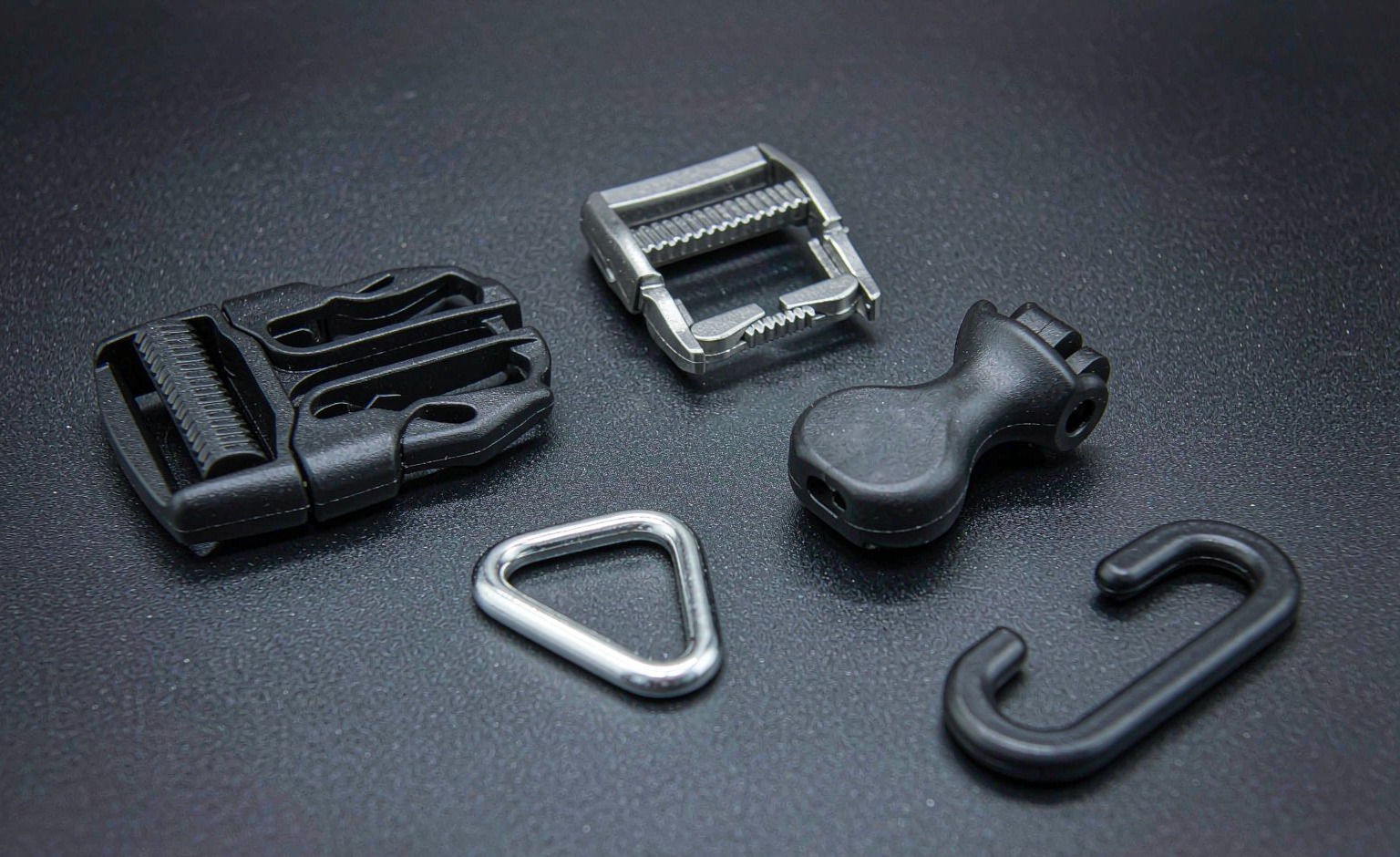
A specification sheet for bags is a field register that records material, coating, mass per unit area, webbing, hardware, sewing construction, tolerance, test method and packing data in one document, so a production partner can quote and build without asking a question. It is the numeric layer beneath the drawing: the drawing carries shape, the sheet carries substance. Programmes quoting from a finished sheet receive a figure in 24-48 hours, sample inside 6-10 working days and complete volume in 35-50 days at a 500-unit floor per reference, released at AQL 2.5. The format covers civilian carry goods — hiking packs, commuter bags, worksite tool carriers and first-aid kits. Weapon carriage, ballistic protection and military certification claims are outside it.
What a Bag Specification Sheet Is For, and What It Is Not
A specification sheet is the numeric layer beneath a drawing. The drawing carries shape: where a panel starts, how a lid closes, what the silhouette measures. The sheet carries substance: what the panel is made of, how thick the coating sits, what the webbing will hold, and how far any of it may drift before a unit is rejected. Neither document works on its own.
It is not a costing sheet and it is not a compliance certificate. A costing sheet turns the specification into money; a certificate reports what a laboratory found on one particular day. The sheet simply states what the product is, in figures, in a form that two parties can both check.
The common failure is not a missing group but a soft entry. Durable, heavy duty and water resistant appear where a method and an acceptance figure belong. An adjective cannot be measured, so it cannot be rejected, and a spec that cannot be rejected is only decoration.
Nine field groups carry a bag from cloth through to carton. The register below sets out what goes into each and how the entry is recorded.
| Field group | Entry required | Recording format |
|---|---|---|
| Base fabric | Fibre, denier, weave, finish | Text plus denier, e.g. 500D polyester plain weave |
| Coating | Polymer, application method, add-on | Text plus grams per square metre |
| Mass per area | Finished cloth mass including coating | Grams per square metre plus fabric width |
| Webbing and tape | Width, thickness, fibre, break strength | Millimetres plus newtons |
| Hardware | Material, finish, size, cycle expectation | Code plus supplier or performance line |
| Sewing | Thread ticket, needle, seam type, stitch count | Ticket number plus stitches per inch |
| Tolerance | Allowed deviation per feature | Millimetres, stated as plus or minus |
| Testing | Method and acceptance figure | Standard number plus numeric limit |
| Packing | Polybag, carton, count, pallet | Millimetres plus pieces per carton |
Pick one unit system per sheet and hold to it. Mixing inches with millimetres inside a single document is the fastest route to a cutting error, because the reader eventually stops checking which one applies.
Bottom line: Replace every adjective on a bag specification sheet with a method and an acceptance figure, because a word such as durable cannot be measured at goods-in while a figure can be checked against AQL 2.5 inspection.
Field Group One: Base Fabric, Coating and Mass per Unit Area
Fibre, denier and weave come first, in that order. Polyester and nylon diverge in abrasion resistance and in how they weather sunlight, and a denier figure quoted without a weave type still describes two quite different cloths. Recording 500D polyester in plain weave tells a buyer something useful; recording polyester alone tells them very little.
Coating deserves its own line rather than a suffix. Name the polymer, the application method and the add-on in grams per square metre. A cloth carrying a heavy polyurethane add-on behaves differently in abrasion, in water and under a needle from the same base cloth carrying a light one, and that difference does not show up in a swatch photograph.
Mass per unit area, in grams per square metre, is the figure that ties cloth to cost, to hand feel and to how a panel drapes. It is measured on the finished cloth with the coating included, and the fabric width belongs beside it, because consumption is calculated from the two together.
Those three entries then anchor the test lines on the same sheet. Abrasion resistance of the finished cloth is commonly run to ASTM D3884, and coating behaviour to ASTM D751. Keeping the method next to the material means the two get read together, which is the only way a substitute gets caught.
Verdict: Give coating its own line with polymer, method and add-on in grams per square metre, because a base fabric described without its coating hides the property that decides abrasion, water behaviour and how the panel sews.
Field Group Two: Webbing, Tape, Binding and Edge Finishing
Webbing is specified by width, thickness, fibre and break strength. Width is the figure everybody records; thickness is the one that decides whether a strap feeds through a ladder lock; break strength is the one that decides what happens when a load shifts sideways.
Polyester webbing and nylon webbing differ in stretch, in ultraviolet behaviour and in how they take a dye lot. Naming the fibre blocks the quietest substitution on the whole sheet, because the two are indistinguishable on a shelf and behave differently in the field.
Binding tape needs a line of its own: width, construction, and whether it is applied straight or on the bias. Edge finishing — bound, turned or overlocked — changes both the appearance and the labour in a panel, and it should be named rather than left to the sewing floor to decide.
On a modular pack this group governs whether anything else mounts at all. Publicly documented geometry for PALS-style fields calls for 25 mm tape, rows spaced 38 mm centre to centre, and a repeat every 50 mm across the panel; recording the tape without those figures leaves the attachment field undefined even though the webbing line looks complete.
Takeaway: Record webbing as width, thickness, fibre and break strength plus the field geometry of 25 mm tape at 38 mm row centres, because a tape entry without geometry leaves a modular field undefined and modules will not mount consistently.
Field Group Three: Hardware: Material, Finish and Performance Data
Hardware is where a sheet either protects a programme or exposes it. The minimum entry is material, finish, size, colour and supplier. The entry that actually protects the programme is a performance line: what the part has to do, stated as a figure.
| Read on | Nominal wording | Brand and part code | Performance line |
|---|---|---|---|
| Substitution control | None | Locked to one source | Open, but testable |
| Quote accuracy | Estimator guesses | Exact, often higher | Exact, often lower |
| Verification at goods-in | Impossible | By label | By test |
| Effort to write | Minimal | Low | Moderate |
| Best used when | Early concept only | Retailer requires the brand | Programme will repeat |
The middle column is not wrong. Where a retailer requires a named component, the brand and part code is the correct entry, and the only sensible note is that no equivalent is accepted. What matters is writing that down, because an unstated brand forces an estimator to assume the most expensive reading.
For plated or bare metal, attach a corrosion method — ASTM B117 salt spray with the exposure hours stated — so the plater has a target and quality has something to check against.
Zippers close with a named chain size, #5, #8 or #10 in the YKK range, plus slider type and tape colour. Chain size governs what a closure does once the pack is filled and the tape is pulled sideways, and it is the field most often reduced to a brand name and nothing else.
Judgement: Record hardware as a performance line with a cycle figure and a test method rather than a nominal description, because only a figure lets an alternative supplier be approved without changing the specification.
Field Group Four: Sewing Construction: Thread, Seam Type and Stitch Count
Four entries belong together: thread ticket, needle size, seam type and stitch count per inch. They interact, which is why they sit in one group. A heavy ticket driven through a small needle shreds the thread; a fine ticket sewn at too low a count produces a seam that looks correct and opens under load.
Stitch count is the figure most often left out. Structural seams on packs commonly sit somewhere between 6 and 8 per inch, but the point is not which number is chosen — it is that a number is written at all, because visual inspection cannot distinguish six from nine.
Bar-tacks close the load path. The sheet should state length, width, stitch pattern and how many sit at each webbing termination. Where a work or tool module carries real weight, the tack is the component under test rather than the cloth around it.
Seam type then decides how the panel behaves at its edge and how much labour it absorbs. A bound seam, a turned seam and an overlocked seam are not interchangeable, and a drawing rarely says which one was intended.
Spec rule: Write thread ticket, needle size, seam type and stitch count per inch on every sewing line, because a seam sewn at the wrong count clears a visual check and only gives way once the pack is loaded.
Field Group Five: Dimensional Tolerances and How to State Them
A tolerance is a promise about variation, and it belongs on the sheet per feature rather than once for the whole product. A single blanket figure is either too tight for a panel or too loose for a grid pitch, and in practice it manages to be both.
| Feature | Recorded band | Consequence when exceeded |
|---|---|---|
| Cut panel | Plus or minus 3 mm | Panels do not close square |
| Finished external size | Plus or minus 5 mm | Two units from one lot look different |
| Webbing placement | Plus or minus 1.5 mm | Strap sits off centre |
| Grid pitch | Plus or minus 1 mm | Modules stop mounting after several rows |
| Logo position | Plus or minus 2 mm | Brand review rejects the lot |
| Carton dimension | Plus or minus 5 mm | Container plan does not reconcile |
Grid pitch earns a tighter band than anything else on the sheet, and the reason is cumulative error. A tape run placed within 1 mm on each row can still drift across eight rows where every row is set out from the row above it, so the sheet has to say that pitch is taken from one fixed origin.
Tolerances also settle arguments. Without a recorded band, a goods-in dispute turns into a discussion about what is reasonable, and that is a discussion nobody wins and everybody pays for.
Selection rule: State tolerance per feature with grid pitch at plus or minus 1 mm measured from a fixed datum, because a single blanket band is simultaneously too tight for panels and too loose to keep modules mounting.
Field Group Six: Test Methods and Acceptance Criteria
Three columns: property, method, acceptance figure. Drop any one of the three and the resulting report cannot be used, and the one that goes missing is almost always the acceptance figure — laboratories are asked for data when what the brand needed was a pass or fail.
Abrasion resistance of the finished cloth runs to ASTM D3884, coating behaviour to ASTM D751, and colour change after domestic washing to ISO 6330. Each of those is a method rather than a claim, and none of them has anything to say about a marketing word printed on a hangtag.
The sampling plan sits in this group too. Attribute inspection under ISO 2859-1 at level II, with critical defects at zero and an accept limit of AQL 2.5, is the arrangement most programmes settle on, and writing it on the sheet means the cost is included rather than surfacing at goods-in.
One further line prevents the most predictable dispute in the calendar: which party funds the testing and inspection work, and whether the reports need to carry the letterhead of a named laboratory. Both are cheap to state and expensive to argue about.
Field Group Seven: Packing, Marking and Carton Data
Packing closes the sheet: polybag thickness and print, carton dimensions in millimetres, carton count, tare and loaded weight, and the pallet layout with its layer count. None of it is difficult and all of it is needed at booking, which is usually the point at which somebody notices it was never written down.
Carton cube decides container count. A 20GP carries around 28 CBM and a 40HQ around 68 CBM, so a carton dimension left blank until the week of booking usually costs more than the fabric decision that occupied several meetings.
Marking — carton marks, side marks, handling icons — should be drawn rather than described in prose. The warehouse reads marks, not paragraphs.
Programme work is coordinated through our SGS-verified production base, a 4,950 m² floor where 7 production lines and 149 machines are staffed by 137 people and monthly output is rated at 200,000 units. The founder entered bag production in 2004 and the business was set up in 2014. Sheets move from sampling to PP sample to AQL 2.5 inspection to shipment.
Specification Sheet Formats Compared: One Page, Multi-Page and Record System
Three formats are in general use, and the right one depends less on the complexity of a single bag than on how many references share components. Sharing is what breaks a format.
| Considered on | Single-page summary | Multi-page sheet set | Record system |
|---|---|---|---|
| Main audience | Sales and buying | Production and quality | Programme team |
| Upkeep burden | Low | Moderate | High initially, low later |
| Shared component control | None | Weak | Strong |
| Characteristic failure | Fields dropped for space | Two sheets disagree | Nobody maintains the data |
| Best used for | A single pouch | One pack with few variants | Modular programme with colourways |
A single page suits a pouch and fails the moment two references share a webbing or a buckle, because the shared entry then has to be corrected in two places and will be corrected in one.
A record system costs the most to establish and is the only one that handles a modular programme properly. Modules, host bags and colourways all draw on the same component list, and a revision applied in the record reaches every reference at once instead of waiting for someone to remember which sheets mentioned it.
Whichever format is chosen, the test is the same: can a reader find one field group, check the unit it is recorded in, and see when it last changed. Where the answer is no, a custom modular backpack programme will eventually pay for it in sample rounds.
Frequently asked questions
What fields does a bag specification sheet need?
Nine groups: base fabric, coating, mass per unit area, webbing and tape, hardware, sewing construction, dimensional tolerance, test method, and packing data. Each entry carries a unit. A finished sheet supports a quote in 24-48 hours and a sample in 6-10 working days.
- Figures, not adjectives
- One unit system per sheet
- Tolerance stated per feature
How is mass per unit area recorded on a bag spec sheet?
In grams per square metre, measured on the finished cloth with the coating included, and shown next to the fabric width. Recording the base cloth without its coating add-on is the common error. Mass and width together drive consumption, and bulk then runs 35-50 days.
Should coating be listed separately from the base fabric?
Yes. Name the polymer, the application method and the add-on in grams per square metre. A coated cloth differs from the same cloth uncoated in abrasion, in water behaviour and under a needle, so listing fabric alone hides the property that decides performance.
What hardware fields belong on a bag specification sheet?
Material, finish, size, colour, supplier or performance line, and a cycle expectation where the part moves. Zippers are closed with a named chain size. State whether an equivalent is acceptable, since that one line changes what a quote assumes.
How should webbing be specified for a modular pack?
By width, thickness, fibre and break strength, plus the field geometry: 25 mm tape, rows 38 mm apart, repeating every 50 mm across the panel. Tape described only by width leaves the grid undefined and modules will not mount reliably across production lots.
What sewing information belongs in the construction group?
Thread ticket, needle size, seam type and stitch count per inch, plus a bar-tack requirement at every load point. A seam sewn at the wrong count passes visual checks and fails under load, so the count has to be recorded rather than implied.
Which tolerances are realistic on a sewn bag?
Panels hold plus or minus 3 mm, a finished external size plus or minus 5 mm, webbing placement plus or minus 1.5 mm and grid pitch plus or minus 1 mm. Tighter bands raise reject rate without improving fit. Release inspection follows ISO 2859-1 with an accept limit of AQL 2.5.
Which test methods belong on a bag specification sheet?
Name the property, the method and an acceptance figure: abrasion to ASTM D3884, coating behaviour to ASTM D751, colour change after washing to ISO 6330. Set sampling under ISO 2859-1 with a limit of AQL 2.5 so there is a basis for refusing a lot.
How is a specification sheet different from a tech pack?
The sheet is the numeric layer; the tech pack is the build instruction on top of it. A sheet records what each component is and how it is measured. A tech pack adds drawings, operation order, hardware schedule and packing instruction. One cannot replace the other.
What packing data does a bag specification sheet carry?
Polybag gauge and print, carton size in millimetres, how many units go in each carton, tare and loaded weight, and the pallet layout. Carton cube then decides container count: a 20GP carries around 28 CBM and a 40HQ around 68 CBM.
How often should a bag specification sheet be revised?
Whenever a material, supplier or component changes, and at least once a season. Each revision carries a letter and a dated change note. Revisions landing after PP approval can trigger tooling charges that fall between USD 300 and 2,500, which is why timing matters.
Can a bag specification sheet be a single page?
For a simple item, yes. A single page suits a pouch, a multi-page set suits one pack with few variants, and a record system suits a modular programme where colourways and modules share components. Sharing is what breaks the shorter formats.
What is the most common error on a bag specification sheet?
Writing adjectives where figures belong. Durable, heavy duty and water resistant cannot be tested or rejected. Replace each with a method and an acceptance figure, then the sheet can be enforced at AQL 2.5 inspection instead of argued about at goods-in.
Who signs off a bag specification sheet?
One named owner inside the brand, usually product or sourcing, who approves revisions and rejects verbal changes. That owner signs the change note and signs off the PP sample before the 35-50 day run starts from a 500-piece minimum per reference.