Home › Field notes › Launching a Modular Bag Line on 500 Units: A Startup Plan
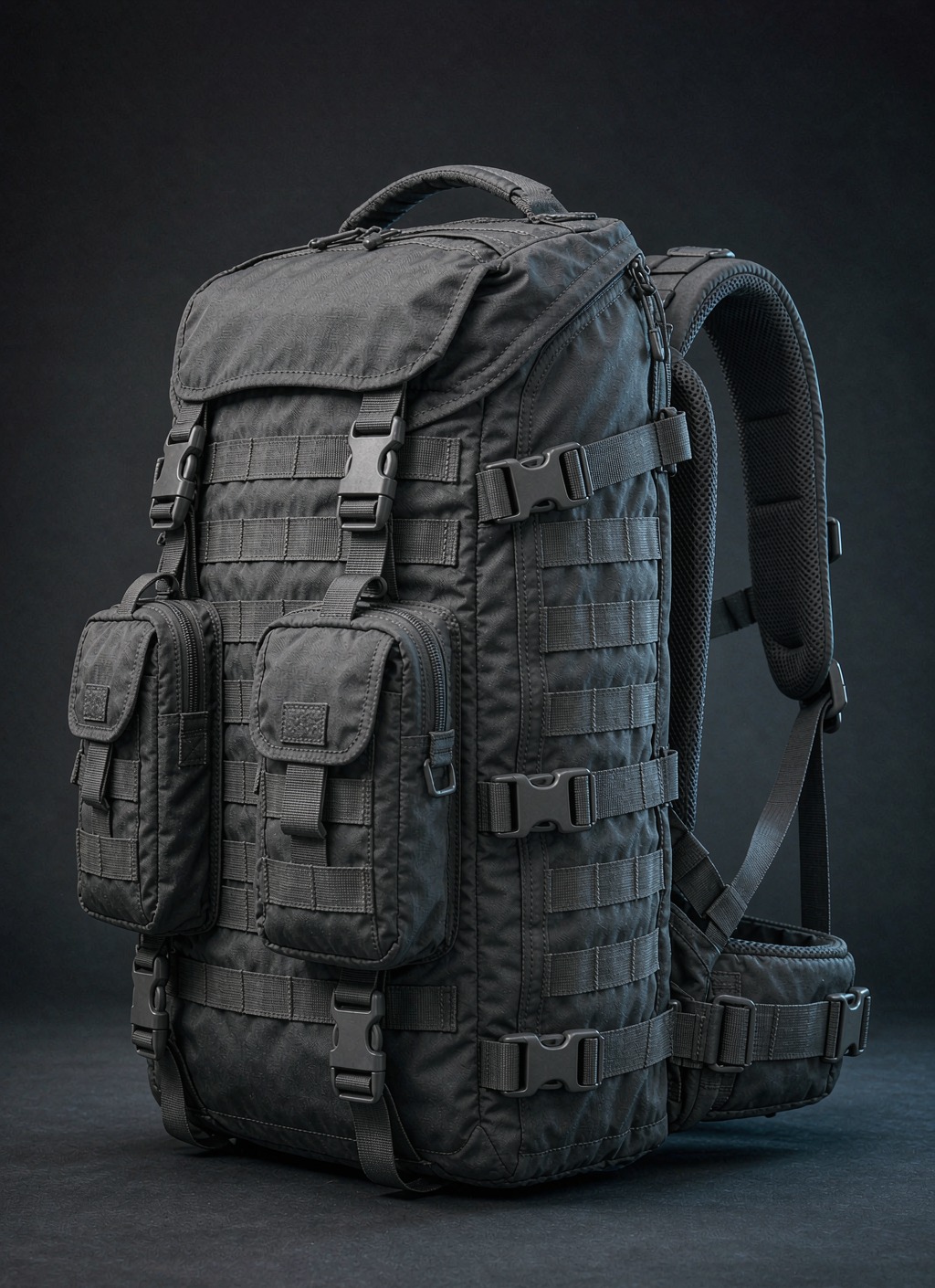
MOQ is 500 units, and the number is structural rather than negotiable: below it a cutting marker does not recover its setup, trim purchases miss supplier minimums, and the inspection sample required at AQL 2.5 swallows too much of the run. The useful question is not how to go lower but how to control risk inside 500. Three levers do that work: splitting colourways to buy information, splitting chassis and modules to match demand you cannot yet predict, and holding the interface constant so the second order can be concentrated rather than spread. What follows works the arithmetic first, then the split decisions that decide whether an opening buy produces information or merely inventory, and closes with the cash curve and the follow-on order. The constraint is fixed at 500 units per reference; the question is how to use it, and the answer is to design the order so evidence arrives while exposure is still small.
Why 500 is the working starting point
Startups ask about lowering the minimum before they ask what the minimum is for, which is the wrong order. The number exists because three costs in a bag programme do not scale linearly with quantity, and below roughly five hundred units they dominate the unit price.
The first is marker and setup amortisation. Cutting a multi-panel shell requires a marker, and laying it out costs the same whether the run is 200 units or 2,000. The second is supplier minimums on trim: webbing, thread, binding and hardware are purchased in lots, and a small run either pays a premium or buys material it will not use. The third is inspection, because a sampling plan at AQL 2.5 from the ISO 2859-1 tables requires a fixed sample regardless of run size, and on a very small run that sample is a large fraction of the output.
Understanding those three costs changes the question from how to reduce the number to how to make the number work. Five hundred units is small enough to be funded by most startup budgets and large enough that the fixed costs behave sensibly. It is also, usefully, small enough that a mistake is survivable, which is not true of a 5,000-unit commitment made on the same information.
The risk-control work therefore happens inside the constraint rather than against it. What follows is the arithmetic and then the three split decisions that determine whether a 500-unit opening buy produces information or merely inventory.
Selection rule: Selection rule: Start at 500 units per reference, because the figure is set by marker efficiency, line setup and inspection sample size rather than by goodwill, and a shorter run costs more per unit for everyone involved.
The arithmetic behind the number
Working the arithmetic once makes every subsequent decision easier, because it converts an abstract minimum into a set of identifiable costs a founder can act on.
Take setup first. Tooling, screens, digitising and pattern work sit in a band of USD 300-2,500 depending on how much is new. Across 500 units that adds roughly sixty cents to five dollars per unit; spread over 2,000 units the identical spend adds a fraction of that. This is why reusing an existing chassis pattern is the single most effective cost lever available to a startup, and why adding artwork positions is more expensive than it appears.
Take material second. Fabric is bought by the metre and cut to a marker, so waste is a function of pattern layout rather than of run size. A small run pays the same waste rate and loses the volume discount, which typically matters less than founders expect and matters far less than setup. Take inspection third: the AQL 2.5 sample size is driven by lot size, and on a 500-unit lot it is proportionate rather than punitive.
The conclusion is that the binding constraint at 500 is setup, not material. Which means the lever a startup should pull is pattern and artwork reuse, not material downgrading. Downgrading fabric to hit a price point produces a product that fails in service; reusing a pattern produces the same product at a lower unit cost.
Splitting 500 across colourways
Nothing damages the economics of an opening buy, and it is the decision startups most often get wrong, because colour feels like the cheapest form of differentiation. It is not. Every extra shell colour brings its own marker, its own thread and trim combination, its own shade approval and its own inspection pass, and it splits the buy into runs too small to reveal preference.
| Division model | Units per colourway | Information returned | Cost accepted |
|---|---|---|---|
| One colourway | 500 | None on colour, deepest unit price | No preference read at all |
| Two colourways | 250 plus 250 | Clean binary preference signal | One extra marker and trim set |
| Three way split | 200 plus 200 plus 100 | Broader shelf read | Shade-variance risk on the smallest run |
| Base plus limited colour | 400 plus 100 | Scarcity narrative for launch | Limited colour may sell out early |
| Four colourways | 125 each | Very broad but statistically thin | Four trim sets, no clean signal |
Two colourways is the recommendation for most startups, and the reasoning is statistical rather than financial. A 250-unit split produces a comparison in which a difference of even twenty units is meaningful. A four-way split at 125 each produces four numbers so close together that the fastest seller is indistinguishable from noise, and the reorder is decided by whoever happened to be displayed best.
Where a third colourway is genuinely wanted for channel reasons, the asymmetric split in the third row is the better structure: two full runs and one small one, which keeps two meaningful comparisons and treats the third as a test rather than as a peer.
Bottom line: Bottom line: Split 500 units across no more than two colourways on a first run, since a third colourway halves the effective run length per shade and raises the unit price on all three.
Splitting 500 across chassis and modules
The second split decision is between base units and modules, and it is where modular economics are either captured or wasted. The instinct is to split evenly. The data argues otherwise.
Every chassis sold is a potential future module customer, and no module can be sold without a chassis. That asymmetry means the opening buy should weight the chassis heavily and the modules lightly, with the module weighting corrected by attach data in the second order. A shape of 400 chassis across two colourways plus 100 units of each of two named modules gives the widest possible base of future accessory customers while limiting exposure to modules whose demand is unproven.
Naming the modules matters as much as the quantity. A wash module and a device sleeve have obvious occasions, and customers buy things whose occasion they can name. A generic utility pouch has no occasion, and generic pouches consistently underperform despite being the cheapest to make. Two named modules outperform four unnamed ones at the same total spend.
The third consideration is availability rather than quantity. Holding the core pouch line in continuous stock counts for more than the opening split, because a module that is out of stock across two selling seasons drops out of the buyer's catalogue permanently. Booking material for the follow-on run while the opening order is still in production is the control that prevents it.
Verdict: Verdict: Divide the opening quantity so the chassis carries the larger share and each module clears its own marker, and confirm every module fits the 25 mm column before the cutting plan is frozen.
How unit cost behaves beyond the opening run
Understanding which cost lines move with volume, and which do not, is what makes a second-order projection credible rather than optimistic.
| Expenditure line | Behaviour at the opening run | Behaviour at a larger run | Reason for the change |
|---|---|---|---|
| Pattern and setup amortisation | Full charge spread across 500 units | Same charge spread across more units | Fixed cost, so the unit share falls |
| Fabric consumption | Standard marker waste, no volume tier | Modest improvement at higher tiers | Driven by layout, not by run size |
| Trim and hardware purchases | Paid at or near supplier minimums | Clears minimums and reaches price breaks | Supplier lot pricing |
| Inspection and release | Proportionate at AQL 2.5 | Sample grows far slower than the lot | Sampling tables are non-linear |
| Line changeover | Charged once for a short run | Same changeover, longer productive run | Setup time amortised over output |
| Freight per unit | Higher, often below container fill | Lower once a container is filled | Fixed container cost per shipment |
The practical reading is that the largest single improvement between an opening and a follow-on run comes from setup amortisation and freight, both of which are fixed costs. Neither requires a change to the product. That is why the second order should reuse the approved pattern and aim for container fill rather than chase a material substitution for a marginal gain.
Schedule from sampling to dispatch
The route from a closed brief to sellable goods runs roughly one hundred days, and almost all of the variance sits in the parts a startup controls. Working backwards from a target date is the only reliable planning method.
Sampling occupies 6-10 working days on a conventional reference and 12-15 where a moulded component, bespoke pull or welded pouch enters the specification, against a charge of USD 50-150 per reference that returns on order. Sample review, correction and approval realistically add ten to fifteen days, because first samples rarely close every line and a second round is normal.
Production then runs 35-50 days from deposit. That window is dominated by material lead time rather than by sewing, so the question worth asking is which materials are booked and which are not, because a fabric ordered late adds weeks that no schedule pressure recovers. Inspection at AQL 2.5 and packing add several days more, and a lot that fails and needs re-inspection adds longer.
Freight closes the sequence: sea transit of 25-35 days, air of 5-8, or 3-5 by courier, followed by clearance plus onward carriage, the step most often left out. A startup planning a launch date should work back through all of it and place the brief close roughly one hundred days before goods need to be sellable.
Takeaway: Takeaway: Hold the schedule at 6-10 working days for sampling and 35-50 days for production, add 25-35 days for sea freight, and verify incoming webbing to ASTM D5034 before the line is booked.
Cash planning around the payment structure
Standard terms are T/T 30/70 quoted FOB Xiamen: thirty per cent on order, seventy per cent against release after inspection. For a startup, the structure is favourable, because the larger payment is contingent on inspection passing and is timed close to the point at which goods become sellable.
What it does require is that the thirty per cent be available at the right moment. The deposit releases material and books capacity, and a delay in paying it delays the whole schedule rather than merely the payment. Founders should treat the deposit date as a hard milestone and plan backwards from it, including the sampling period and the brief close that precedes it.
The balance is the largest outflow and lands roughly forty to fifty days after the deposit. Founders who have not reserved for it discover a gap at precisely the moment they have no leverage, because the goods are finished and inspection has passed. Reserving the full balance before the deposit is paid is the discipline that prevents that.
Freight, duty and delivery sit outside both payments and are frequently underestimated. Under FOB Xiamen the buyer carries main carriage, insurance, import duty, terminal handling and onward delivery. Building that figure from a real quotation rather than an assumption is the last piece of cash planning, and it is the piece most often skipped.
What the opening run teaches you for the second buy
A 500-unit opening buy is worth most as an instrument. The point is not to sell 500 units; it is to remove enough uncertainty that the follow-on order can be three times larger without repeating the same unknowns.
Three measurements carry that. The proportion of chassis owners who later add a pouch, tells a startup whether the modular proposition is landing. Return reasons, classified by the mechanism that failed rather than by tone, tell it whether the construction is right. Interface complaints, logged separately from cosmetic ones, tell it whether the geometry and the reinforcement are right.
Two specification reviews follow. The first compares the production run against the approved sample and identifies which lines drifted. The second compares the brief against reality and identifies which lines were never actually measured, because those are the ones that will cause trouble again at larger volume.
The second buy then follows from the data rather than from optimism. Concentrate volume in the colourway that sold, weight the module with the highest attach rate, reuse the approved pattern so the setup is already paid, and aim for container fill so freight per unit falls. Holding the interface constant throughout is what keeps the installed base compatible and makes that concentration safe.
One further decision belongs here, because it is easier to make correctly at the opening buy than to correct later: what the second range extension will be. A brand that knows it intends to add a hiking configuration or a work-oriented module in the following season can specify the chassis mounting faces to suit it now, at no cost, whereas discovering the requirement later may mean a chassis revision that strands the accessories already sold. Thinking one season ahead is cheap. Revisions are not.
The pattern across the whole opening buy is consistent. The constraint is fixed, the information is incomplete, and the response is to structure the order so that the information arrives while the exposure is still small. Five hundred units of one well-specified chassis with two named modules gives a startup exactly that: enough inventory to learn from, small enough that the lesson is affordable, and structured so that the following order can be placed on evidence rather than on hope.
That last point is the one worth carrying into the second season. A startup that has measured attach rate, coded its returns by failure mode and kept its interface unchanged enters the reorder conversation with three facts and a reusable pattern. One that has not, enters it with a hope and a fresh development cycle. The difference in outcome between those two positions is far larger than any difference in unit price negotiated along the way.
Spec rule: Spec rule: Treat the first 500 unit run as a measurement exercise, record defects by cause at AQL 2.5 inspection, and place the second order on what the first run actually taught rather than on what the forecast assumed.
Working capital and the shape of the cash curve
A startup's first order consumes cash in a curve rather than in a lump, and the shape of that curve is what determines whether the launch is fundable. Understanding it before committing prevents the common failure of running out of money with goods already on the water.
The curve has three humps. The first is small and early: the sampling fee of USD 50-150 per reference plus setup within a band of USD 300-2,500, both due before production begins. The second is the deposit, thirty per cent of goods value, which releases material and books capacity. The third and largest is the balance at seventy per cent, payable against release after inspection, arriving roughly forty to fifty days after the deposit and closely followed by freight and duty.
The gap between the second and third humps is where founders underestimate. It looks like a quiet period, because production is underway and nothing is being asked for, and it is exactly when the balance should be reserved in full. A founder who reaches the release date without having reserved it has no leverage remaining, because the goods are built and inspection has passed.
One structural option softens the curve without changing the product. Where a startup expects a second season, paying setup once and reusing the approved pattern on the follow-on run means the second order carries no setup hump at all, which is a materially easier cash profile and the strongest available argument for planning the reorder before the first one ships.
Two further pressures sit on the curve and deserve explicit planning. The first is the selling period itself: inventory bought at the start of a season is cash until it converts, so a launch date sixty days before the peak selling window carries two months of working capital that a later date would not. The second is the returns tail, since a small share of units will come back after sale and the cash tied up in them is unavailable for the reorder. Neither pressure is large on its own, and together they are the difference between a reorder that can be placed from operating cash and one that needs external funding.
Before the split is decided, review the chassis options and the module types with the strongest attach history.
Frequently asked questions
What is the minimum order for a modular bag line?
The working minimum sits at 500 units per reference. Under it, the marker never recover its setup, trim purchases miss supplier minimums, and the sample an AQL 2.5 plan requires becomes too large a share of the run.
Why not start lower to reduce risk?
Because the fixed costs do not scale down. Setup amortisation, trim minimums and inspection sampling all dominate below 500, so a smaller run costs more per unit and returns less usable information per unit of spend.
How should 500 units be split across colourways?
Two colourways at 250 each. That produces a comparison in which a difference of twenty units is meaningful, whereas a four-way split at 125 each produces differences indistinguishable from display noise.
Should the opening buy weight chassis or modules?
Weight the chassis. Every chassis sold is a future module customer and no module sells without one, so 400 chassis plus 100 units each of two named modules is a sounder shape than an even split.
Which modules should launch first?
Two named scenarios, such as a wash module and a device sleeve. Customers buy modules whose occasion they can name, and generic utility pouches consistently underperform despite being cheaper to make.
How much does setup cost on an opening order?
Put USD 300-2,500 aside for tools, screens, digitising and marker work. Reusing an existing chassis pattern is the most effective lever, because setup rather than material is the binding constraint at 500 units.
What does the sampling fee cover?
USD 50-150 per reference, covering pattern work, materials pulled for the sample and the labour to build one unit. It is refunded against the production order, so a startup that proceeds pays that cost once.
How long do sampling and production take?
Sampling needs 6-10 working days, twelve to fifteen on complex work, with sample review and correction adding ten to fifteen days. Mass production then runs 35-50 days from deposit.
What payment terms should a startup plan for?
Settlement runs T/T 30/70 on FOB Xiamen terms: thirty per cent when the order is booked to commit cloth and capacity, the balance of seventy per cent once the finished lot clears inspection.
What sits outside those two payments?
Freight, insurance, import duty, terminal handling and onward delivery, all carried by the buyer under FOB terms. Build that figure from a real quotation rather than an assumption, because it is the line most often underestimated.
How long is the route from brief to sellable goods?
Roughly one hundred days. Sampling and approval, then 35-50 days of production, then inspection and packing, then freight at 25-35 days by sea or 5-8 by air, followed by clearance and delivery.
Which cost line improves most on a second order?
Setup amortisation and freight per unit, both fixed costs. Reuse the approved pattern and aim for container fill into a 20GP at roughly 28 CBM or a 40HQ at roughly 68 CBM rather than chasing a material substitution.
What should be measured after the opening run?
Attach rate, return reasons coded by failure mode, and interface complaints logged separately from cosmetic ones. Those three indicate whether the proposition, the construction and the geometry are each correct.
How should the second buy be structured?
Concentrate on the colourway that sold, weight the module with the highest attach rate, reuse the approved pattern, and leave the grid alone so existing owners stay compatible.