Home › Field notes › Care Symbol Selection for Bags: Which of the Five Families Apply
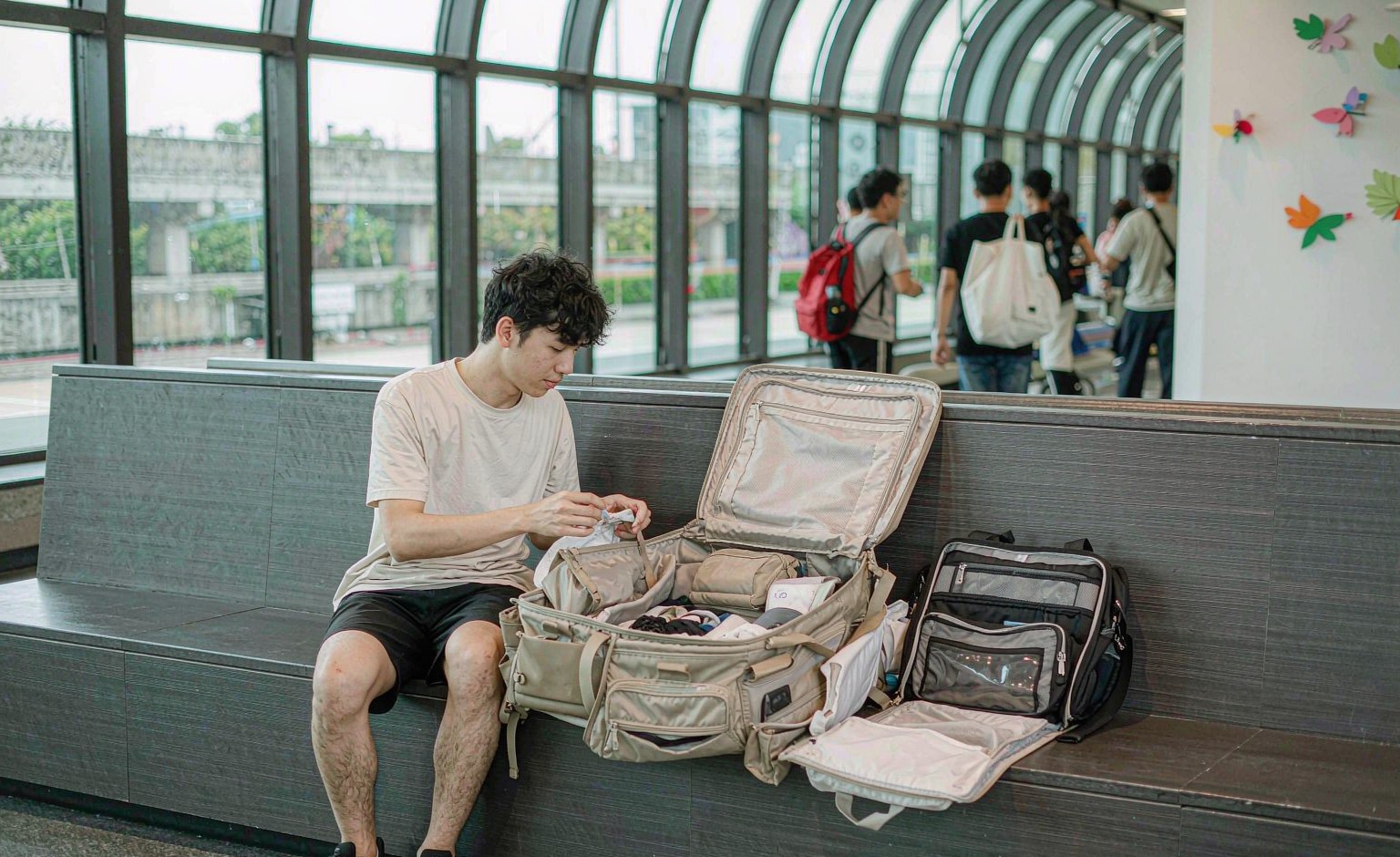
Care symbol selection for bags starts by removing symbols rather than adding them: the five families — washing, bleaching, drying, ironing and professional care — were designed for laundered garments, and on a bag only the first two usually describe anything that will actually happen to it. A labelled care strip is agreed at the sample stage, and a routine build returns in 6-10 working days while one with new tooling or a fresh module takes 12-15, with bulk running 35-50 days once the PP sample clears. The boundary is that care label content is destination-market dependent and the symbols must match what the construction can survive; a symbol that implies a process the bag cannot endure is a claim, not a convenience.
The Five Care Symbol Families and What Each One Actually Controls
The care symbol system is built from five families, each drawn as a base shape with modifiers. The washtub covers washing in water and carries temperature and agitation information through numbers and bars under the tub. The triangle covers bleaching and distinguishes chlorine bleach from oxygen-based bleach. The square covers drying and splits into tumble drying and natural drying, with a circle inside the square for tumble and different marks for line, flat and drip drying. The iron covers pressing, with dots setting a temperature band. The circle covers professional care and splits into dry cleaning and wet cleaning, with a letter identifying the process.
Each family answers one question about one process, and the system assumes the article will be laundered. That assumption is exactly where bag programmes part company with apparel. A backpack is not washed weekly; it is spot cleaned, brushed, air dried and occasionally wiped. Applying the full garment set to a bag produces a label full of instructions nobody will follow and, worse, a label that implies the bag tolerates processes it may not.
The distinction that matters for specification is between a symbol that instructs and a symbol that warns. A crossed-out symbol is a prohibition, and prohibitions are the most valuable entries on a bag label: they tell the owner not to machine wash, not to bleach, not to tumble dry. A positive symbol, by contrast, is a permission, and a permission on a bag is a claim about what the construction survives.
The domestic laundering procedures that these symbols reference are described in ISO 6330, which sets out the washing and drying routines used when textile articles are characterised. What belongs on the label is a separate question from how an article is tested, and the two should not be conflated on a specification sheet.
Selection rule: Build a bag care strip from prohibitions first, add only the positive symbols the construction genuinely survives, and treat every added symbol as a claim rather than as decoration.
Which Symbols Apply to a Bag and Which Do Not: A Family-by-Family Filter
Working family by family is the fastest way to a defensible strip. Washing: relevant, because bags do get hand washed, and the useful entry is usually a low-temperature hand wash or a crossed-out machine wash. Bleaching: relevant mainly as a prohibition, because chlorine bleach attacks dyed nylon, printed panels and coated shells. Drying: partly relevant, because tumble drying damages coatings, foam laminates and stiffeners even when the shell fabric would survive it. Ironing: rarely relevant, because a bag has no flat pressed surface worth protecting and heat damages coatings and hardware. Professional care: relevant for structured bags that a consumer might take to a cleaner, and irrelevant for a soft pack that is not a dry-clean candidate.
Construction decides the edge cases. A coated or laminated shell behaves differently from an uncoated woven: heat and solvent affect the film before they affect the base cloth. A foam-padded back panel or a moulded stiffener is the part that fails first in a tumble dryer. Printed or embroidered panels, bonded seams and magnetic closures all narrow what can be permitted.
| Symbol family | Needed on a bag? | Usual form | Component that sets the limit |
|---|---|---|---|
| Washing (tub) | Yes, in most programmes | Hand wash at a low temperature, or machine wash crossed out | Coating, printed panels, bonded seams |
| Bleaching (triangle) | Yes, as a prohibition | Triangle crossed out; plain triangle only where the shell is proven colourfast | Dyed shell, webbing and print inks |
| Drying (square) | Usually, as a prohibition on tumble | Circle-in-square crossed out, with a natural drying mark | Foam laminate, moulded stiffener, coating |
| Ironing (iron) | Rarely | Iron crossed out, or omitted entirely where the market permits omission | Coating, hardware, hook-and-loop |
| Professional care (circle) | Only for structured bags | Circle with a process letter, or omitted for soft packs | Stiffener, adhesive, interlining |
Where a family is not needed, the question becomes whether it may be omitted. Omission rules are destination-market dependent: some markets expect a complete five-symbol sequence, others accept a reduced set. That is a question for the destination requirement, not for the artwork team's preference, and it belongs on the specification as a confirmed line.
Verdict: Filter the five families against the construction before writing any symbol, keep bleaching and tumble drying as prohibitions by default, and confirm omission rules for the destination market rather than assuming a reduced strip is acceptable.
Washing Symbols on a Bag: Tub, Temperature and the Hand-Wash Question
The tub is the one family a bag usually needs, and the decision inside it is temperature and agitation. A hand-wash symbol with a low temperature figure is the safe default for a pack with a coated shell, a printed panel or a foam back panel, because it sets both a low temperature and no mechanical agitation. A machine-wash symbol with a higher temperature and a bar under the tub implies agitation the construction may not survive and is the entry most often added without thought.
The bars under the tub are an agitation instruction, not a decoration: fewer bars means a gentler cycle. On a bag, the gentle end of that scale is the only end worth using, and in most programmes the honest answer is a hand wash or a crossed-out machine wash rather than a gentle machine cycle. Our production team raises this at sampling because the care strip is reviewed together with the sample, and a change after that point touches the same label run as the fibre statement and the origin mark.
Modules complicate it slightly, and the packs that carry the widest range of them are described under the modular hiking backpack platform. A detachable pouch with hardware, a hook-and-loop field or a stiffened body may have a different tolerance from the host bag, and a pouch offered on its own needs a strip of its own. Where the pouch travels inside a carrier as one presentation, the instruction should describe the most delicate element in the box rather than the toughest, because an owner reads one label as covering everything packed with it.
Bottom line: Default to a low-temperature hand wash or a crossed-out machine wash on any bag with a coating, print or laminate, and let the most delicate element in the set set the instruction for the whole presentation.
Bleach, Drying and Ironing Symbols: Where a Bag Label Usually Stops
Bleach on a bag is normally a prohibition. The plain triangle permits chlorine bleach, and chlorine is aggressive toward dyed polyamide, printed panels, coated films and elastic. A bag with any coloured trim, logo print or coated shell should carry the crossed triangle unless there is a specific reason to do otherwise. The variant with two diagonal lines inside the triangle refers to a non-chlorine bleach and is a narrower permission, but on a bag it is still a permission that has to be justified.
Drying is the family where bags get damaged in service. A tumble dryer applies heat and tumbling to foam laminates, moulded stiffeners, adhesive-bonded seams and coatings, and those are the parts that delaminate, curl or crack. The crossed circle-in-square is therefore the most useful drying symbol on a bag, and it is usually paired with a natural drying mark — line, flat or drip — so the label tells the owner what to do as well as what not to do. Flat drying is the safer of the natural options for a structured bag.
Ironing is where most bag labels should stop. A bag has no surface that benefits from pressing, and the iron's temperature bands were set for fabrics, not for coated shells, hook-and-loop tape or plastic hardware. The honest choices are a crossed-out iron or no iron symbol at all, and whether omission is permitted is destination-market dependent. Adding a one-dot iron because a template had one is the clearest case of a symbol inherited rather than selected.
Takeaway: Cross out chlorine bleach and tumble drying as the default on any bag with foam, coating or print, add a natural drying mark to make the strip actionable, and leave the iron out unless the destination requires a complete sequence.
Professional Care Symbols: When a Bag Carries One and When It Should Not
The circle covers professional cleaning and is the family most often copied from an apparel template without thought. Its two branches are dry cleaning, marked with a letter identifying the solvent, and wet cleaning, marked with a W. On apparel these are routine. On a bag they apply mainly to structured articles — a moulded or stiffened body, a bonded interlining, a leather or coated trim — that a consumer might reasonably hand to a cleaner.
Before a circle goes on a bag label, three things have to be true. The article has to be one a cleaner would accept, which excludes most soft packs. The solvents and mechanical action implied by the letter have to be compatible with the adhesives, coatings and stiffeners inside, because delamination is the failure mode that shows up after professional cleaning. And the destination market has to expect the symbol, because omission rules differ.
A letter inside the circle is not a generic mark: it identifies a process, and choosing one without checking what it implies is a claim made by accident. Where a bag is genuinely a dry-clean article, the letter should be selected against the adhesive and coating stack rather than inherited from a garment programme. Where it is not, the family is omitted and the strip ends at drying.
Judgement: Use the professional-care circle only for structured bags whose adhesive, coating and stiffener stack is compatible with the identified process, and otherwise end the strip at the drying symbol.
Five Mis-Marking Errors Found Most Often on Imported Bag Labels
Most label rework comes from five repeat errors. The first is inheritance: the previous artwork is copied after the construction changed, so a tumble symbol survives on a bag that gained a foam back panel. The second is the uncrossed default: a template ships with plain triangle and plain tub because nobody crossed anything out, and the label thereby permits chlorine bleach and machine washing. The third is over-permission: a high temperature is printed because the shell fabric tolerates it, ignoring that the coating, print or hardware does not.
The fourth is the contradictory strip: a machine wash permitted alongside a crossed-out tumble dry, which instructs the owner into a process the bag cannot complete. The fifth is the orphan symbol: a professional care circle on a soft pack that no cleaner would accept, or an iron symbol on a bag with moulded hardware.
| Error | How it appears on the strip | Correction before the run |
|---|---|---|
| Inherited symbols | Tumble dry permitted after a foam panel was added | Rebuild the strip from the current construction schedule |
| Uncrossed defaults | Plain triangle and plain tub with no prohibition marks | Cross out bleach and tumble as the default position |
| Over-permission on temperature | High wash temperature matching the shell only | Set the figure from coating, print and hardware limits |
| Contradictory instruction | Machine wash permitted, tumble dry forbidden | Align washing and drying to the same weakest component |
| Orphan professional symbol | Care circle on a soft pack with no stiffener | Omit the family where the destination permits omission |
These errors share one cause: the strip is produced from a template rather than from the construction. Preventing them costs one review at the sample stage, and the label content checked at that review is the same content checked later against AQL 2.5 at inspection.
Spec rule: Rebuild the care strip from the current bill of materials at every pre-production gate instead of reusing the previous artwork, and read the finished strip once as a consumer would to catch contradictions before the run.
Building the Care Label: Sequence, Substrate and Print Method
Sequence is conventional: the symbols are presented in the order the processes occur, which puts washing first and professional care last, and a market may specify the order as well as the content. Alongside the symbols, a label usually carries the fibre statement and an origin line, and the three blocks are prepared from one source document so that they cannot drift apart. The companion notes on hangtag and care label requirements and fibre content labelling sit on the same specification sheet for this reason.
Content requirements for consumer-facing labelling vary by market, and market-specific import and marking guidance for consumer goods is published by the U.S. Department of Commerce; the practical step is to confirm which sequence and which omissions the destination accepts, then write that answer onto the specification.
Substrate choice is a durability decision. A care label that fades, curls or becomes unreadable has failed its purpose even if the content was correct, and a bag is handled far more roughly than a garment. Printed satin, coated polyester and woven labels each behave differently: printed labels give finer symbol detail, woven labels survive abrasion better, and the right choice depends on where the label sits and how the bag will be cleaned.
Print method and legibility set the smallest viable symbol size. A symbol below the point where its internal marks resolve is not a symbol at all, and the resolution limit belongs to the print method — screen, heat transfer or woven — rather than to the artwork file. Our production team confirms legibility on a physical strike-off during sampling rather than on screen, because a symbol that looks correct at 400 percent on a monitor frequently closes up at actual size.
How Care Symbols Are Agreed: Sampling, PP Sample and the Labelled Spec
The care strip is agreed in the same three gates as the rest of the label set. At quotation it is listed as a line item carrying a note that the content follows the destination market. At sampling, which occupies 6-10 working days on a straightforward build and 12-15 once tooling is involved, the strip arrives on the sample so it is assessed as a physical object attached to the real construction rather than as a line in a document. At pre-production the approved sample becomes the reference, and whatever strip it carries is what enters bulk.
The SGS-verified production base we work with keeps 7 production lines and 149 machines staffed by 137 people on 4,950 m² of floor, rated at 200,000 units a month; bag production experience in the founding team reaches back to 2004 and the operation dates from 2014. Label application is scheduled on those lines alongside assembly, which is why a label change discovered late is a line-side rework rather than an artwork edit.
Inspection closes it out. Under general inspection level II of ISO 2859-1, a lot is accepted or rejected against Critical 0, Major 2.5 and Minor 4.0, and a wrong symbol counts as a defect rather than as a note. A care strip error on the 500-unit opening order is never an isolated unit: it is the same strip on every piece in that run.
Shipment documentation follows the same discipline as the rest of the programme: FOB Xiamen terms, sea freight of 25-35 days, air of 5-8 days and express of 3-5 days, with the carton cube planned at roughly 28 CBM to a 20GP and 68 CBM to a 40HQ. Where a care strip question arises after goods have left, the fastest resolution comes from the retained approved sample rather than from the artwork file.
Frequently asked questions
What are the five care symbol families used on textiles?
They are washing, shown as a tub; bleaching, shown as a triangle; drying, shown as a square; ironing, shown as an iron; and professional care, shown as a circle. Each covers one process, and on a bag only the first two usually describe anything that will happen.
Which care symbols does a backpack actually need?
Most backpacks need a washing instruction and a bleaching prohibition, plus a drying instruction. Ironing is rarely relevant and professional care applies mainly to structured bags. Omission rules are destination-market dependent, so confirm them before the strip is finalised.
Should a bag care label permit chlorine bleaching?
Usually not. Chlorine attacks dyed polyamide, printed panels, coatings and elastic, so the crossed-out triangle is the default for any bag with coloured trim or a logo print. The plain triangle is a permission that needs justification.
Why is tumble drying usually prohibited on bags?
Heat and tumbling damage foam laminates, moulded stiffeners, adhesive-bonded seams and coatings before they damage the shell fabric. The crossed circle-in-square, paired with a natural drying mark, is the useful entry.
Does a bag need an iron symbol?
Rarely. A bag has no surface that benefits from pressing, and heat damages coatings, hook-and-loop and hardware. The choices are a crossed iron or no iron symbol, and whether omission is allowed depends on the destination market.
When is a professional care circle appropriate on a bag?
Mainly for structured bags with a stiffener, bonded interlining or coated trim that a cleaner would accept. A soft pack with no stiffener is not a dry-clean candidate, and a circle on it is an orphan symbol.
Can detachable modules have a different care strip from the host bag?
Yes when the module is offered on its own, because the pouch then stands as a separate article needing its own strip. Where it travels inside a carrier, one strip should follow the most delicate element in the box.
How is care label content agreed before bulk production?
Three gates settle it: a quotation line item, a physical review while the sample is built — 6-10 working days on routine work, 12-15 with tooling — and a freeze at the PP sample. Past pre-production, any change is a label rework.
- Quotation line item
- Sample-stage physical review
- PP sample freeze
What causes most care symbol rework on bag programmes?
Inheritance from previous artwork after the construction changed, uncrossed template defaults, and permissions set from the shell fabric while ignoring coating and hardware. Rebuilding the strip from the current bill of materials prevents all three.
Are care labels checked during inspection?
They are. Level II of ISO 2859-1 sets the sample size, and the lot is judged against Critical 0, Major 2.5 and Minor 4.0; a symbol that contradicts the construction is counted as a defect in that sample.
How long does sampling take when a care strip is being revised?
Allow 6-10 working days on a routine construction and 12-15 once tooling is involved, and judge the revised strip on a printed strike-off at full size. Catching illegibility in that window avoids reprinting an entire label batch.
What substrate should a bag care label use?
Whichever survives the bag's service life: printed satin gives finer symbol detail while woven survives abrasion better. Decide by where the label sits and how the bag will be cleaned, then confirm on a strike-off.
Does the care strip have to follow a fixed order?
The conventional order follows the process sequence, washing first and professional care last, and some markets specify the order as well as the content. Confirm the sequence requirement for the destination market before artwork release.
What happens if a care symbol is wrong on a landed shipment?
The realistic options are relabel in the destination market or rework the stock, both more expensive than catching it at the PP sample. A wrong symbol in a 500-unit minimum order repeats across every unit in the run.