Home › Field notes › Instruction Sheet and Insert Printing for Bag Programmes: Stock, Fold
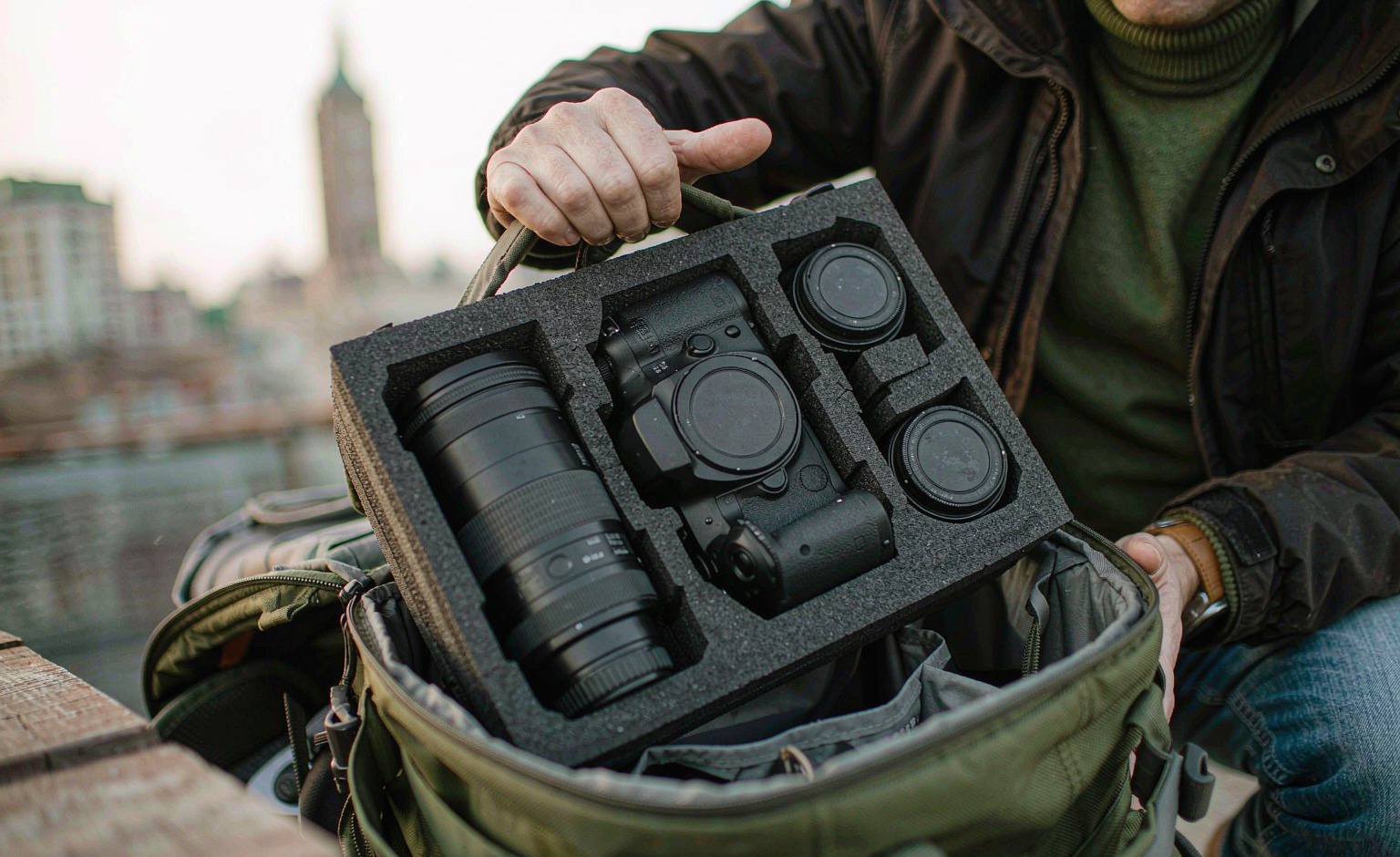
An instruction sheet and its printed insert are specified as four deliverables in one piece: statutory content for the destination market, a module map the buyer can follow without the box, care guidance that reduces avoidable returns, and a traceable brand contact. Standard sampling takes 6-10 working days, the minimum order is 500 units, and bulk production runs 35-50 days before inspection to AQL 2.5 and shipment FOB Xiamen. The boundary is that required insert content is destination-market dependent; confirm it with your broker or retailer, because a sheet that reads well can still be refused for missing one mandated element.
What an Instruction Sheet Has to Do Before It Is Designed
An insert is not marketing collateral that happens to sit in the box. It is the only document that travels with the product into the buyer's hands, and it is read at the moment of first use — which is also the moment a return decision is made. Four jobs sit in that one sheet, and they compete for the same panel area: statutory content, a module map, care and repair guidance, and contact or registration details. Designing for one and hoping the others fit is how a sheet ends up at 6 pt type on the fourth panel.
Statutory content comes first because it is not negotiable. Which items are required — fibre content, care symbols, importer address, warning statements, disposal marking — depends on where the goods are placed on the market, and the list is settled with the broker or the retailer rather than copied from the previous season's file. Practical consequence: leave the statutory block as a reserved area in the layout, sized for the longest language, and let the design work around it instead of squeezing it in at the end. General export and marking guidance for the destination is published by the U.S. Department of Commerce, and the underlying trade framework is described by WTO; neither supplies your mandated wording, which stays a market question.
The module map is the part that is specific to a modular platform and the part most often omitted. A system with a removable pouch, a detachable waist module and a configurable interior needs at least one diagram showing how the pieces connect, which panel accepts which attachment, and what the webbing grid is for. Without it, the buyer treats the product as a single bag, never attaches the module, and the differentiator that justified the price is never experienced. One clear line drawing on panel two does more for perceived value than three lifestyle photographs on the cover.
Verdict: Size the statutory block first for the longest language in the set, place the module map on the second panel, and accept that care guidance and registration details compete for whatever area remains.
Fold Formats Compared: Sheet Size, Panel Count and What Each Format Costs
Fold geometry governs everything else. The panel count sets how much content fits, the sheet size sets the envelope the insert has to fit into, and the fold pattern sets whether the piece opens flat in the hand or has to be turned. Four formats cover almost every bag programme, and the choice is made from the content volume and the packing envelope rather than from habit.
| Format | Sheet size before folding | Usable panels | Packing envelope and typical failure |
|---|---|---|---|
| Single-fold leaflet | A4 (210 x 297 mm), folded to A5 | 4 | Fits a flat pack at about 148 x 210 mm; fails when content grows past four panels |
| Accordion (Z-fold) | A4 folded to 99 x 210 mm | 6 | Slim strip that lies flat in a side pocket; fails when opened against the fold direction |
| Map fold (cross fold) | A3 (297 x 420 mm) folded to A5 | 8 | Good for a module map across two panels; fails if the stock is too heavy to hold the crease |
| Saddle-stitched booklet | A5, 8-16 pages | 8-16 | Handles long language sets; fails on unit cost and on thickness in a tight polybag |
Sheet sizes follow ISO 216, which is why A4 folded once gives A5 and an A3 sheet folded twice gives A5 as well: the aspect ratio is preserved through the fold, so panels stay proportional and the layout does not need re-drawing when the format changes. Working inside that series also means a printer in any market can quote from the same dimensions without a conversion step.
The envelope test is the one that catches problems late. An insert has to fit the polybag or the retail sleeve without creasing the pack or compressing the bag's own structure, and a folded 8-panel sheet at 120 gsm is thick enough to print through a light-coloured shell under warehouse compression. Measure the finished fold against the packed unit, not against the flat sheet on a desk.
Spec rule: Choose the fold format from content volume and the packed envelope, keep every sheet inside the ISO 216 A-series so panels stay proportional, and test the folded insert inside a packed unit before the print run is released.
Paper Stock and Ink: Weight, Finish and Behaviour in a Humid Container
Stock weight is a trade between legibility and bulk. Offset paper at 80-100 gsm keeps a folded 4-panel leaflet slim and is the default for a single-language sheet; 120-157 gsm gives a cover-weight feel for a booklet and survives handling, at the cost of thickness in the polybag. Lighter stock at 60-70 gsm is used for long multi-language sheets where the panel count is already driving bulk, and it is the point at which show-through becomes visible with dense line art.
Finish matters more than most teams expect. A matte uncoated stock reads well under retail lighting and takes a pen, which is useful where the sheet includes a warranty registration card. A gloss coated stock gives better ink density for photographs but glares under downlights and is harder to write on. Where the insert sits against a coated fabric panel for weeks in a sealed polybag, a coated stock can transfer ink under pressure and humidity, so a rub check on the packed unit is worth the hour.
Containers are the hostile environment. Interior conditions cycle through temperature and humidity over 25-35 days at sea, and paper absorbs moisture, which causes cockling at the fold and blocking where sheets are stacked. Specifying a stock with reasonable dimensional stability, wrapping inserts in bundles rather than loose, and keeping them away from the carton wall all reduce the risk. Where the programme ships air at 5-8 days the exposure is shorter, but the landed humidity in the destination market can be higher still.
Ink coverage is the last variable. Large solid areas on a folded sheet crack at the crease unless the stock is scored, and a solid dark panel facing a light fabric shell is the classic transfer case. Scoring folds above about 120 gsm, keeping solids away from the crease line by a few millimetres, and specifying a rub-resistant ink set are three cheap decisions that prevent a cosmetic defect on a piece the buyer reads first.
Takeaway: Score any fold above 120 gsm, keep solid ink areas clear of the crease, and specify a rub-resistant set wherever the insert rests against a light-coloured shell for more than a few weeks.
Artwork Rules for Line Illustrations: What Must Be Shown
Line art in an insert has one job: to let a first-time user complete an action without guessing. That sets three rules. Show the part in the orientation the user holds it, show the direction of movement, and show the end state. A drawing of a pouch floating next to a bag with no arrow is decoration; the same drawing with an arrow at the attachment point, the webbing rows drawn as actual rows, and a second frame showing the pouch seated is an instruction.
Scale consistency beats stylistic polish. If the bag is drawn at one scale, every module must be drawn at the same scale, because a buyer judging whether a pouch fits uses the drawing as a proxy for the real thing. Where a dimension matters — a 25 mm webbing row, a 38 mm vertical spacing, a 50 mm horizontal repeat — state it numerically rather than relying on the drawing, since print shrinkage and screen rendering both distort a measured line.
| Element | Requirement at artwork release | Defect seen most often |
|---|---|---|
| Module map | Every module drawn at one scale with attachment arrows and an end-state frame | Modules drawn at different scales, so fit cannot be judged |
| Webbing or grid detail | Row count drawn accurately; spacing stated in millimetres in the text | Grid drawn decoratively, spacing implied by the artwork |
| Care symbols | Symbol set supplied as vectors, not rasterised, and legible at the final print size | Symbols pasted at 72 dpi and blurring at print |
| Statutory block | Reserved area sized for the longest language in the set | Block added last and overrun by the layout |
| Contact and importer details | Full address, not a web address alone, in the form the market requires | Only a URL given where a postal address is needed |
Symbols deserve a specific warning. Care and compliance symbols are supplied as vector artwork and checked at final print size, because a symbol set pasted from a web page at screen resolution turns to mush at 5 mm. Where a market requires specific symbols, the correct set is confirmed with the broker; the artwork requirement is simply that whatever is supplied is vector, consistent in weight, and legible at the size it will actually be printed.
Bottom line: Draw every module at one scale with a direction arrow and an end-state frame, state spacing numerically rather than graphically, and supply all symbols as vectors checked at final print size.
Language Versions: How Many, in What Order, and Who Signs Off
The language set is decided by the distribution list, not by the artwork. A single-market e-commerce programme may need one; a European retail programme may need a set that runs five to fifteen, and an importer in a bilingual market may require two on the same sheet. Required languages and their order are destination-market dependent, so the set is confirmed with the retailer or broker and then frozen before layout begins, because adding a language after layout is a re-plate, not an edit.
Three construction strategies exist and they behave differently under cost pressure. Separate sheets per language give clean typography and simple packing, at the cost of a print run per language and a pick-and-pack step. A shared multilingual sheet folds all languages into one piece, which keeps packing simple and the unit cost flat, but the type size falls as the set grows and the statutory block must be repeated in each language. A booklet with a language index is the third option and suits sets above about eight languages.
Translation quality is a compliance issue rather than a cosmetic one. A care instruction translated loosely can advise the wrong washing temperature, and a warning statement translated by a generalist tool can invert its meaning. Use a translator who works from the final source text, keep one master source file, and version-number every language so a correction can be traced. Where a market has a legally prescribed form of words, use that form rather than a translation of it.
Sign-off closes the loop. One named person at the brand approves the full set, in writing, against the source file; the printer works from that approved set only. Corrections after sign-off are change-controlled: the version number moves, the affected languages are re-plated, and the old plates are destroyed so a superseded sheet cannot reappear in a repeat order six months later.
Judgement: Freeze the language set before layout, version-number every translation against one master source file, and require a single written sign-off covering all languages, because a late addition is a re-plate rather than a text edit.
Why One Missing Element Can Return a Whole Batch
Inserts fail in a characteristic way: the fault is small, uniform and present on every unit, so the remedy is never a partial fix. A missing importer address, a wrong care symbol, a language that was dropped from the set, or a warning statement at the wrong size appears on 100% of the pieces. A retailer's goods-in team does not sort good leaflets from bad ones; it rejects the delivery, and the options become reprint and re-insert at the destination, or return.
The cost structure is unforgiving because the insert is the cheapest item in the box and the most expensive to replace. Reprinting is cheap. Opening 5,000 polybags, removing one sheet, inserting another, resealing and recounting in a destination-market warehouse is charged at that market's handling rate, and the shelf window has already gone. Where the goods were produced in a 35-50 day window and shipped in 25-35 days at sea, a rework at the far end can consume more calendar time than making them again.
Three controls prevent it. First, a written content checklist signed at the pre-production sample gate, listing every mandated element for the destination market with a tick against each. Second, a first-off insert checked against that checklist before the run, not after. Third, inspection of the packed unit at AQL 2.5 under the plan in ISO 2859-1, with insert defects assigned to a class in advance so that a missing element is a critical rather than a debate.
There is also a quieter failure: the insert that is present and correct but absent from the right units. In a multi-reference or multi-colourway shipment, the wrong sheet in the wrong box is a mismatch rather than an omission, and it is found by the customer. Packing the insert with the unit rather than bulk-dropping sheets into cartons, and verifying one packed unit per carton, removes that class of error for a few seconds per box.
Selection rule: Sign a content checklist at the pre-production sample gate, check first-off inserts against it, and verify one packed unit per carton, because every insert fault is uniform and therefore always a batch-level event.
How to Choose an Insert Specification for a Bag Programme: A Sequence
The sequence below is the order in which these decisions have to be taken, because a later step re-drawing an earlier one costs a re-plate and a re-sample.
- Establish the destination market first and get the written list of mandated insert content from the retailer or broker.
- Freeze the language set and the order of languages, and nominate one sign-off owner.
- Estimate content volume from the longest language, which sets the panel count.
- Choose the fold format from the panel count and the packed envelope, keeping to the ISO 216 A-series.
- Choose the stock weight and finish, and decide whether folds must be scored.
- Reserve the statutory block in the layout, sized for the longest language.
- Draw the module map at one scale with direction arrows and an end-state frame.
- Supply care and compliance symbols as vectors and check them at final print size.
- Approve the full set in writing, version-number every language, and destroy superseded plates.
- Inspect the packed unit at AQL 2.5 with insert defects pre-assigned to a defect class.
Steps one and two are the ones that protect the schedule. Both are brand-side decisions that can be taken before any artwork exists, and both are the usual cause of a late change. Where they are still open at sampling, the honest advice is to hold the print rather than plate a sheet that will be superseded, because a two-week wait for a content answer is cheaper than a rework at the destination.
Step ten deserves a note on where it sits. Inspection happens on the packed unit, not on the sheet, because the failure modes that matter — wrong sheet in the right box, insert creased by packing, ink transferred to the shell — are only visible in the assembled pack.
Print Method and Colour: Matching the Run Length to the Process
Print method follows run length and the number of versions. Offset litho gives the best colour consistency and the lowest unit cost once plates are made, and it suits a single-language run of several thousand where the artwork is frozen. Digital print has no plate cost, suits short runs and multi-version work, and is the natural choice where each language is a separate short run and the total across all languages is modest. Screen print is reserved for special finishes rather than text.
Colour control is where insert work is judged. Brand colours are matched against a supplied reference with a numeric tolerance rather than by eye, and the same reference is used for the shell fabric, the woven label and the insert, so a logo does not appear in three different reds across one product. A press proof is approved before the run, and a retained sample from the run is kept with the order record so a repeat order can be matched to the previous season rather than re-matched from scratch.
Where the insert carries photography, the resolution requirement rises and the stock usually moves to a coated sheet. That changes the fold behaviour and the rub risk described earlier, so the sheet specification and the image plan are decided together. For a modular platform, the practical answer is usually line art on uncoated stock: it reads at small sizes, it does not glare, and a drawing of the attachment system explains more than a photograph of a bag on a table.
Programme Facts: Sampling, Tooling and Inspection Discipline
Vetted partner facilities provide a 6-10 working day sample turnaround on a conventional construction, extending to 12-15 working days where the build is complex; the sample charge is USD 50-150 and is credited back once an order is placed, while new plates or dies cost USD 300-2,500. Each reference begins at 500 pieces, the build window is 35-50 days, terms are T/T 30/70, and the ship point is FOB Xiamen. Transit runs 25-35 days by sea, 5-8 days by air, or 3-5 days by courier.
Across the 4,950 m² SGS-verified production floor sit 7 production lines and 149 machines, worked by 137 people against a rated 200,000 pieces per month; our founder has been in bag production since 2004, and the business was set up in 2014. Insert wording is checked at the pre-production sample gate against the customer's own checklist, print is released from an approved proof, and the assembled pack is examined to AQL 2.5 following ISO 2859-1 with the defect classes agreed beforehand. Container plans work on 28 CBM for a 20GP and 68 CBM for a 40HQ.
Practical scope: the print specification, the fold geometry, the language set and the examination of the assembled pack are controlled inside the programme. Which statements have to appear stays a market question, and the customer settles it directly with its broker or retailer in each destination. Where the customer supplies the insert artwork, the version-numbered set and the statutory block sizing are requested at the same gate so both can be reconciled before any plate is cut.
Related reading: hangtag and care label content, the specification sheet template, and building a tech pack for a modular platform. The full platform range is listed on the product page, and packaging queries can go to the enquiry desk.
Bottom line: Confirm content and language before layout, approve from a proof, and inspect the assembled pack rather than the flat sheet, because the three failures that cost money are all visible only in the finished unit.
Frequently asked questions
What goes on an instruction sheet for a modular backpack?
Statutory content for the destination market, a module map showing how each part attaches, care and repair guidance, and a traceable brand contact. Size the statutory block first for the longest language, then place the module map on the second panel. Minimum order is 500 units and sampling takes 6-10 working days.
How many language versions should one insert carry?
The distribution list decides it. A single-market programme may need one; a European retail programme may need five to fifteen. Required languages are destination-market dependent, so confirm with your broker and freeze the set before layout, because adding one later is a re-plate rather than a text edit.
What paper weight is right for a folded bag insert?
Offset stock at 80-100 gsm suits a four-panel leaflet and keeps the pack slim; 120-157 gsm suits a booklet cover and needs scoring at the fold; 60-70 gsm suits long multilingual sheets where panel count already drives bulk. Test the folded piece inside a packed unit before release.
Which fold format fits a module map best?
A map fold from A3 down to A5 gives eight usable panels and lets the module map run across two, which a four-panel single fold cannot do. The constraint is stock weight: above about 120 gsm the crease needs scoring or the sheet will not hold the fold.
Why would a retailer reject a whole batch over an insert?
Insert faults are uniform, so they appear on every unit. A missing importer address, a dropped language or an undersized warning cannot be sorted at goods-in; the delivery is refused and the options become reprint and re-insert in the destination market or return. Both cost more than the print.
How is insert content checked before the print run?
A written content checklist covering every mandated element is signed at the pre-production sample gate, first-off inserts are checked against it, and the packed unit is inspected to AQL 2.5 under ISO 2859-1 with insert defects pre-assigned to a defect class.
Should care symbols be vector artwork?
Yes. Symbols pasted from a web page at screen resolution blur at 5 mm print height, and a blurred care symbol is unreadable rather than merely untidy. Supply the set as vectors, check legibility at final print size, and confirm which set the destination market requires with your broker.
How long does it take to produce a new insert?
Sampling for a standard build runs 6-10 working days and 12-15 for complex work, with a fee of USD 50-150 refunded on order. New plates or screens cost USD 300-2,500. Bulk runs 35-50 days, then sea freight 25-35 days, air 5-8 days or courier 3-5 days.
Can one insert serve several colourways of the same bag?
Yes, where the content is identical. Colourway-specific text or imagery means one version per colourway, and the wrong sheet in the right box becomes a mismatch found by the customer. Pack the insert with the unit and verify one assembled pack per carton.
What causes ink transfer from an insert onto the bag shell?
Large solid ink areas, a coated stock pressed against a light shell, and humidity over a 25-35 day sea transit. Score folds above 120 gsm, keep solids clear of the crease, and specify a rub-resistant ink set where the insert rests against pale fabric for weeks.
Is digital or offset printing better for a multi-language insert set?
Digital suits short per-language runs because there is no plate cost; offset gives better colour consistency and lower unit cost once plates exist and the artwork is frozen. With five or more languages each under a few thousand pieces, digital usually wins on total cost.
How do I keep a repeat order matching last season's insert?
Keep the version-numbered artwork set, the approved press proof and a retained sample from the run with the order record. Re-match the repeat against the retained sample rather than starting from the source file, and destroy superseded plates so an old version cannot reappear.
Does the insert need to state the attachment grid spacing?
Yes, in millimetres, wherever the buyer is expected to add third-party pouches. State 25 mm webbing, 38 mm vertical spacing and 50 mm horizontal repeat as numbers rather than relying on the drawing, because print and screen rendering both distort a measured line.
Who should sign off the final insert artwork?
One named person at the brand, in writing, approving the complete language set against the master source file. Shared or verbal approval is how a superseded version reaches print. Corrections after sign-off move the version number and require the affected plates to be remade.